Artwork
Head of a Faun
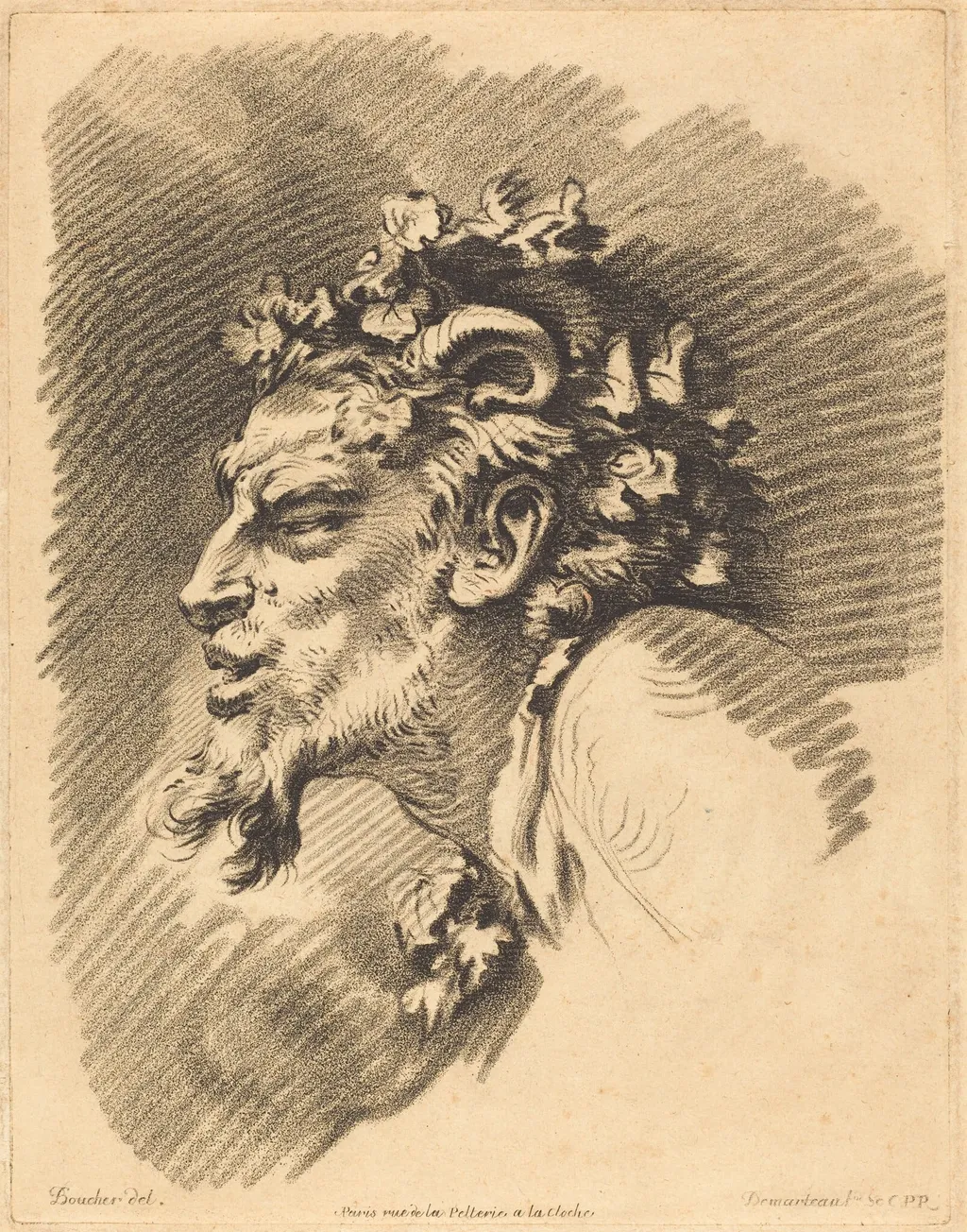
Head of a Faun is a chalk print by the Baroque artist Gilles Demarteau the Elder. It dates from 1749 and is held in the collection of the National Gallery of Art.
About this work
Next time you’re at the National Gallery of Art, Washington, look for works like this to see the paper’s texture.
This is a chalk drawing of a faun’s head. It’s not a photo—it uses a special print method called chalk manner, where ink holds powdered chalk on paper. The lines look soft and smudged, like a sketch.
That print trick was rare in 1776. It copies real chalk art but turns it into a print you can share. You’d usually see this in books or small prints, not a big wall painting.
Next time you’re at the National Gallery of Art, Washington, look for works like this to see the paper’s texture.
Overview
Head of a Faun is a small print created in 1749 by the French engraver Gilles Demarteau the Elder. Executed in the chalk‑manner technique on laid paper, the work depicts the head of a mythological faun rendered in a loose, sketch‑like style.
Subject & Meaning
The image presents a half‑human, half‑goat figure from classical mythology, focusing on the expressive features of the creature’s head. By isolating the faun’s visage, the print emphasizes the playful and rustic qualities associated with the mythic being.
Technique & Style
Demarteau employed the chalk‑manner process, a rare 18th‑century method that combines ink with powdered chalk to produce soft, velvety lines that mimic the appearance of a chalk drawing. The result is a gently smudged, atmospheric effect uncommon in prints of the period.
History & Provenance
The work was produced in 1749 and later entered the collection of the National Gallery of Art in Washington, D.C. Its presence in the museum reflects the institution’s interest in early printmaking techniques and French decorative arts.
Context
Chalk‑manner prints were typically used for book illustrations or modestly sized reproductions, rather than large decorative panels. Their rarity and delicate appearance made them suitable for collectors seeking intimate, study‑like images.
Legacy
While not widely reproduced, Head of a Faun illustrates the experimental spirit of mid‑18th‑century French printmakers, showcasing how they adapted drawing techniques to the print medium and influencing later developments in tonal engraving.
Own this work as a print
Artist & collection


![Head of a Man [recto], by Théodore Géricault](https://artifactworldgallery.com/img/theodore-gericault--head-of-a-man-recto--d6e68ba78da40efa-w320.webp)