Artwork
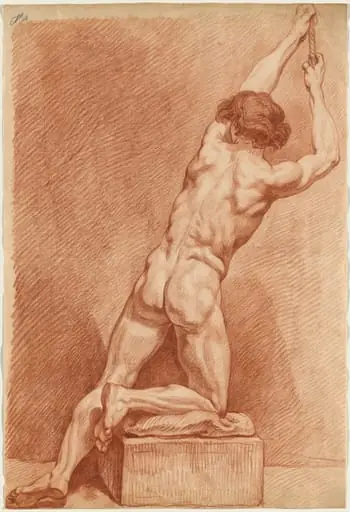
Seated Nude Man, Seen from Behind, Pulling a Rope
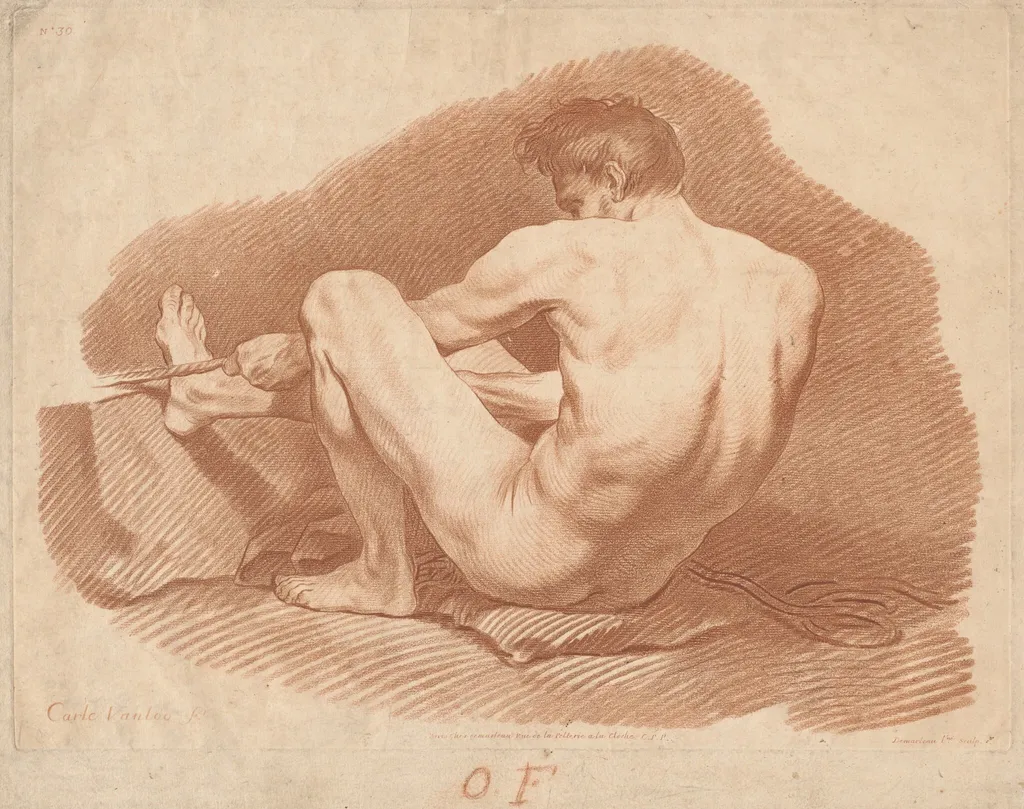
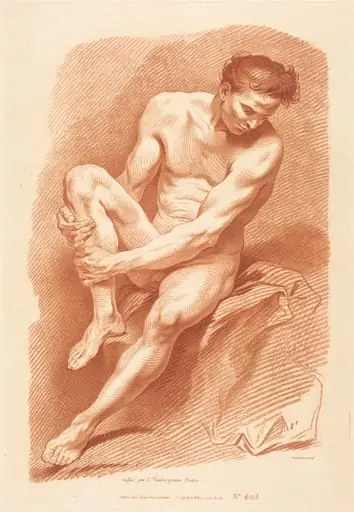
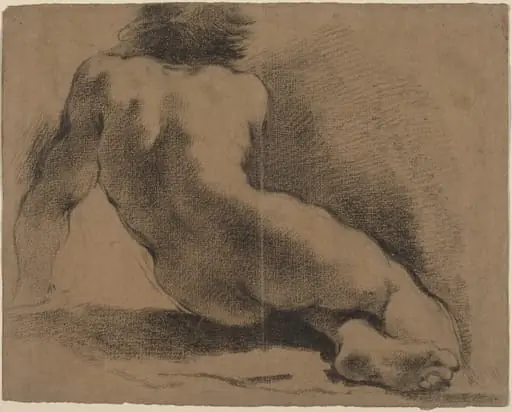
Seated Nude Man, Seen from Behind, Pulling a Rope is a chalk print by the Baroque artist Gilles Demarteau the Elder. It dates from 1760 and is held in the collection of the National Gallery of Art.
About this work
Overview
Created around 1760 by Gilles Demarteau the Elder, this print depicts a nude male figure seated and viewed from behind, engaged in the act of pulling a rope.
Created around 1760 by Gilles Demarteau the Elder, this print depicts a nude male figure seated and viewed from behind, engaged in the act of pulling a rope. Executed in chalk manner with red-brown ink on laid paper, it belongs to the tradition of reproductive prints that translated drawings into printed form. The composition emphasizes physical tension and anatomical detail, rendered through controlled tonal gradations rather than line.
Subject & Meaning
The figure’s posture suggests exertion, with one hand tugging a rope and the other resting on the knee, creating a dynamic twist in the torso. The nudity is not mythological or allegorical but grounded in physical labor, evoking a sense of private effort. The absence of context or narrative cues invites focus on the body’s strain and form, aligning with 18th-century interest in anatomical study and naturalistic gesture.
Technique & Style
Demarteau employed the chalk manner technique, using drypoint and burin to simulate the texture of chalk on paper. Soft, blended tones in red-brown ink create subtle transitions between light and shadow, enhancing the three-dimensionality of the musculature. The dark, indistinct background isolates the figure, heightening the effect of volume and concentrating attention on the contours of the back, shoulders, and limbs.
History & Provenance
Demarteau was known for translating drawings by artists like Boucher into prints for collectors. This work likely originated as a study for larger compositions or as an independent exercise in figure rendering. It circulated among connoisseurs interested in the academic tradition of life drawing, though its exact early ownership remains undocumented.
Context
In mid-18th-century France, prints of nude figures were often produced for artistic education or private collections, separate from public exhibitions. Demarteau’s work reflects the influence of Rococo sensibility in its attention to texture and form, yet avoids ornamentation. The emphasis on the male body in motion aligns with broader trends in anatomical studies and the growing interest in naturalism over idealized classicism.
Legacy
Though not widely exhibited today, the print exemplifies Demarteau’s skill in translating drawing into print with tonal nuance. It contributes to the understanding of how academic figure studies were disseminated beyond the studio. Its quiet intensity and technical precision mark it as a representative work of French reproductive printmaking in the decades before the Revolution.
Artist & collection