Artwork
Head of a Young Woman
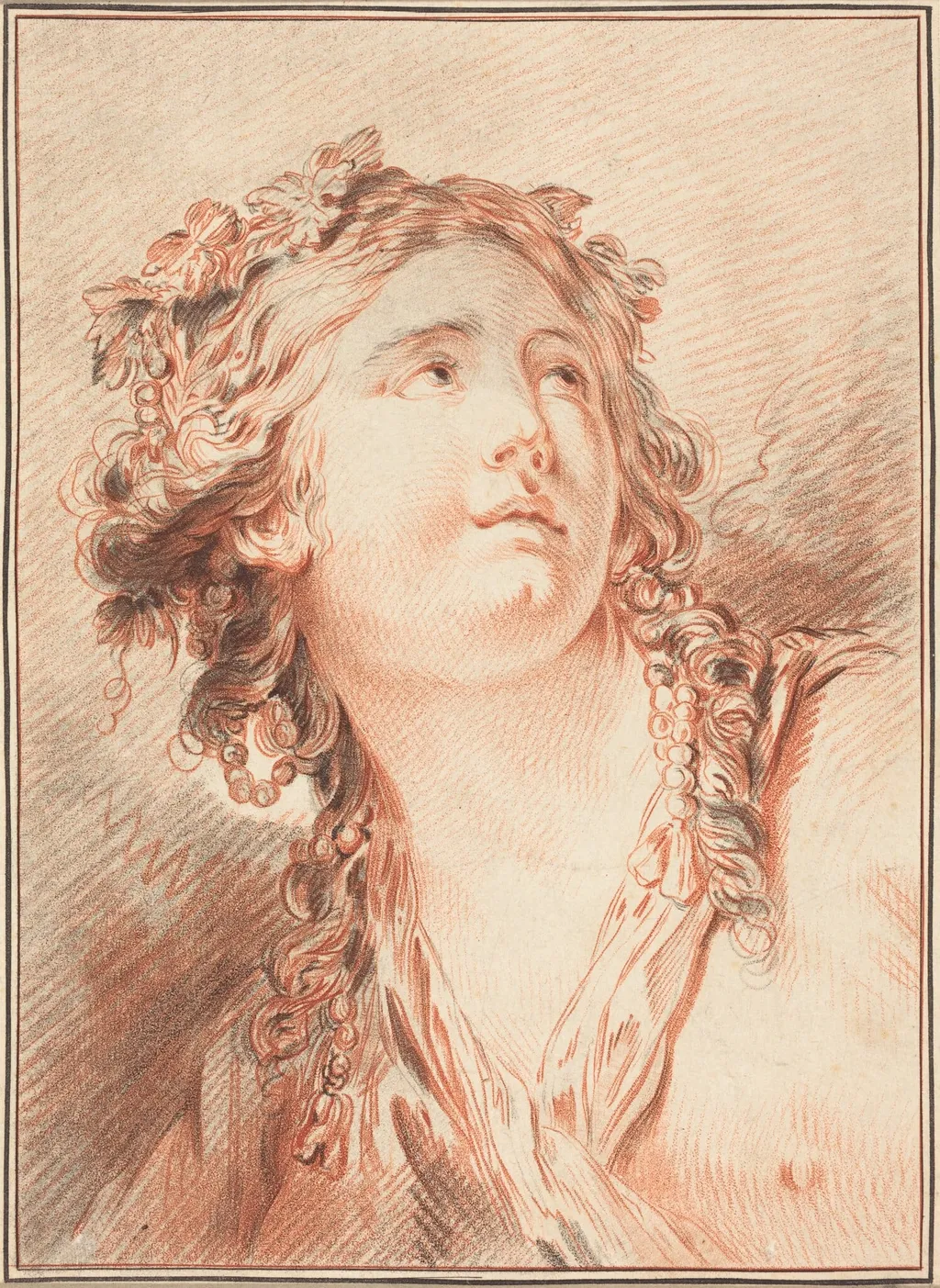
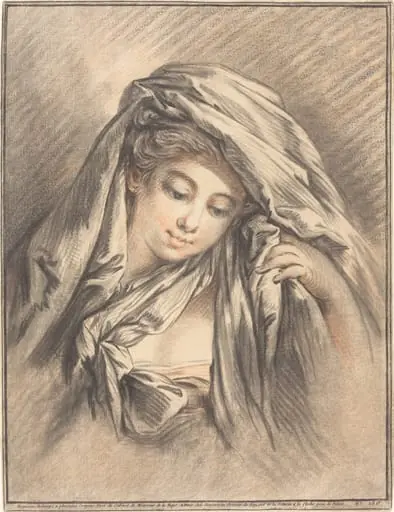
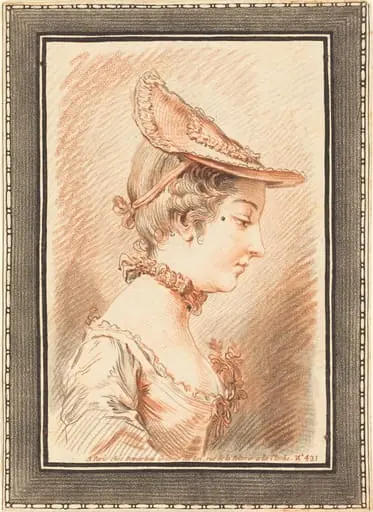
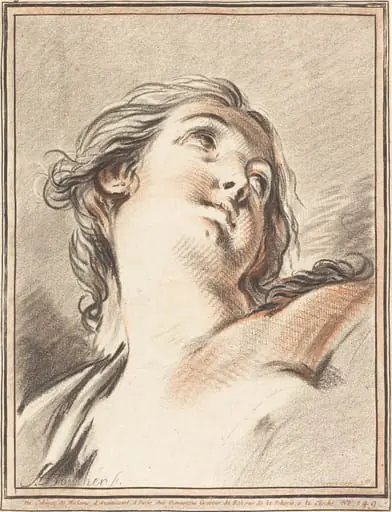
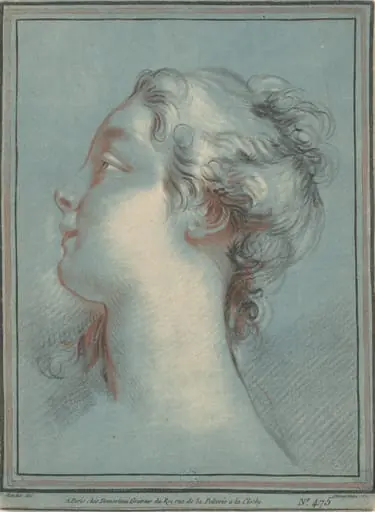
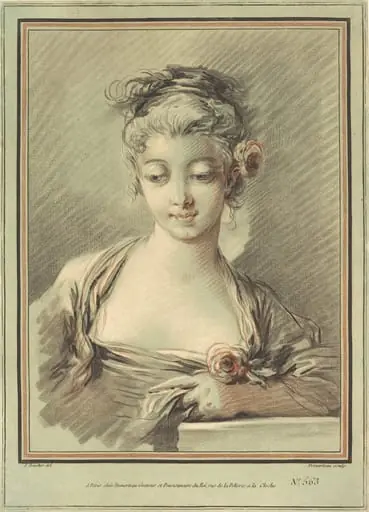
Head of a Young Woman is a chalk print by the Baroque artist Gilles Demarteau the Elder. It dates from 1749 and is held in the collection of the National Gallery of Art.
About this work
Overview
Head of a Young Woman is a 1749 print executed in the chalk manner, employing red and black inks on a light ground. The work is attributed to Gilles Demarteau the Elder, a French printmaker known for his delicate tonal studies. The piece presents a single figure in profile, rendered with a restrained palette that emphasizes form over detail.
Subject & Meaning
The image portrays a young woman seen from the side, her hair gathered in loose curls that frame a serene expression. A simple pearl necklace rests on her collarbone, suggesting modest elegance. The composition focuses on the individual's likeness rather than narrative content, inviting contemplation of beauty and poise within a private, intimate moment.
Technique & Style
Demarteau employed the chalk manner, a printmaking technique that imitates the soft gradations of chalk drawing through fine red and black lines. The artist achieved subtle modeling of skin and hair by varying line density, creating a warm, shadowed atmosphere characteristic of late Baroque tonal experiments. The smooth contours and gentle shading reflect a refined handling of line and tone.
History & Provenance
Created in 1749, the print belongs to the later phase of Demarteau's career, when he was adapting French drawing traditions for the print market. While specific ownership records are scarce, the work is documented in several 18th‑century print catalogues, indicating its circulation among collectors of fashionable portrait studies.
Context
The chalk manner emerged in the mid‑18th century as a response to the demand for affordable reproductions of academic drawings. Demarteau’s prints, including this portrait, exemplify the period’s interest in rendering chiaroscuro effects without the expense of oil painting, aligning with broader Baroque sensibilities that prized dramatic light and refined surface treatment.
Artist & collection