Artwork
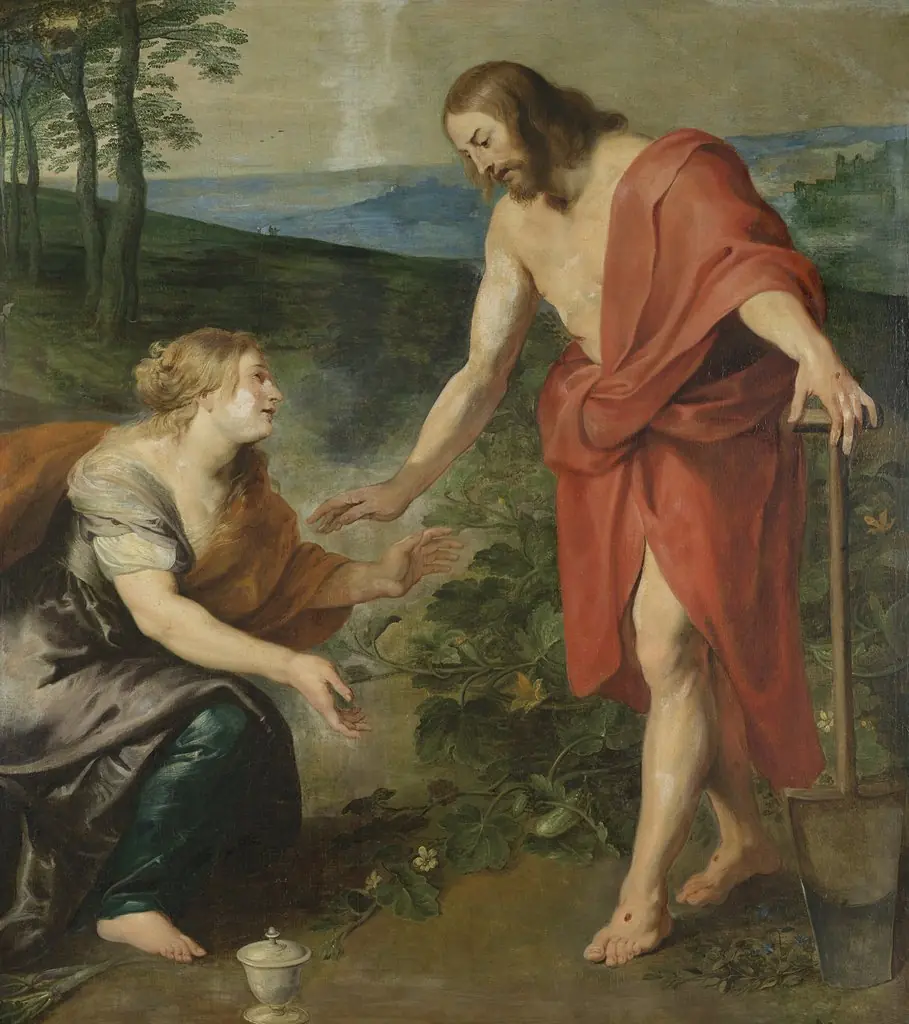
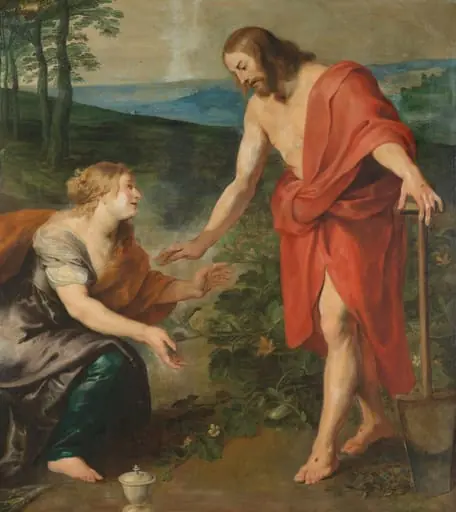
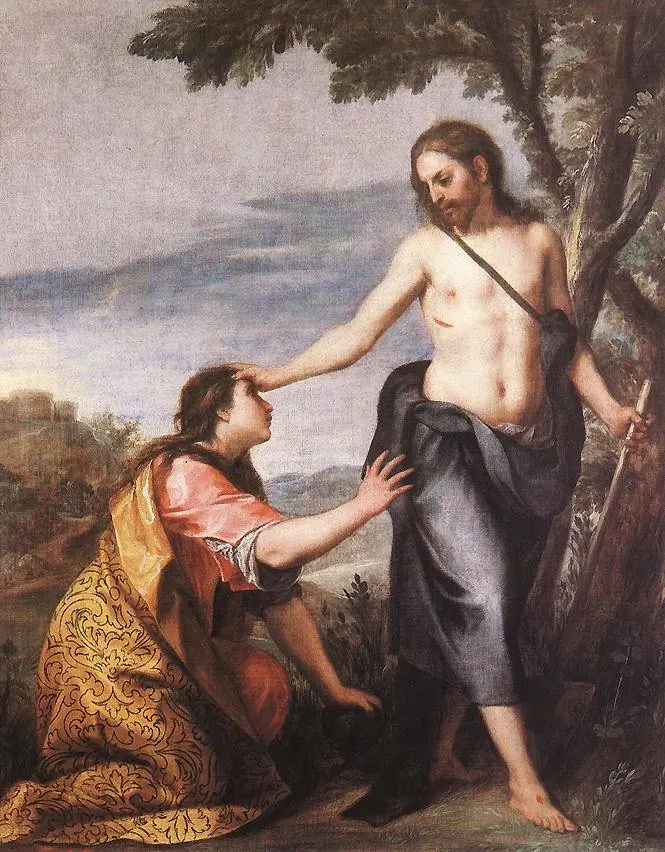
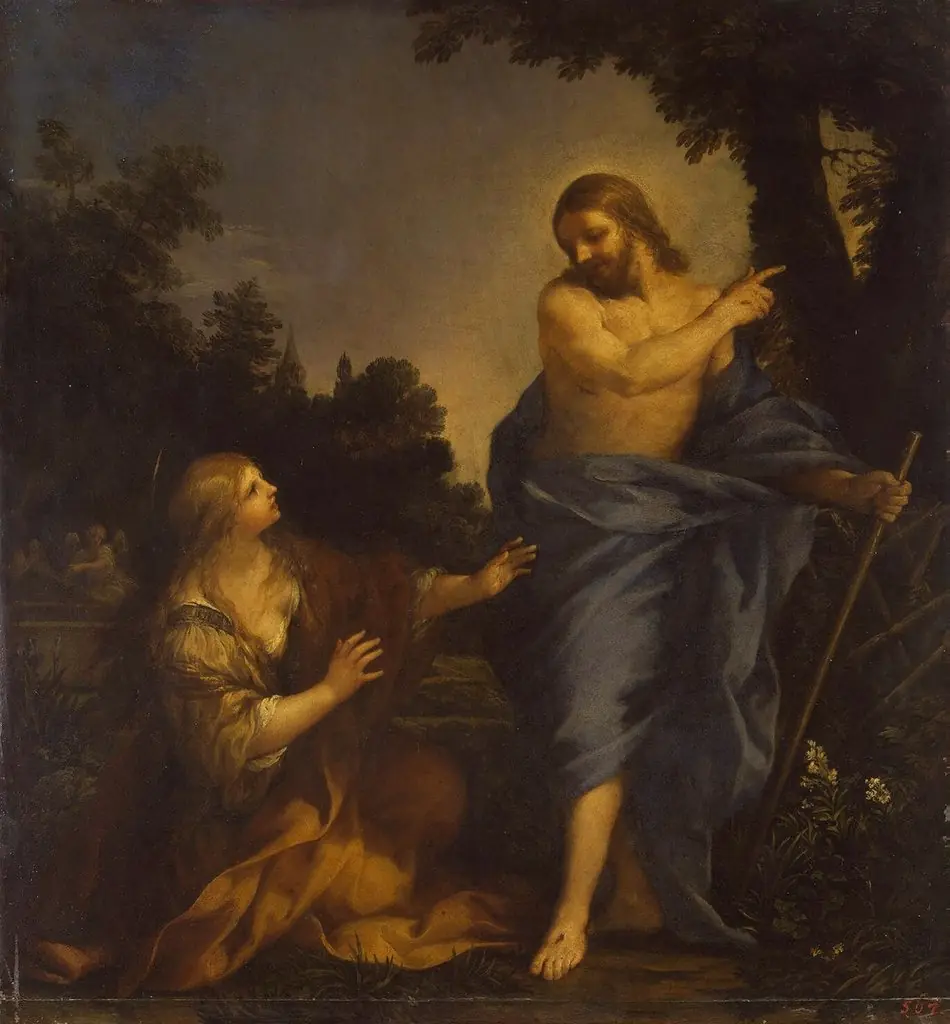
“Noli me tangere” – Resurrected Christ appearing to Mary Magdalene (John 20:14-17)
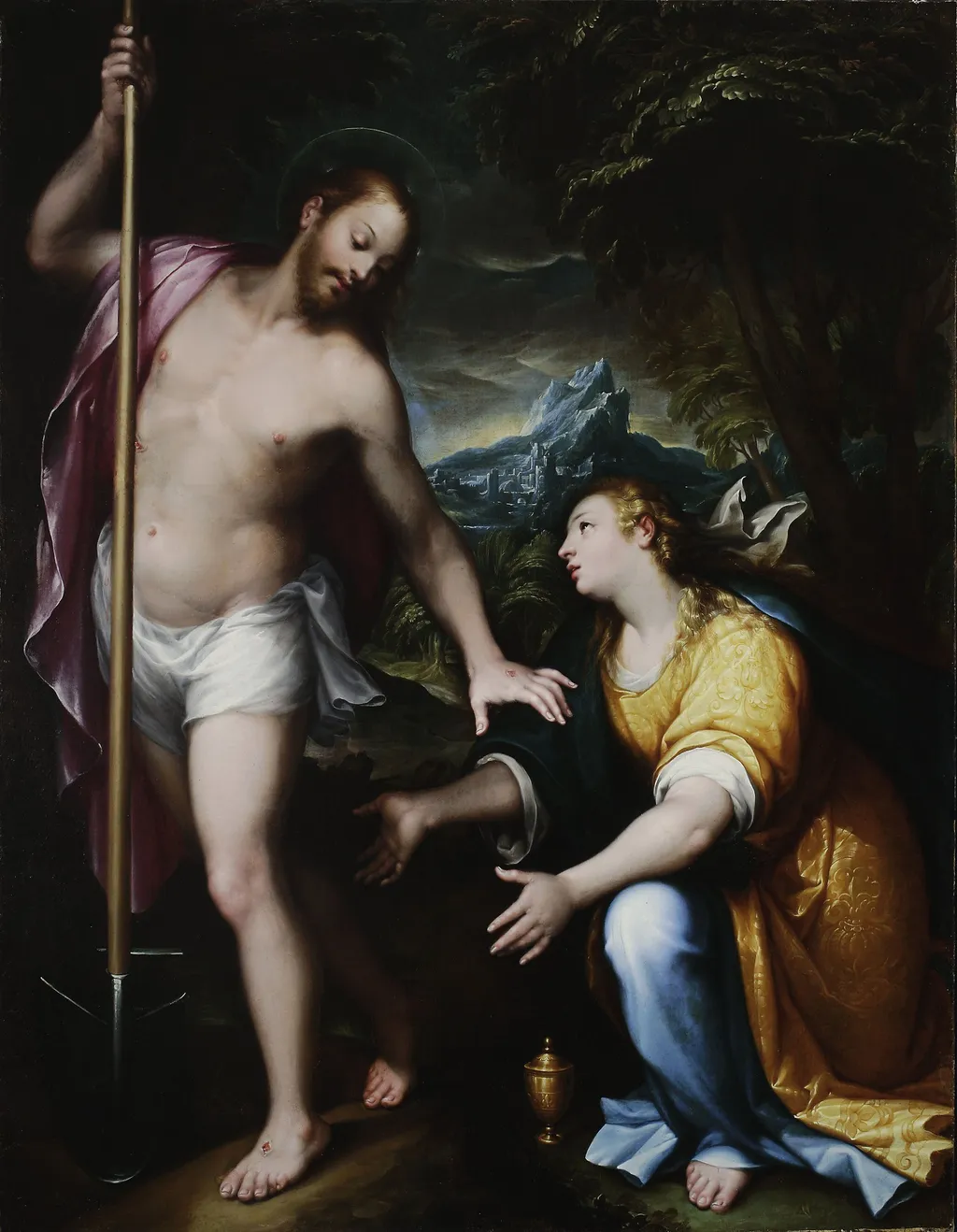
“Noli me tangere” – Resurrected Christ appearing to Mary Magdalene (John 20:14-17) is an oil painting by the Mannerist artist Denys Calvaert. It dates from 1589 and is held in the collection of the National Museum in Warsaw.
About this work
Overview
Denys Calvaert’s oil on canvas, dated around 1589, portrays the biblical encounter in which the risen Christ appears to Mary Magdalene. The work is part of the collection of the National Museum in Warsaw, where it is displayed as an example of late‑Renaissance religious art.
Subject & Meaning
The composition captures the moment from John’s Gospel when Jesus, having risen, tells Mary “Noli me tangere” – “do not hold on to me.” Calvaert emphasizes the contrast between the divine figure, extending a hand in invitation, and Mary’s kneeling posture, expressing both reverence and astonishment.
Technique & Style
Calvaert employs chiaroscuro, juxtaposing illuminated areas against deep shadows to model the figures and suggest three‑dimensionality. The palette features a pink robe for Christ and a bright yellow garment for Mary, while the surrounding landscape is rendered in muted earth tones, enhancing the focal interaction.
Context
Created in the closing years of the 16th century, the painting reflects the Counter‑Reformation’s emphasis on clear, emotionally resonant depictions of biblical scenes. Calvaert, a Flemish‑born artist active in Bologna, blended Northern detail with Italian compositional conventions, evident in the balanced arrangement of figures and the atmospheric backdrop.
History & Provenance
Since its early acquisition, the work has remained in public collections, eventually entering the holdings of Warsaw’s National Museum. Its presence there underscores the museum’s commitment to representing Northern European contributions to Italian Baroque painting.
Own this work as a print
Artist & collection

Artist
Denis Calvaert was an Antwerp-born Flemish painter who spent most of his life in Italy, where he was known as Dionisio Fiammingo or simply Il Fiammingo.