Artwork
Royal College of Art interior showing plaster casts of classical sculpture
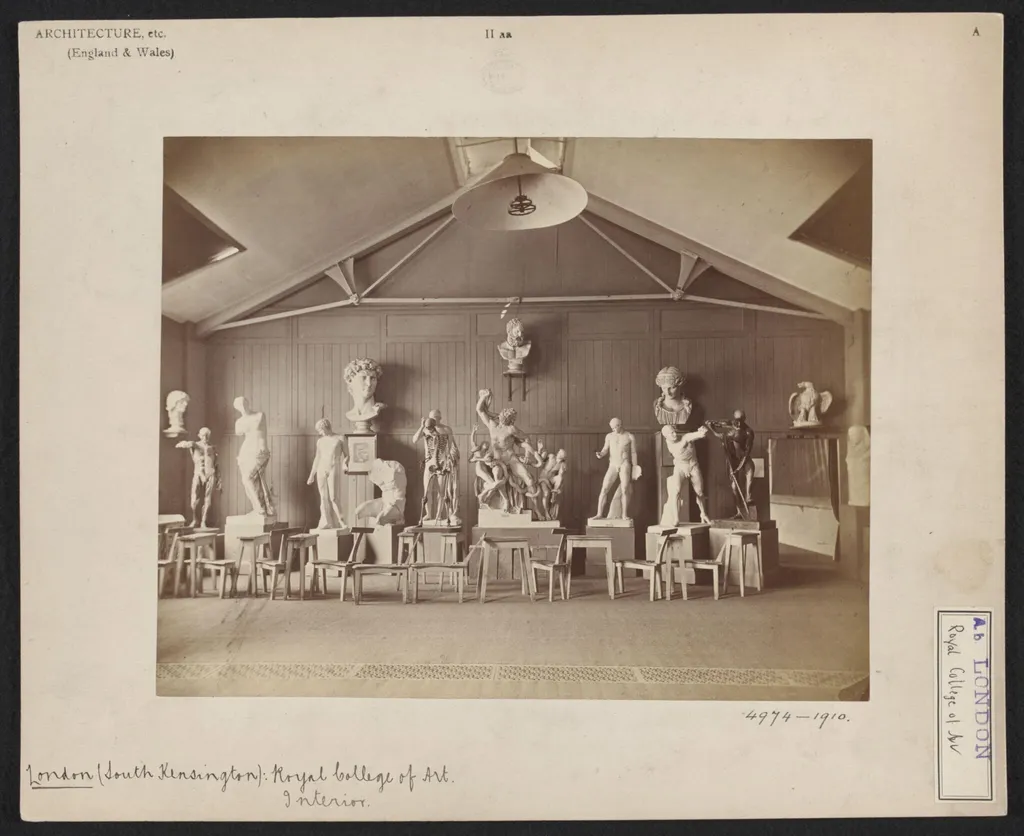
Royal College of Art interior showing plaster casts of classical sculpture is a photographic photography by Department of Science and Art of the Committee of Council on Education. It dates from 1850 and is held in the collection of the Victoria and Albert Museum.
About this work
Overview
This photograph captures the interior of the Royal College of Art, showcasing plaster casts of classical sculptures arranged in a systematic display.
This photograph captures the interior of the Royal College of Art, showcasing plaster casts of classical sculptures arranged in a systematic display. Taken in the mid-19th century, it belongs to a broader photographic initiative by the National Art Library to document artistic and architectural education resources. The image serves both as a record of pedagogical practice and as an artifact of early photographic documentation in art institutions.
Subject & Meaning
The plaster casts, reproductions of ancient Greek and Roman sculptures, were central to art training at the time, intended to teach proportion, form, and classical ideals. Their arrangement in the college interior reflects an educational philosophy rooted in emulation of antiquity. The photograph preserves not only the objects but also the spatial logic of 19th-century art instruction, where direct observation of classical models was considered essential.
Technique & Style
The photograph employs a frontal, evenly lit composition typical of documentary photography of the period. The camera’s fixed perspective emphasizes architectural symmetry and the orderly arrangement of casts, minimizing artistic flourish in favor of clarity. Grain and tonal range reflect early photographic processes, likely albumen print on paper, consistent with mid-Victorian technical standards.
History & Provenance
The image was acquired by the National Art Library as part of its systematic effort to compile visual references for students and designers. It originated from the South Kensington site, where the V&A and its affiliated institutions were developing a unified educational mission. Its preservation underscores its role as both instructional material and historical evidence of institutional growth.
Context
In the 1850s–70s, British art education emphasized classical training through casts, a practice imported from continental academies. The Royal College of Art, then part of the South Kensington complex, was a key site for this pedagogy. Photographs like this were used to standardize visual learning across institutions, supporting a national curriculum in design and applied arts.
Legacy
This photograph remains part of a larger archive that traces the evolution of art education and photographic documentation in Britain. It illustrates how photography transitioned from a tool of record-keeping to a medium with its own historical value. Today, it informs studies on 19th-century pedagogy, museum practices, and the material culture of artistic training.
Artist & collection
Artist
Department of Science and Art of the Committee of Council on Education
They spent 50 years turning a South Kensington building site into a public playground.

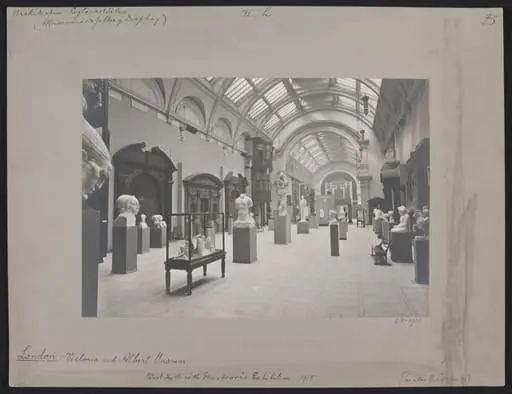 Victoria and Albert Museum, West Hall (Gallery 48) showing Ivan Meštrović sculpture exhibition, looking west
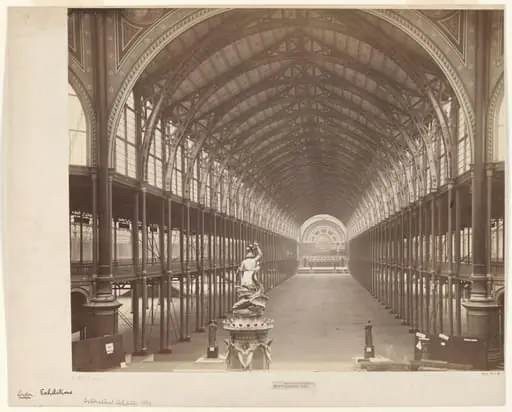 Interior view of the Nave, looking west, International Exhibition, South Kensington
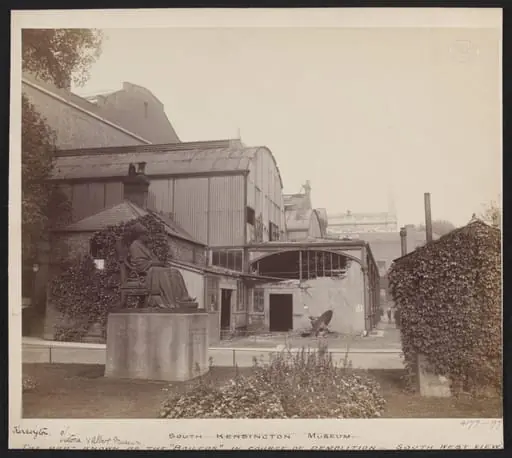 Remains of the 'Brompton Boilers', in October 1897, in the course of demolition
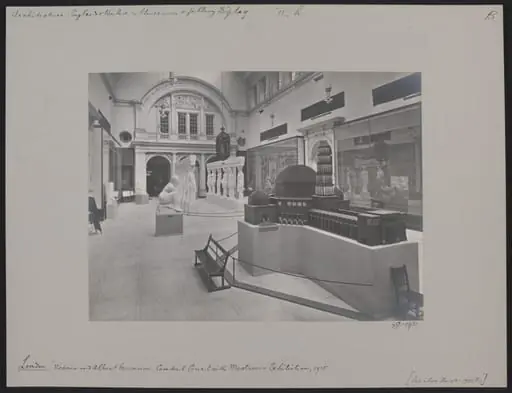 Photograph, Victoria and Albert Museum, Central Court (Gallery 43) showing Ivan Meštrović sculpture exhibition, gelatin silver print, 1915
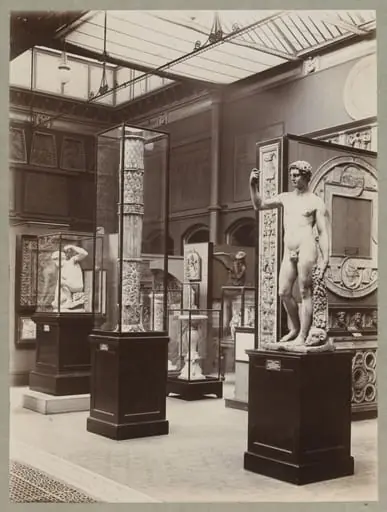 South Kensington Museum, Interior of North Court showing marble statues including statue of Jason and Narcissus
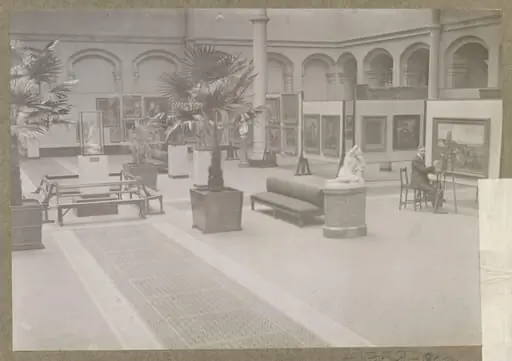 South Kensington Museum, Exhibition of paintings, North Court, north-east corner
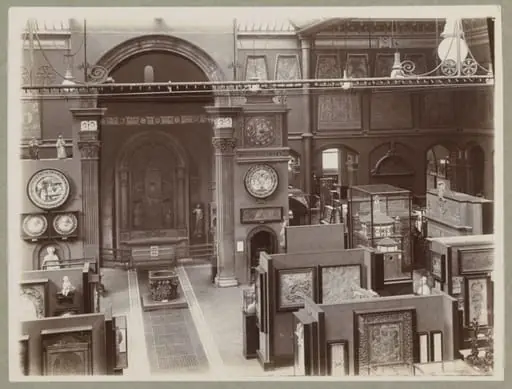 South Kensington Museum, Interior of North Court
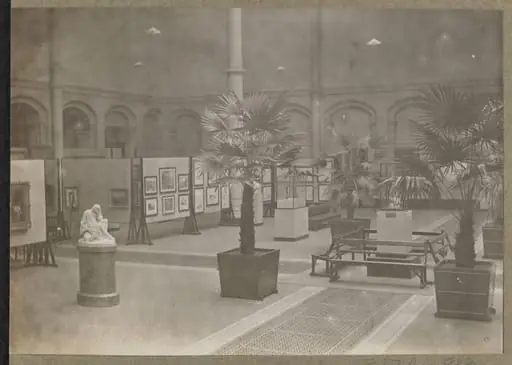 Victoria and Albert Museum, Exhibition of paintings, North court, north-west corner
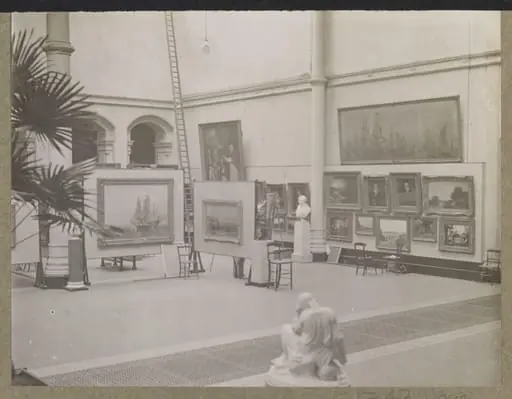 Victoria and Albert Museum, Exhibition of paintings, North court, south-east corner
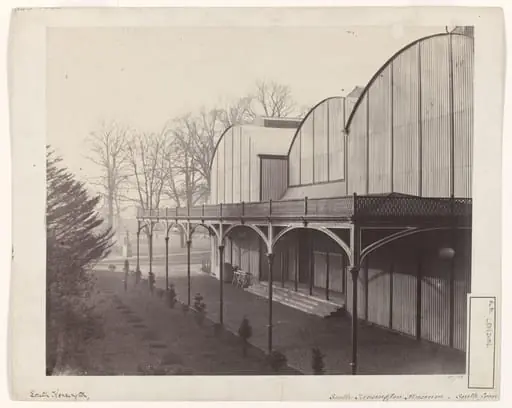 Exterior view of the south front entrance of the South Kensington Museum (the 'Brompton Boilers')
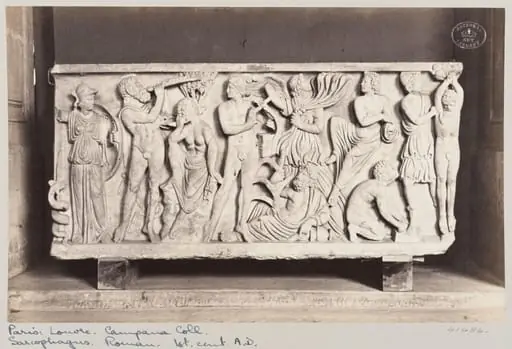 Marble Sarcophagus showing the trial of skill between Apollo and Marsyas, bas-relief