Artwork
Marble Sarcophagus showing the trial of skill between Apollo and Marsyas, bas-relief
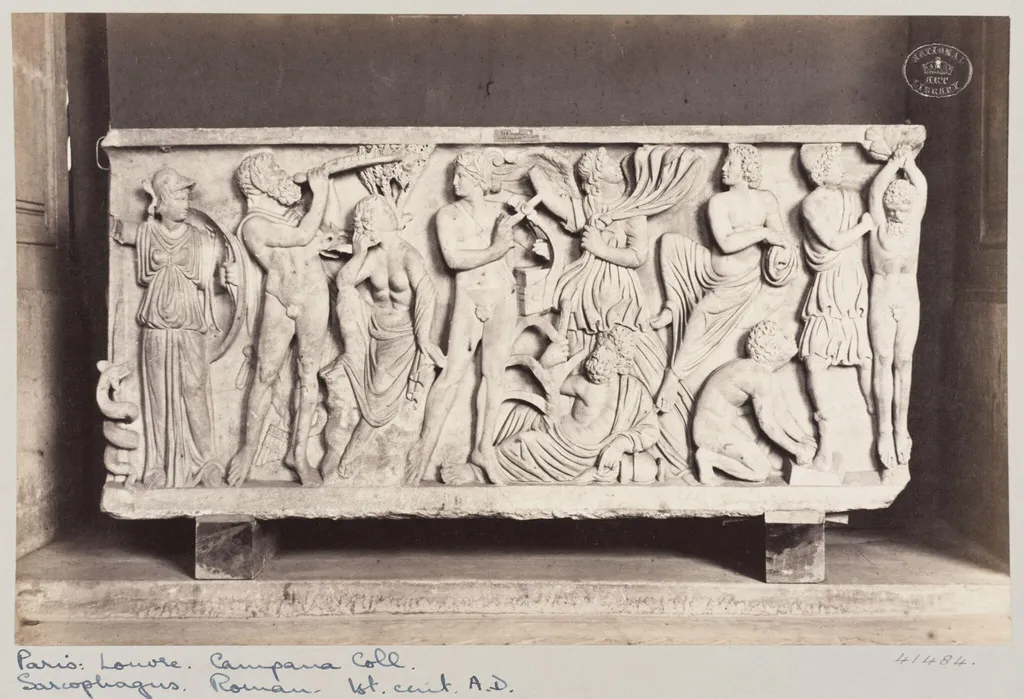
Marble Sarcophagus showing the trial of skill between Apollo and Marsyas, bas-relief is a photographic photography by the Impressionist artist Louise Laffon. It dates from 1864 and is held in the collection of the Victoria and Albert Museum.
About this work
This photograph is a bas-relief titled Marble Sarcophagus showing the trial of skill between Apollo and Marsyas.
This photograph is a bas-relief titled Marble Sarcophagus showing the trial of skill between Apollo and Marsyas. It was created by Louise Laffon in 1863-1864.
The Victoria and Albert Museum has a long history of collecting photographs, starting from 1852. They were used as resources for artists and students, and Louise Laffon's work is part of this collection.
You can learn more about the artist behind this photograph, Laffon, Louise.
Overview
The image is a photographic reproduction of a marble sarcophagus relief that depicts the mythic contest between Apollo and the satyr Marsyas. Executed in the mid‑1860s, the photograph was taken by French photographer Louise Laffon and now forms part of the Victoria and Albert Museum’s early photographic holdings.
Subject & Meaning
The relief illustrates the ancient story in which Apollo challenges Marsyas to a musical duel, a narrative that symbolises the triumph of divine order over barbaric hubris. The composition captures the tension of the contest, with Apollo’s lyre contrasted against Marsyas’s pipe, underscoring themes of skill, judgment, and the consequences of overreaching.
Technique & Style
Laffon’s photograph records the bas‑relief with careful attention to light and shadow, rendering the marble’s texture and the depth of the carving. The image reflects mid‑nineteenth‑century photographic practices, employing a large‑format camera and albumen paper to achieve fine tonal range suitable for scholarly study.
History & Provenance
The photograph was produced between 1863 and 1864 as part of a series commissioned from Laffon, who was among the few women active in the French Photographic Society. In 1864 the Victoria and Albert Museum acquired 500 of her prints, including this work, through the dealer Monsieur E. Cappe, integrating them into its National Art Library collection.
Context
At the time, the museum’s founding director Henry Cole promoted photography as a tool for education and research, encouraging the acquisition of images that could supplement drawings and casts. Laffon’s documentation of classical sculpture supported this mission, providing artists and students with accurate visual references of antiquarian objects.
Legacy
Laffon’s contributions, long overlooked, exemplify the role of women photographers in the early institutional use of the medium. Her work continues to serve scholars examining the transmission of classical iconography and the development of photographic documentation in museum practice.
Artist & collection
Artist
Louise Laffon (1828–1885), was a French photographer and painter. She was one of the first female professional photographers in France. She had a studio in Paris between 1859 and 1876.

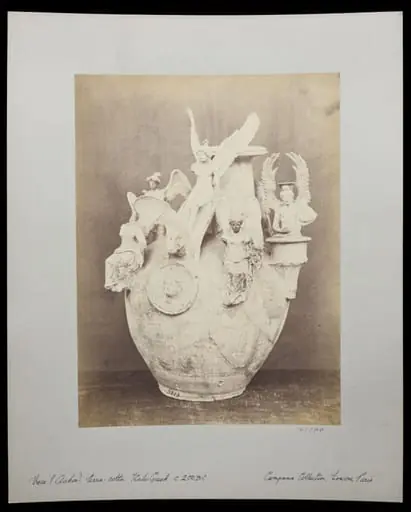 Perfume Burner in terra cotta
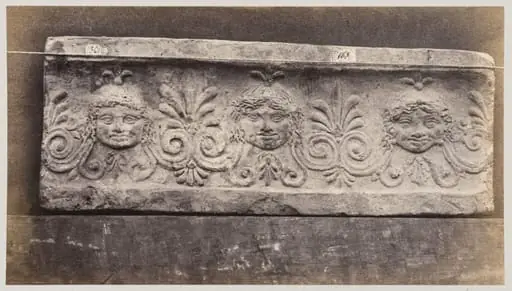 Three masques of gorgons in terra cotta
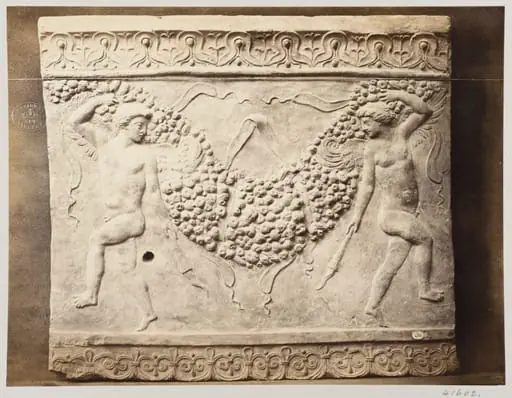 Bas-relief of portion of frieze of dancing figures with torches bearing festoon of fruit in terra cotta
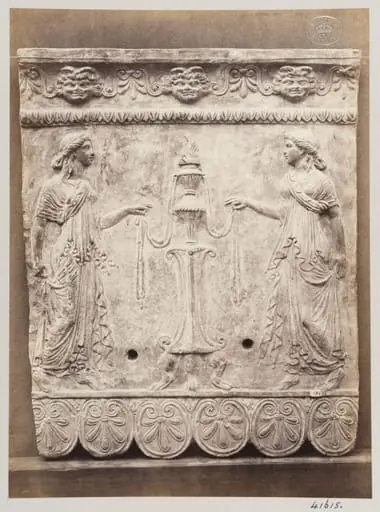 Bas-relief portion of a frieze of two draped females and an altar in terra cotta
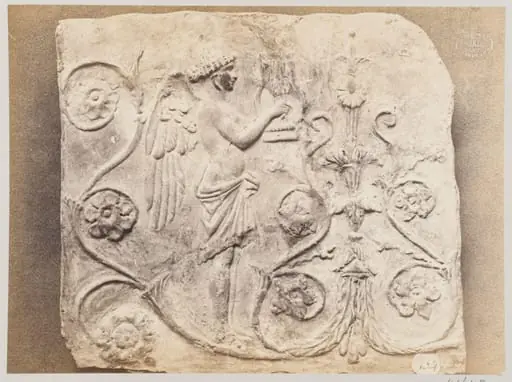 Bas-relief of a geni and a lyre in terra cotta
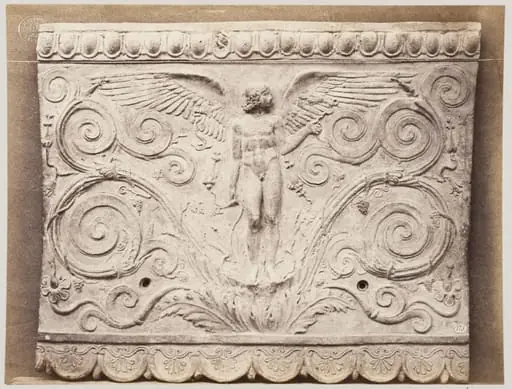 Bas-relief of a portion of frieze of Eros with scrollwork in terra cotta
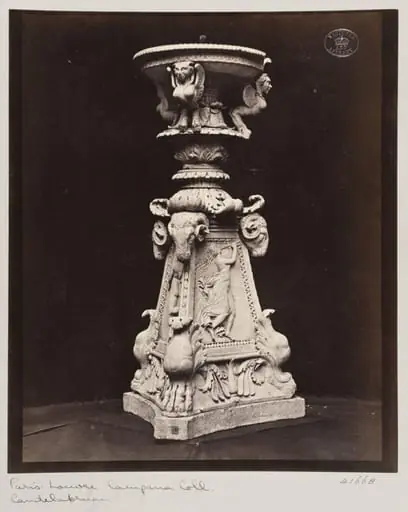 Marble sculptured fountain
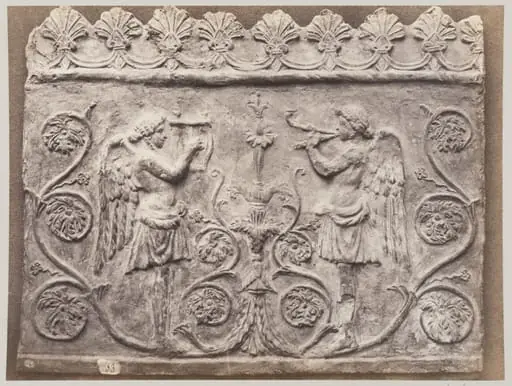 Bas-relief portion of frieze of Genii with double flutes and lyre
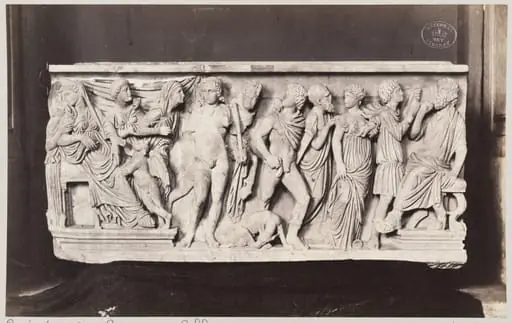 Marble Sarcophagus showing the story of Phaedra and Hippolytus
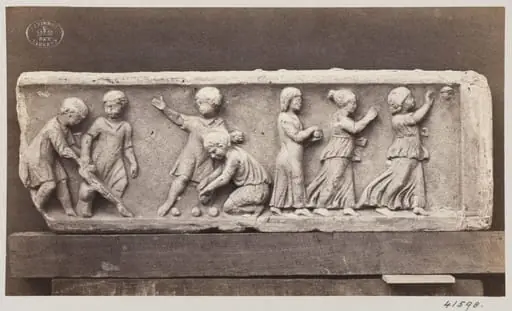 Marble bas-relief of Children playing
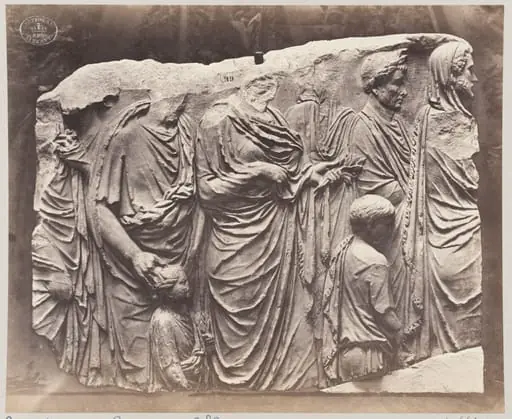 Portion of a marble sarcophagus of procession of draped figures
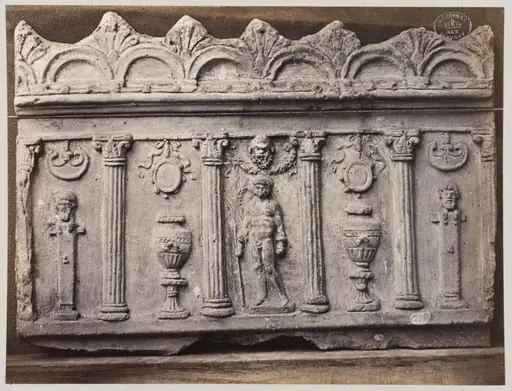 Bas-relief of a figure with bust, vessels and columns in terra cotta
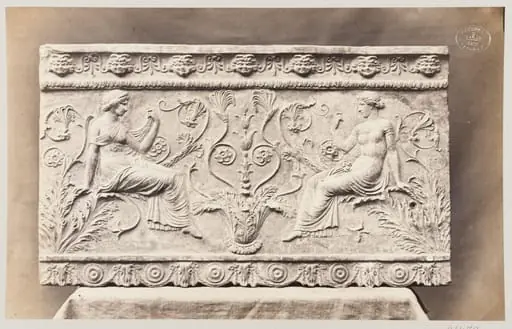 Two female figures seated on foliage ornament, bas-relief in terra cotta
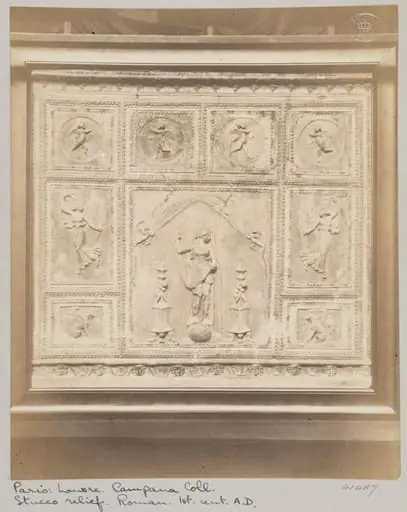 Venus standing on a ball surrounded by Ambrini, two figures of Victory and two griffins, bas-relief in coloured stucco
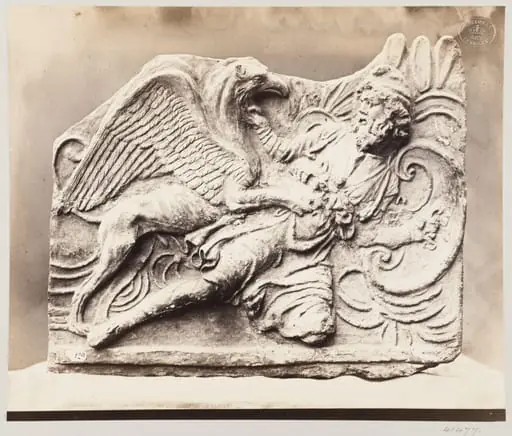 An Arimaspi combating with a Griffin, bas-relief fragment in terra cotta
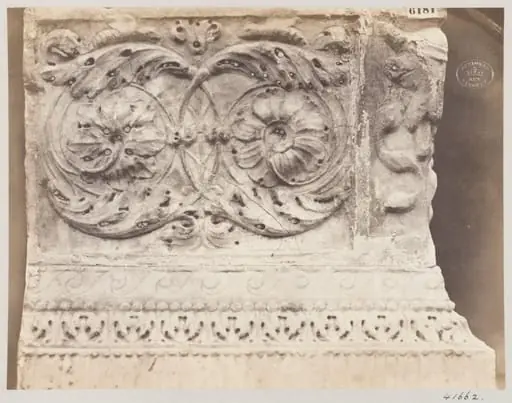 Marble portion of a sacophagus ornamented with bas-relief foliage
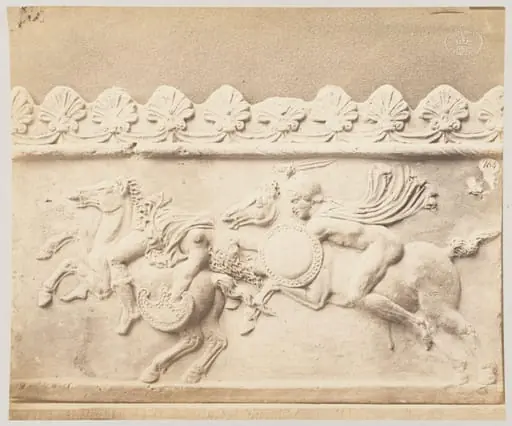 Combat between an Amazon and a Greek warrior, bas-relief in terra cotta
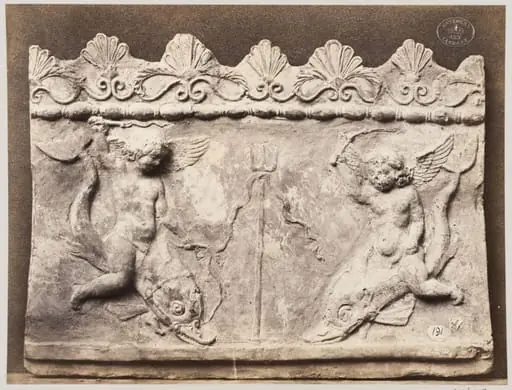 Bas-relief of two figures of Neptune in terra cotta