Artwork
The Temple of Vesta
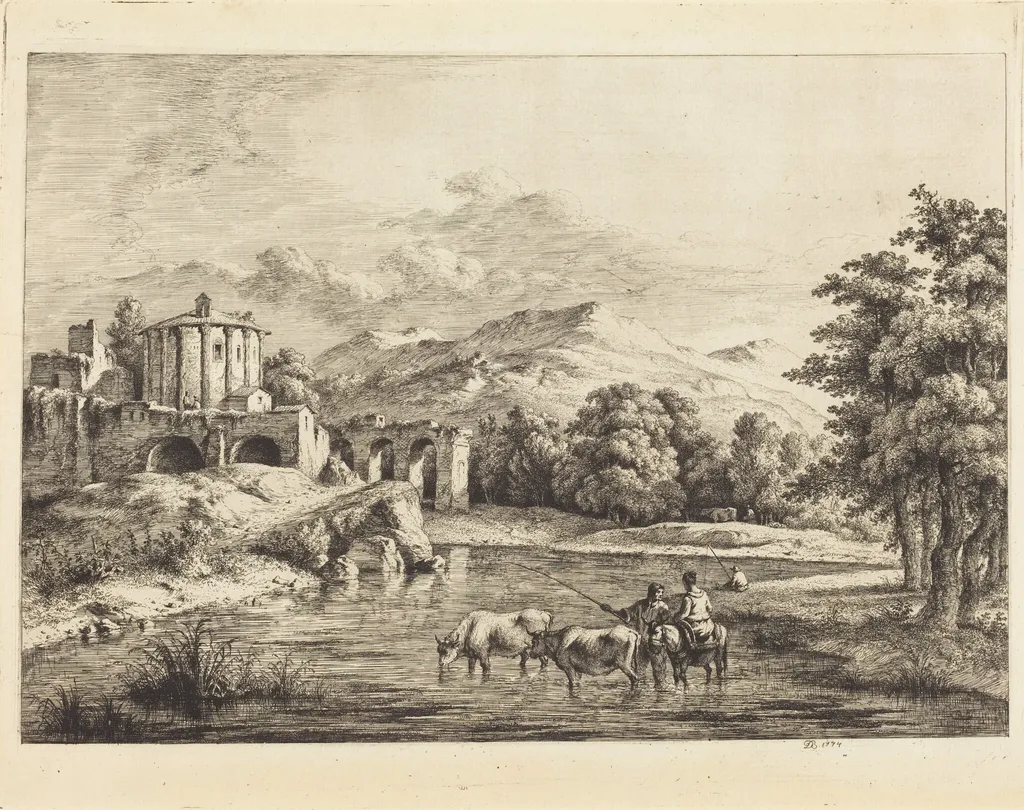
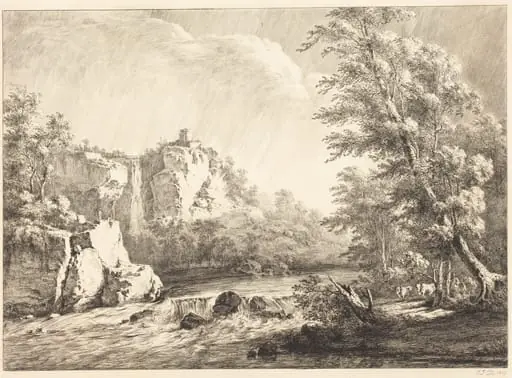
The Temple of Vesta is an ink print by the Romanticist artist Jean-Jacques de Boissieu. It dates from 1774 and is held in the collection of the National Gallery of Art.
About this work
Overview
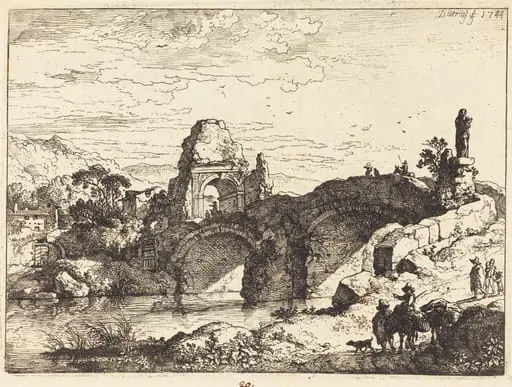
The Temple of Vesta is an etching on laid paper created by Jean-Jacques de Boissieu in 1774, depicting a serene rural landscape centered around an ancient temple.
Subject & Meaning
The scene unfolds with everyday life in harmony with antiquity: figures tend animals, cross a bridge, and gather near the temple, evoking a sense of tranquility and coexistence between human activity and classical heritage.
Technique & Style
De Boissieu employed fine etching lines to achieve nuanced light and shadow effects, characteristic of the medium's capabilities during this period, enhancing the overall peaceful ambiance of the composition.
History & Provenance
Created in 1774, specific provenance details are not provided, though the work reflects the 18th-century European interest in classical antiquities and pastoral themes.
Context
This etching aligns with late 18th-century artistic trends that often featured idealized landscapes, classical elements, and the everyday, catering to a growing appreciation for both antiquity and serene natural settings.
Legacy
While specific legacy details of 'The Temple of Vesta' are not outlined, it contributes to the broader legacy of 18th-century etching techniques and the enduring appeal of classical landscapes in art.
Own this work as a print
Artist & collection
Artist
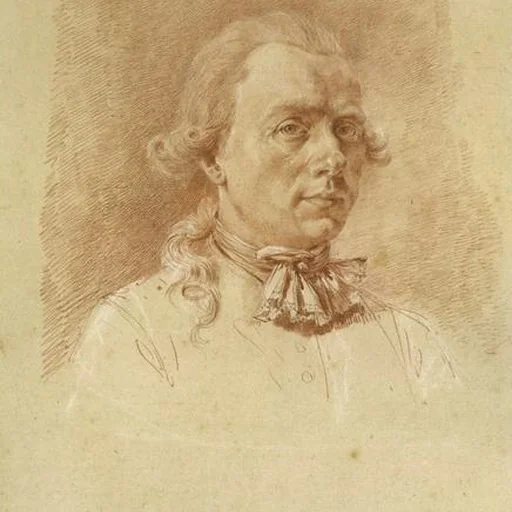
Jean-Jacques de Boissieu (1736–1810) was a French artist, born in Lyon.

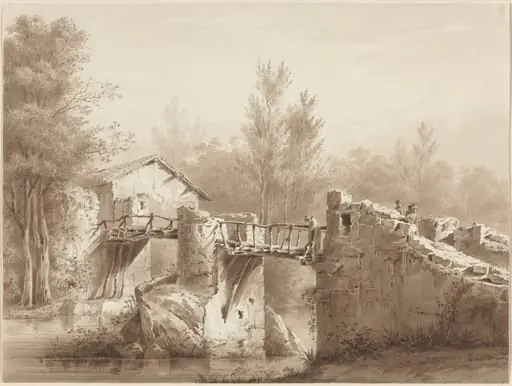
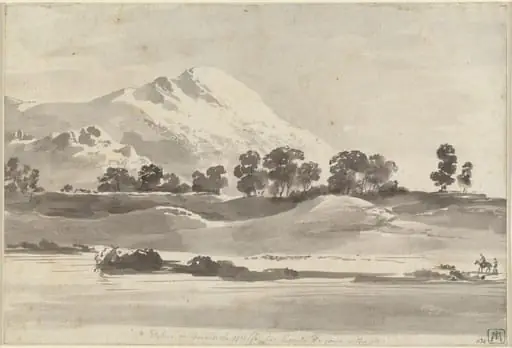
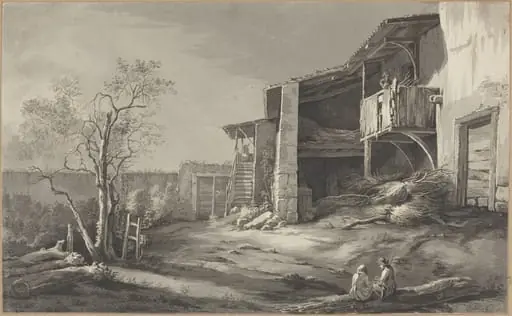
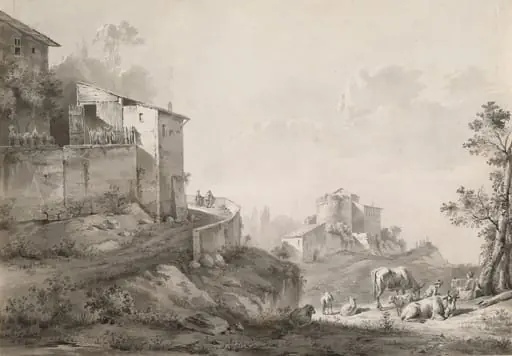
 Landscape with a Bridge and Ruined Tower
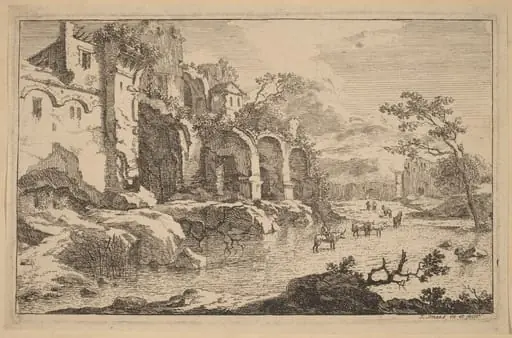 Building in Ruins at the Side of a River
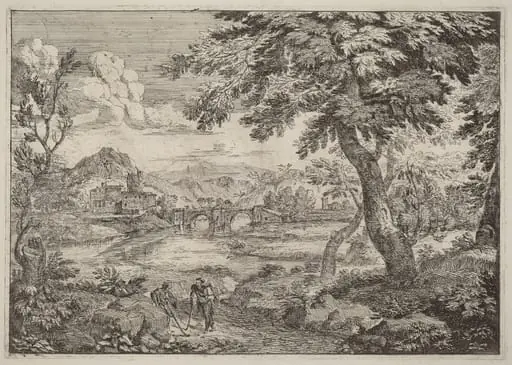 Double Arched Bridge
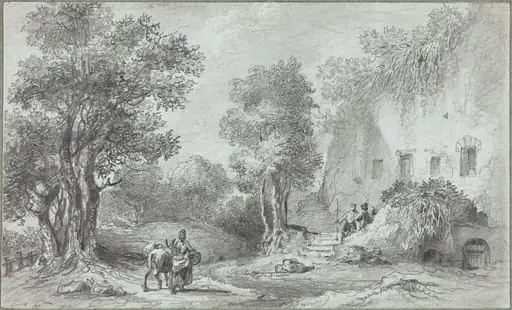 Landscape with Peasants before an Inn
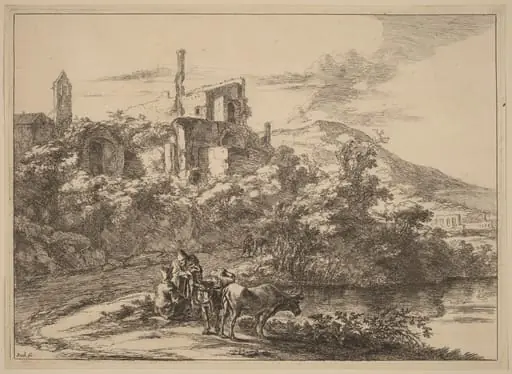 Two Cows near the River at Tivoli
![Landscape with Tower and Two Ruined Pillars [left], by Canaletto](https://artifactworldgallery.com/img/canaletto--landscape-with-tower-and-two-ruined-pillars-left--60d58ba162fec5aa-w320.webp) Landscape with Tower and Two Ruined Pillars [left]
Landscape with Tower and Two Ruined Pillars [left]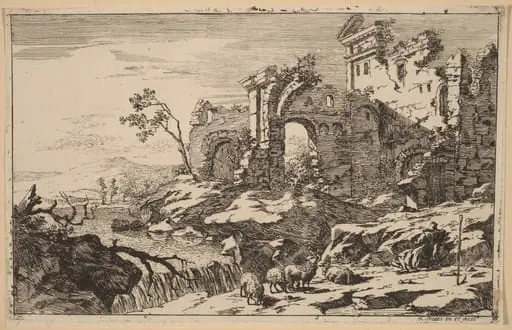 Sleeping Shepherd
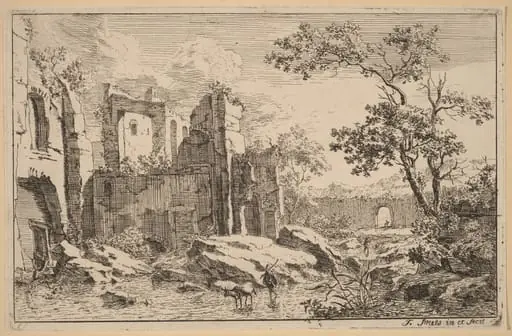 Man and Ox in a River
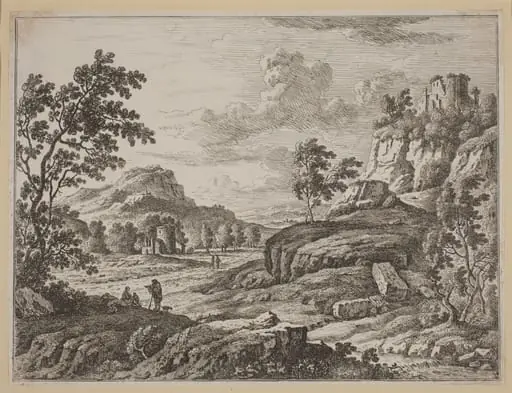 Landscape with Two Ruined Towers
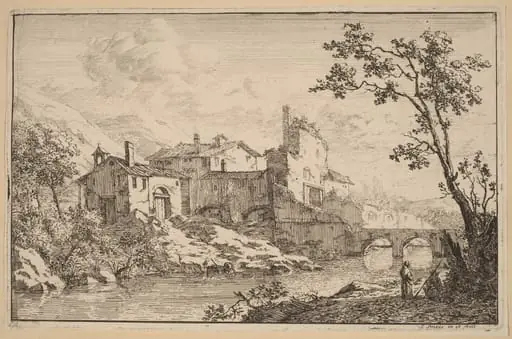 Houses at the Side of a River
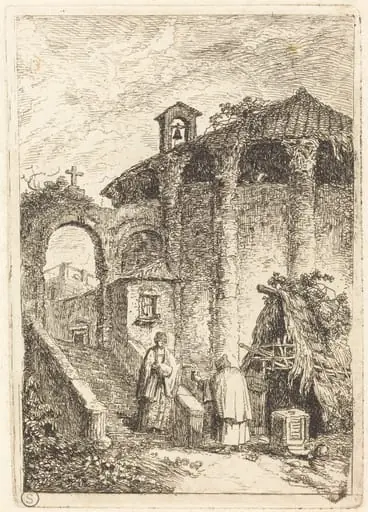 The Ancient Temple
 River Landscape with a Passing Storm