Artwork
A Pike Pursuing Small Fish
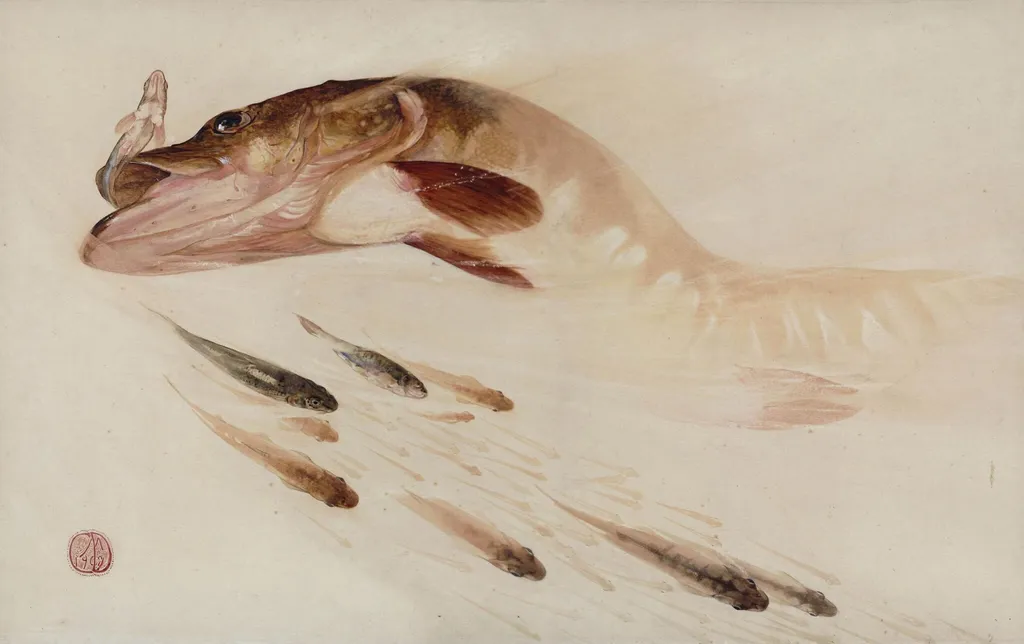
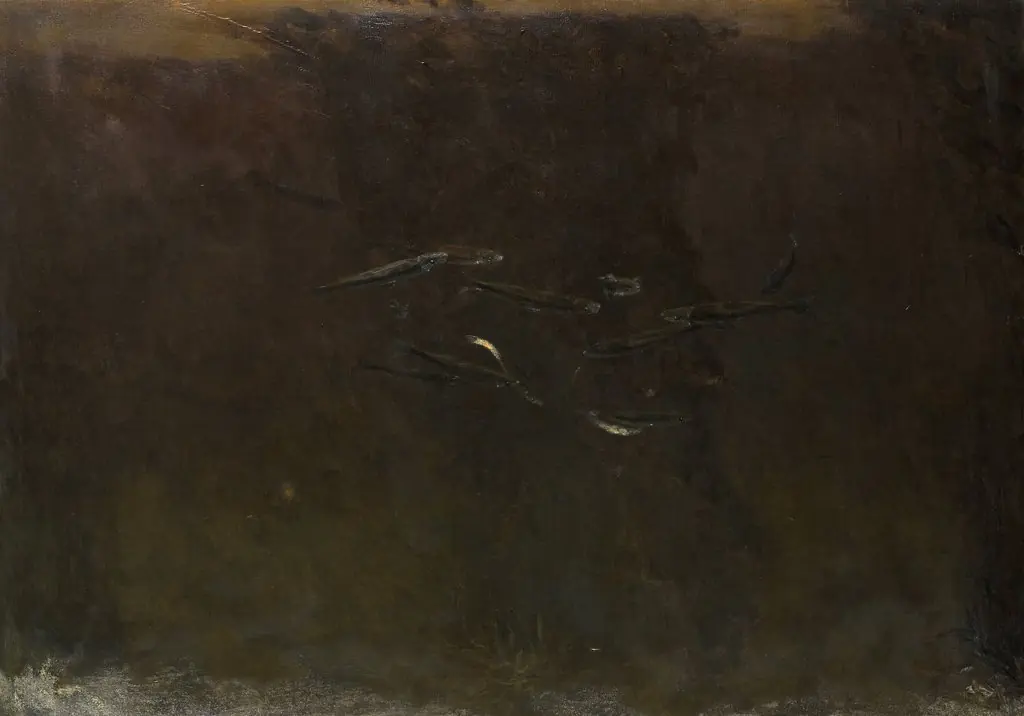
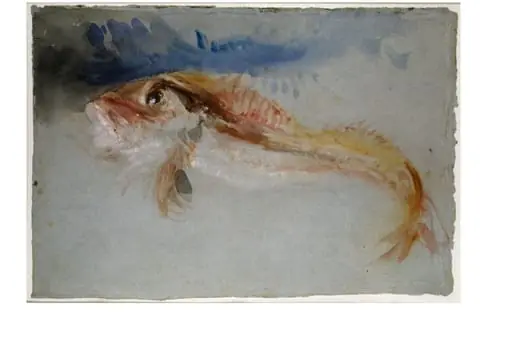
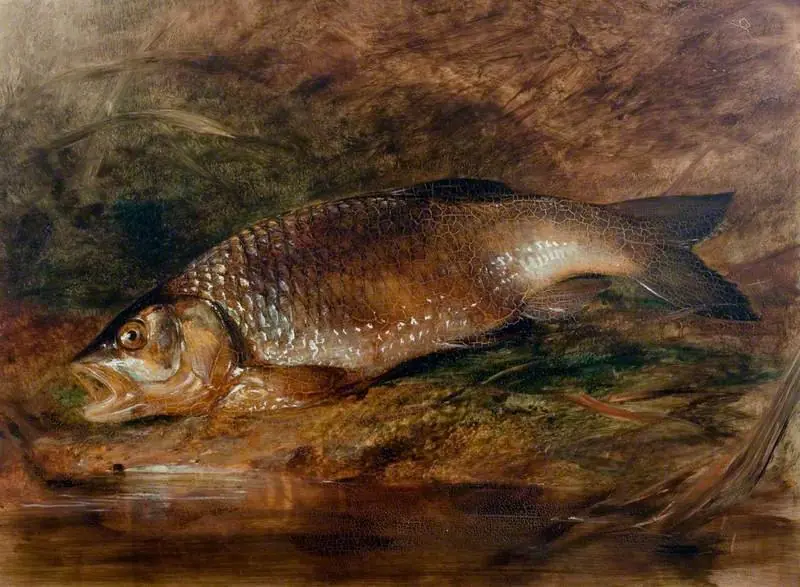
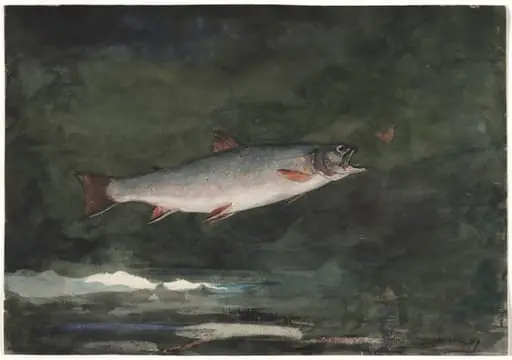
A Pike Pursuing Small Fish is a watercolor work on paper by the Impressionist artist Charles Maurice Detmold. It dates from 1902 and is held in the collection of the Victoria and Albert Museum. A watercolour from 1902 depicts a pike in motion, lunging after three smaller fish.
About this work
Overview
The artist signed and dated the work, adding an inscribed number, suggesting it may have been part of a series or catalogued study.
A watercolour from 1902 depicts a pike in motion, lunging after three smaller fish. The composition is spare, with minimal background detail and a focus on the predatory moment. The artist signed and dated the work, adding an inscribed number, suggesting it may have been part of a series or catalogued study. The medium’s transparency enhances the sense of fluidity, capturing the fish as if seen through shifting water.
Subject & Meaning
The scene captures a moment of natural predation, emphasizing the pike’s aggressive posture and the smaller fish’s frantic escape. Rather than idealizing the hunt, the artist conveys a sense of awkward energy—the pike’s wide fins and open mouth suggest force without grace. The lack of environmental context isolates the action, inviting focus on instinct and movement rather than narrative or symbolism.
Technique & Style
Delicate washes of soft brown and pink define the pike’s body, with subtle gradations suggesting scale and texture. The smaller fish are rendered with minimal detail, using darker, flat tones to contrast the predator’s complexity. Faint, fluid lines imply water movement, while the untouched white paper serves as both space and light. The style balances observation with expressive simplification, avoiding realism in favor of dynamic suggestion.
History & Provenance
The work is signed, dated, and numbered, indicating the artist’s intention to document or classify it. Though its early ownership is unrecorded, its precise markings suggest it was not a casual sketch but a deliberate study. No public exhibition history is documented, and it remains within private or institutional collections, likely acquired soon after its creation.
Context
Created in the early 20th century, the piece aligns with a period when naturalist watercolours were valued for scientific and aesthetic precision. Artists like Charles Maurice Detmold similarly explored aquatic life with restrained detail and atmospheric effects. This work reflects a broader interest in capturing fleeting natural moments, not as grand narratives but as quiet, observed phenomena.
Legacy
Though not widely exhibited, the watercolour stands as an example of early 20th-century naturalist illustration in watercolour. Its focus on motion, economy of form, and emotional tone influenced later artists interested in aquatic subjects. It remains a quiet testament to the artist’s ability to convey tension and life with minimal means, appreciated more for its sensitivity than its scale.
Artist & collection

Artist
Edward Julius Detmold and his twin brother Charles Maurice Detmold (1883–1908) were prolific Victorian and early twentieth-century etchers, painters, and book illustrators.