Artwork
The Big Fish Eat the Little Fish
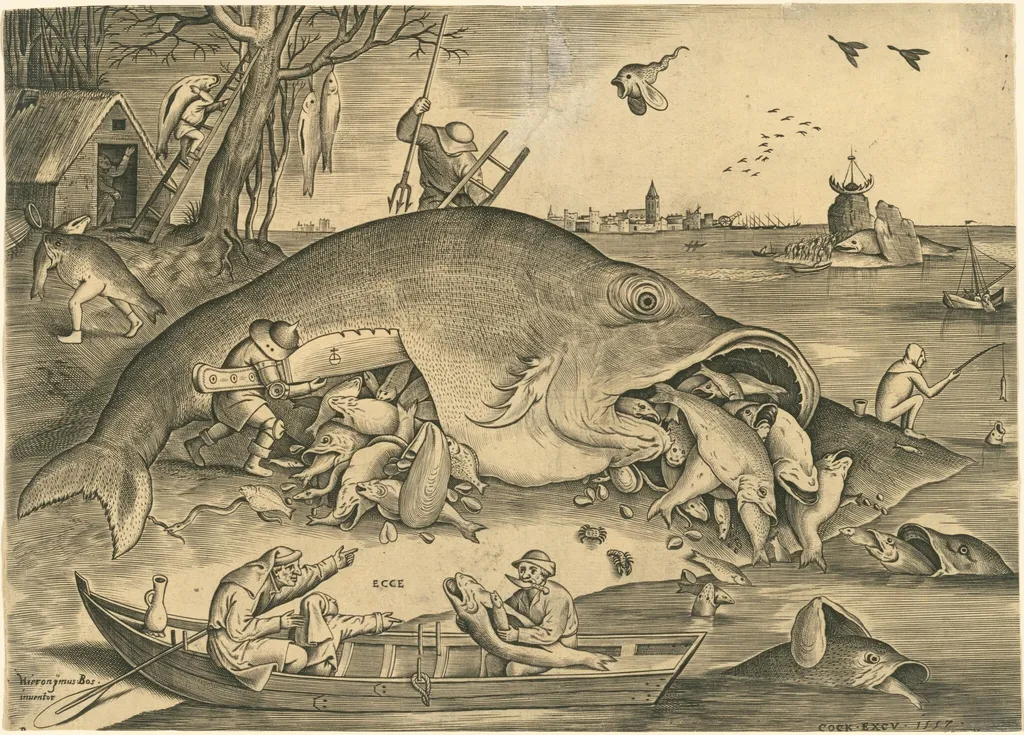
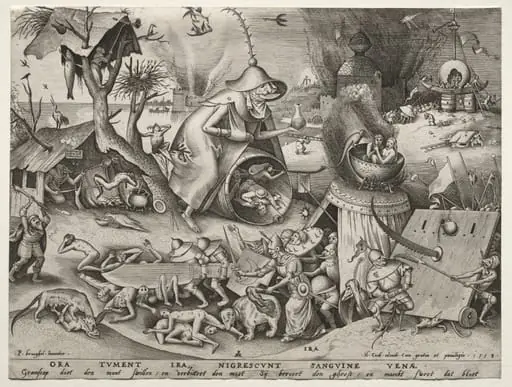
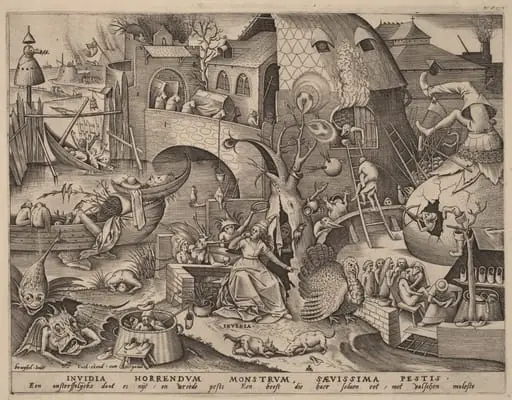
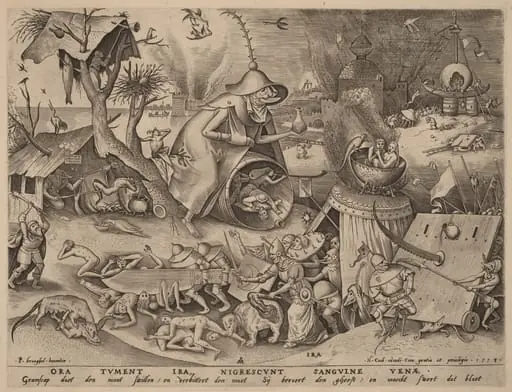
The Big Fish Eat the Little Fish is an ink print by the Renaissance artist Pieter van der Heyden. It dates from 1557 and is held in the collection of the National Gallery of Art.
About this work
Overview
Pieter van der Heyden, a Flemish engraver active in the mid‑1500s, produced the print *The Big Fish Eat the Little Fish* in 1557. Executed as an engraving, the work exemplifies the reproductive print tradition in which van der Heyden rendered designs supplied by leading artists of his region.
Subject & Meaning
The image presents a colossal fish that engulfs ships, structures, and human figures, while a crowded sea teems with smaller fish caught in nets or drifting helplessly. A lone man on a hill, spear in hand, watches the chaos as birds wheel above and distant vessels sink, suggesting a moral commentary on the vulnerability of humanity to overwhelming forces.
Technique & Style
Created through copper engraving, the composition relies on fine incised lines to render intricate textures—from the scales of the massive fish to the delicate architecture of the swallowed buildings. Van der Heyden’s dense hatching builds dramatic contrast, while the crowded tableau reflects the Renaissance fascination with complex, allegorical scenes rendered with meticulous detail.
History & Provenance
The print belongs to a series of reproductive works for which van der Heyden was known, translating the designs of prominent Flemish artists into widely circulated prints. Its 1557 date places it within the height of the Northern Renaissance print market, where such images were disseminated among collectors and scholars across Europe.
Context
By juxtaposing everyday life with fantastical catastrophe, the work reflects contemporary concerns about the fragility of social order.
The grotesque tableau aligns with 16th‑century moralizing motifs that warned of hubris and the perils of excess. By juxtaposing everyday life with fantastical catastrophe, the work reflects contemporary concerns about the fragility of social order. Though not as frequently cited as other prints of the period, it remains a vivid example of Flemish engraving’s capacity for narrative density and allegorical depth.
Artist & collection

Artist
Pieter van der Heyden (c. 1530 - after March 1572) was a Flemish printmaker who is known for his reproductive engravings after works by leading Flemish painters and designers of the 16th century.