Artwork
Lithographic Workshop
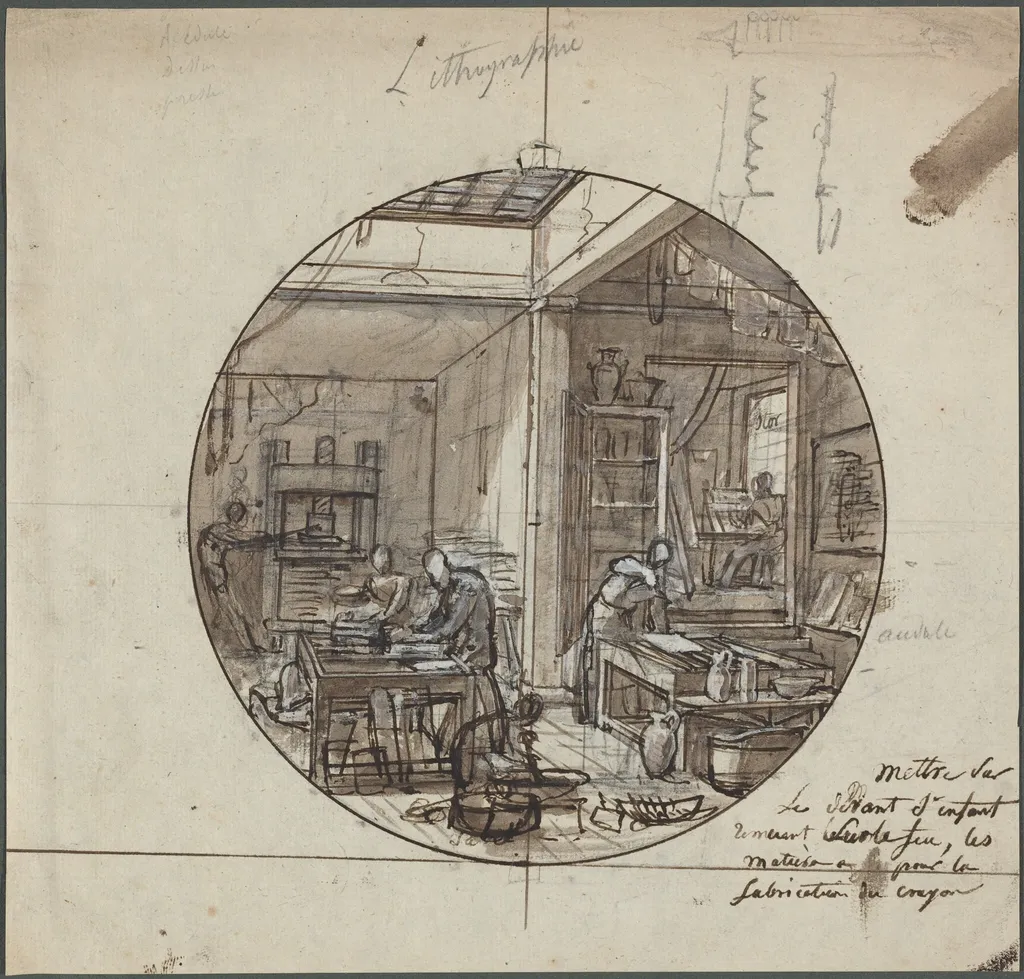
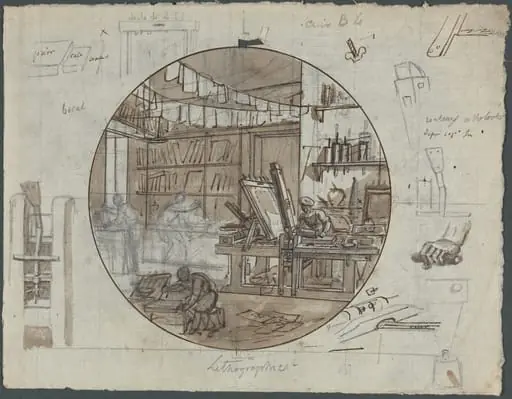
Lithographic Workshop is an ink drawing by the Romanticist artist Jean Charles Develly. It dates from 1828 and is held in the collection of the National Gallery of Art.
About this work
Overview
Created around 1828, this drawing by Jean Charles Develly depicts an interior scene of a lithographic printing workshop. Executed in pen and brown ink with graphite and brown wash, it is heightened with white pigment on laid paper. The work captures the technical environment of early 19th-century printmaking, emphasizing the physical labor and spatial arrangement of the process.
Subject & Meaning
The scene portrays workers engaged in the manual tasks of lithography—inking stones, pressing paper, and handling equipment. No single figure dominates; instead, the composition conveys collective labor. The absence of idealization suggests a documentary intent, valuing the workshop as a site of skilled craft rather than artistic spectacle.
Technique & Style
Develly employed layered washes to model form and depth, while pen lines define structural details like tools and machinery. Graphite underdrawing guides the composition, and selective white highlights accentuate light reflecting off metal or paper. The restrained palette and precise handling reflect a topographical approach, prioritizing clarity over expressive flourish.
History & Provenance
The drawing originates from Develly’s direct observation of lithographic studios in Paris during the 1820s, a period when the medium was rapidly expanding. Its survival suggests it may have served as a study or record for the artist or his circle. No documented early ownership is known, but it entered institutional collections in the 20th century.
Context
Lithography emerged in the late 18th century as a commercial and artistic printing method, gaining traction in France by the 1820s. Develly’s drawing aligns with a growing interest in documenting industrial and artisanal processes. Unlike romanticized depictions of studios, this work presents an unembellished view of labor, mirroring contemporary shifts in visual culture toward realism.
Legacy
The drawing stands as a rare visual record of early lithographic practice, offering insight into the material conditions of print production before mechanization. It contributes to the historical understanding of how artists and craftsmen interacted with emerging technologies, preserving a moment when manual skill defined the limits and possibilities of image-making.
Artist & collection

 Two blacksmiths beneath a parasol
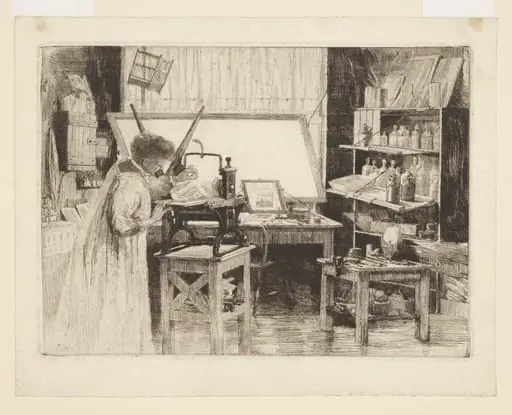 An Artist Working at her Press
 Sketches of a figure writing at a pedestal table, and a figure lighting a pipe
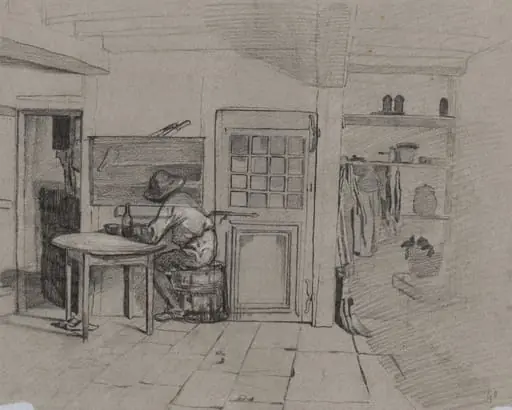 A Farmhouse Interior with a Boy at a Table
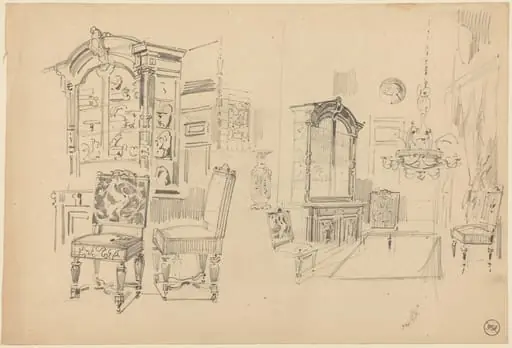 Two Studies of an Interior with Furniture
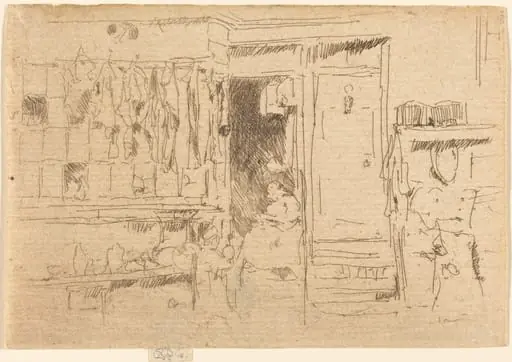 Old-Clothes Shop, No.I
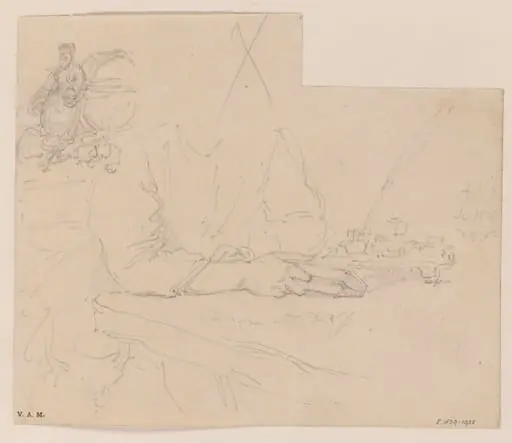 A Western woman seated at a table
 A Chinese blacksmith at his forge
 A figure seated beside a portrait, and other sketches
 Wilhelm von Wright höyläpenkin ääressä, piirustus "Mariebergin verstas" -maalausta varten
 A Chinese blacksmith at work
 Lithographic Workshop