Artwork
Tyttö amoriineineen
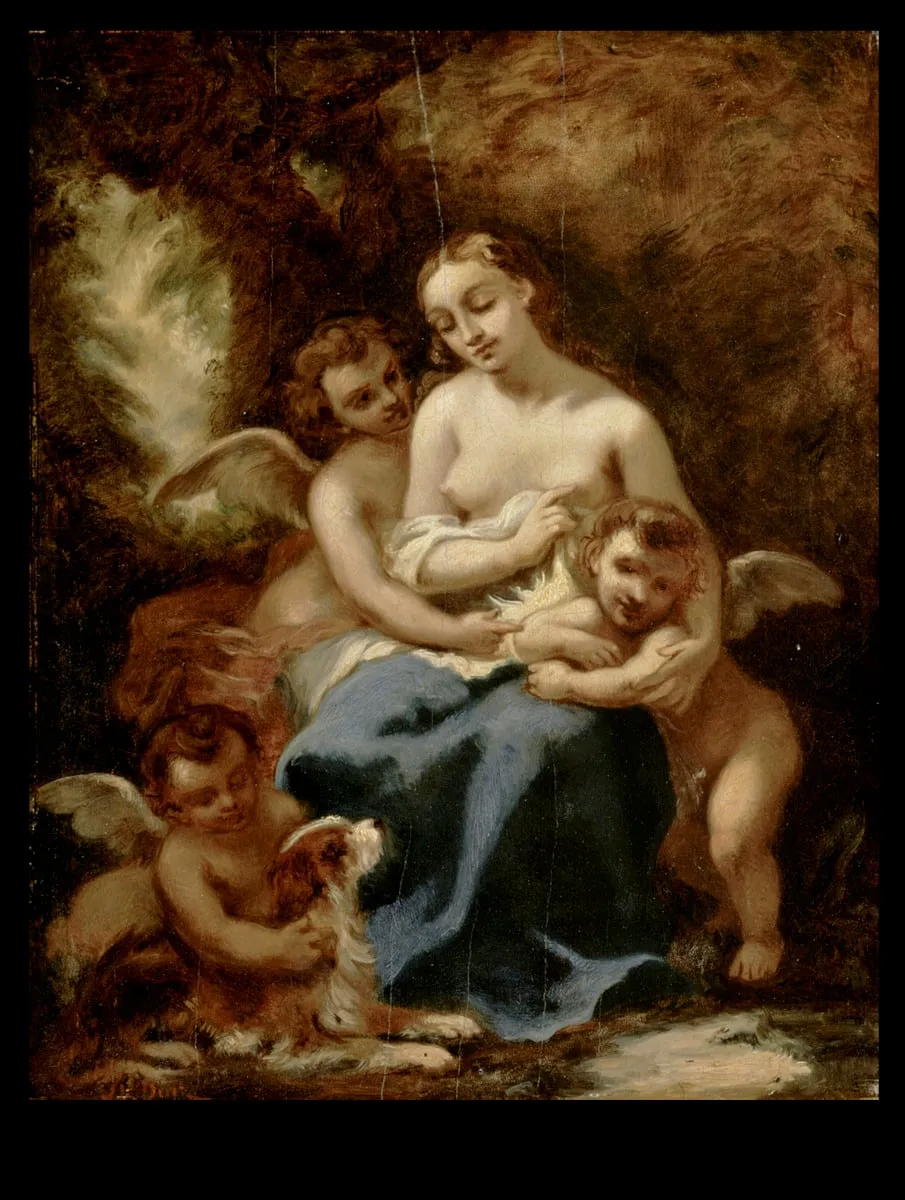
Tyttö amoriineineen is an unspecified painting by Narcisse Virgile Diaz de la Peña. It is held in the collection of the Finnish National Gallery. The work depicts a young woman seated amid three cherubic figures.
About this work
Overview
The work depicts a young woman seated amid three cherubic figures. She is shown with closed eyes, dressed in a blue skirt, and holding a white cloth, while the putti engage playfully around her—one perched on her lap and two positioned on the ground. The composition is set against a dark, shadowy backdrop that hints at foliage or trees, creating depth.
Subject & Meaning
The central figure appears to embody a tranquil, perhaps contemplative state, suggested by her closed eyes and gentle posture. The surrounding putti, traditional symbols of innocence and divine presence, reinforce a serene, almost reverent atmosphere, inviting viewers to sense a quiet, harmonious interaction between the mortal and the celestial.
Technique & Style
Rendered in a classical manner, the painting employs smooth, flowing lines and soft curves to model both the woman and the cherubs. The chiaroscuro of a dark background contrasted with lighter areas suggests an early‑Baroque or Rococo sensibility, emphasizing three‑dimensional form and a calm, balanced composition.
Context
The inclusion of putti and the serene, idealized figure aligns the piece with European traditions that favored allegorical and mythological subjects. Such imagery was common in decorative panels and private devotional works, reflecting a taste for graceful, intimate scenes during the period.
Artist & collection
Artist
Narcisse Virgile Diaz de la Peña
Narcisse Virgile Diaz de la Peña painted lush forest scenes and mythological figures with a loose, glowing touch.



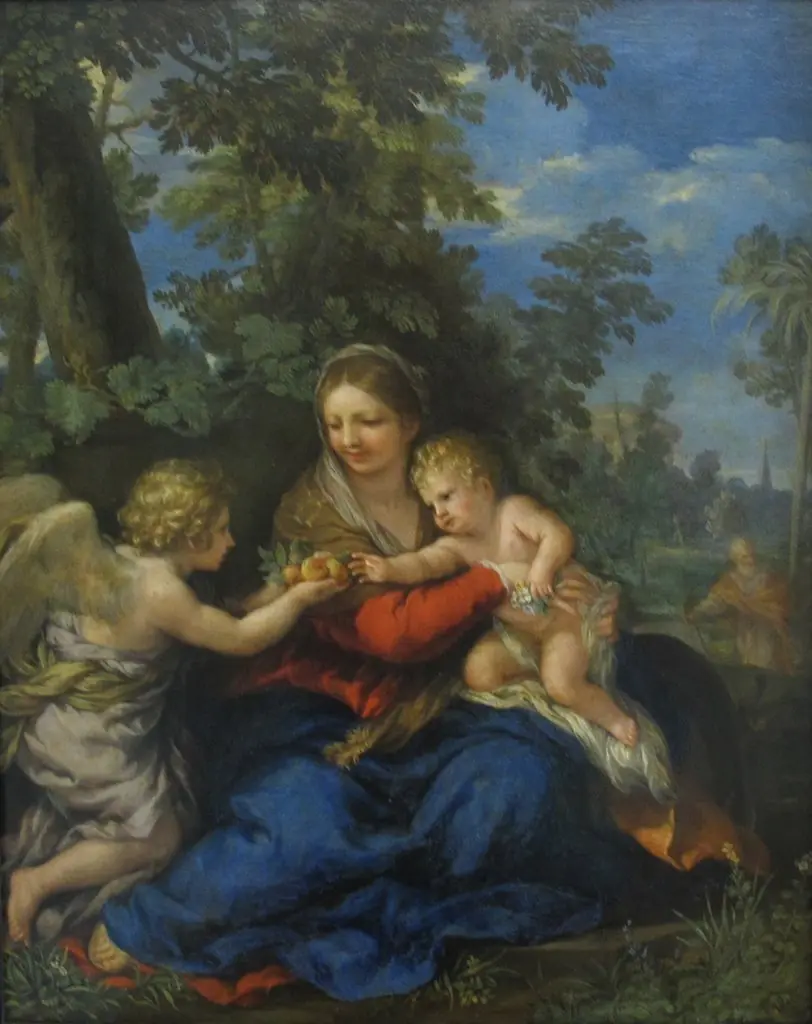 Holy Family Resting on the Flight to Egypt
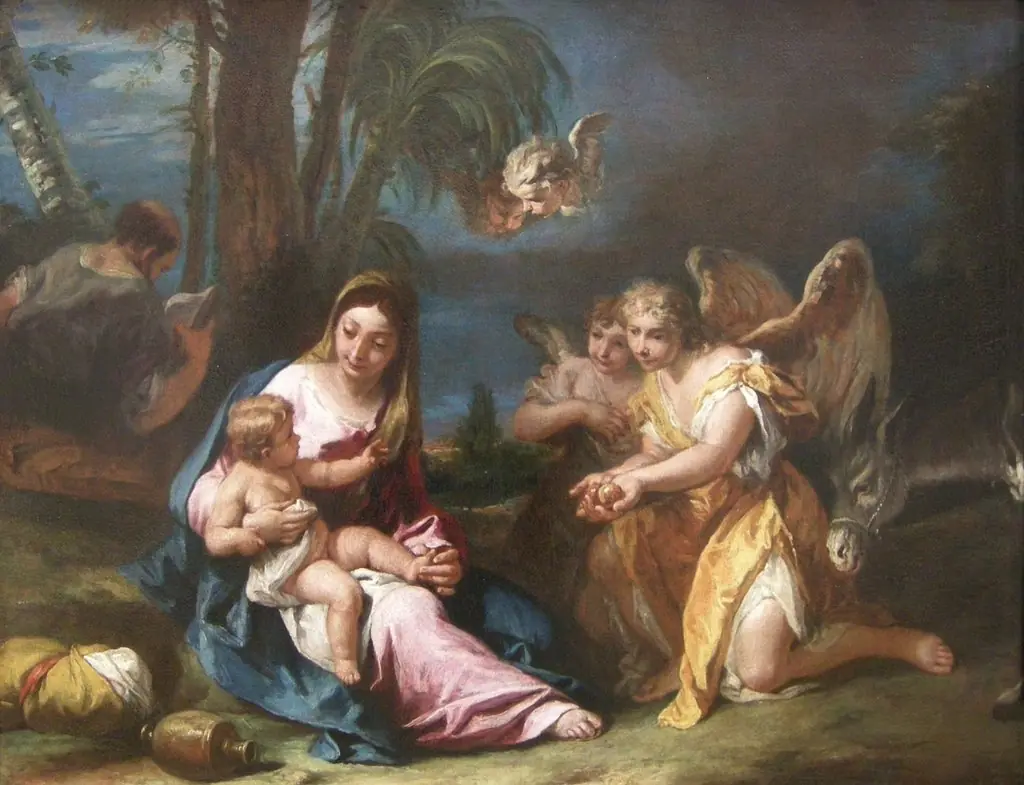 The Rest on The Flight into Egypt
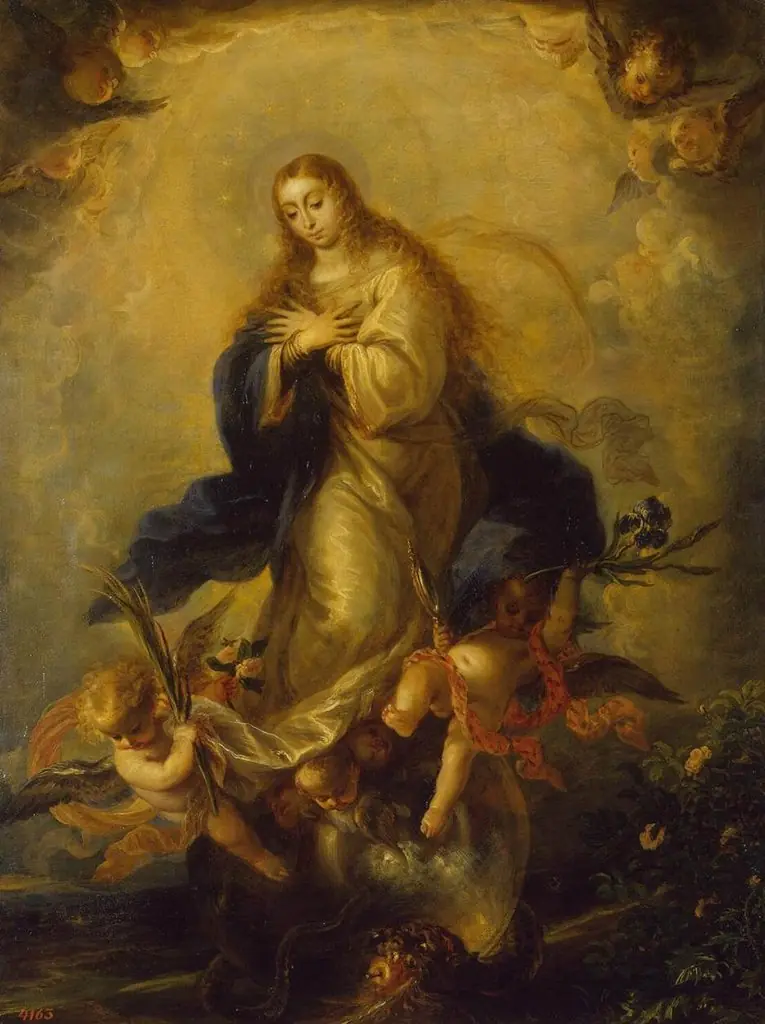 Immaculate Conception
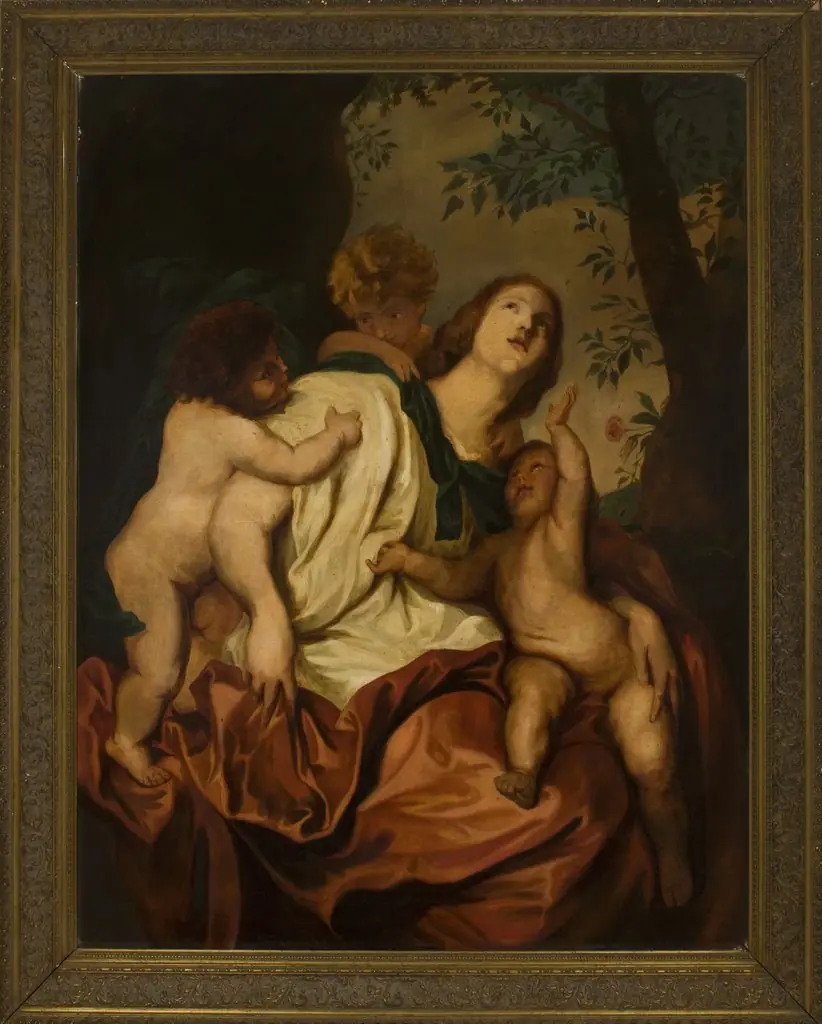 Allegory of Caritas – Copy
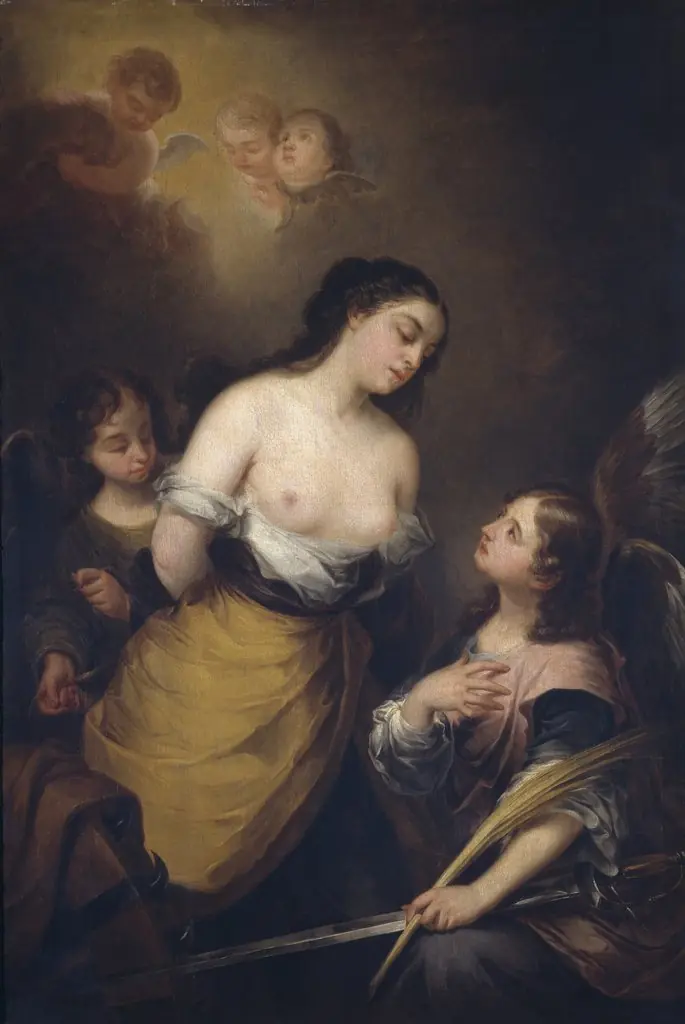 Santa Catalina
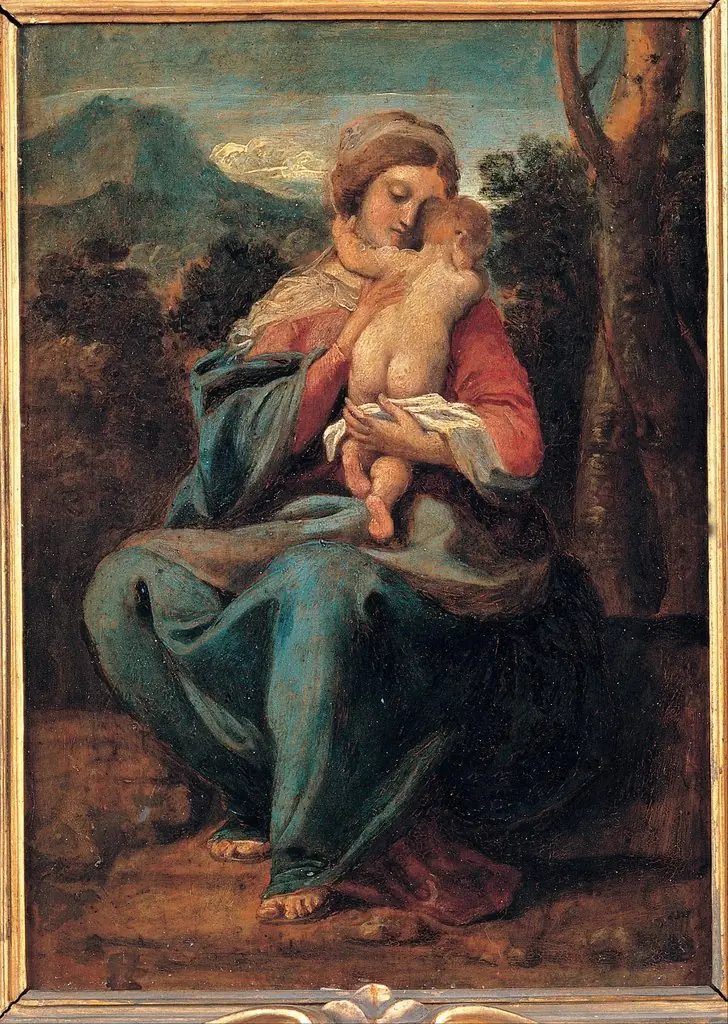 Madonna with the Child
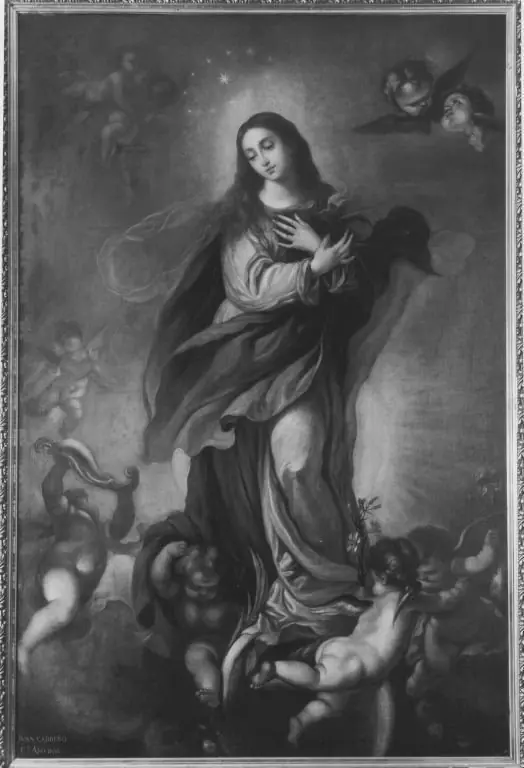 Maria, die unbefleckt Empfangene (und Werkstatt)
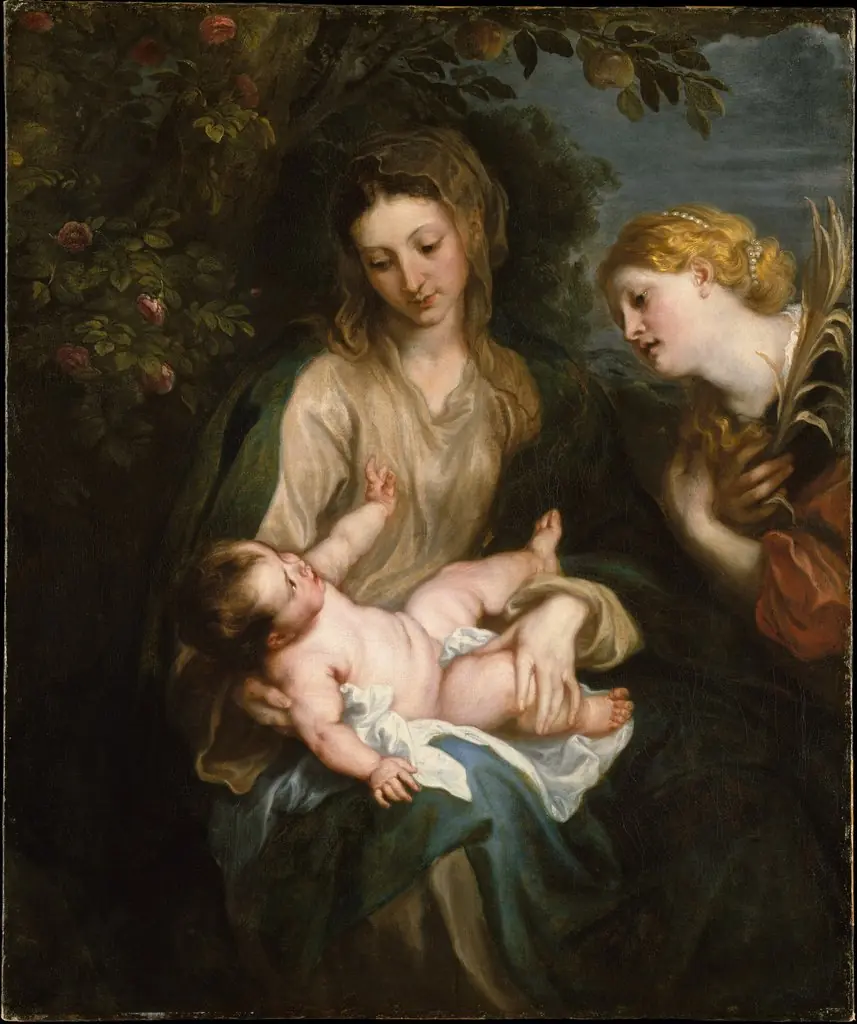 Virgin and Child with Saint Catherine of Alexandria
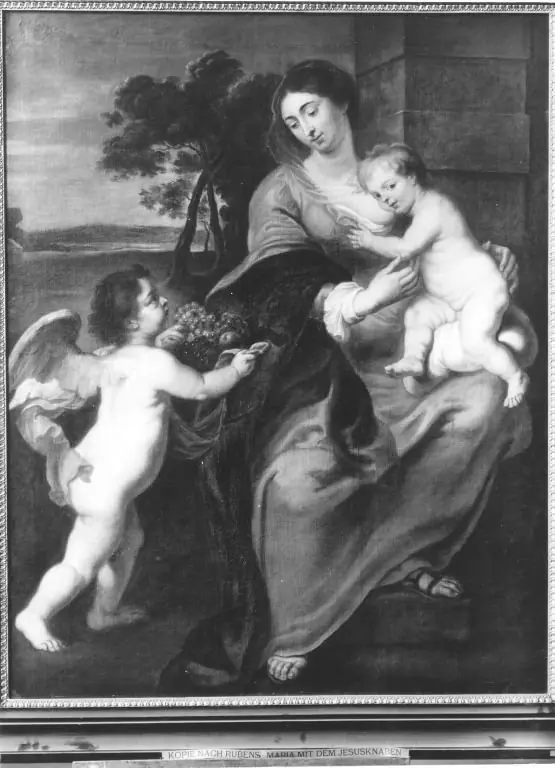 Maria mit Christuskind und einem Engel (Nachfolger)
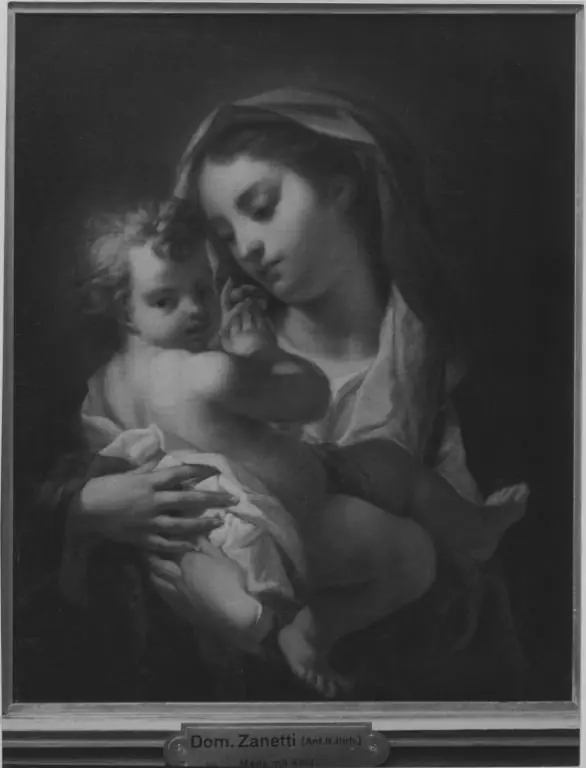 Madonna and Child
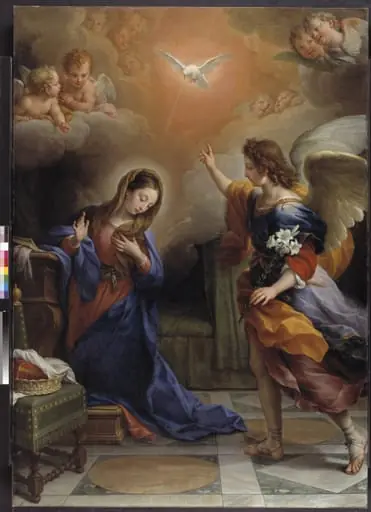 The Annunciation
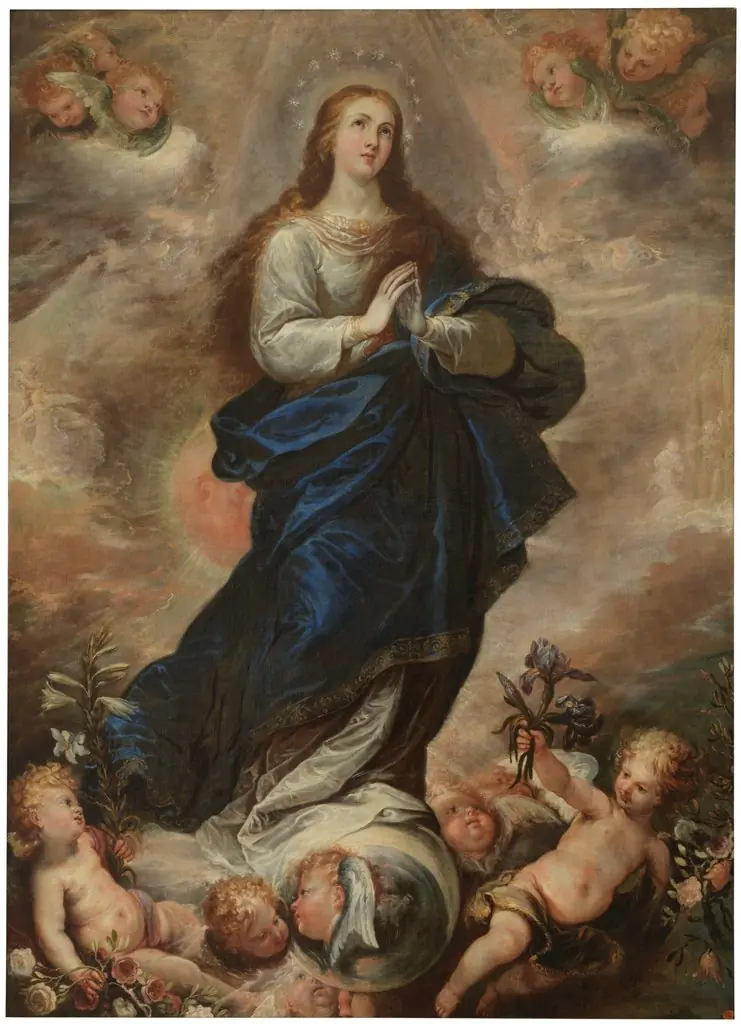 La Purísima Concepción