Artwork
Untitled
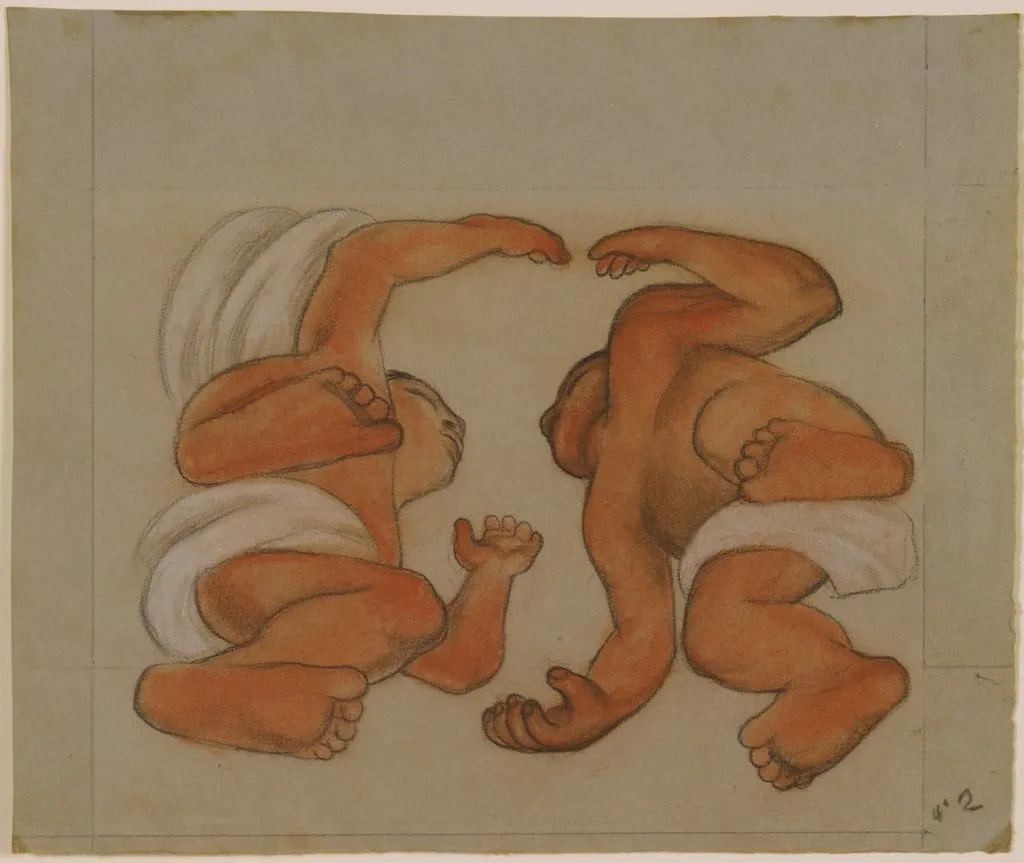
Untitled is a graphite drawing by Diego Rivera. It dates from 1925 and is held in the collection of the Museum of Modern Art.
About this work
Overview
Created around 1925, this drawing by Diego Rivera is executed in chalk, wash, and pencil on gray paper.
Created around 1925, this drawing by Diego Rivera is executed in chalk, wash, and pencil on gray paper. It is part of the collection at The Museum of Modern Art. The work is a quiet, intimate study of two infants, rendered with restrained lines and minimal detail. Its modest scale and monochromatic palette emphasize form and gesture over narrative, reflecting Rivera’s interest in human presence during a period of artistic experimentation.
Subject & Meaning
The drawing portrays two infants lying on their backs, facing one another, their hands gently touching. Both wear simple white diapers; one curls slightly, the other lies extended. The composition suggests a moment of quiet connection, free from context or symbolism. Rivera avoids sentimentality, presenting the figures with clinical clarity. The interaction feels innate, not staged—offering a glimpse into early human vulnerability and physicality.
Technique & Style
Rivera uses bold, fluid lines to define the infants’ forms, with subtle washes adding soft volume without heavy shading. The gray paper serves as a neutral midtone, allowing chalk highlights and pencil contours to define shape with economy. The style is reductive yet expressive, prioritizing gesture over detail. This approach aligns with Rivera’s broader interest in simplifying the human figure to reveal essential structure and movement.
History & Provenance
The drawing dates to a period when Rivera was refining his visual language after returning from Europe, where he encountered modernist trends. It entered The Museum of Modern Art’s collection in the mid-20th century, likely through acquisition or donation tied to Rivera’s growing recognition in the United States. Its preservation as a drawing rather than a mural reflects the artist’s engagement with intimate, preparatory work alongside large-scale public commissions.
Context
In the mid-1920s, Rivera was developing his distinctive style, blending Mexican folk motifs with European modernism. While best known for murals, he produced numerous drawings exploring the human form in private settings. This piece aligns with his interest in universal human experiences—birth, infancy, bodily presence—detached from political or national themes, revealing a quieter facet of his practice during a transformative phase.
Legacy
Though less known than Rivera’s murals, this drawing exemplifies his ability to convey emotional resonance through minimal means. It contributes to understanding his broader artistic concerns: the dignity of the body, the economy of line, and the quiet power of everyday subjects. The work remains a reference point for studies of modernist draftsmanship and the human figure in 20th-century Mexican art.
Artist & collection

Artist
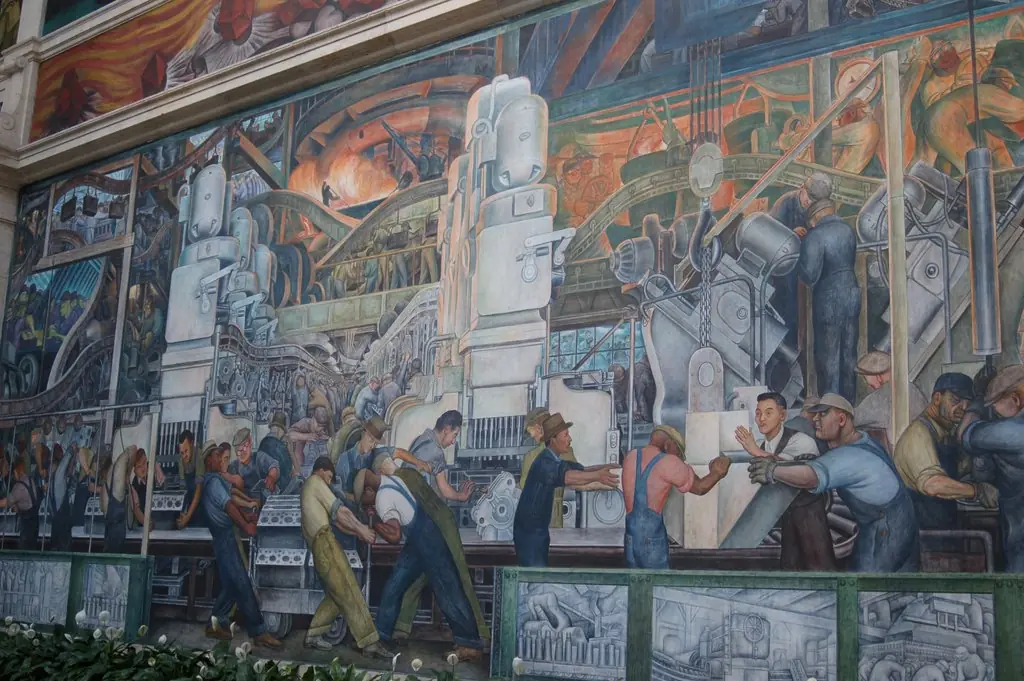
Diego María de la Concepción Juan Nepomuceno Estanislao de la Rivera y Barrientos Acosta y Rodríguez was a Mexican painter. His large frescoes helped establish the mural movement in Mexican and international art.

![Study for Aita tamari vahine Judith te parari [verso], by Paul Gauguin](https://artifactworldgallery.com/img/paul-gauguin--study-for-aita-tamari-vahine-judith-te-parari-verso--fe81da9ac820dff5-w320.webp)