Artwork
The Lunch
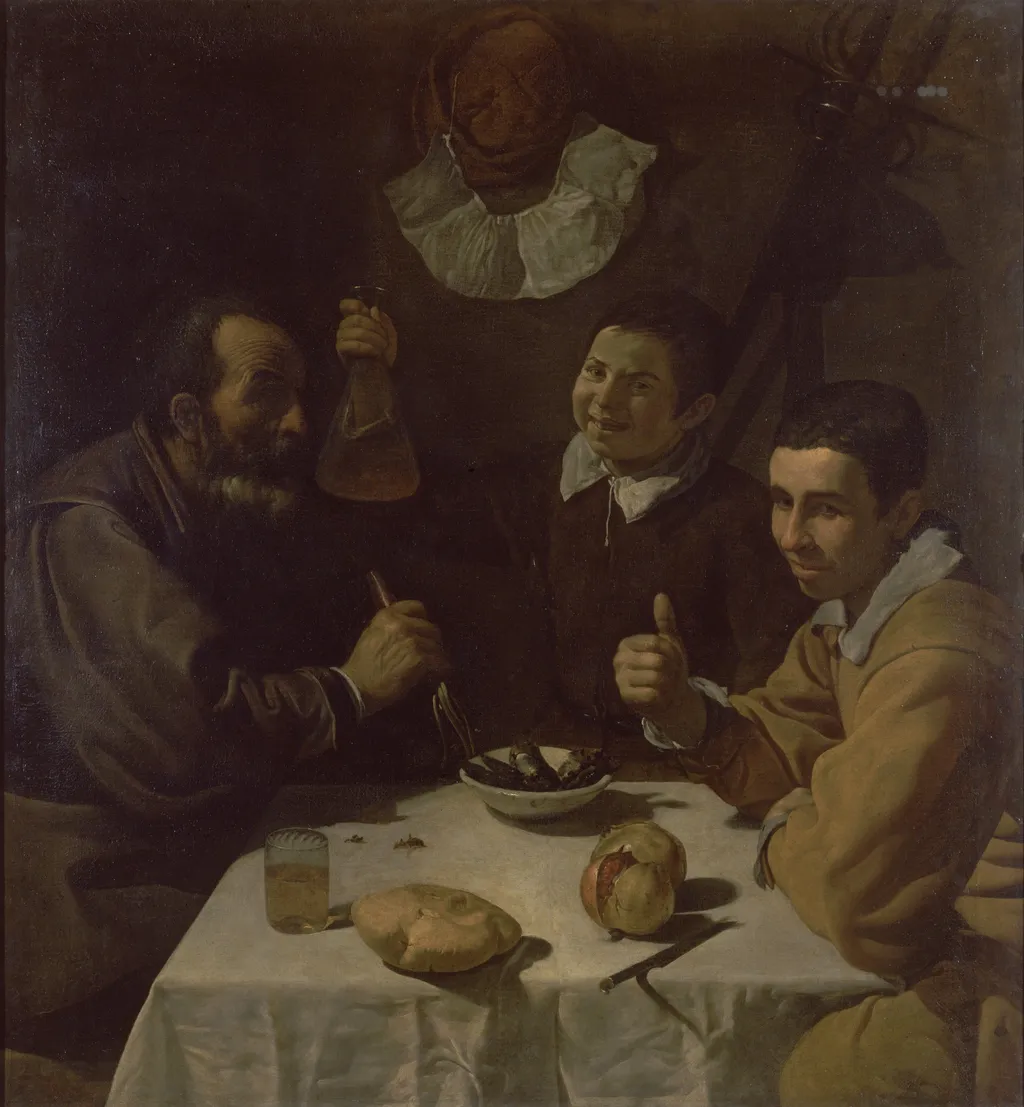
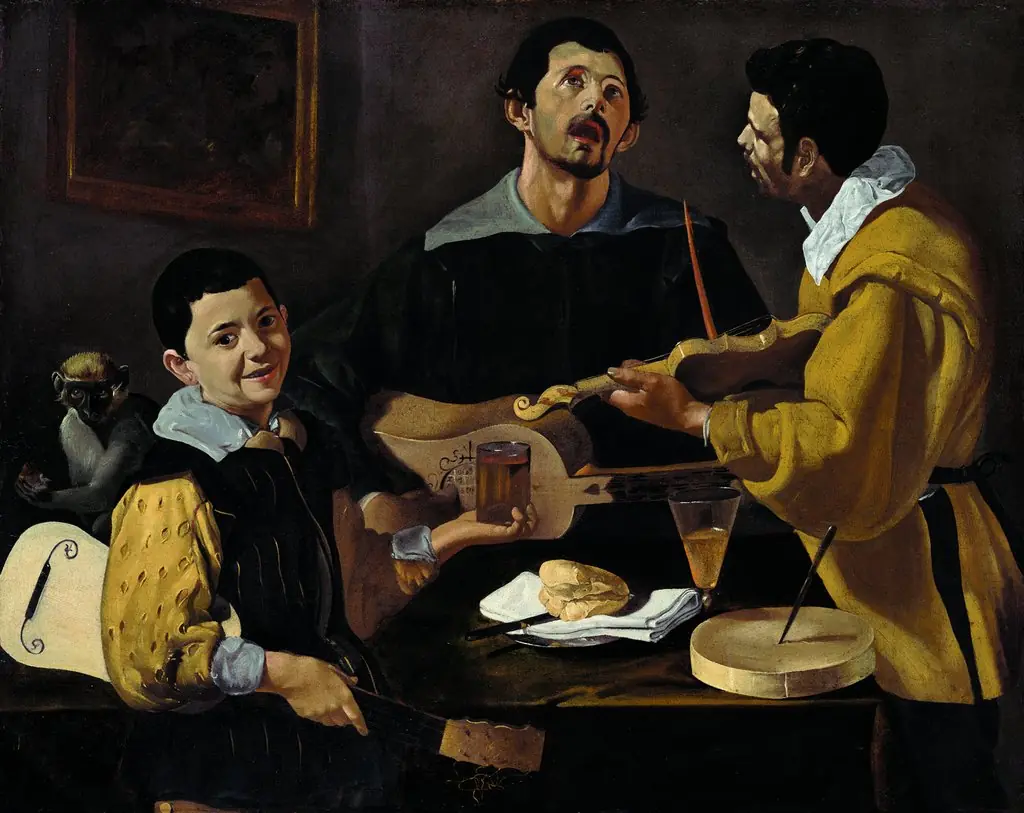
The Lunch is an oil painting by the Early Baroque Italian artist Diego Velázquez. It dates from 1617 and is held in the collection of the Hermitage Museum.
About this work
Overview
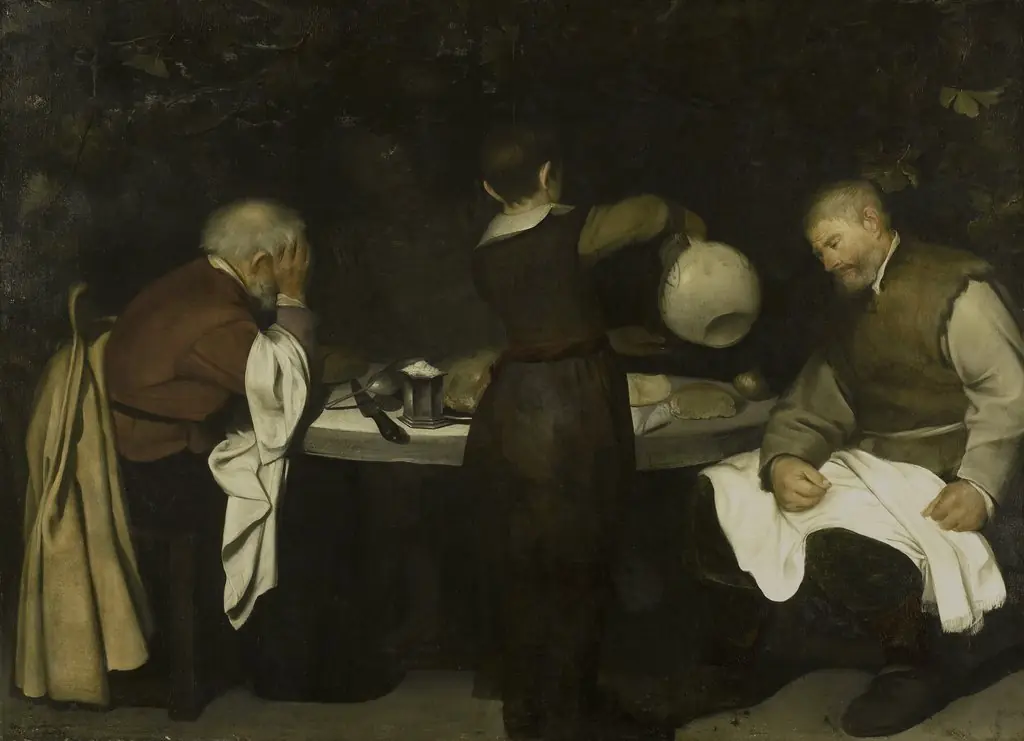
Completed around 1617, this early oil on canvas by Diego Velázquez is part of the Hermitage Museum’s collection in Saint Petersburg. The composition depicts a modest interior scene centered on a table draped with a rumpled cloth, upon which lie two pomegranates and a loaf of bread, while figures engage in a quiet meal.
Subject & Meaning
Three figures dominate the foreground: an elderly man on the left, a younger man on the right who appears to make a thumb gesture, and a boy in the background pouring wine into a jug. A woman, identified by her white collar, is also present, suggesting a domestic gathering that blends everyday activity with subtle social cues.
Technique & Style
Velázquez employs chiaroscuro to model forms, allowing a soft light from the left to illuminate the faces and textures while the surrounding space recedes into shadow. The rendering of fabrics, the sheen of the pomegranates, and the tactile quality of the bread demonstrate his early attention to material detail and spatial depth.
History & Provenance
The work entered the Hermitage Museum’s holdings in the 18th century and has remained there since. In 2019 it was temporarily re‑titled “The Breakfast” for the H’ART Museum’s “De Schatkamer!” exhibition in Amsterdam, where it was displayed from early February to late August.
Context
The painting closely mirrors Velázquez’s later work, The Farmers’ Lunch (1618), indicating a recurring interest in genre scenes of rural or domestic life. Such compositions reflect the early Baroque Spanish tradition of portraying ordinary subjects with dignity, a practice that would inform the artist’s subsequent court paintings.
Own this work as a print
Artist & collection
Artist
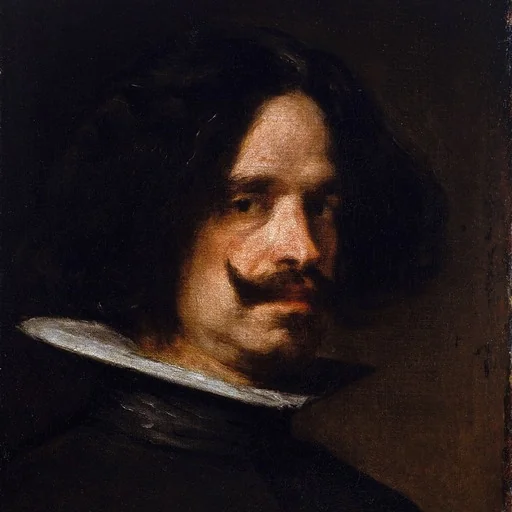
Diego Rodríguez de Silva y Velázquez was a Spanish Baroque painter, the leading artist in the court of King Philip IV of Spain and Portugal, and of the Spanish Golden Age.