Artwork
Untitled
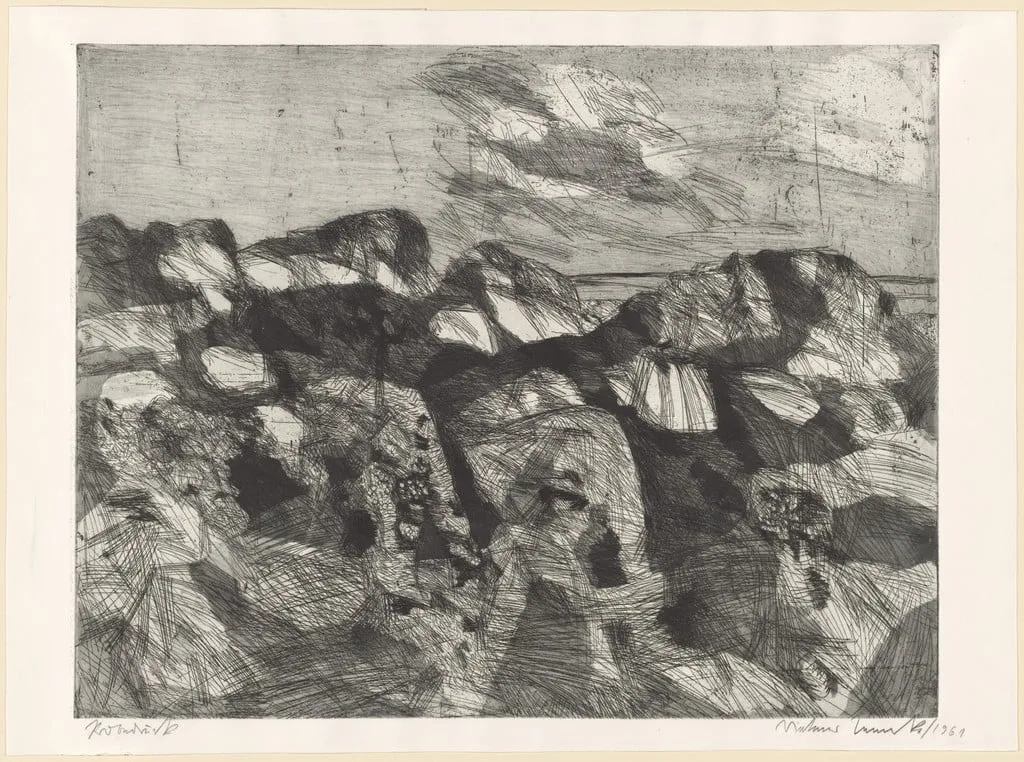
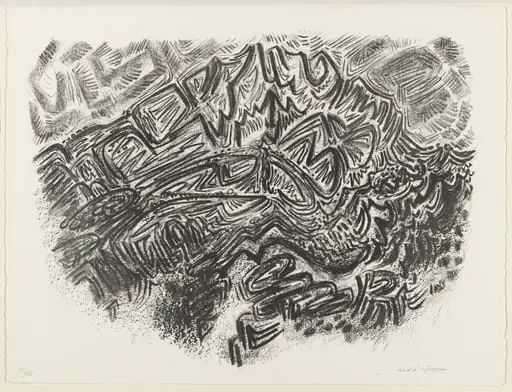
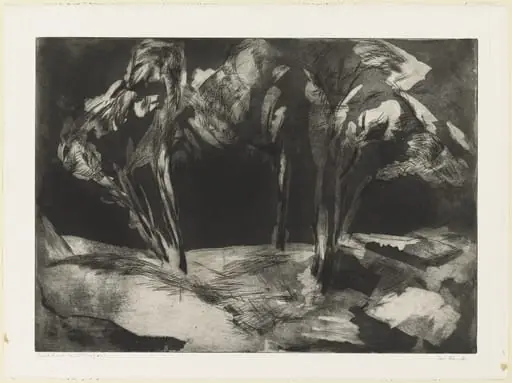
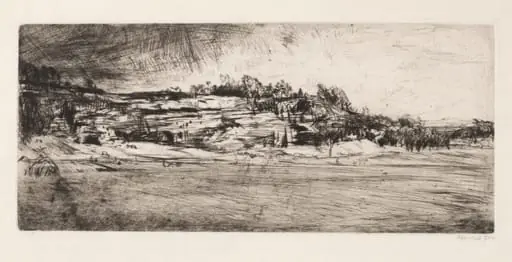
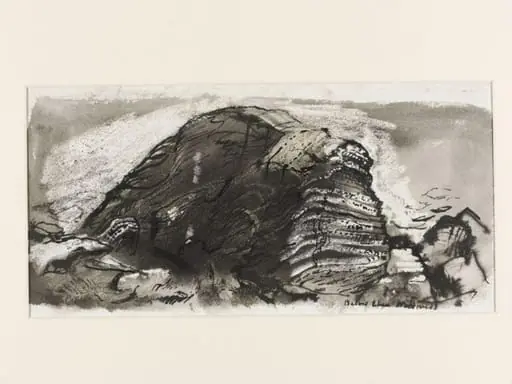
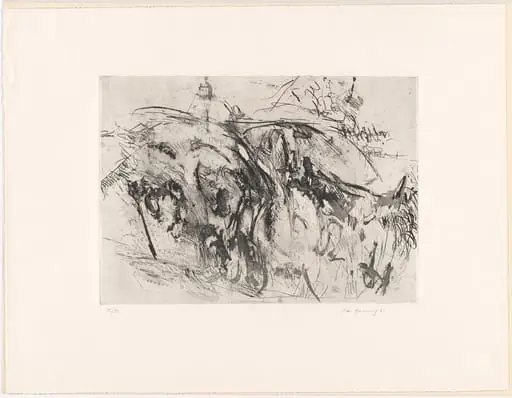
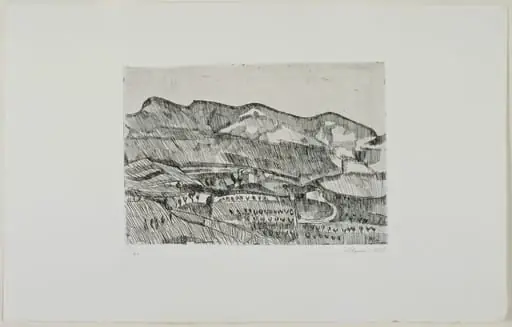
Untitled is an ink print by Dietmar Lemke. It dates from 1961 and is held in the collection of the Museum of Modern Art.
About this work
Overview
Created in 1961, this etching by Dietmar Lemke is a monochromatic print held in the collection of The Museum of Modern Art. It presents a landscape defined not by realistic detail but by a dense network of incised lines. The work exemplifies the artist’s engagement with abstracted natural forms through the traditional printmaking method of etching, emphasizing texture over representation.
Subject & Meaning
The composition suggests a terrain of hills or rocky outcrops, but the forms resist clear identification. Rather than depicting a specific place, the work evokes a sense of geological tension through fragmented, agitated lines. The absence of horizon or scale invites contemplation of the land as a psychological or emotional space, shaped by the artist’s hand rather than observed reality.
Technique & Style
Lemke employed etching to carve directly into a metal plate, using acid to bite lines into the surface. The resulting print captures the raw, irregular quality of the tool’s movement—lines overlap, vary in depth, and create areas of dense black and faint gray. The texture is tactile and uneven, reflecting the physical act of drawing through corrosion, not ink application.
History & Provenance
The work entered The Museum of Modern Art’s collection shortly after its creation, reflecting the institution’s interest in postwar European printmaking. While little is documented about its early exhibition history, its acquisition aligns with MoMA’s broader efforts to include abstract and experimental prints from the 1950s and 1960s.
Context
Made during a period of renewed interest in printmaking across Europe, Lemke’s etching responds to broader artistic trends that favored process and materiality over narrative. Artists were exploring how the physical act of making—scratching, biting, pressing—could convey inner states. This work sits within that shift, prioritizing gesture and texture over traditional landscape conventions.
Legacy
Though not widely reproduced, the etching remains a quiet example of Lemke’s contribution to postwar German print culture. Its inclusion in MoMA’s collection underscores its significance as a study in the expressive potential of etching’s limitations—where roughness becomes meaning, and absence becomes presence.
Artist & collection