Artwork
Untitled
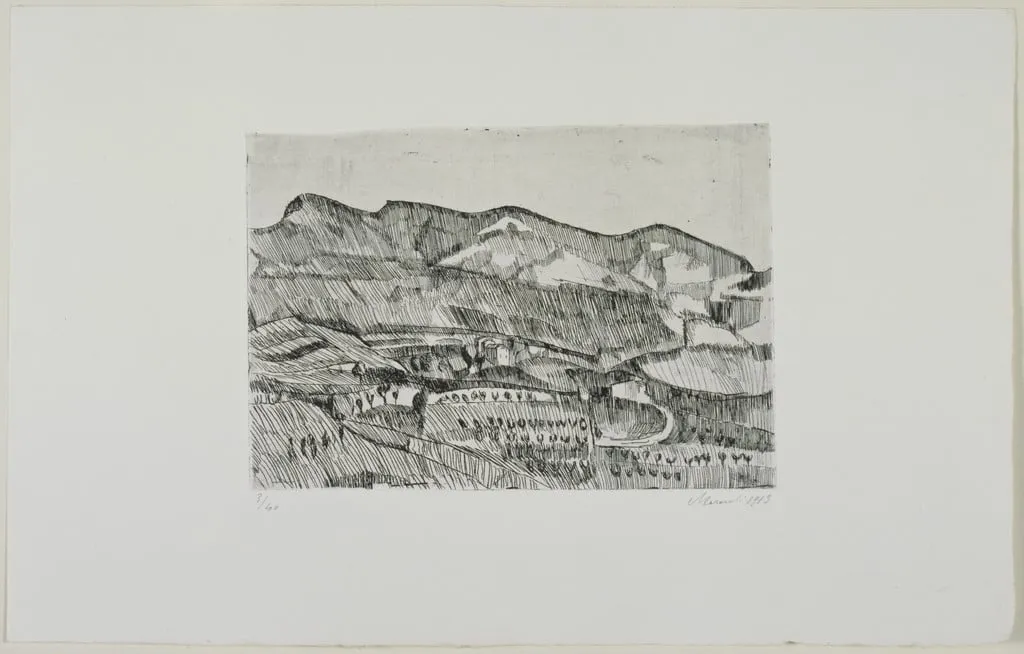
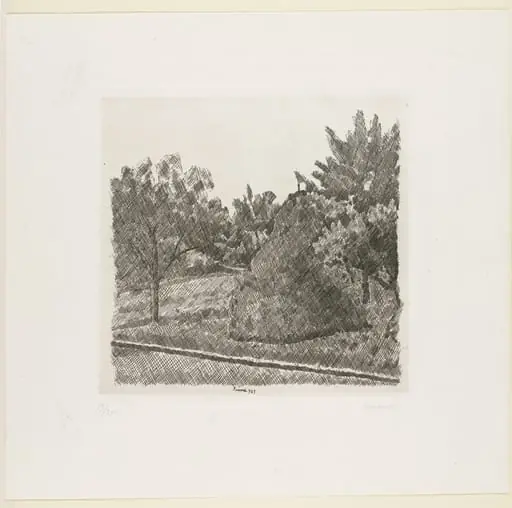
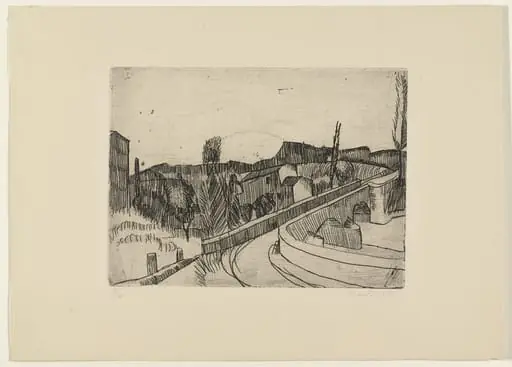
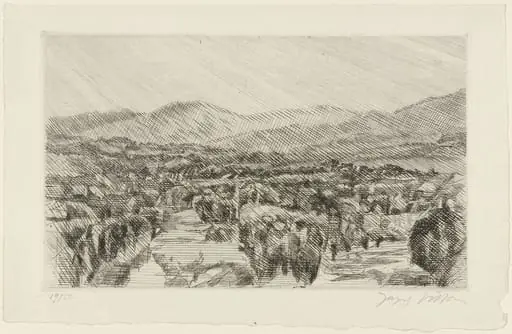
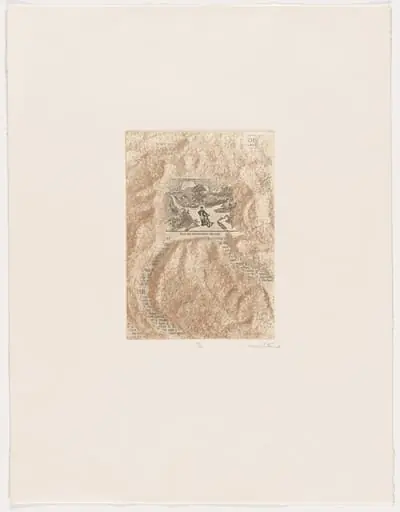
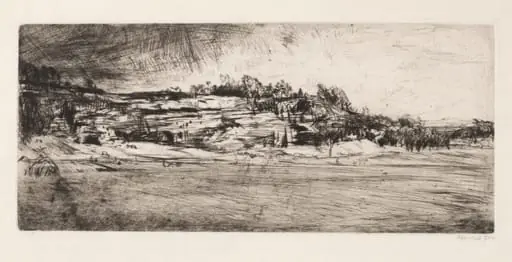
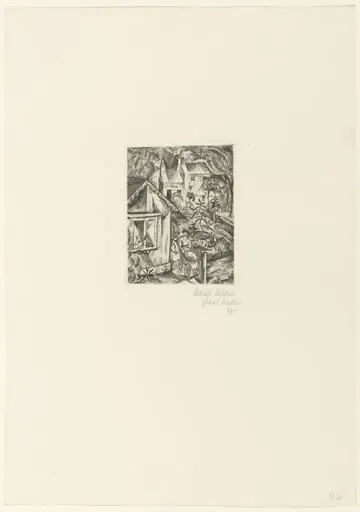
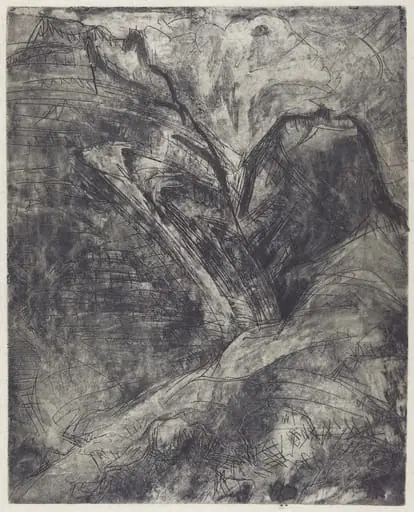
Untitled is an ink print by Giorgio Morandi. It dates from 1913 and is held in the collection of the Museum of Modern Art.
About this work
Overview
Giorgio Morandi produced this etching in 1913, early in his career, as part of his exploration of landscape through printmaking.
Giorgio Morandi produced this etching in 1913, early in his career, as part of his exploration of landscape through printmaking. Unlike his later still lifes, this work depicts a rural scene with rolling fields and distant mountains. Rendered in monochrome, it reflects his interest in quiet, understated forms and the subtle modulation of tone. The piece is held in the collection of The Museum of Modern Art.
Subject & Meaning
The composition presents a serene, unnamed countryside, with fields defined by fine, hand-drawn lines and mountains receding into a lighter horizon. There is no human presence or narrative; the focus lies in the arrangement of natural forms and the rhythm of linear marks. The work suggests contemplation of place rather than depiction, aligning with Morandi’s lifelong preoccupation with stillness and spatial harmony.
Technique & Style
Morandi used etching to achieve fine, controlled lines that model the land’s contours with minimal ink density. The contrast between the darker, densely lined fields and the softly graded mountains demonstrates his sensitivity to tonal gradation. The hand-drawn quality of the lines avoids mechanical precision, emphasizing the artist’s direct engagement with the plate and the tactile nature of the medium.
History & Provenance
Created in 1913, this etching belongs to Morandi’s formative period, before he fully developed his signature still-life vocabulary. It was likely made during his time in Bologna, where he studied and began exhibiting. The work entered The Museum of Modern Art’s collection through later acquisitions focused on early 20th-century European printmaking, securing its place in institutional narratives of modernist simplicity.
Context
In 1913, Morandi was influenced by Italian Divisionism and early modernist trends, though he remained distinct in his avoidance of bold expression. This landscape reflects a broader European interest in rural subjects, yet his approach—restrained, meditative, and devoid of sentiment—sets it apart from contemporaneous movements like Futurism or Expressionism.
Legacy
Though less known than his still lifes, this etching reveals the foundations of Morandi’s aesthetic: a devotion to quiet observation, reduction of form, and emotional restraint. It anticipates his lifelong commitment to exploring the same motifs with incremental variation, influencing later generations of artists drawn to minimalism and contemplative composition.
Artist & collection
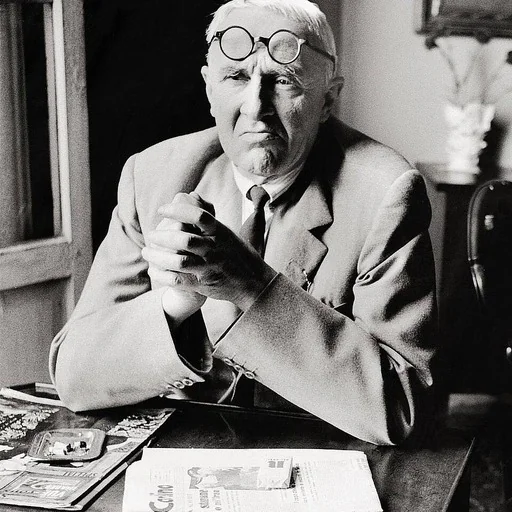
Artist
Giorgio Morandi (July 20, 1890 – June 18, 1964) was an Italian painter and printmaker widely known for his subtly muted still-life paintings of ceramic vessels, flowers, and landscapes.