Artwork
Fete din Țara Oltului
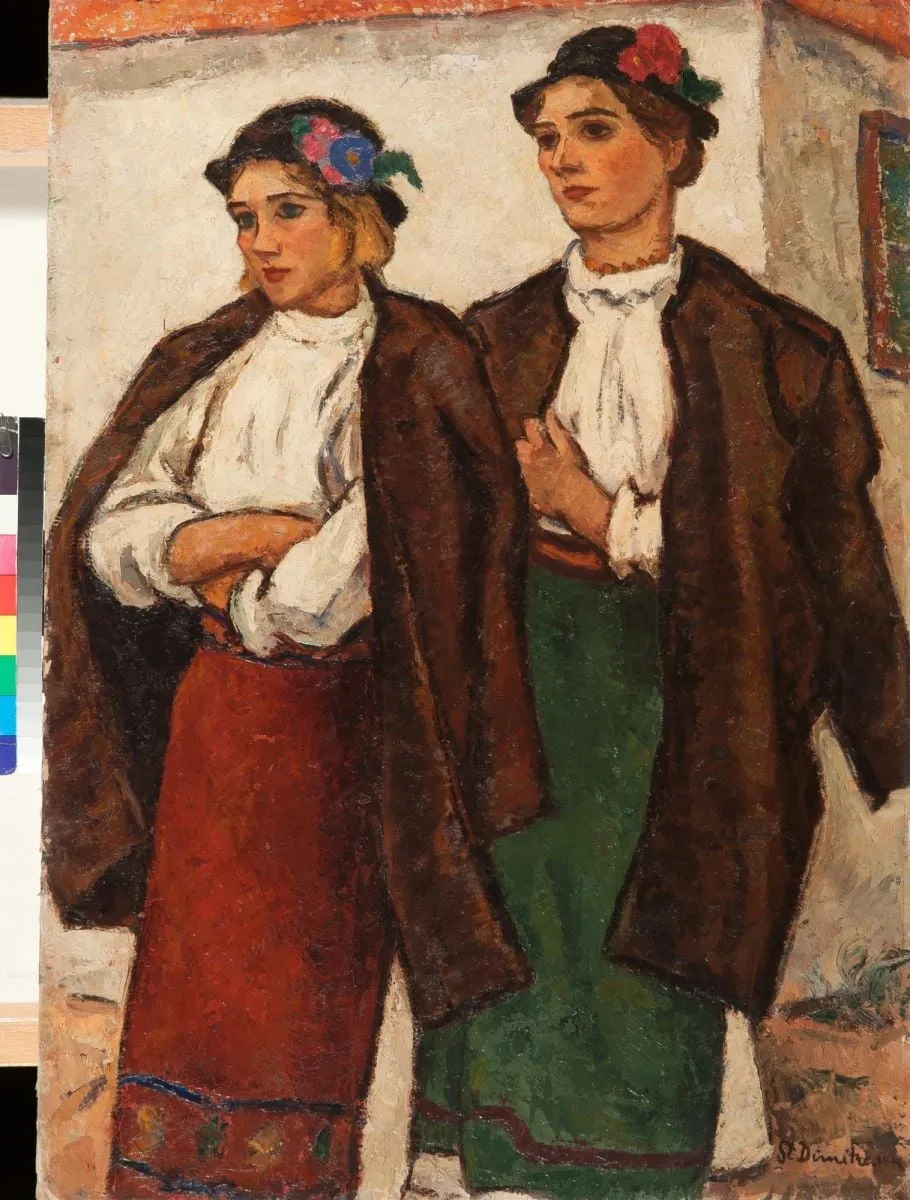
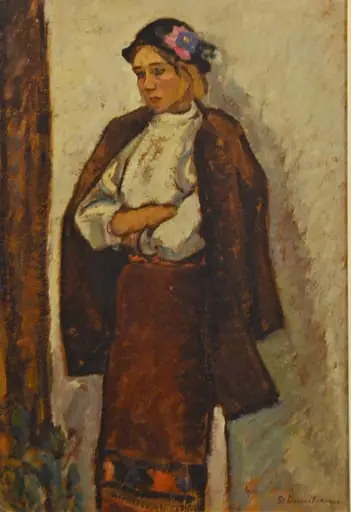
Fete din Țara Oltului is a print by Ștefan Dimitrescu. It dates from 1926 and is held in the collection of the National Museum of Art of Romania.
About this work
Overview
The painting resides in the Museum of Ethnography, where it serves as a record of regional dress and domestic life in early 20th-century Romania.
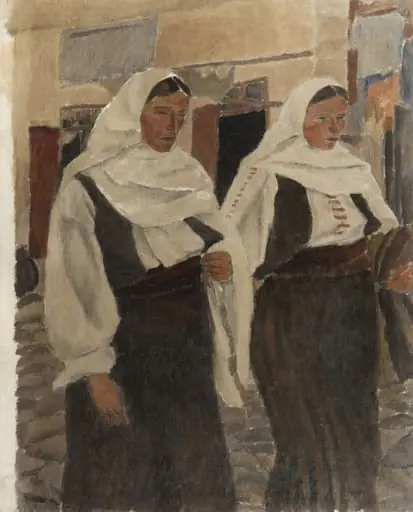
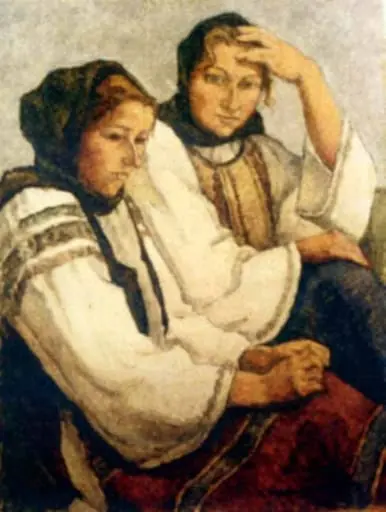
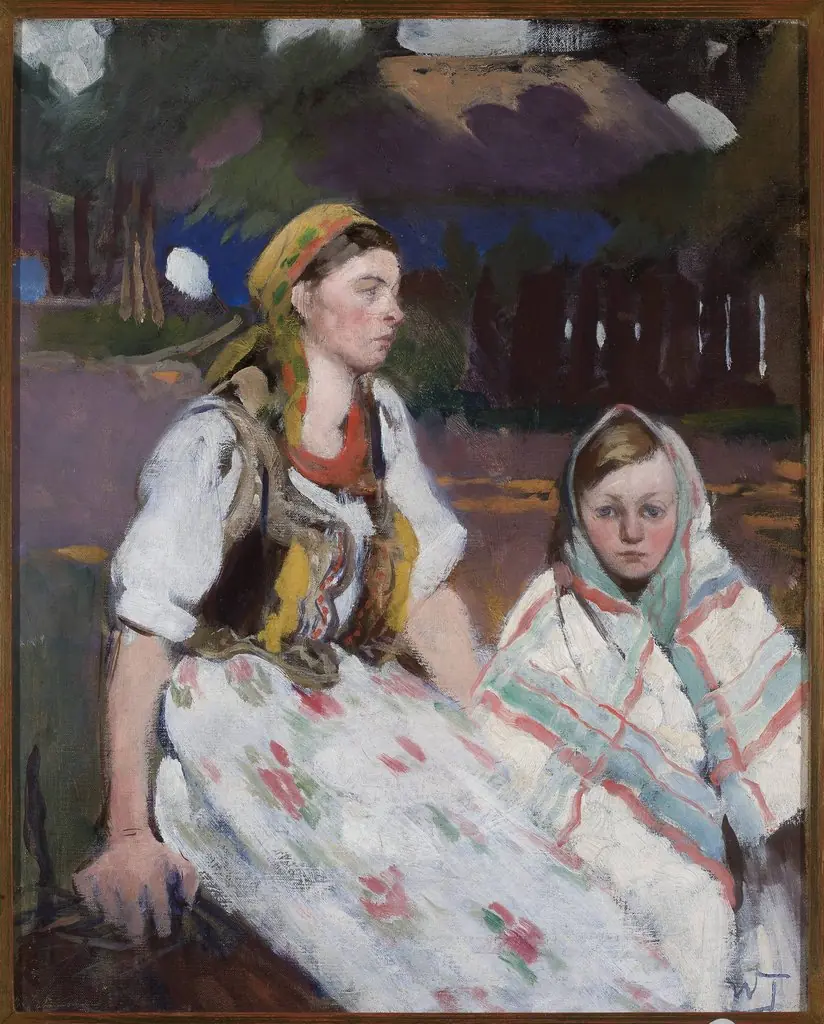
Painted in 1926 by Ștefan Dimitrescu, Fete din Țara Oltului depicts two women in a modest interior setting. The work is rendered in thick, tactile oil paint, with visible brushwork that emphasizes texture over smooth finish. Its composition centers on the figures, whose traditional attire contrasts with the subdued background. The painting resides in the Museum of Ethnography, where it serves as a record of regional dress and domestic life in early 20th-century Romania.
Subject & Meaning
The two women, positioned side by side, embody quiet dignity in their stillness. Their clothing—red and green skirts with layered garments—reflects rural attire from the Olt region, likely worn for daily life rather than celebration. Their gestures, one hands on hips, the other clasped, suggest individual temperament rather than narrative. The absence of context or action invites contemplation of identity and endurance in provincial communities.
Technique & Style
Dimitrescu employed a robust impasto technique, building pigment into ridges and peaks, especially on fabric and skin. Colors are deliberately saturated on the figures, while the background remains muted, drawing focus to the subjects. The brushwork is deliberate and unrefined, avoiding idealization. This approach aligns with interwar Romanian realism, prioritizing material presence over polished finish.
History & Provenance
Created in 1926, the painting entered the collection of the Museum of Ethnography in Bucharest, where it has remained since. It was not widely exhibited outside Romania during Dimitrescu’s lifetime, and its preservation reflects institutional interest in documenting regional culture. No significant alterations or restorations are documented, preserving its original surface and tonal balance.
Context
In the 1920s, Romanian artists increasingly turned to rural subjects as national identity was being redefined after territorial expansion. Dimitrescu, influenced by post-impressionist color and structure, avoided romanticizing peasant life. Instead, he presented it with unembellished presence, aligning with broader European trends toward social realism while maintaining local specificity.
Legacy
Fete din Țara Oltului endures as a quiet testament to regional dress and female presence in interwar Romania. It is not celebrated for dramatic composition but for its unvarnished observation. The painting contributes to scholarly understanding of how Romanian artists engaged with ethnographic detail without narrative embellishment, influencing later generations focused on authenticity over spectacle.
Artist & collection