Artwork
Interior țărănesc
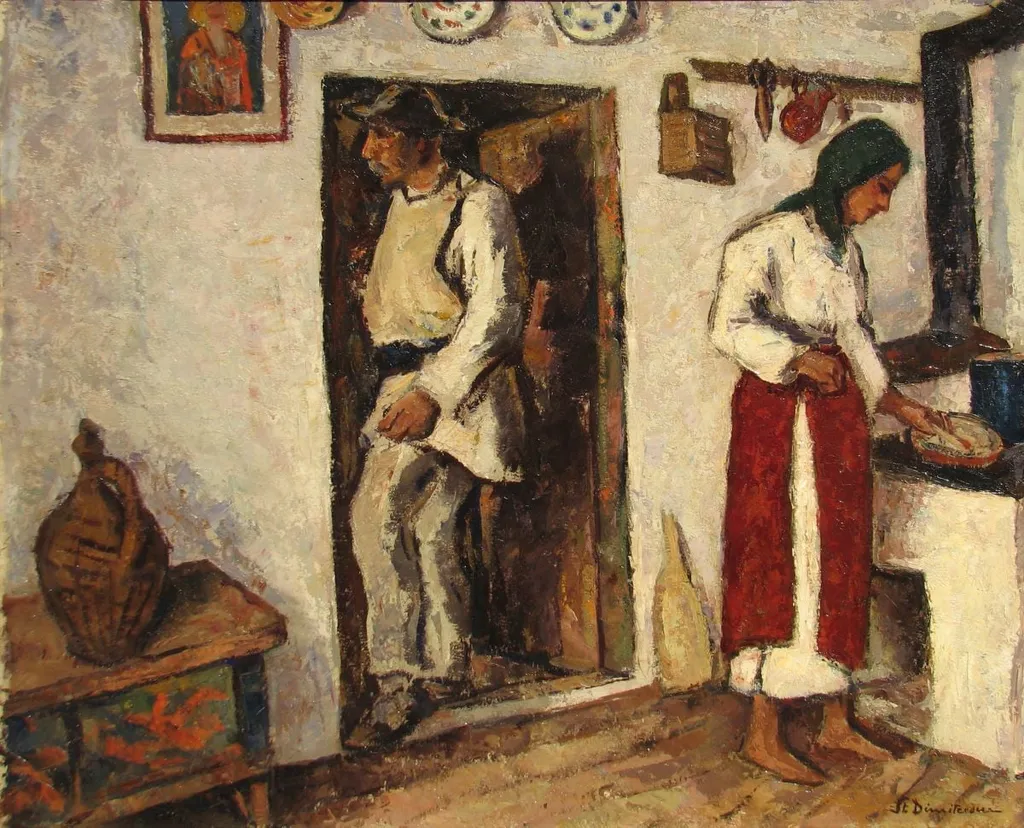
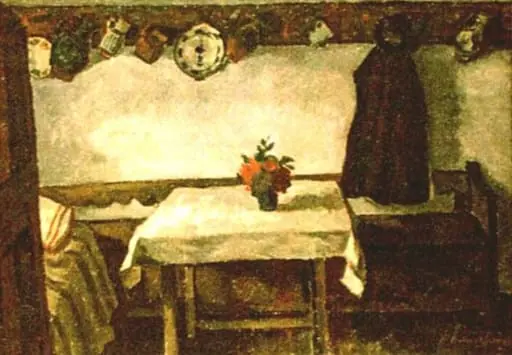
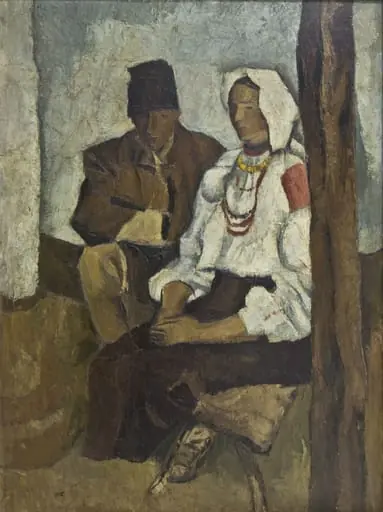
Interior țărănesc is a print by Ștefan Dimitrescu. It dates from 1919 and is held in the collection of the Brukenthal National Museum.
About this work
Overview
The space is unadorned, with minimal furnishings and worn surfaces, conveying a sense of everyday life observed with quiet attention.
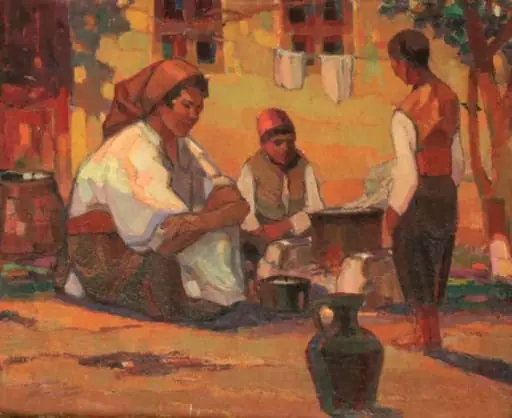
Painted around 1919 by Ștefan Dimitrescu, Interior țărănesc captures a quiet domestic interior in rural Romania. The composition centers on two figures in a modest room, their presence suggesting routine rather than ceremony. The space is unadorned, with minimal furnishings and worn surfaces, conveying a sense of everyday life observed with quiet attention. The painting avoids idealization, instead emphasizing texture and atmosphere through deliberate brushwork.
Subject & Meaning
The scene depicts two individuals engaged in unspoken, routine activity—one near the doorway, the other holding a bowl, possibly engaged in food preparation or storage. Their clothing, simple and regionally typical, anchors the image in rural life. The absence of narrative drama or symbolic flourish invites contemplation of labor, solitude, and domestic rhythm. The painting’s power lies in its restraint, portraying dignity in the ordinary without sentimentality.
Technique & Style
Dimitrescu employs thick, tactile brushstrokes to build the surfaces of walls, fabric, and wood, creating a sense of physical presence. The impasto technique gives texture to the faded plaster and worn furniture, enhancing the feeling of age and use. Light falls softly, modeling forms without harsh contrast, and shadows deepen corners to suggest spatial depth. The palette is muted, with the red skirt as the only vivid note, drawing the eye without disrupting the scene’s quiet tone.
History & Provenance
Created shortly after World War I, the painting reflects a period of social and cultural redefinition in Romania. Dimitrescu, associated with the Tinerimea Artistică group, focused on indigenous themes during this time. While specific ownership records are limited, the work is recognized as part of his early mature phase, when he turned toward intimate portrayals of peasant life, distancing himself from academic conventions in favor of personal, observational realism.
Context
In early 20th-century Romania, artists increasingly turned to rural subjects as symbols of national identity. Dimitrescu’s Interior țărănesc aligns with this trend but avoids romanticism. Unlike idealized folk scenes, his work presents unvarnished interiors, echoing the influence of French Realism and Post-Impressionism. The painting emerges from a broader movement seeking authenticity in everyday Romanian life, grounded in direct observation rather than myth.
Legacy
The painting contributes to Dimitrescu’s reputation as a key figure in Romanian modernism who elevated domestic realism. Its emphasis on material texture and subdued emotion influenced later generations of artists interested in the psychological weight of ordinary spaces. While not widely exhibited internationally, it remains a touchstone in Romanian art history for its honest depiction of rural existence and its technical commitment to tactile surface.
Artist & collection