Artwork
Spoitori
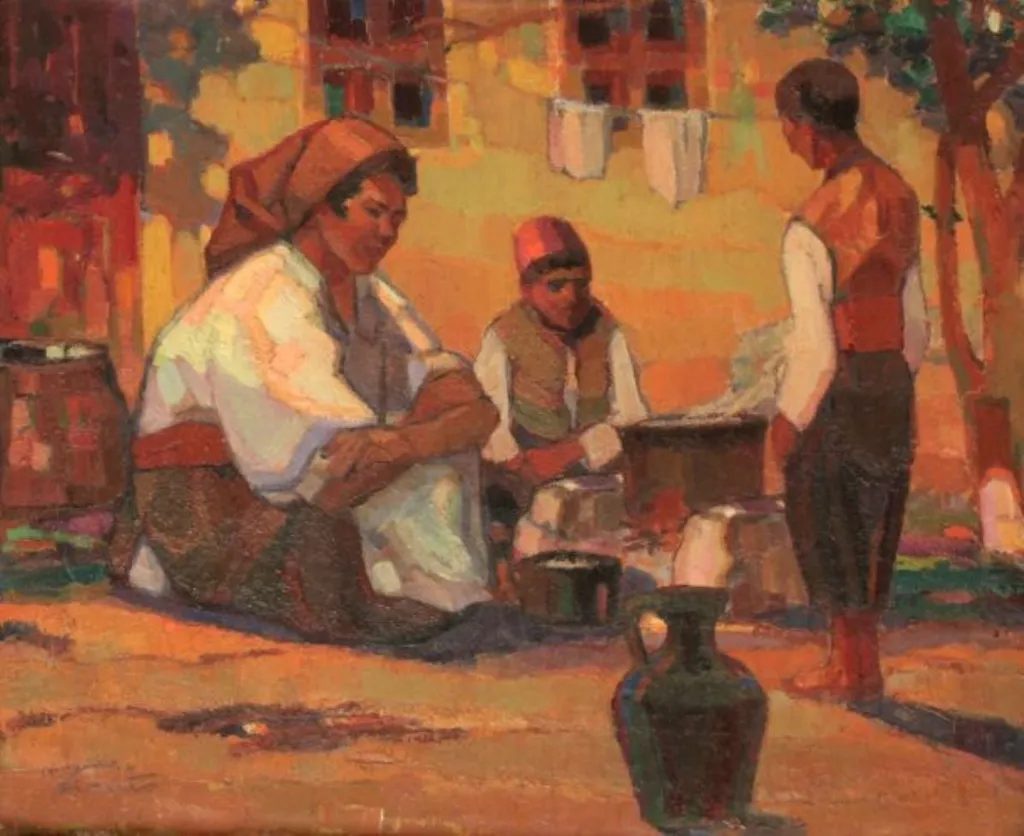
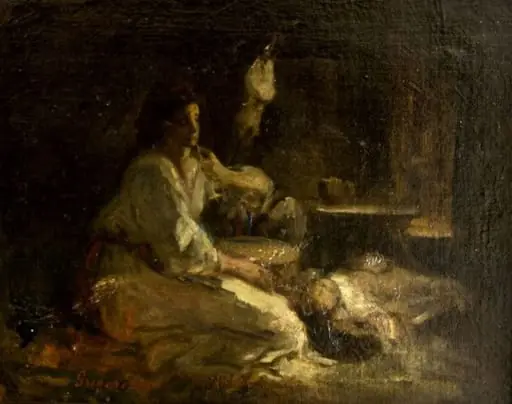
Spoitori is an unspecified painting by Francisc Șirato. It is held in the collection of the Art Museum of Constanta. This painting depicts an intimate domestic interior with three figures bathed in warm, directional light.
About this work
Overview
The scene is rendered with thick, tactile brushwork that emphasizes surface texture and the physicality of paint.
This painting depicts an intimate domestic interior with three figures bathed in warm, directional light. The scene is rendered with thick, tactile brushwork that emphasizes surface texture and the physicality of paint. A muted palette of earth tones is punctuated by vivid reds and yellows, particularly in the wall accents and the woman’s headscarf, grounding the composition in a sense of everyday reality.
Subject & Meaning
The figures—an adult woman holding an infant, a standing boy near a table with a bird and vessel, and a leaning boy gazing downward—suggest a quiet, unidealized moment of domestic life. No narrative climax is present; instead, the painting conveys stillness and routine. The presence of the bird and hanging garments implies a lived-in space, where care and labor coexist without ceremony.
Technique & Style
The artist employs impasto to build up paint in thick layers, especially along the walls and clothing, creating a sculptural quality. Light falls sharply across faces and objects, heightening contrast and volume. Visible brushstrokes avoid smooth blending, favoring a raw, immediate handling that prioritizes emotional resonance over polished finish.
History & Provenance
The work’s origin and early ownership are undocumented in available records. It has been consistently attributed to a late 19th-century painter working in a regional style, though no definitive archival trail links it to a specific exhibition or collection prior to its modern acquisition. Its survival suggests it was preserved within a private or familial context.
Context
Created during a period when rural and working-class interiors gained artistic attention, the painting aligns with broader trends in European realism. Unlike grand historical scenes, it focuses on unadorned domesticity, reflecting a shift toward valuing ordinary life. The rough walls and humble objects echo similar depictions by contemporaries seeking authenticity over idealization.
Legacy
Though not widely exhibited or reproduced, the painting contributes to a quieter lineage of domestic realism that prioritized texture and light over narrative drama. Its emphasis on material presence and unembellished gesture influenced later artists interested in the emotional weight of everyday spaces, particularly in regional art movements of the early 20th century.
Artist & collection
Artist
Francisc Șirato painted quiet scenes of people and places, often with soft light and gentle colors.