Artwork
Tânără și copil pe scaun
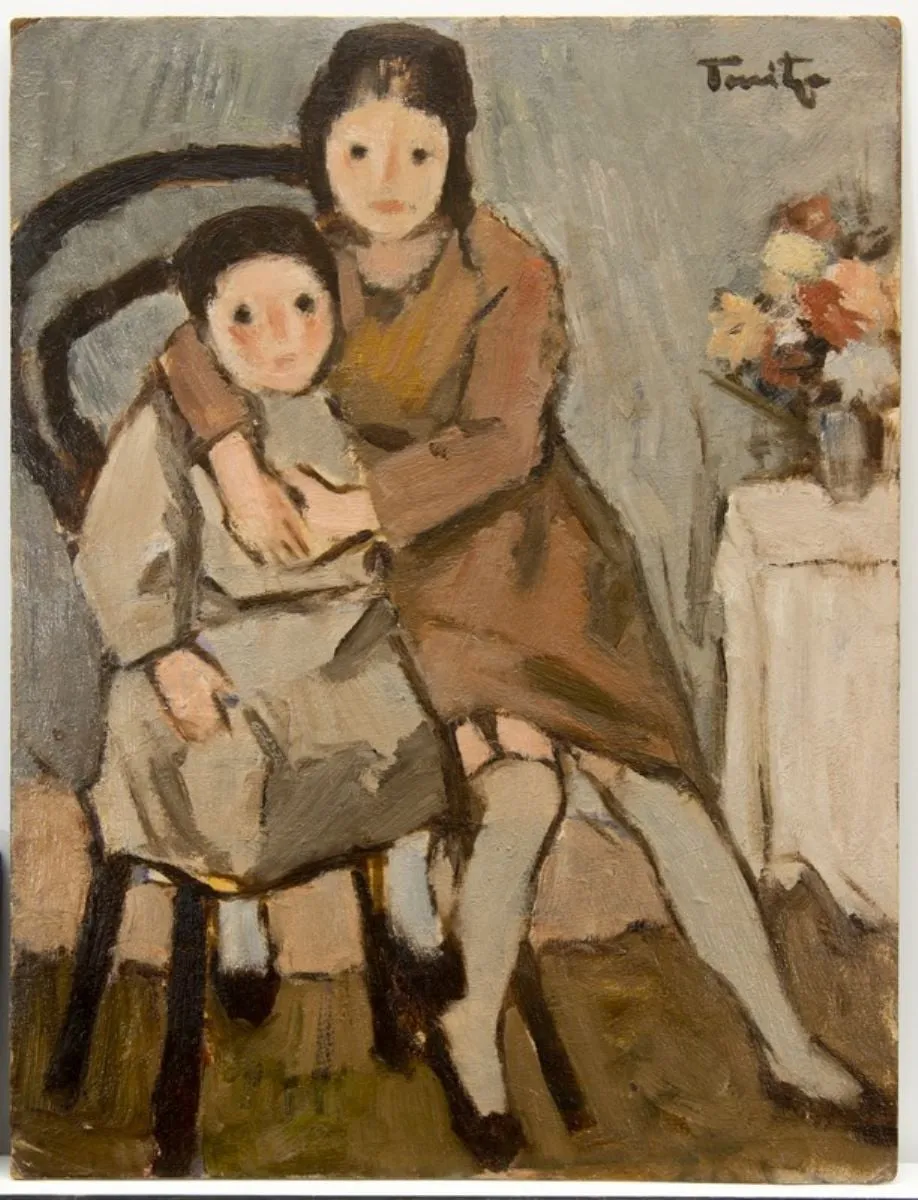
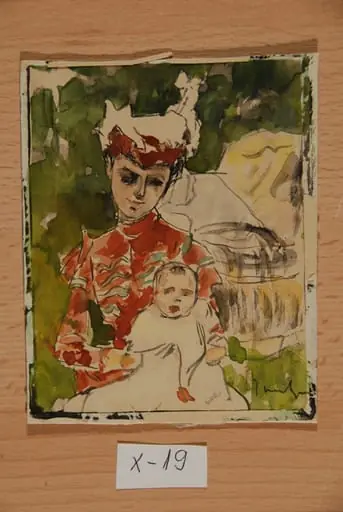
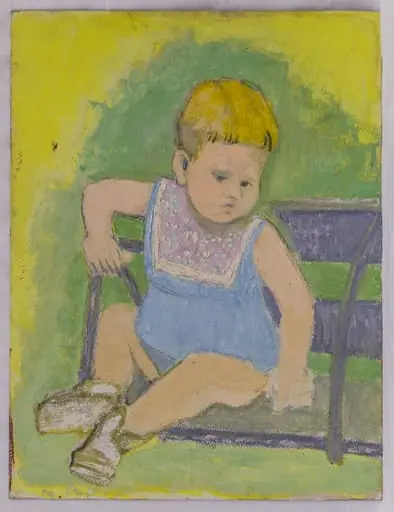
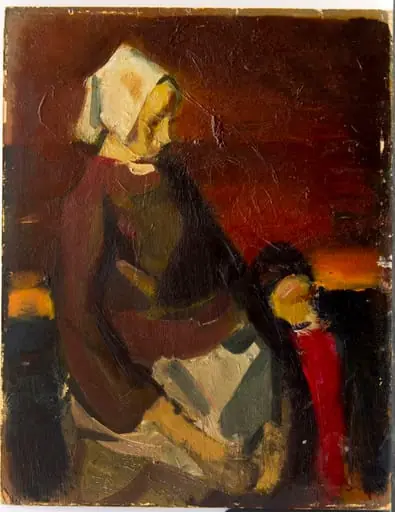
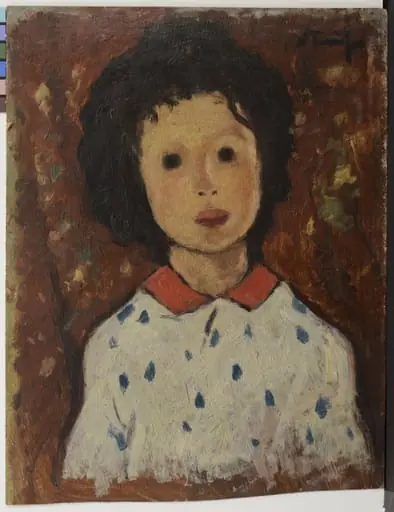
Tânără și copil pe scaun is a print by Nicolae Tonitza. It dates from 1923 and is held in the collection of the National Museum of Art of Romania.
About this work
Overview
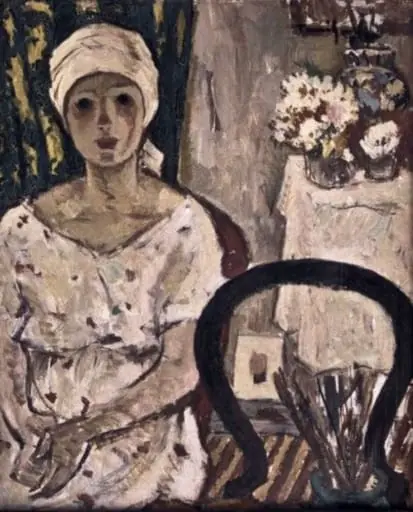
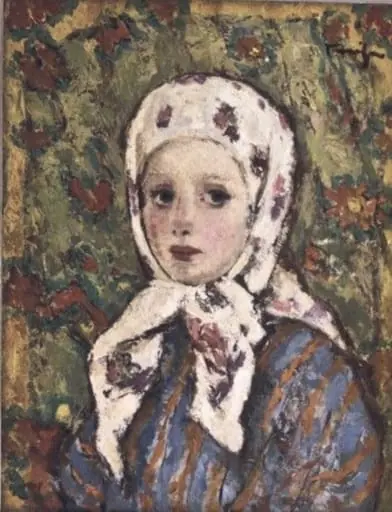
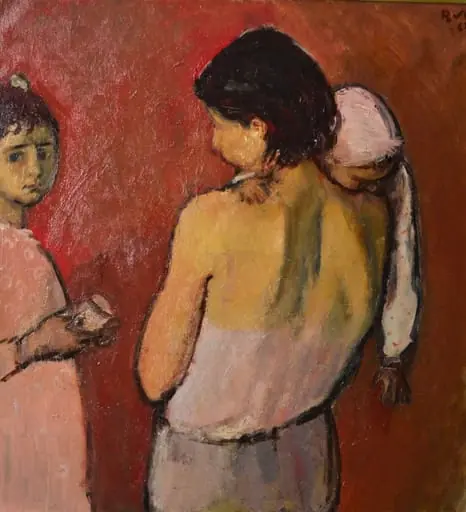
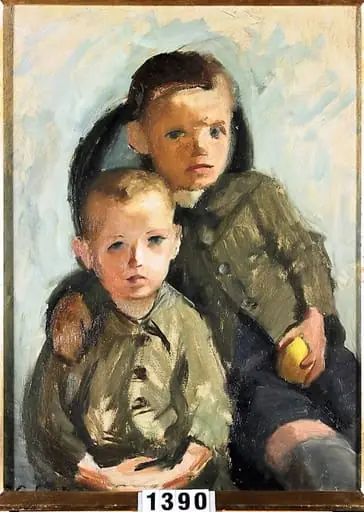
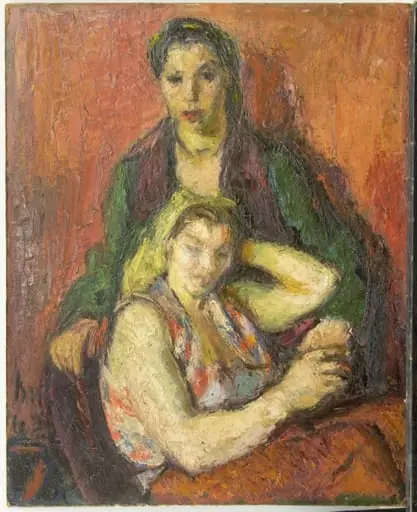
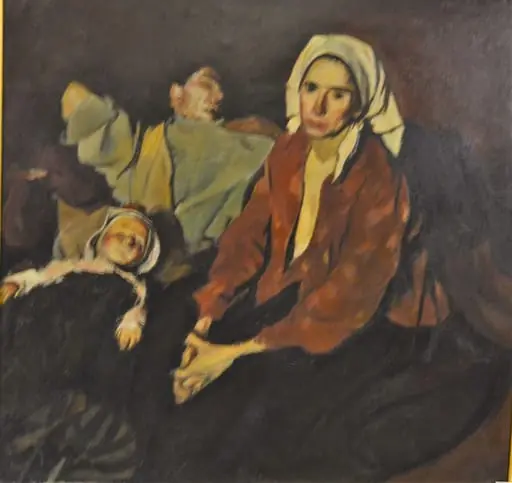
Painted around 1923 by Romanian artist Nicolae Tonitza, this work depicts a quiet domestic moment between a young woman and a child seated together. Rendered in a restrained palette of earth tones, the composition emphasizes simplicity and intimacy. The figures and furnishings are rendered with minimal detail, avoiding ornamentation in favor of emotional resonance through form and texture.
Subject & Meaning
The painting portrays a tender, unspoken bond between mother and child, conveyed through physical closeness rather than facial expression. Both figures have featureless, rounded faces, stripping away individual identity to suggest universal themes of care and vulnerability. The sparse setting—plain chair, modest table, single vase—reinforces a sense of quiet endurance amid economic hardship.
Technique & Style
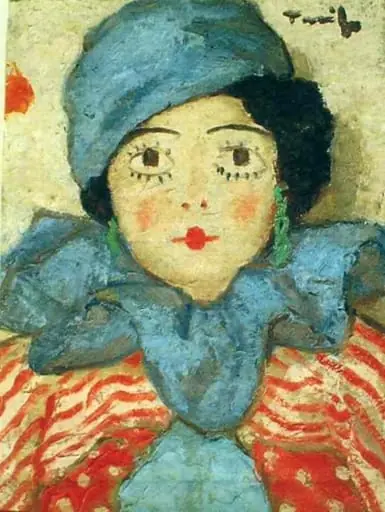
Tonitza employed thick, uneven brushstrokes to build form, a technique known as impasto, which gives the surface a tactile, almost sculptural quality.
Tonitza employed thick, uneven brushstrokes to build form, a technique known as impasto, which gives the surface a tactile, almost sculptural quality. Colors are subdued, dominated by grayish browns and muted ochres, with only the flowers introducing a faint hint of color. The rough handling of paint rejects polished finish, aligning the work with expressive realism rather than academic convention.
History & Provenance
Created during Tonitza’s mature period in interwar Romania, the painting reflects his engagement with rural and working-class life. It was likely produced in Bucharest, where he was active in artistic circles and influenced by post-impressionist and expressionist tendencies. The work remained within Romanian collections, eventually entering public ownership through institutional acquisition.
Context
In the 1920s, Romanian artists increasingly turned to everyday subjects as national identity was being redefined after territorial expansion. Tonitza, like contemporaries such as Ștefan Luchian, sought to capture the dignity of ordinary people. This painting aligns with a broader movement toward social realism, though its emotional tone leans toward quiet introspection rather than political statement.
Legacy
The work is recognized as a representative example of Tonitza’s humanist approach to painting. Its unadorned style and emotional restraint influenced later generations of Romanian painters who valued authenticity over idealization. Though not widely exhibited internationally, it remains a touchstone in discussions of interwar Romanian art for its understated power and formal economy.
Artist & collection

Artist
Nicolae Tonitza was a Romanian painter, engraver, lithographer, journalist and art critic. Drawing inspiration from Post-Impressionism and Expressionism, he had a major role in introducing modernist guidelines to local art.