Artwork
Portret (de) femeie
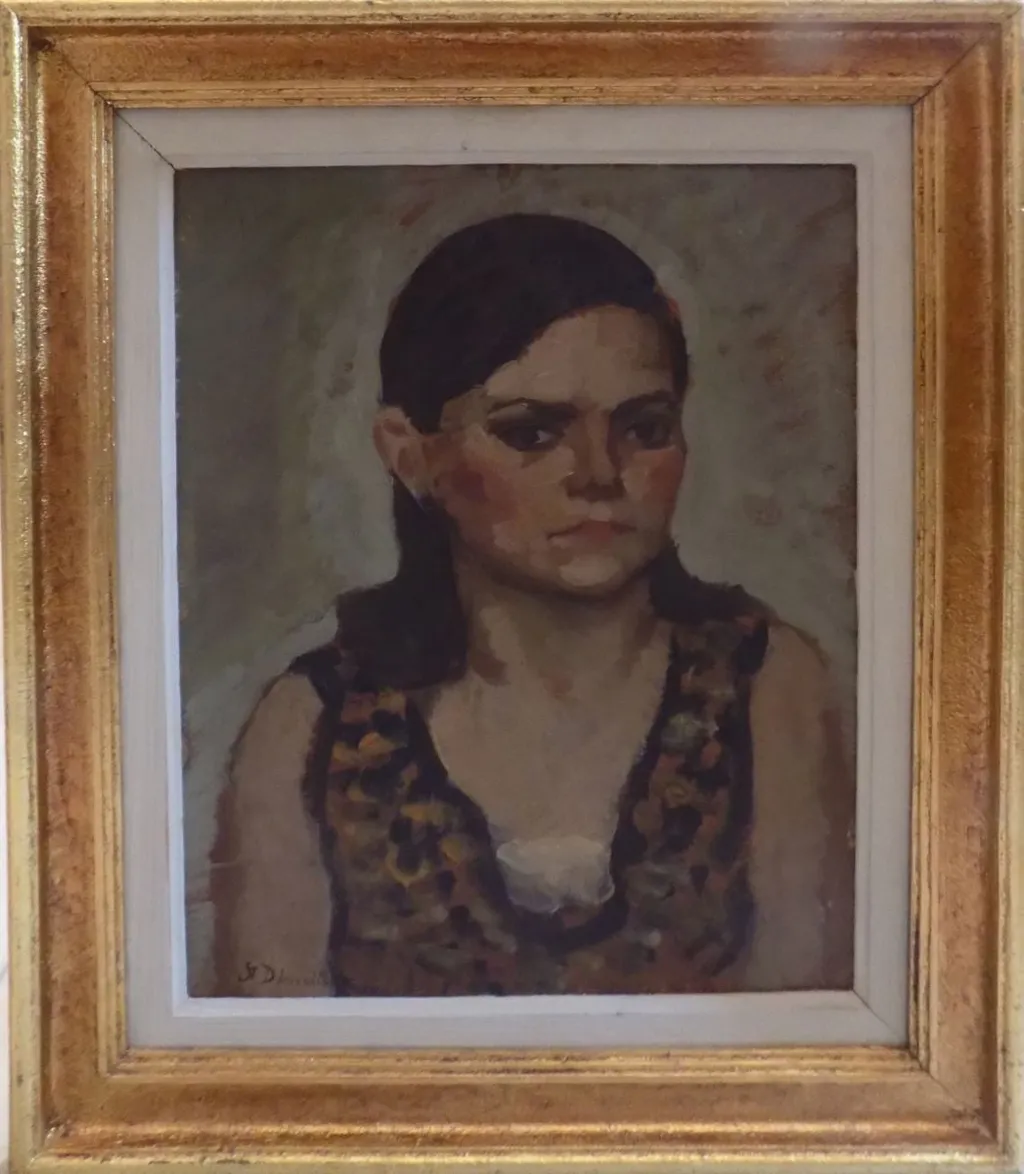
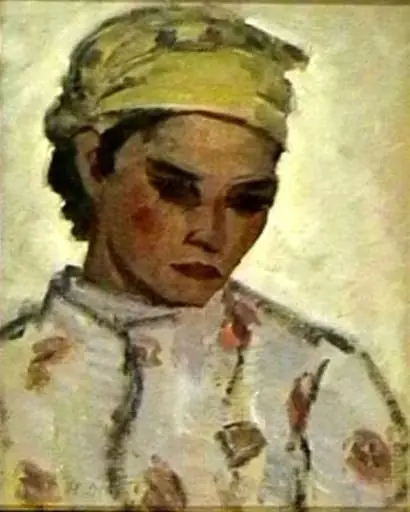
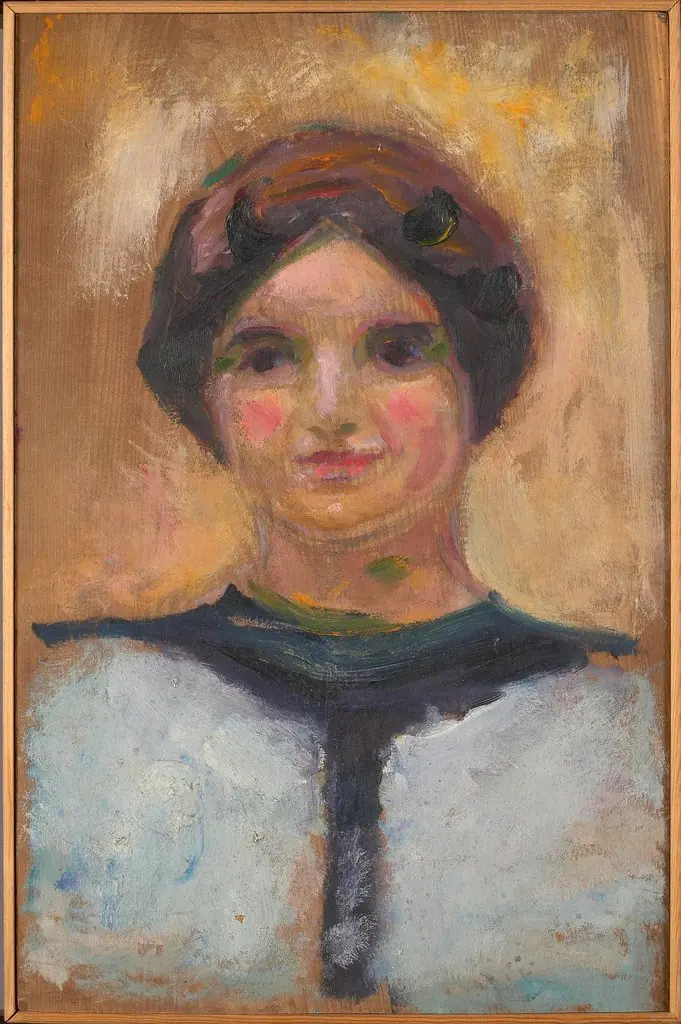
Portret (de) femeie is an unspecified painting by Ștefan Dimitrescu. It dates from 1919 and is held in the collection of the Bucharest Municipality Museum.
About this work
Overview
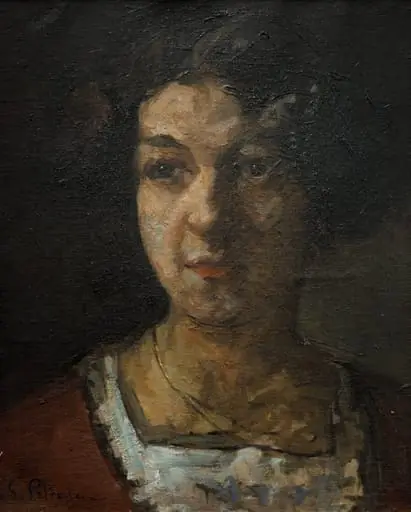
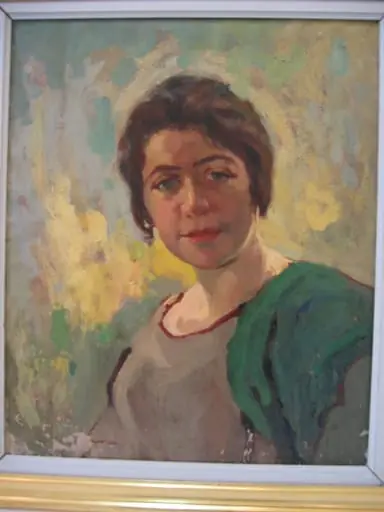
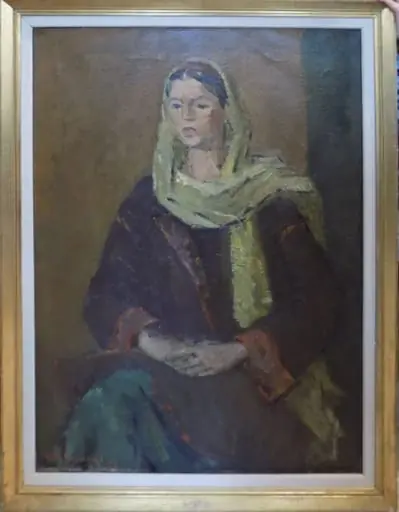
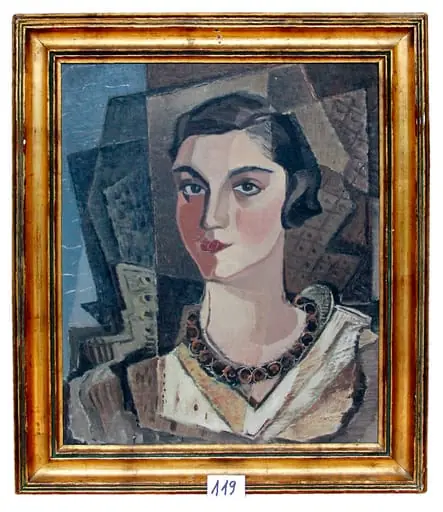
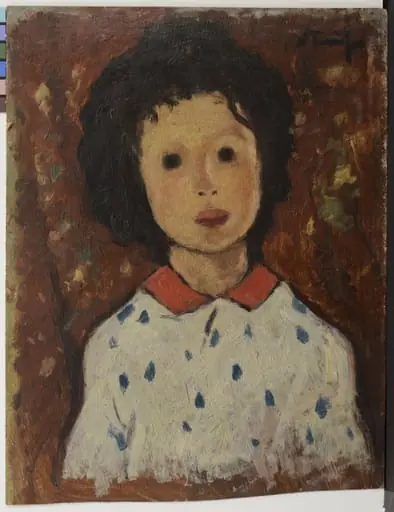
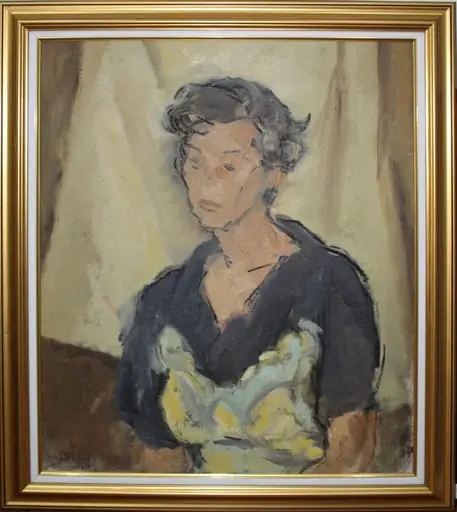
Painted around 1919 by Ștefan Dimitrescu, this portrait depicts a woman in quiet stillness. Executed in oil, the work is part of the Museum of Ethnography’s collection. Its composition centers entirely on the subject’s upper body, with no contextual details to distract from her presence. The restrained palette and deliberate blurring of the background emphasize emotional immediacy over narrative.
Subject & Meaning
Her expression, softened by subtle shadows beneath the eyes, suggests weariness rather than sorrow.
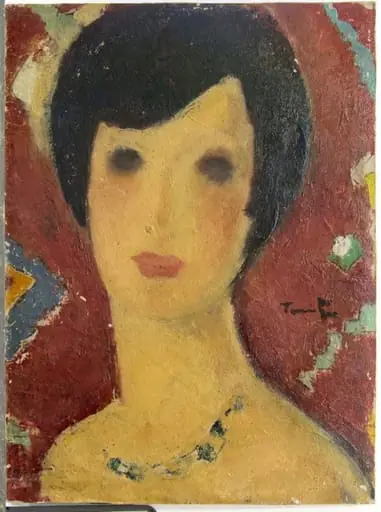
The woman’s short dark hair and direct gaze convey a sense of quiet resilience. Her expression, softened by subtle shadows beneath the eyes, suggests weariness rather than sorrow. The absence of jewelry or overt symbols of status points to an ordinary individual, possibly representing the quiet dignity of everyday life in post-war Romania. Her stillness invites contemplation rather than interpretation.
Technique & Style
Dimitrescu employs loose, visible brushwork, particularly in the rendering of hair and fabric, creating a tactile texture that contrasts with the smoother modeling of the face. The use of muted tones and soft chiaroscuro defines form without harsh lines. The background is deliberately indistinct, allowing the figure to emerge through tonal gradations rather than sharp contours, reinforcing a sense of intimacy.
History & Provenance
The painting entered the Museum of Ethnography’s holdings in the early 20th century, likely acquired during a period when Romanian artists were documenting regional identities. Its placement within an ethnographic context suggests an interest in portraying common people as cultural subjects. No record of prior ownership or exhibition history is widely documented, indicating it may have remained in private or institutional hands since creation.
Context
Created shortly after World War I, the portrait reflects a broader Romanian artistic shift toward psychological realism and social observation. Artists like Dimitrescu moved away from idealized forms, focusing instead on individual character and emotional nuance. This work aligns with efforts to capture the inner lives of ordinary citizens amid national reconstruction and cultural redefinition.
Legacy
Though not widely reproduced, the portrait exemplifies Dimitrescu’s contribution to interwar Romanian portraiture. Its emphasis on psychological depth over decorative detail influenced later generations of artists seeking authenticity in depicting the human figure. The work remains a quiet reference point in discussions of Romanian modernism and the representation of women in early 20th-century art.
Artist & collection