Artwork
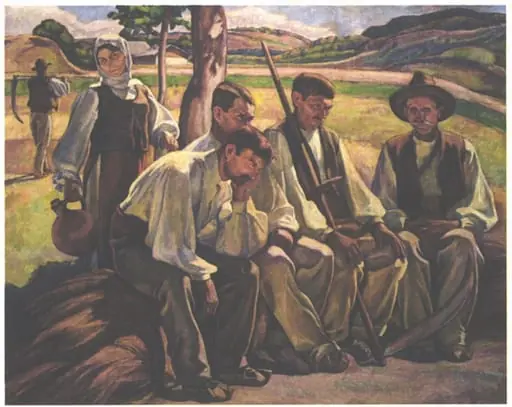
Țărani pe câmp (Ascuțind coasa)
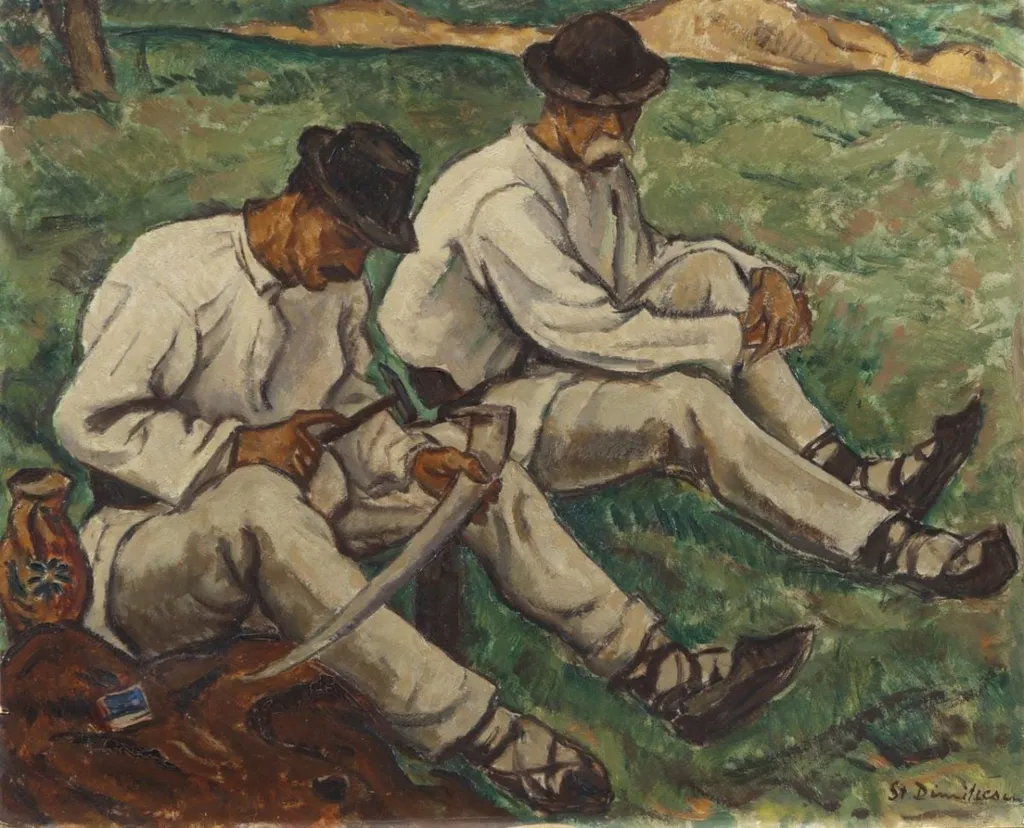
Țărani pe câmp (Ascuțind coasa) is a print by Ștefan Dimitrescu. It dates from 1920 and is held in the collection of the National Museum of Art of Romania.
About this work
Overview
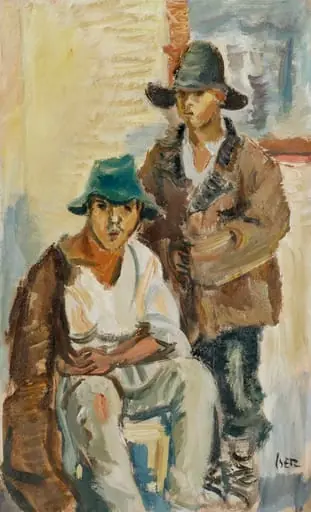
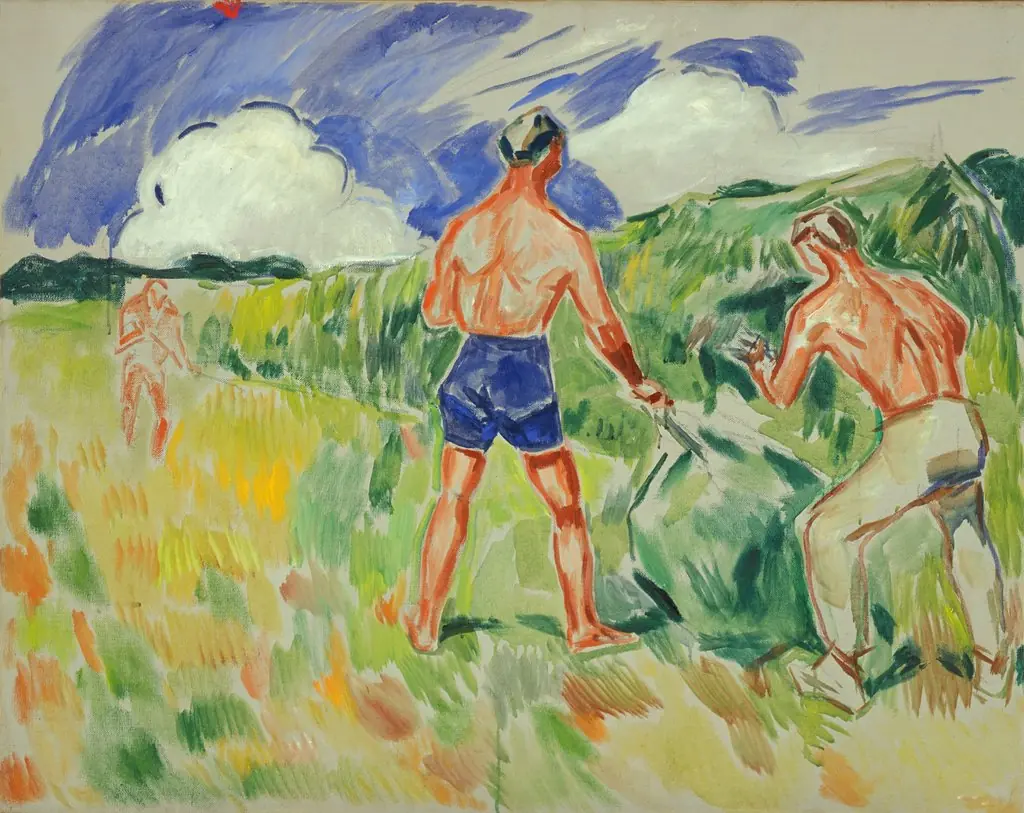
Ștefan Dimitrescu’s 1920 oil painting Țărani pe câmp (Ascuțind coasa) presents a quiet rural tableau. Two laborers stand in an open field; one sharpens a scythe while the other sits cross‑legged, gazing downward. The composition is anchored by the figures, whose white shirts and dark headgear contrast with the muted earth tones of the surrounding landscape.
Subject & Meaning
The work captures a moment of agrarian routine, emphasizing the intimate relationship between the peasant and his tools. By focusing on the act of preparing a scythe, the painting alludes to the cycles of harvest and the dignity of manual labor, inviting contemplation of the everyday responsibilities that sustain rural communities.
Technique & Style
Dimitrescu employs strong contour lines and a restrained palette of browns, ochres, and muted greens, creating a sense of solidity.
Dimitrescu employs strong contour lines and a restrained palette of browns, ochres, and muted greens, creating a sense of solidity. The handling of light suggests chiaroscuro, with subtle gradations that model the figures against the field. The overall effect is one of balance, the composition guiding the eye toward the central activity while maintaining a harmonious integration with the natural setting.
History & Provenance
Created in the immediate post‑World War I period, the painting reflects a broader Romanian interest in depicting peasant life as a national motif. It entered public collections in the early decades of the twentieth century, though specific acquisition details remain limited in the available records.
Artist & collection