Artwork
Ciobani
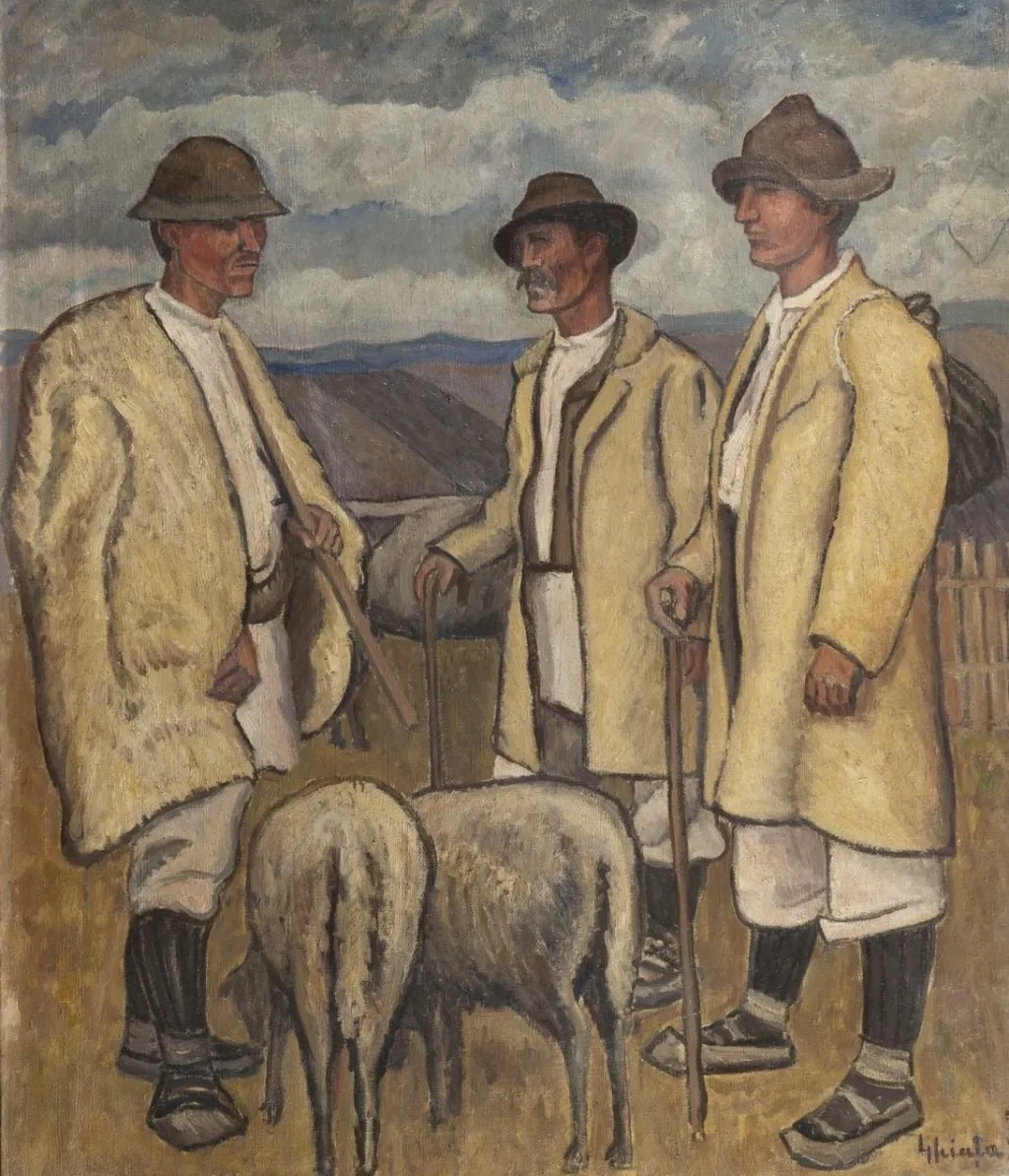
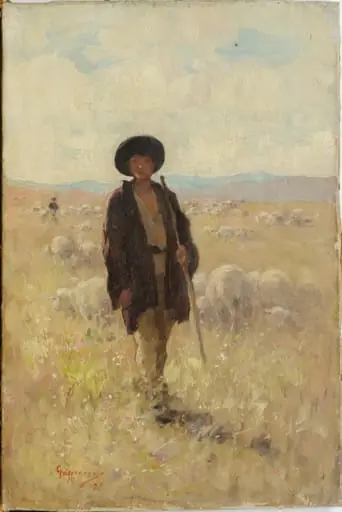
Ciobani is an unspecified painting by Dumitru Ghiață. It dates from 1925 and is held in the collection of the National Museum of Art of Romania.
About this work
Overview
The work belongs to a body of paintings that prioritize quiet observation over dramatic narrative, drawing from the visual rhythms of the Romanian countryside.
Dumitru Ghiață, a Romanian painter born in 1888, produced *Ciobani* circa 1925 as part of his sustained engagement with rural life. The work belongs to a body of paintings that prioritize quiet observation over dramatic narrative, drawing from the visual rhythms of the Romanian countryside. Ghiață’s approach favors restrained color and solid forms, avoiding embellishment in favor of structural clarity and emotional restraint.
Subject & Meaning
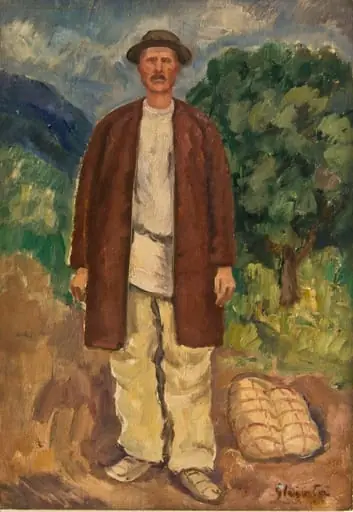
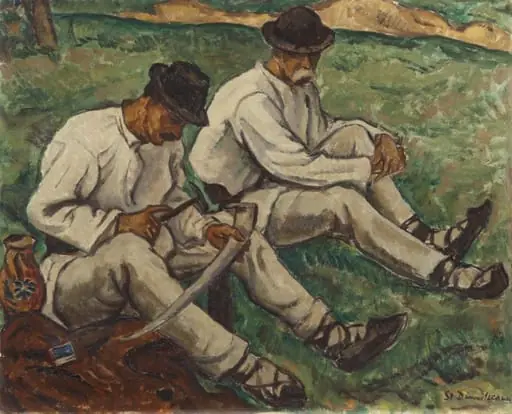
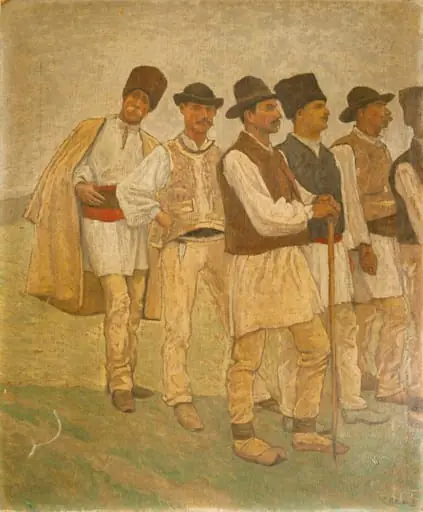
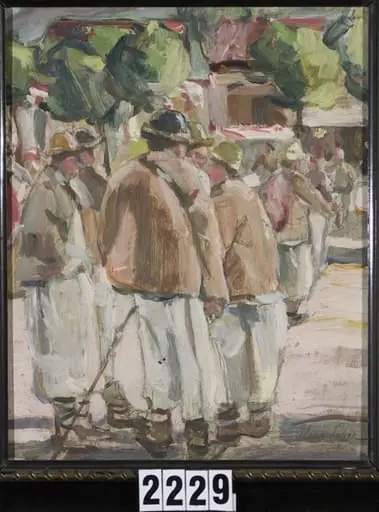
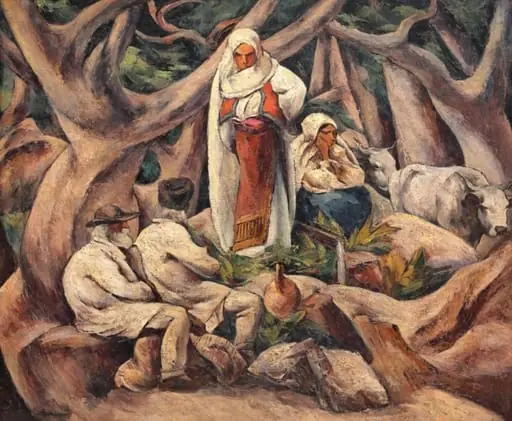
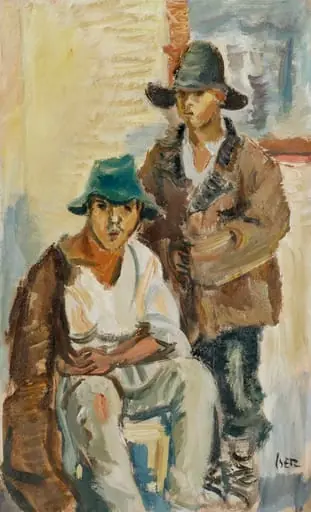
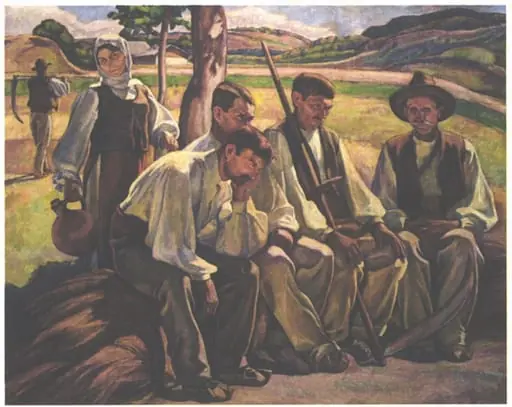
The painting portrays three shepherds standing in a field, their postures calm and grounded, with a single sheep positioned slightly ahead. Their traditional attire—long coats and wide-brimmed hats—signals regional identity and occupation. The staff held by one figure reinforces their role as caretakers of livestock. The scene conveys neither labor nor hardship, but a quiet dignity in daily routine, rooted in the rhythms of pastoral existence.
Technique & Style
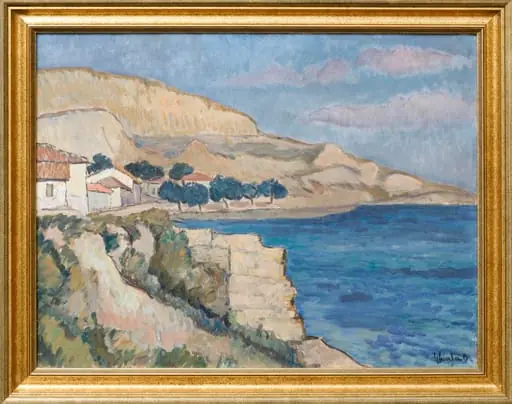
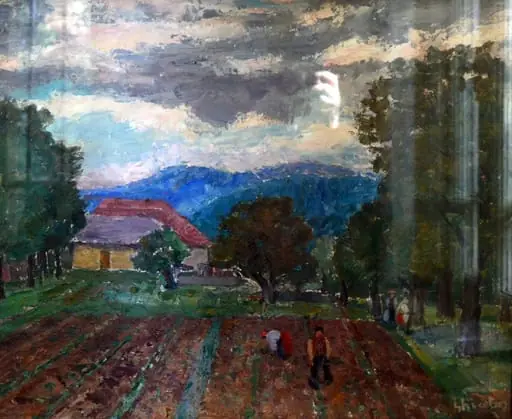
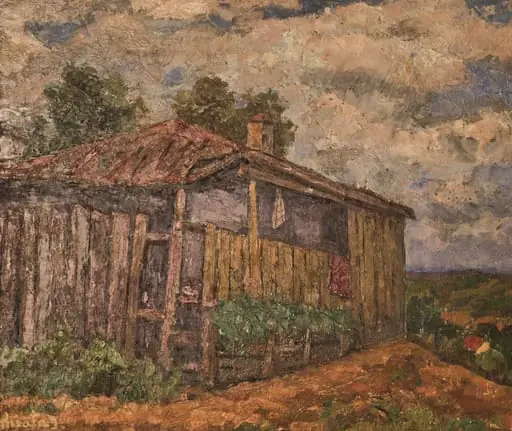
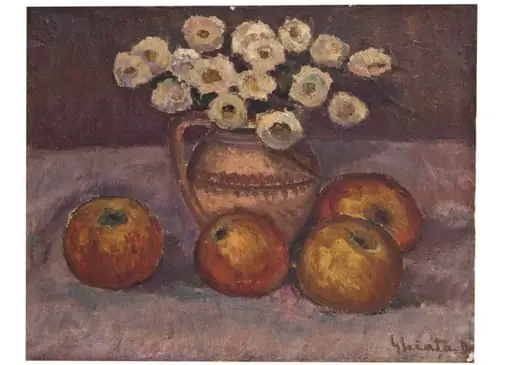
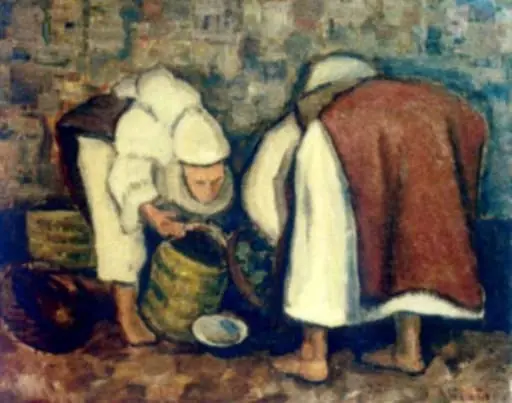
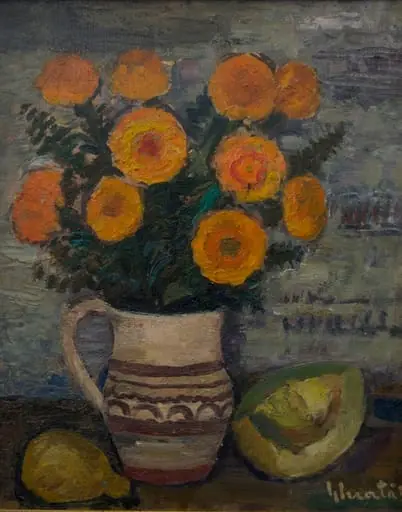
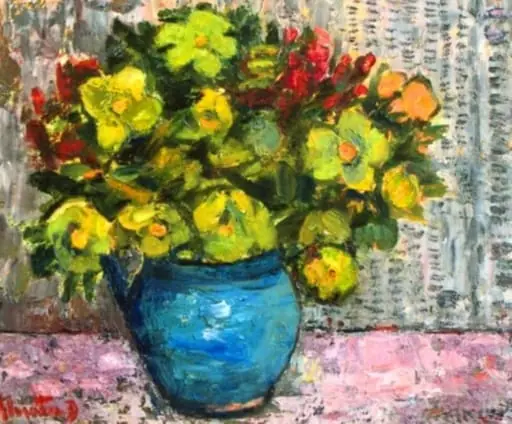
Ghiață employs a muted palette dominated by earth tones—ochres, grays, and soft browns—to unify the figures and landscape. Brushwork is deliberate and unadorned, with forms rendered through solid planes rather than fine detail. The sky and hills are suggested with loose washes, creating a sense of depth without illusionism. This method aligns with folk-inspired realism, prioritizing emotional resonance over technical flourish.
History & Provenance
Created during the interwar period, *Ciobani* emerged from a time when Romanian artists increasingly turned to indigenous themes as part of a broader cultural affirmation. While specific ownership history is not widely documented, the painting is recognized within institutional collections of Romanian interwar art. Its survival and preservation reflect its status as a representative work of regional realism from the era.
Context
In 1920s Romania, a movement toward national artistic identity gained momentum, with painters like Ghiață rejecting foreign academic styles in favor of local subjects and visual languages. Rural life became a focal point, not as idealized nostalgia, but as a source of authentic form and character. *Ciobani* fits within this trend, offering a sober, unembellished view of peasant labor and landscape.
Legacy
Ghiață’s work, including *Ciobani*, contributed to a generation of Romanian art that valued simplicity and regional authenticity. Though not widely known internationally, his paintings remain referenced in studies of interwar Eastern European realism. His influence endures in how later artists approached rural subjects—with restraint, respect, and an emphasis on the quiet dignity of everyday life.
Artist & collection
Artist
Dumitru Ghiață (22 September 1888 – 3 July 1972) was a Romanian landscape painter.