Artwork
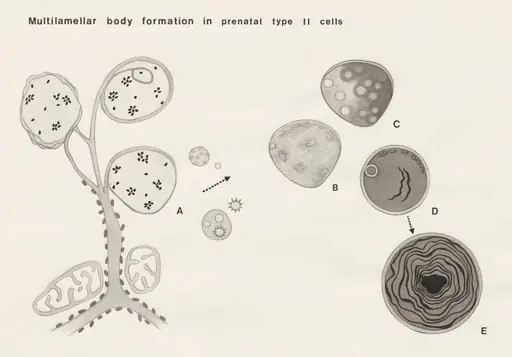
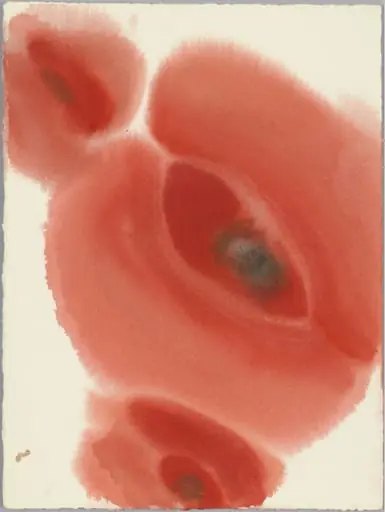
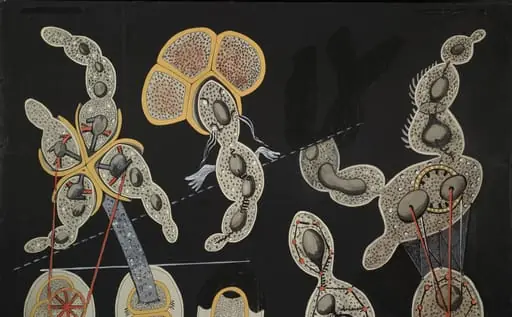
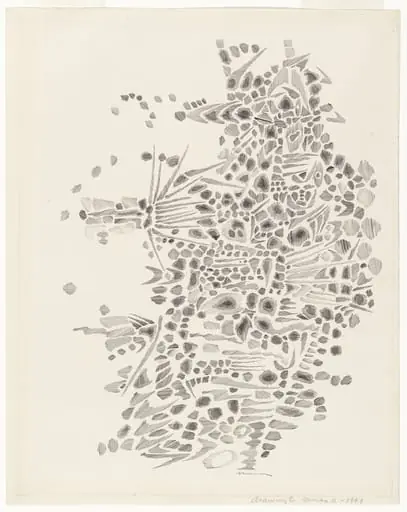
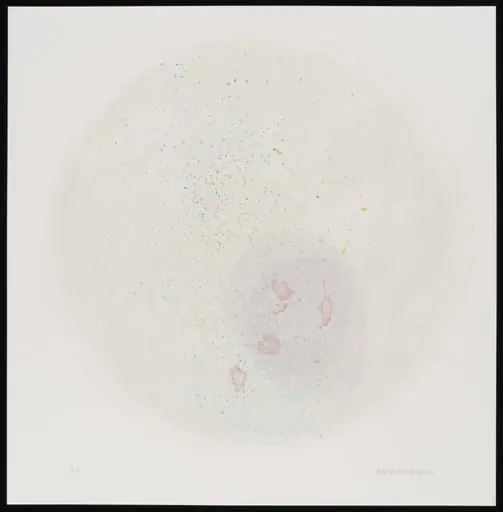
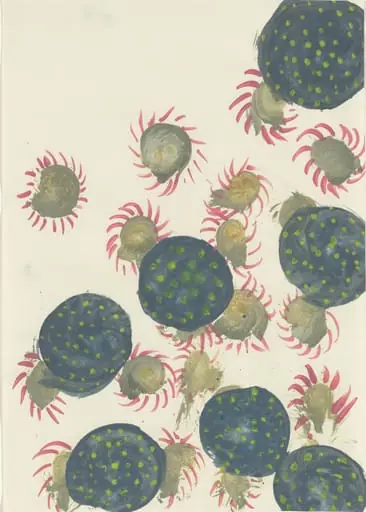
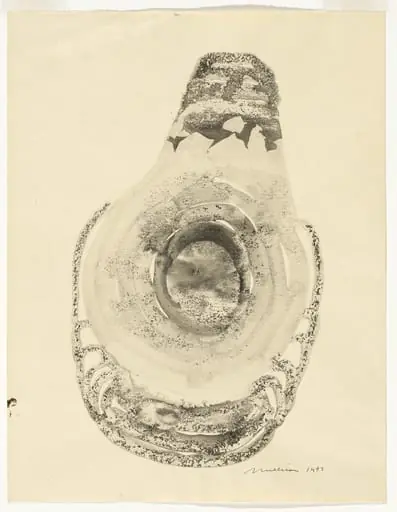
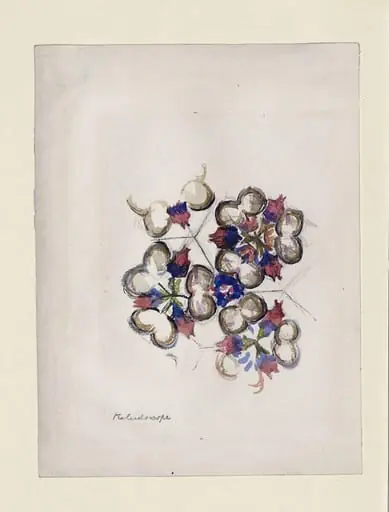
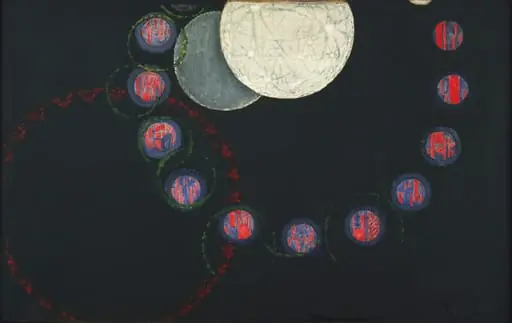
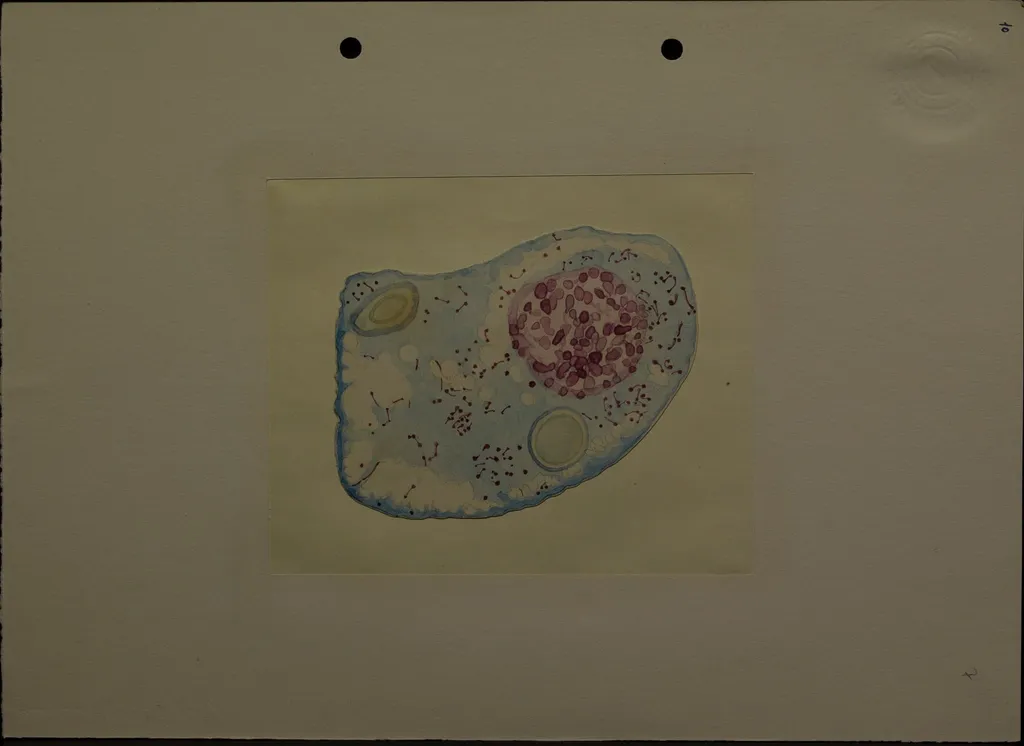
Desenul redă o secțiune o secțiune printr-o celulă (?), mărită. Este realizat de Dimitrie Voinov, în acuarelă, probabil când erea elev, student sau tânăr cercetător. Dimitrie Voinov (1867 - 1951) a fost un biolog, zoolog, histolog, citolog, fondatorul școlii românești de citologie. Din 1927, a devenit membru titular al Academiei Române.
Desenul redă o secțiune o secțiune printr-o celulă (?), mărită. Este realizat de Dimitrie Voinov, în acuarelă, probabil când erea elev, student sau tânăr cercetător. Dimitrie Voinov (1867 - 1951) a fost un biolog, zoolog, histolog, citolog, fondatorul școlii românești de citologie. Din 1927, a devenit membru titular al Academiei Române. is a print by Dimitrie Voinov. It is held in the collection of the National Museum of Romanian History.
About this work
Overview
This watercolor artwork by Dimitrie Voinov depicts a magnified cellular section, likely created during his early academic or research years. The piece showcases a single cell with internal structures, including a cluster of red dots (possibly the nucleus or organelles), faint blue outer edges, and a pale yellow background.
Subject & Meaning
The subject is a biological cell, sliced open to reveal its internal components. The artwork's meaning lies in its scientific illustration, possibly serving as an educational or research tool, reflecting Voinov's background in biology, zoology, histology, and cytology.
Technique & Style
Executed in simple watercolors, the technique prioritizes clarity and scientific accuracy over aesthetic embellishments. The color palette is restrained, with red dots, faint blue edges, and a pale yellow background, contributing to the piece's educational and illustrative purpose.
History & Provenance
Created by Dimitrie Voinov, a renowned Romanian biologist and founder of the Romanian cytology school, during his early career (exact date unknown, but before his 1927 appointment as a full member of the Romanian Academy). Provenance details are not provided.
Context
The artwork contextualizes Voinov's dual role as an artist and a scientist, common among 19th-early 20th-century academics. It reflects the period's scientific advancements in cellular biology and Voinov's contributions to the field.
Legacy
While the artwork's individual legacy is not prominently noted, it represents Voinov's broader impact on Romanian cytology and academia, with his scientific work and founding of the Romanian cytology school being his most enduring achievements.
Artist & collection
Artist
This Romanian scientist made delicate watercolor drawings to show how cells look under a microscope.