Artwork
Kaleidoscope
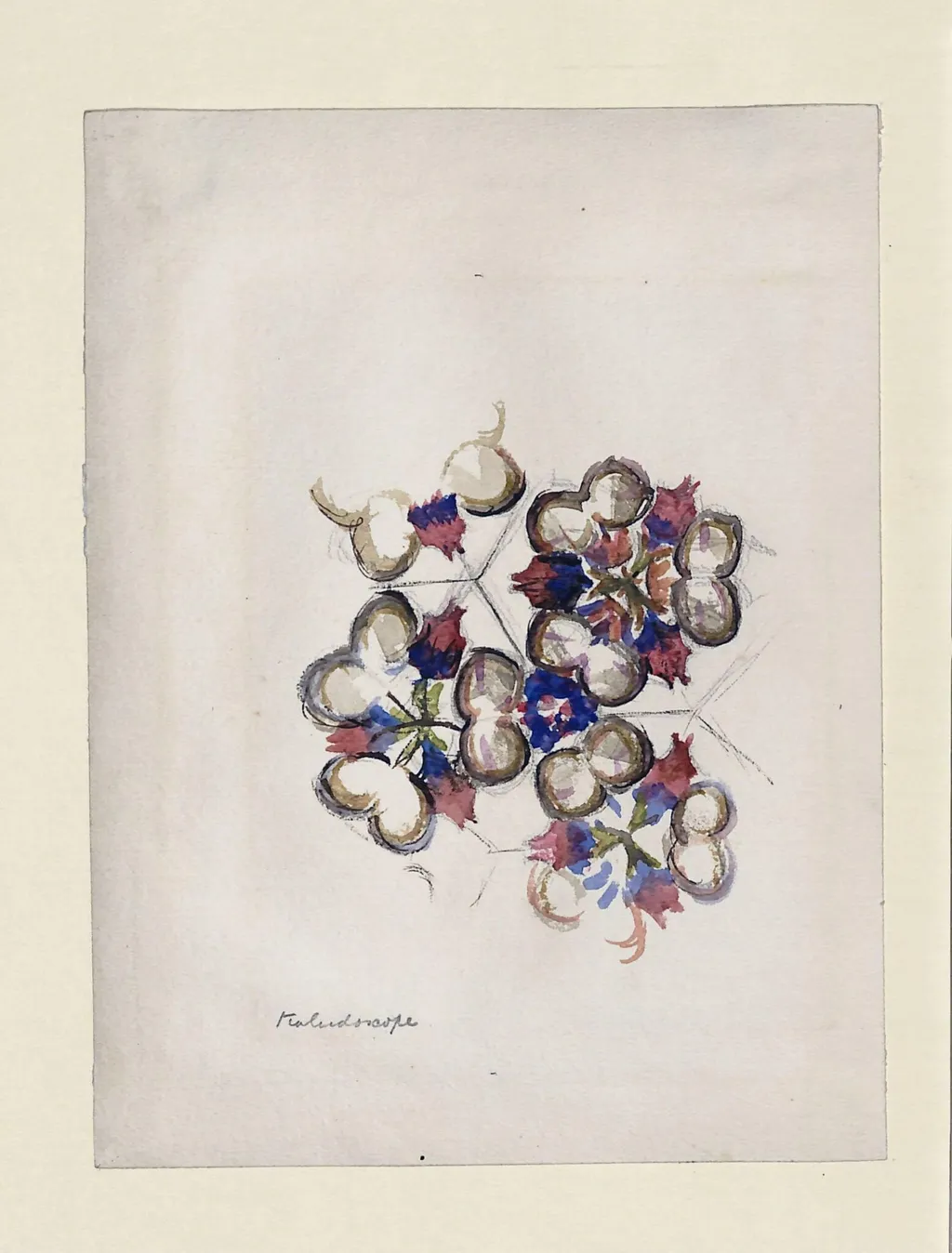
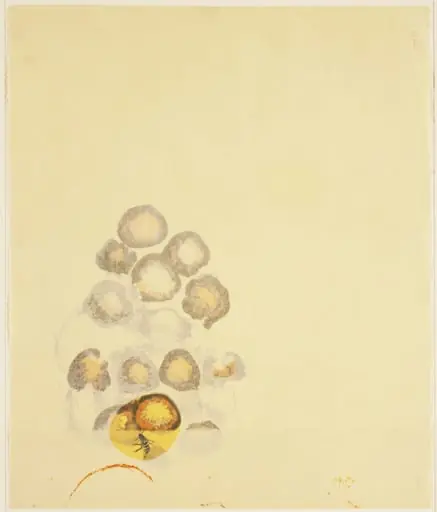
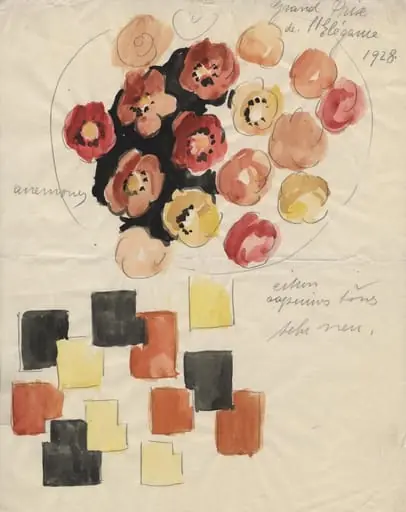
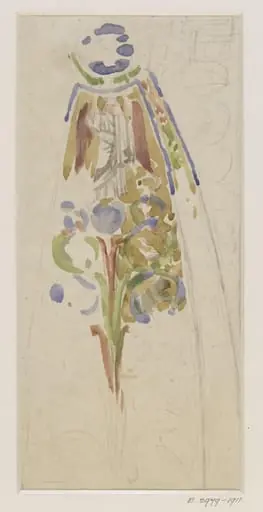
Kaleidoscope is a watercolor work on paper by the Impressionist artist Unknown. It dates from 1860 and is held in the collection of the Victoria and Albert Museum.
About this work
Overview
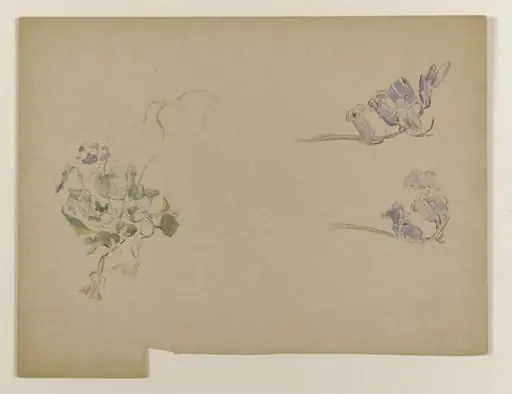
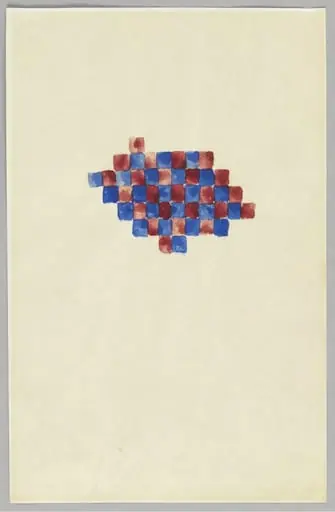
Executed in loose, expressive brushwork, it employs a limited palette of red, blue, and green to suggest floral forms.
Created in 1860, this watercolour bears the title *Kaleidoscope* and is attributed to an unidentified artist. Executed in loose, expressive brushwork, it employs a limited palette of red, blue, and green to suggest floral forms. The work appears as a spontaneous study rather than a polished composition, capturing the transient effects of light and colour through rapid, uneven strokes and areas of diluted pigment.
Subject & Meaning
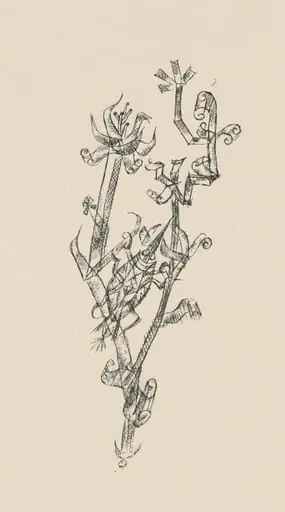
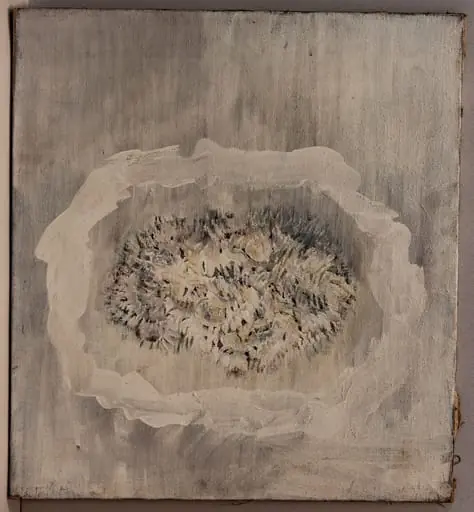
The image evokes abstracted floral motifs, their petals dissolving into swirling patterns that mimic the shifting symmetries of a kaleidoscope. The title suggests an interest in optical phenomena, particularly the way repeated shapes and colours transform under reflection. Rather than depicting specific plants, the artist explores the visual rhythm of colour interaction, aligning with contemporary scientific fascination with perception.
Technique & Style
The artist applied watercolour with a fluid, improvisational approach, allowing pigments to bleed and blur at the edges. Strokes are swift and uneven, with some regions left intentionally pale or smudged to suggest motion and transience. The lack of defined outlines and the emphasis on colour blending reflect an experimental attitude, prioritizing atmospheric effect over representational precision.
History & Provenance
The work passed from the artist’s possession to Mrs. Elizabeth Burt, indicating a personal or familial connection. Its survival suggests it was valued within a private collection, though no public record of exhibition or broader recognition exists. The absence of documented sales or institutional acquisition prior to its current location underscores its status as a private, possibly intimate, artistic exercise.
Context
The piece responds to the scientific and aesthetic interest in Sir David Brewster’s kaleidoscope, patented in 1814 and widely discussed in mid-century Britain. His theories on colour symmetry influenced artists and designers exploring optical effects. This watercolour reflects a broader cultural engagement with perception, where scientific instruments inspired new ways of seeing and representing natural forms.
Legacy
Though not widely exhibited or reproduced, the work stands as a quiet example of how scientific innovations shaped artistic practice in the 19th century. Its informal quality and focus on colour dynamics align it with emerging trends in watercolour studies, where immediacy and sensory response took precedence over formal completion. It remains a modest but revealing artifact of its time.
Artist & collection

 Domestic Scene
 Giacomo and Cardinal Marco, investing Andrea, Abbot of San Zeno, with his Benefice
 The Nymph of Fontainebleau
 Portrait of a Woman
 Madonna and Child with Saints in the Enclosed Garden
 Venus and Minerva
 Family Group of Four on Sofa
 Wall painting from Room H of the Villa of P. Fannius Synistor at Boscoreale