Artwork
Piață turcească
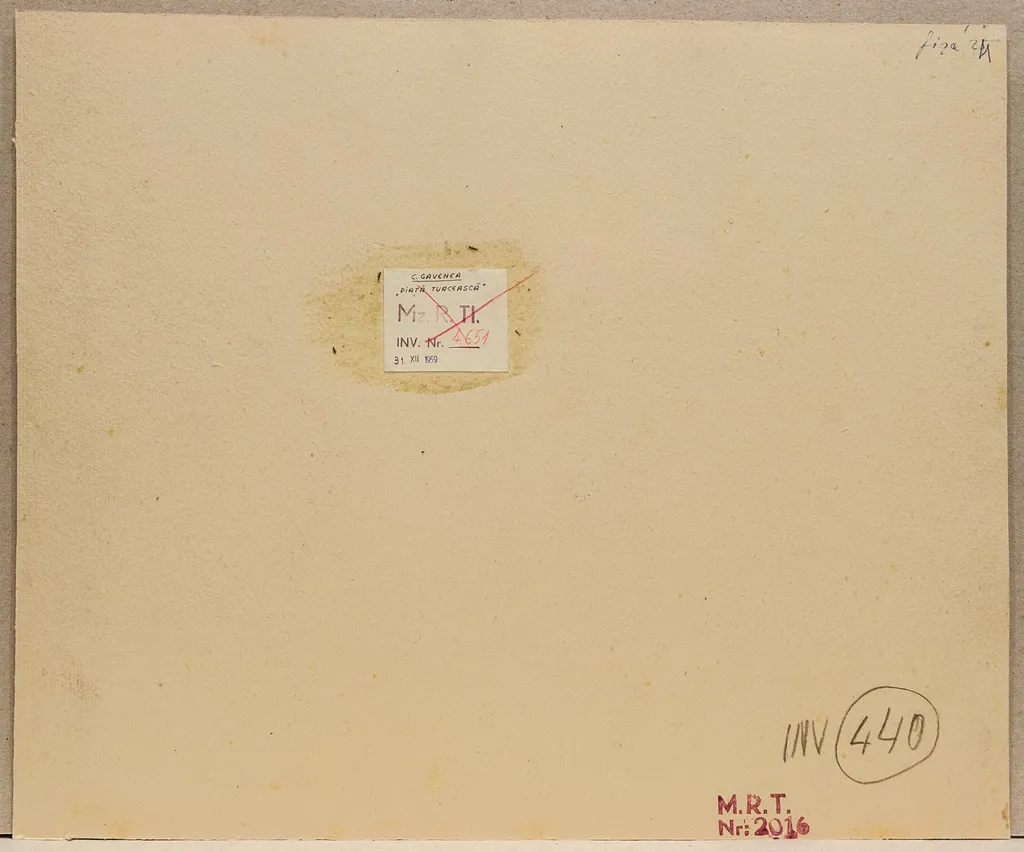
Piață turcească is a print by Constantin Găvenea. It dates from 1950 and is held in the collection of the Gavrila Simion Eco-Museum Research Institute Tulcea.
About this work
The surface is plain beige, with no visible brushstrokes, figures, or colors—just a smooth, bare background.
This is a blank or empty canvas. The surface is plain beige, with no visible brushstrokes, figures, or colors—just a smooth, bare background.
A small faded label in the center reads *"Piață turcească"* (Turkish Square) and has an inventory number from 1959, suggesting this was once part of a collection. The edges show handwritten notes, including "Inv. 440" and "M.R.T."
If you’re curious about where this might belong, check out the Museum of Ethnography.
Overview
Piață turcească is a nearly blank canvas attributed to Romanian artist Constantin Găvenea, dated around 1950. The surface is uniformly beige, devoid of pigment, form, or texture. A faint central label identifies the title and includes a 1959 inventory number. Handwritten annotations along the edges, including 'Inv. 440' and 'M.R.T.', suggest it was cataloged as part of a larger ethnographic collection, though its visual content offers no direct representation of its named subject.
Subject & Meaning
The title references a Turkish square, implying a cultural or geographic scene, yet the canvas contains no imagery to support this. The disconnect between title and surface invites questions about intent: was it a conceptual gesture, an unfinished work, or a mislabeled object? Its presence in an ethnography museum suggests an attempt to document cultural spaces, but the absence of visual data leaves interpretation open to speculation rather than evidence.
Technique & Style
The work’s technique is minimal to the point of absence: no brushwork, no layering, no color variation. The surface is smooth and uniformly coated, possibly with a priming layer or base coat. The label is applied with faded ink, and the handwritten notes appear in pencil or ink, suggesting administrative handling rather than artistic intervention. The style, if any, lies in its emptiness — a deliberate or accidental void.
History & Provenance
The piece entered the Museum of Ethnography’s collection in 1959 with the inventory number 440. The 'M.R.T.' marking may reference a department or collector, though its meaning remains undocumented. No records confirm how or why Găvenea produced this object, nor whether it was ever exhibited or studied. Its survival as a physical artifact, stripped of visual content, raises questions about archival practices and the preservation of ambiguous works.
Context
In postwar Romania, ethnographic institutions collected material culture to document national and regional identities. Găvenea, known for documenting folk life, may have intended this as a record of a Turkish-influenced marketplace. Yet the lack of imagery contrasts sharply with his other works. Its inclusion in the collection may reflect bureaucratic inertia, experimental intent, or a lost narrative — a silent artifact in a museum built on visible evidence.
Legacy
Piață turcească endures not as a representation but as an enigma. It challenges assumptions about what constitutes an artwork or ethnographic object. Its minimalism, absence of content, and institutional framing have made it a subject of quiet curiosity among curators and researchers. It stands as a testament to the gaps in documentation — a blank space that speaks through its silence.
Artist & collection
Museum
Gavrila Simion Eco-Museum Research Institute Tulcea
Continue through works from the same source collection.
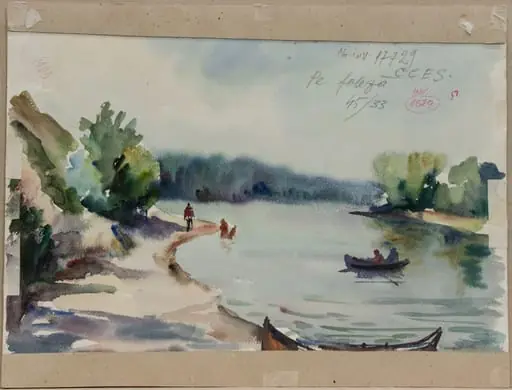
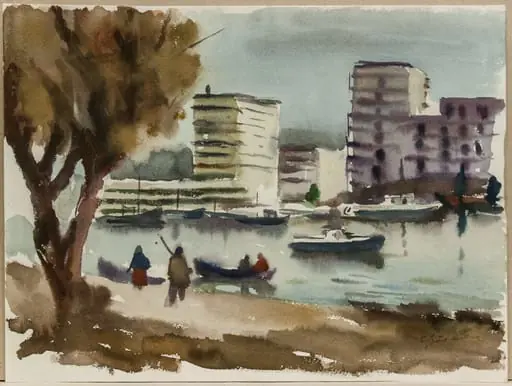
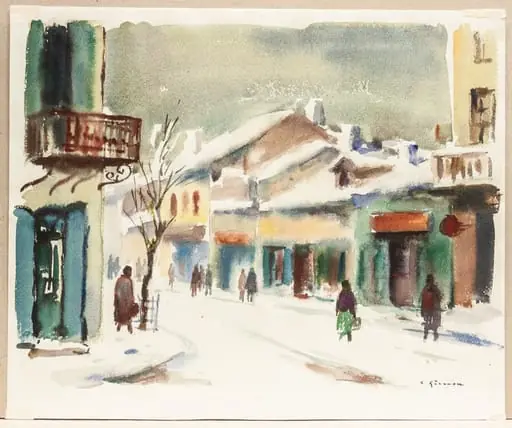
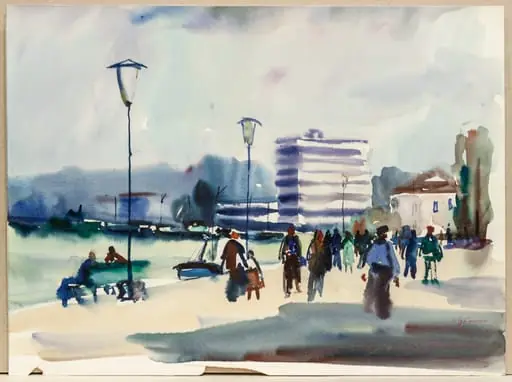
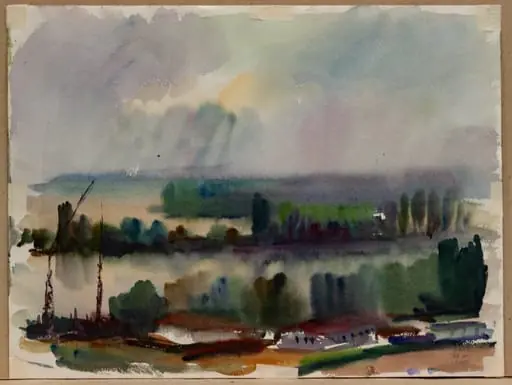
 S 14 - Omagiul meu Sulinei (Mal de Dunăre cu trandafir și bărci)
 Peisaj (cu stradă)
 S 33 - Peisaj la Sulina (Dunăre și faleză cu tufe de flori grena)
 S 32 - Peisaj la Sulina (Dunăre și maluri pierdute în pete de culoare)
 Peisaj cu copaci printre care se văd acoperișurile gri și roșii. În dreapta, printre copaci, se ridică înalt turnul alb al unei biserici. În plan îndepărtat, blocuri, în spatele cărora se ridică furnale profilate pe un deal înalt albastru. Cerul învolburat albastru-violet. Copacii colorați în culorile toamnei. Semnat și datat cu negru, stânga jos: Craiu (19)70 ?.
 Turnu Severin
 Peisaj la șantierul naval
 Cheile Bicazului
 Ghivece
 S 28 - Peisaj la Sulina (Intrare de casă cu flori)
 Peisaj cu case Balcic
 Piață din Tulcea