Artwork
Hanover Gate, Regent's Park, N.W.8
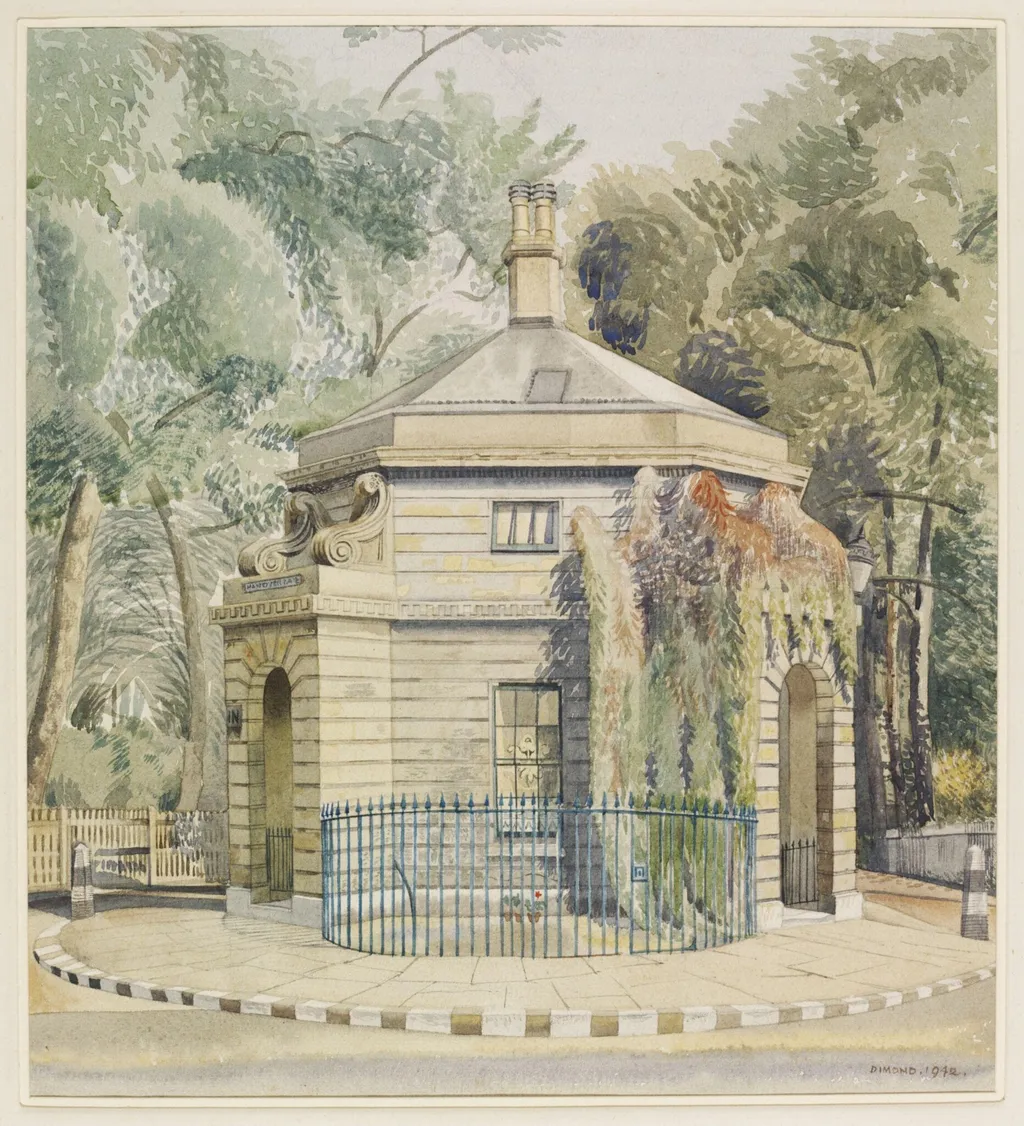
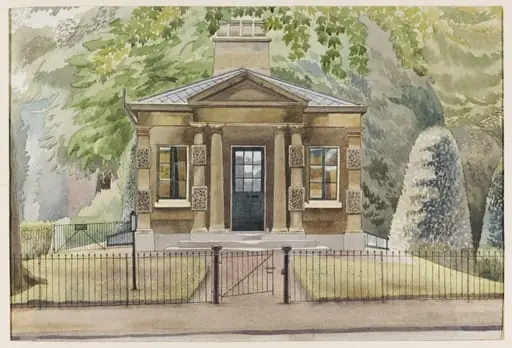
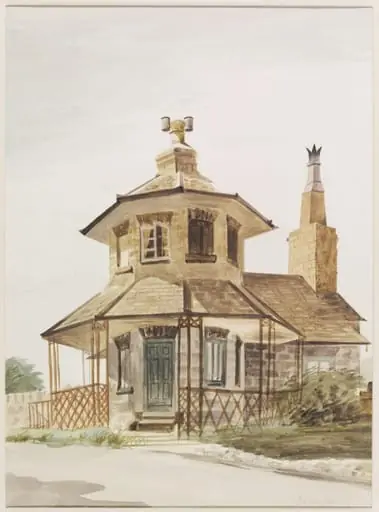
Hanover Gate, Regent's Park, N.W.8 is a watercolor work on paper by the Impressionist artist Dimond. It dates from 1942 and is held in the collection of the Victoria and Albert Museum. Created in 1942, this watercolour portrays the lodge at Hanover Gate within Regent’s Park.
About this work
Overview
The modest octagonal stone structure, topped with a chimney and fronted by a low fence and gate, is shown partially veiled by climbing vegetation.
Created in 1942, this watercolour portrays the lodge at Hanover Gate within Regent’s Park. The modest octagonal stone structure, topped with a chimney and fronted by a low fence and gate, is shown partially veiled by climbing vegetation. A solitary tree with drooping branches frames the right side, while additional foliage recedes into the background, lending the scene a calm, atmospheric quality.
Subject & Meaning
The work captures a quiet moment in a historic park setting, emphasizing the interplay between built form and natural growth. By highlighting the lodge’s modest architecture against the encroaching creeper, the image suggests a gentle tension between preservation and the inevitable passage of time.
Technique & Style
Executed in watercolour, the artist employs a muted palette and delicate washes to convey depth and misty ambience. Soft edges and layered tones render the stone and foliage with a dreamlike translucency, while precise line work defines the building’s geometric features.
History & Provenance
The painting was produced for the Recording Britain scheme, a wartime project funded by the Pilgrim Trust and managed by the Committee for the Employment of Artists in Wartime under the Ministry of Labour and National Service. Between 1940 and 1943, the scheme commissioned artists to document threatened landscapes and architecture across Britain; this piece is among the over 1,500 works created by 97 contributors, overseen by Sir Kenneth Clark.
Context
During the early 1940s, Britain faced extensive bombing and rapid urban change, prompting concerns that historic sites might be lost. Recording Britain aimed to create a visual archive of such places, preserving their appearance for future generations and providing employment for artists during the conflict.
Artist & collection