Artwork
Toll House, Trewalchmai, Anglesey
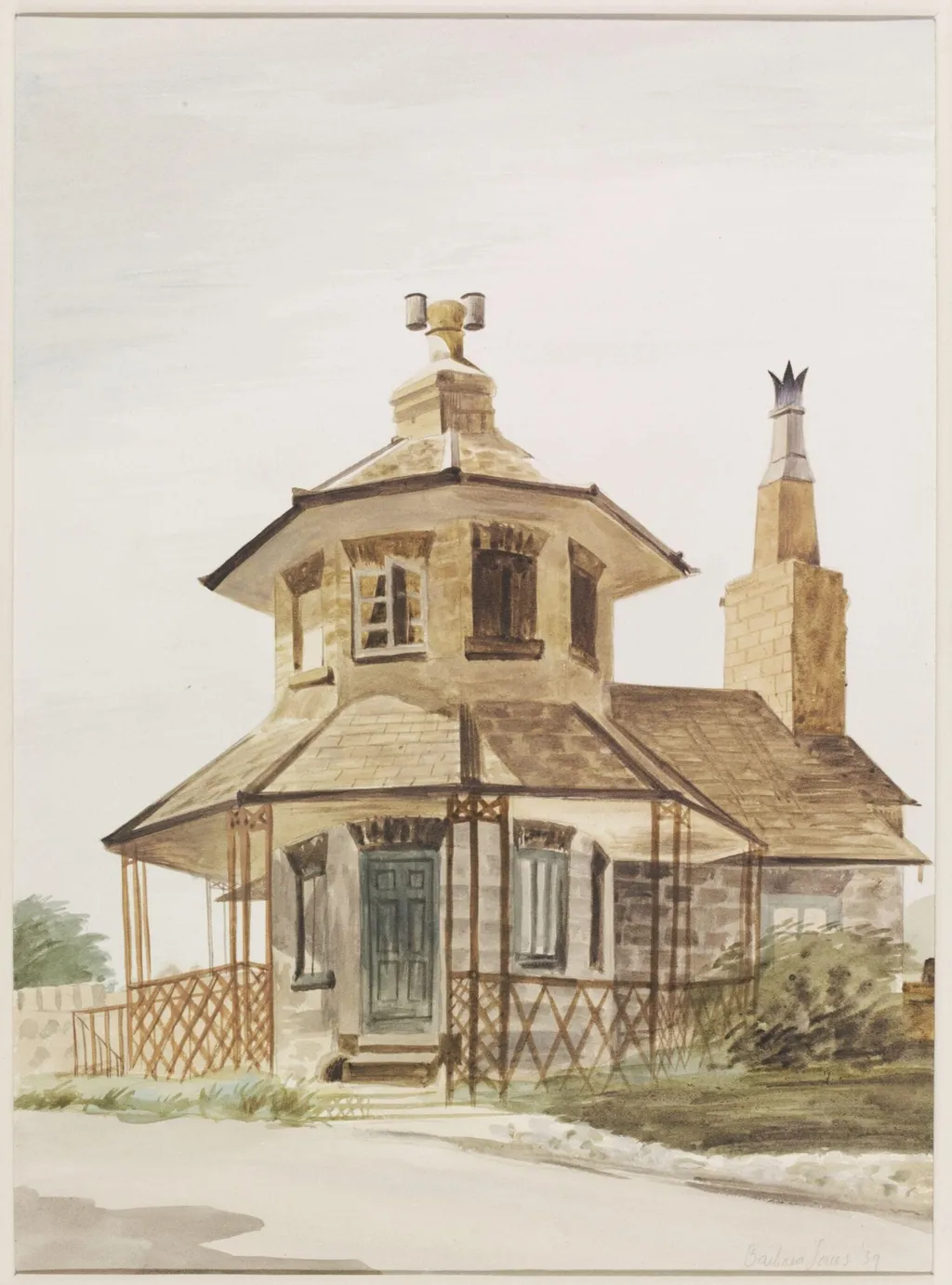
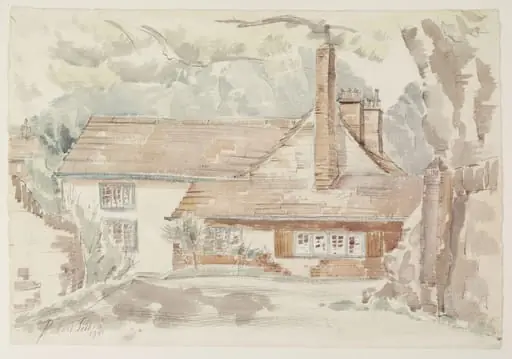
Toll House, Trewalchmai, Anglesey is a watercolor work on paper by Barbara Jones. It dates from 1939 and is held in the collection of the Victoria and Albert Museum.
About this work
Overview
Commissioned by the Pilgrim Trust and overseen by Sir Kenneth Clark, the initiative sought to preserve images of places at risk from war or modern development.
Barbara Jones created this watercolour in 1939, capturing a modest octagonal toll house in Trewalchmai, Anglesey. The work was produced as part of the *Recording Britain* project, a government-backed effort to visually archive vulnerable rural architecture during the early years of World War II. Commissioned by the Pilgrim Trust and overseen by Sir Kenneth Clark, the initiative sought to preserve images of places at risk from war or modern development.
Subject & Meaning
The subject is a small, functional structure once used to collect road tolls, now isolated in a quiet Welsh landscape. Its presence beside a church steeple suggests a link between civic and spiritual life in a rural community. The painting does not idealize the building but records it with quiet attention, reflecting a broader concern for the fading traces of everyday heritage in a time of national uncertainty.
Technique & Style
Jones employed soft, muted watercolour washes to render the light brown brickwork and deep green door, avoiding sharp contrasts. The trellised veranda and wooden railings are suggested with delicate lines, while the sloped roof and tiny tower are simplified into clean geometric forms. The lighting is gentle, casting a subdued glow that enhances the building’s intimacy, reinforcing the work’s contemplative tone.
History & Provenance
The painting was completed in 1939 as part of the *Recording Britain* initiative, which commissioned over 150 artists to document landscapes and structures across the UK. Jones’s contribution was among hundreds acquired by the Victoria and Albert Museum, where the collection remains held. The work was not exhibited publicly until after the war, when the project’s archival purpose became widely recognized.
Context
During the late 1930s, Britain faced the dual threats of wartime destruction and rapid urban change. The *Recording Britain* project emerged as a cultural response, aiming to create a visual archive before historic sites vanished. Jones’s focus on a minor rural structure aligns with the project’s ethos: valuing ordinary architecture as part of national identity, not just grand monuments.
Legacy
Jones’s watercolour endures as a quiet testament to the *Recording Britain* project’s mission. It contributes to a broader visual record of pre-war rural life, preserved in museum collections and studied for its historical and artistic value. The painting’s restraint and attention to detail reflect a generation of artists who saw documentation as an act of cultural preservation.
Artist & collection
Artist
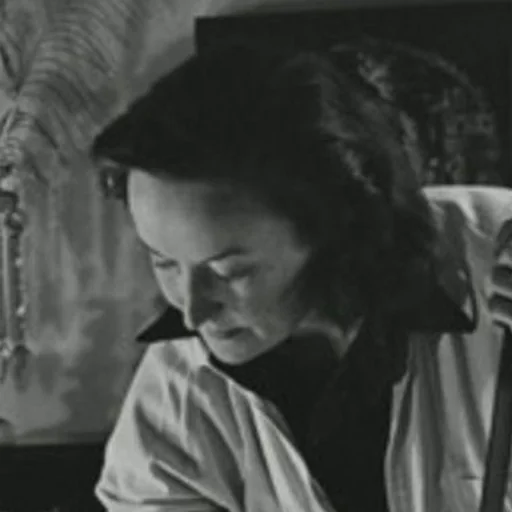
Barbara Mildred Jones (25 December 1912 – 28 August 1978) was an English artist, writer and mural painter. She is known for curating the exhibition Black Eyes and Lemonade (1951) and her book The Unsophisticated Arts (1951).

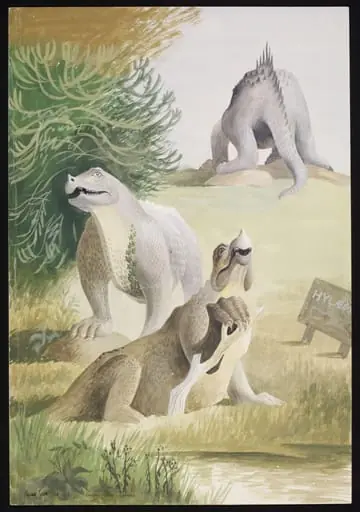 Crystal Palace Gardens, Sydenham, Kent
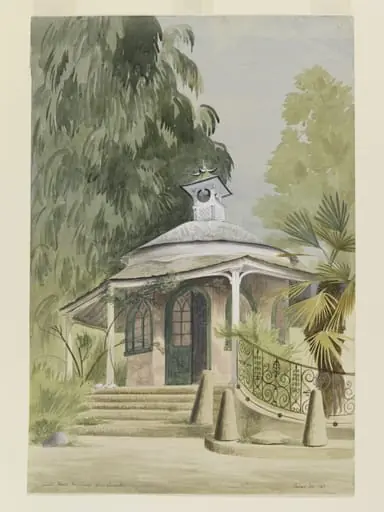 Summer House, Marlborough House, Falmouth
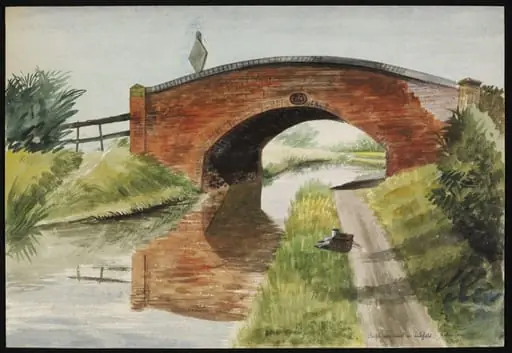 Bridge over Canal, near Litchfield
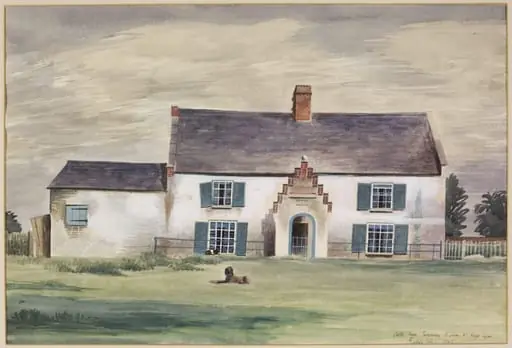 Castle Farm, Terrington St John, near King's Lynn
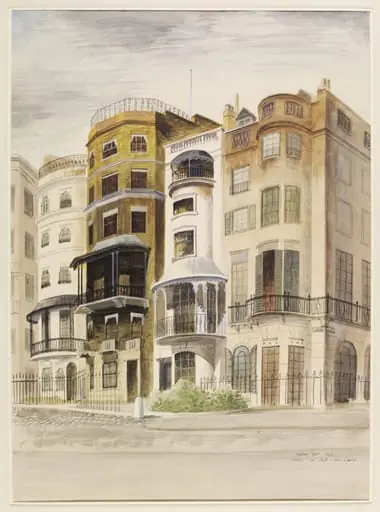 93 to 97 Park Lane, W.1.
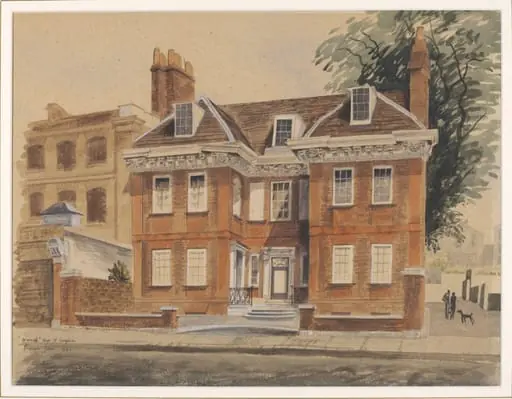 "Wrencote," High Street, Croydon
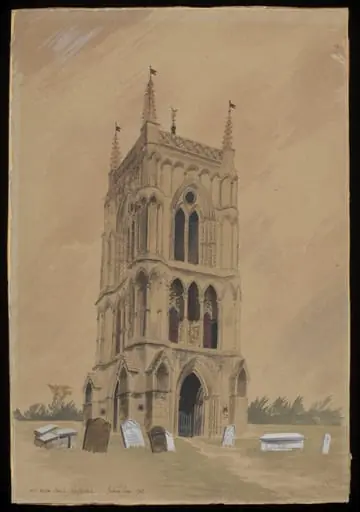 The bell tower, St. Mary's Church, West Walton near Wisbech
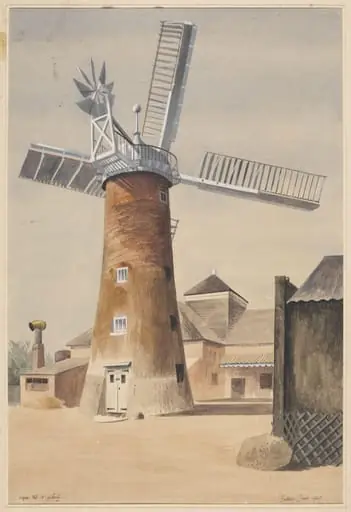 The Mill, Walpole Highway, near Wisbech
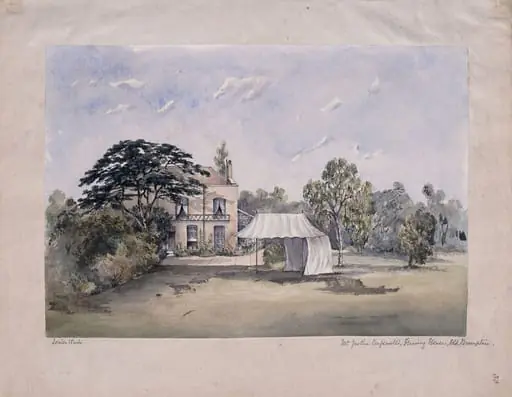 Fleming House
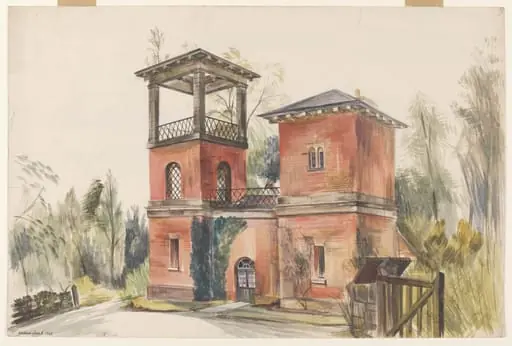 Alton Lodge
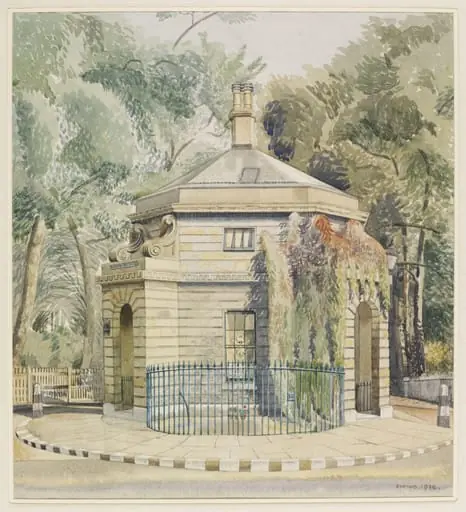 Hanover Gate, Regent's Park, N.W.8
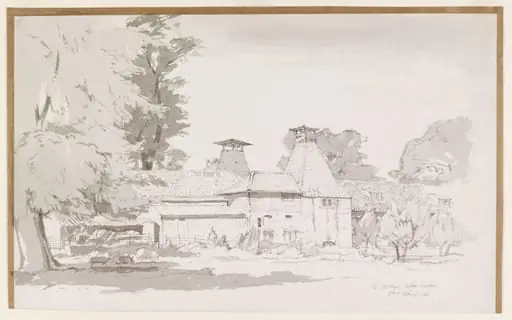 The Maltings, Saffron Walden
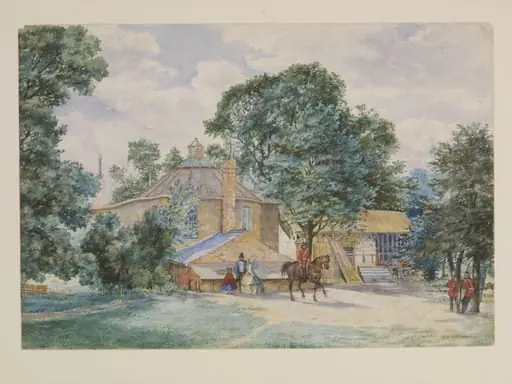 The first lecture theatre at the South Kensington Museum, later the Victoria and Albert Museum
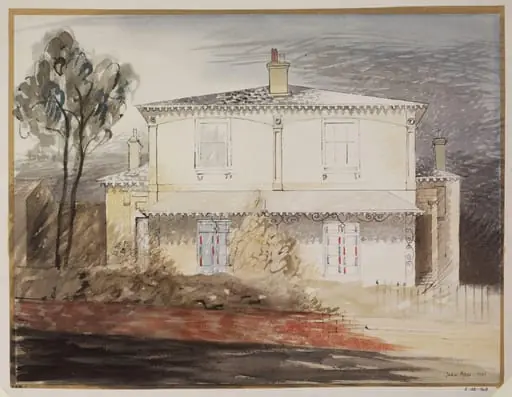 A House, Maidenhead
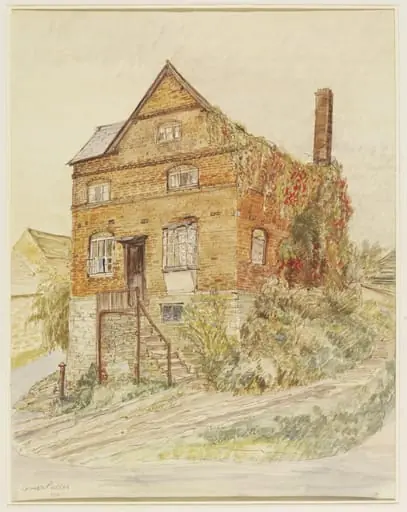 House, Wigmore
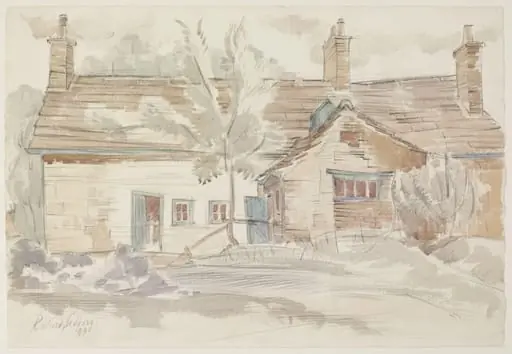 Cottages at Norton, No.4
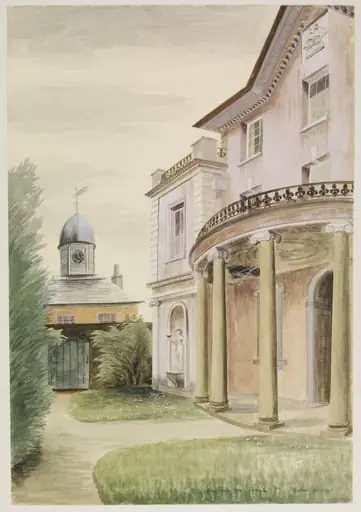 Marlborough House, Falmouth
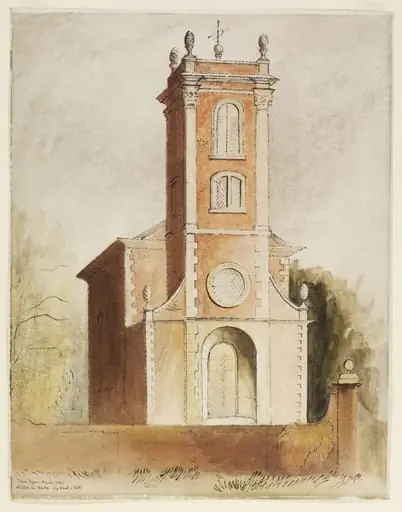 Busby's Church, Willen
 Cottages at Norton, No.2