Artwork
Boy and girl, lighting a candle
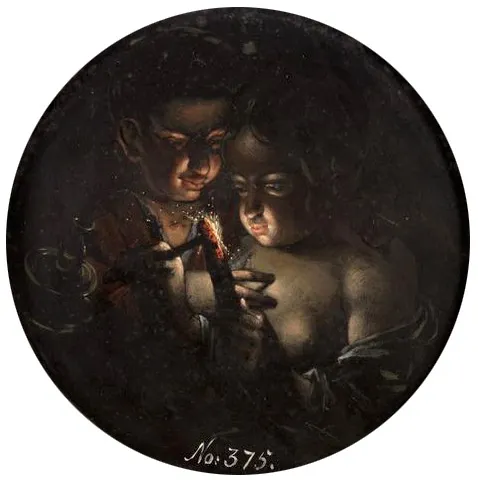
Boy and girl, lighting a candle is a color painting by the Dutch Golden Age artist Dirck de Quade van Ravesteyn. It dates from 1605 and is held in the collection of the Kunsthistorisches Museum.
About this work
Overview
Boy and girl, lighting a candle is a 1605 painting by Dirck de Quade van Ravesteyn, a Dutch Golden Age artist associated with the court of Rudolf II, Holy Roman Emperor. The work is part of the Kunsthistorisches Museum's collection.
Subject & Meaning
The painting portrays a serene moment of two children collaborating to light a candle, their attention focused on the task. The boy, in a white shirt, holds the candle, while the girl, in a white dress, operates the lighter. Their shared, intent gaze conveys a sense of quiet contemplation.
Technique & Style
Van Ravesteyn employed chiaroscuro to create depth and dimensionality, juxtaposing the illuminated figures against a dark, shadowy background. This contrast enhances the sense of intimacy and highlights the central action.
History & Provenance
Created in 1605, the painting is characteristic of the Dutch Golden Age. Originally part of the imperial collection under Rudolf II, it is now housed in the Kunsthistorisches Museum.
Context
As a court artist for Rudolf II, van Ravesteyn's work reflects the cultural and artistic values of the Holy Roman Empire during the Dutch Golden Age, blending Dutch realism with the patron's preferences for symbolic and contemplative themes.
Legacy
While specific impact on later artists is not well-documented, the painting contributes to the broader legacy of Dutch Golden Age painting, particularly in its use of chiaroscuro to evoke emotional depth in everyday scenes.
Artist & collection
Artist
Dirck de Quade van Ravesteyn (1565 – 1620), was a Dutch Golden Age painter active in the court of Rudolf II, Holy Roman Emperor.


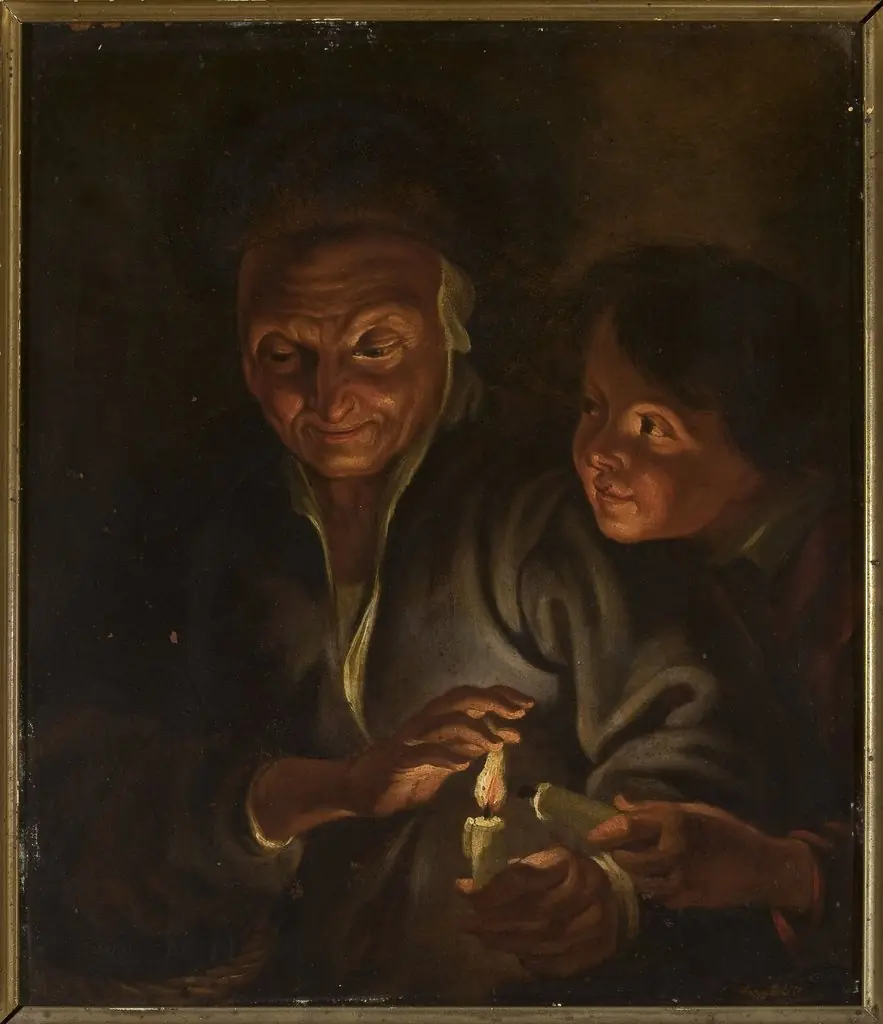 Old woman and a boy with a candle
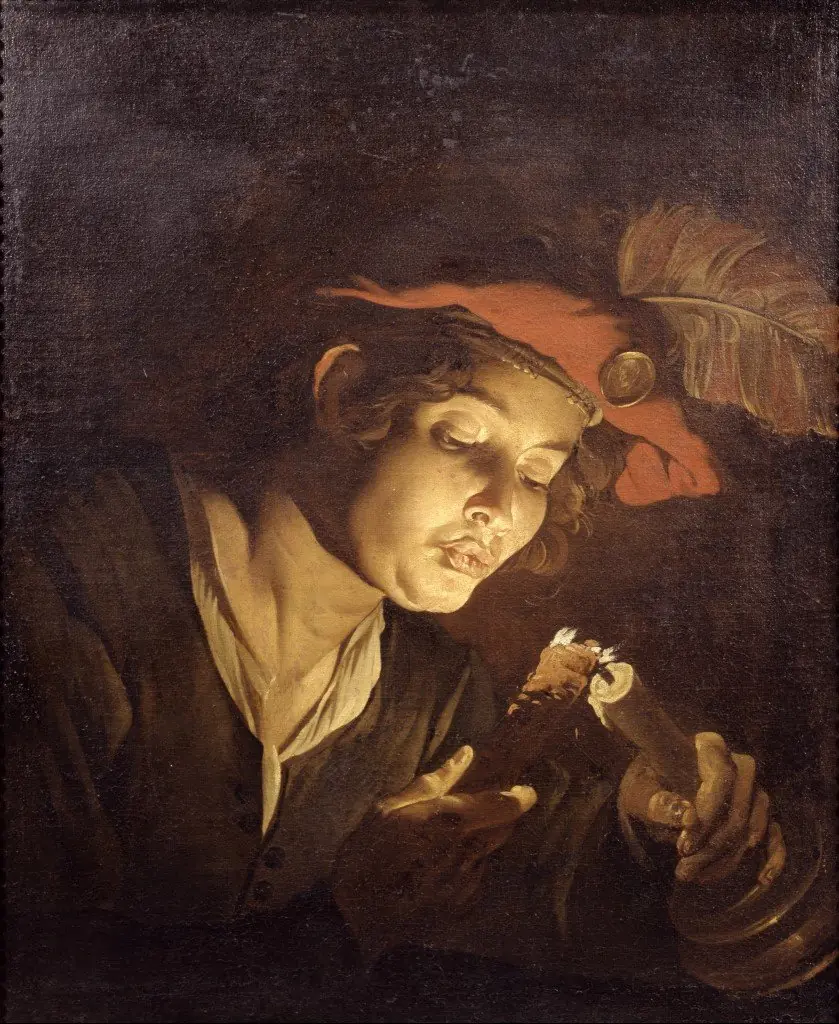 Boy lighting a candle from a wick
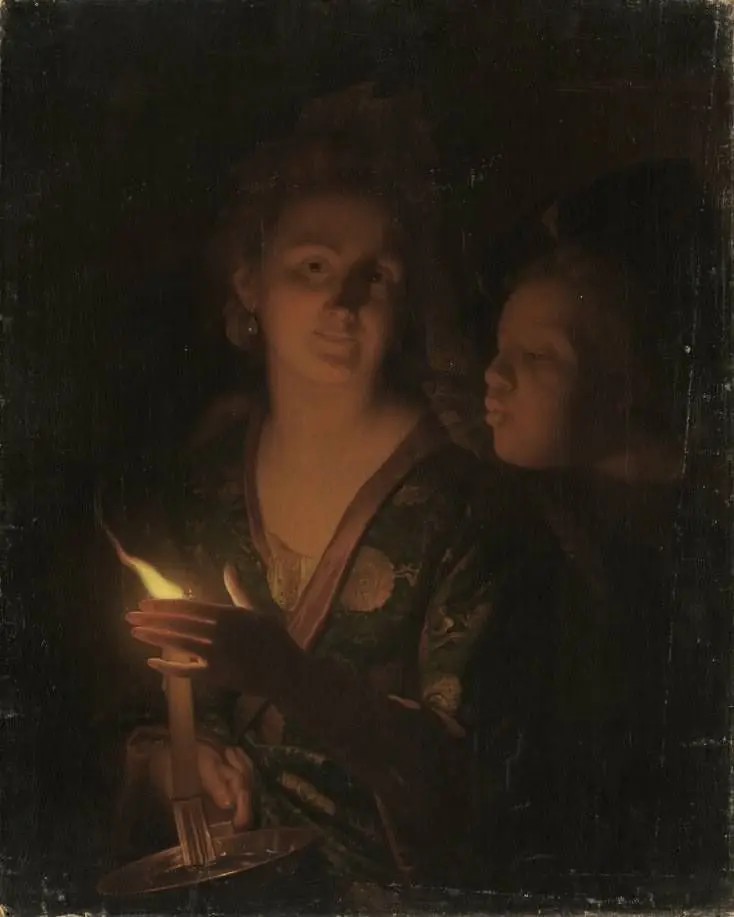 Woman with a candle that a boy tries to blow out
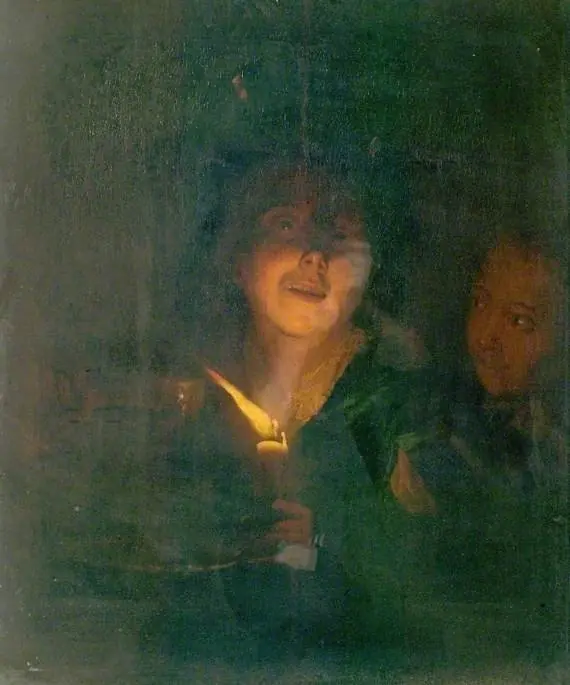 Candlelight
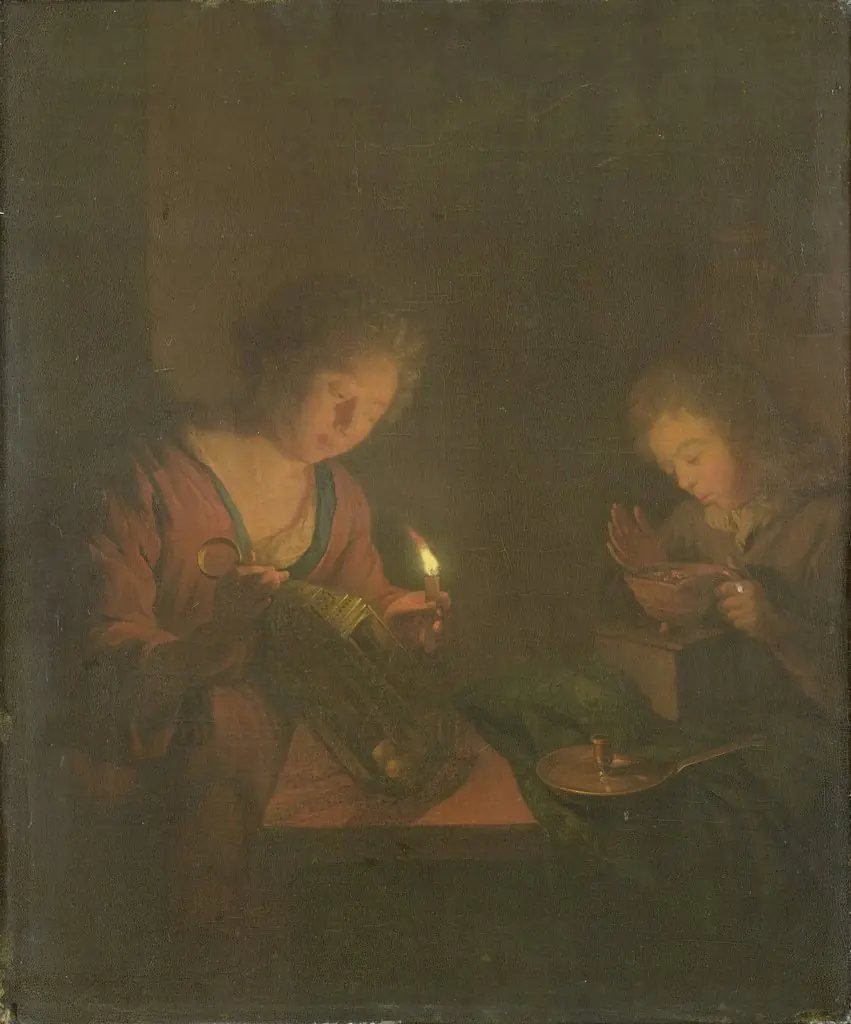 A girl putting a candle in a lantern and a boy testing the fire in a footwarmer
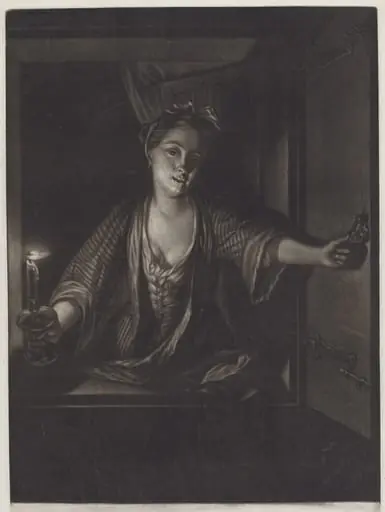 Girl with a Candle
 Fire and Light (A Girl Places a Candle in a Lantern and a Boy Blows on the Coals in a Chafing-Dish)
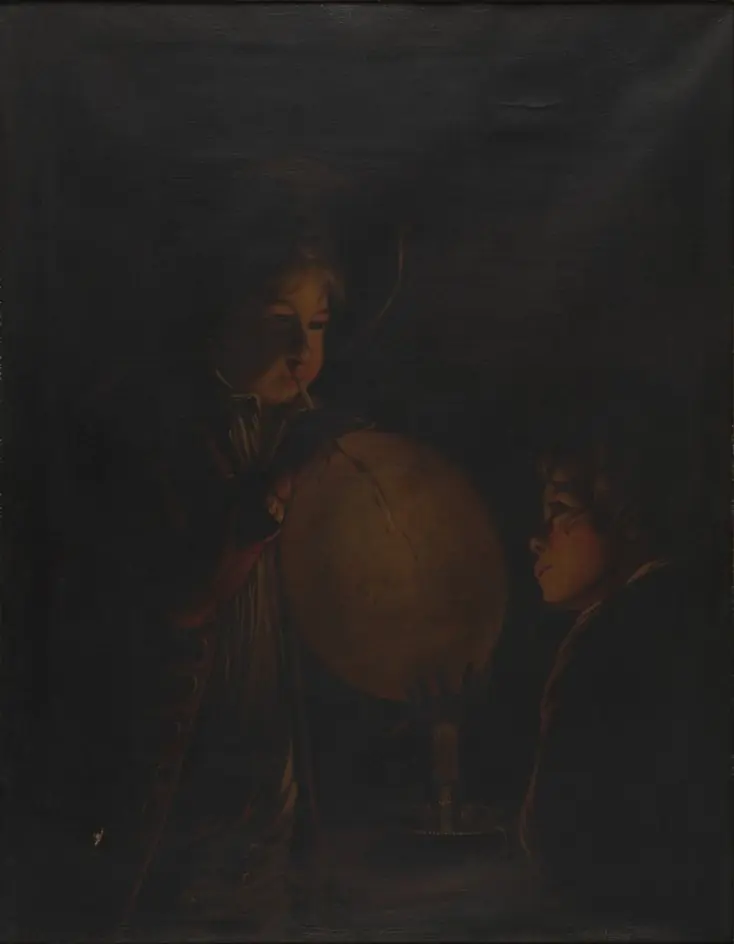 Two Boys with a Bladder: Candlelight Effect