Artwork
Flötenspielerin (Allegorie der Musik?)
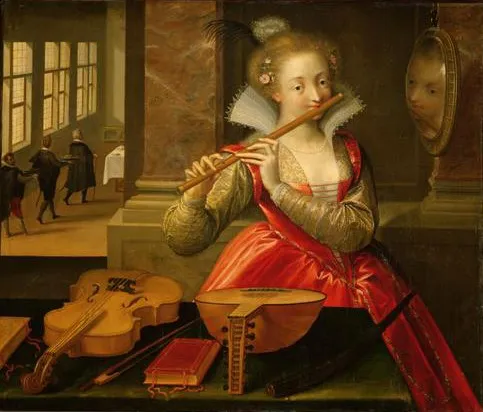
Flötenspielerin (Allegorie der Musik?) is an oil painting by the Early Baroque Italian artist Dirck de Quade van Ravesteyn. It dates from 1600 and is held in the collection of the Kunsthistorisches Museum.
About this work
Overview
Painted around 1600 by Dirck de Quade van Ravesteyn, this oil-on-panel work depicts a woman playing a flute in an interior setting.
Painted around 1600 by Dirck de Quade van Ravesteyn, this oil-on-panel work depicts a woman playing a flute in an interior setting. Though titled *Flötenspielerin (Allegorie der Musik?)*, its allegorical intent remains tentative. The artist, active in the late Renaissance and early Baroque periods, was employed at the court of Rudolf II in Prague, where he absorbed Italianate stylistic influences. The painting is now part of the Kunsthistorisches Museum’s collection in Vienna.
Subject & Meaning
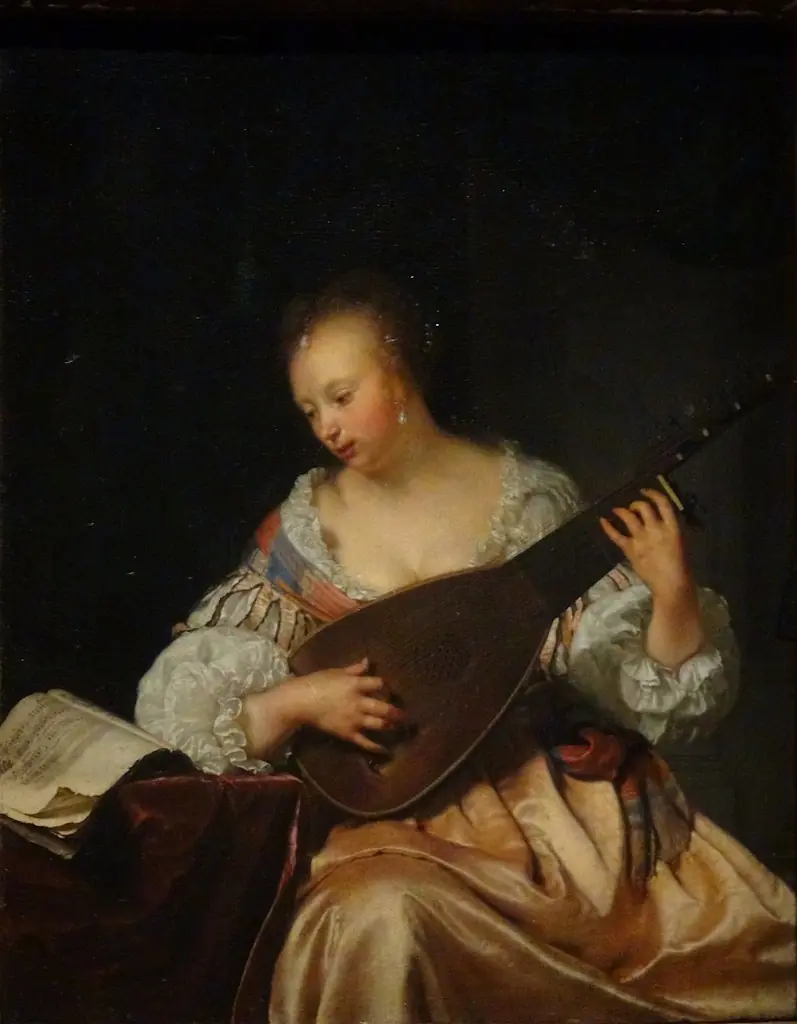
The central figure, a woman engaged with a flute, suggests an association with music, though no definitive symbolic program is confirmed. Her elaborate attire and the presence of a violin and harp nearby imply a connection to courtly musical culture. The mirror reflecting her face may allude to self-contemplation or the reflective nature of art, but no textual evidence confirms a specific allegory. The scene resists clear narrative, favoring quiet, introspective presence over overt symbolism.
Technique & Style
Ravesteyn employs chiaroscuro to model the figure against a dim interior, enhancing her three-dimensionality and isolating her from the background. The rich red of her dress contrasts with muted tones in the room, drawing focus to her form. Details like the high collar and puffy sleeves reflect contemporary Netherlandish fashion, while the soft rendering of textures—fabric, wood, metal—shows attention to material realism. The composition is tightly framed, emphasizing intimacy over grandeur.
History & Provenance
Created during Ravesteyn’s tenure at the court of Rudolf II, the painting likely originated in Prague’s artistic circle, where Italian and Northern European styles converged. It remained in imperial collections, eventually entering the Kunsthistorisches Museum’s holdings. No significant changes in ownership are documented between its creation and its current location, suggesting continuous preservation within elite European collections since the early 17th century.
Context
In the early 1600s, Rudolf II’s court was a hub for Mannerist and early Baroque art, attracting painters who blended Northern detail with Italian compositional ideals. Allegorical figures, especially those linked to the arts, were popular among patrons seeking refined cultural expression. This work reflects that trend, though its subdued setting and lack of mythological references distinguish it from more elaborate allegories of the period.
Legacy
While not widely known outside specialist circles, the painting exemplifies the quiet, introspective strand of early Baroque portraiture in Central Europe. It illustrates how Northern artists adapted Italian techniques to depict domestic, symbolic subjects without theatricality. Its preservation in a major museum underscores its value as a document of courtly visual culture during a transitional moment in European art.
Artist & collection
Artist
Dirck de Quade van Ravesteyn (1565 – 1620), was a Dutch Golden Age painter active in the court of Rudolf II, Holy Roman Emperor.

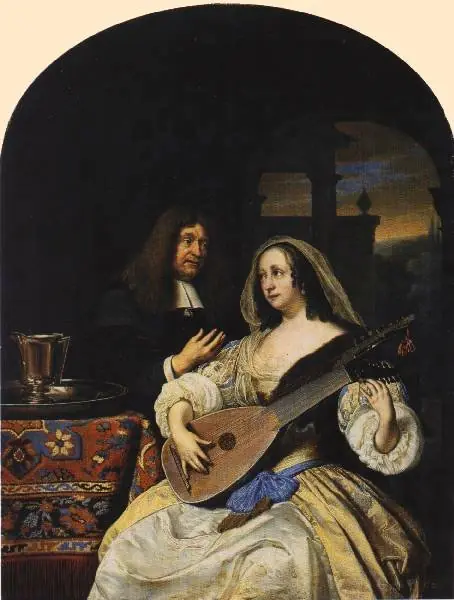 Portrait of François de le Boë (Sylvius) and his Wife
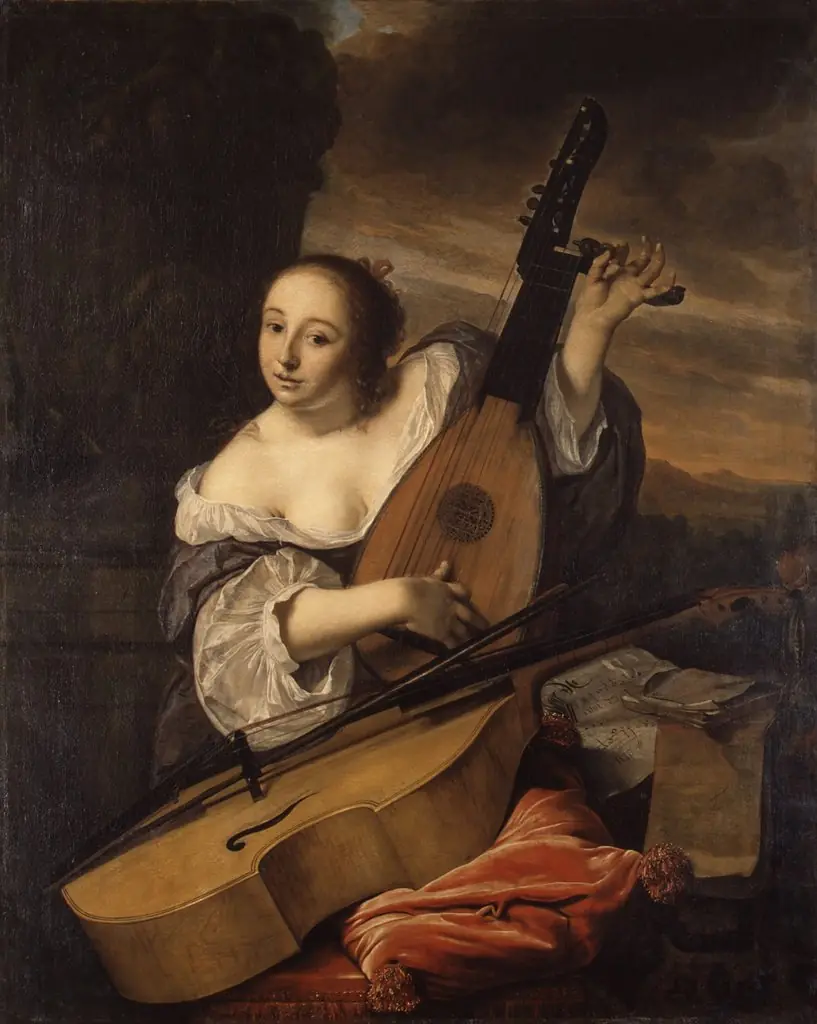 The Musician
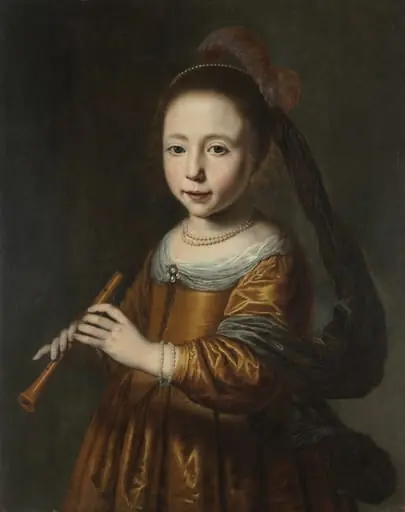 Portrait of Elizabeth Spiegel
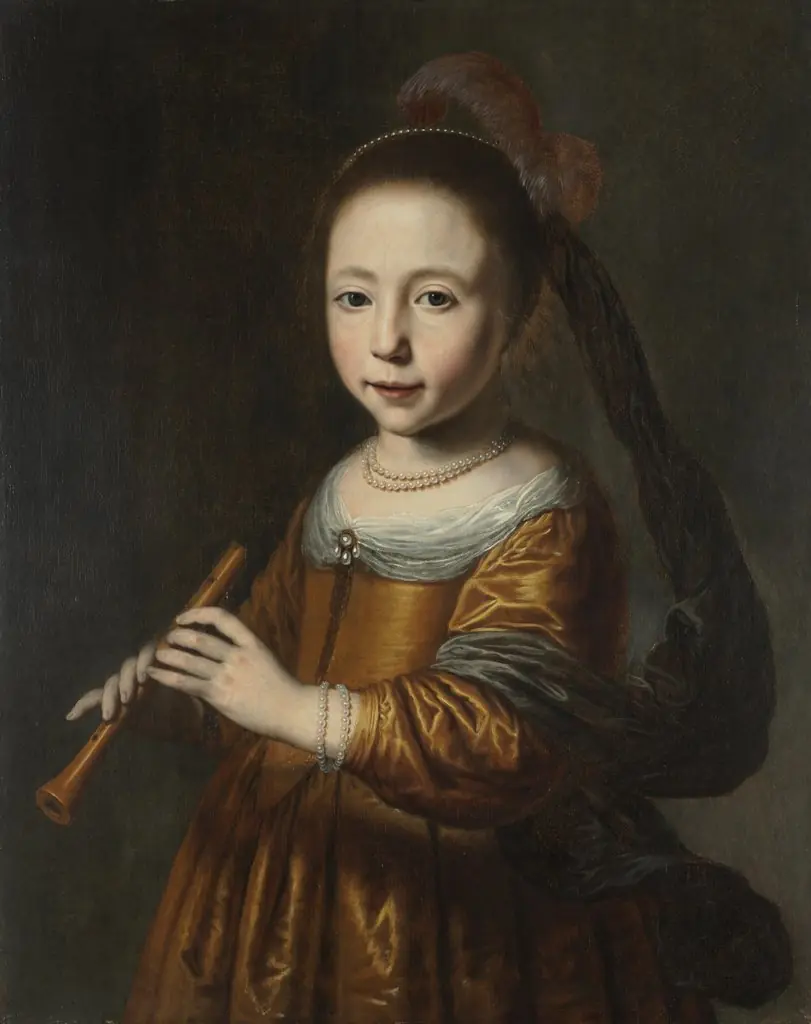 Portrait of Elizabeth Spiegel
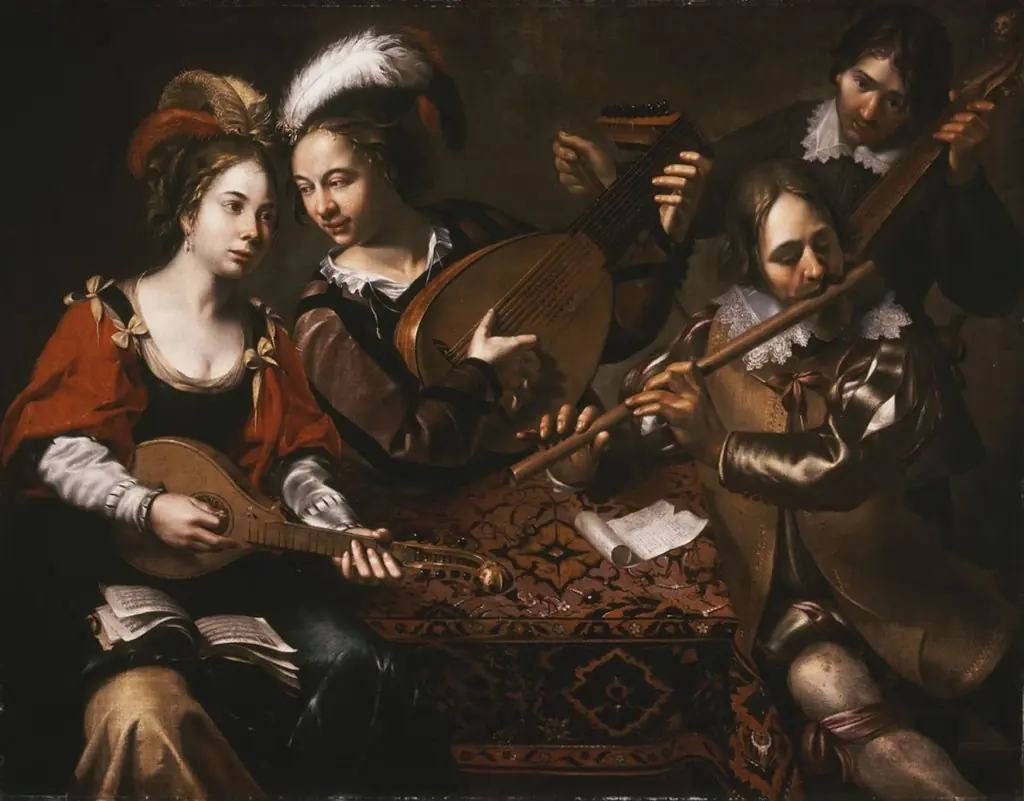 Company Making Music
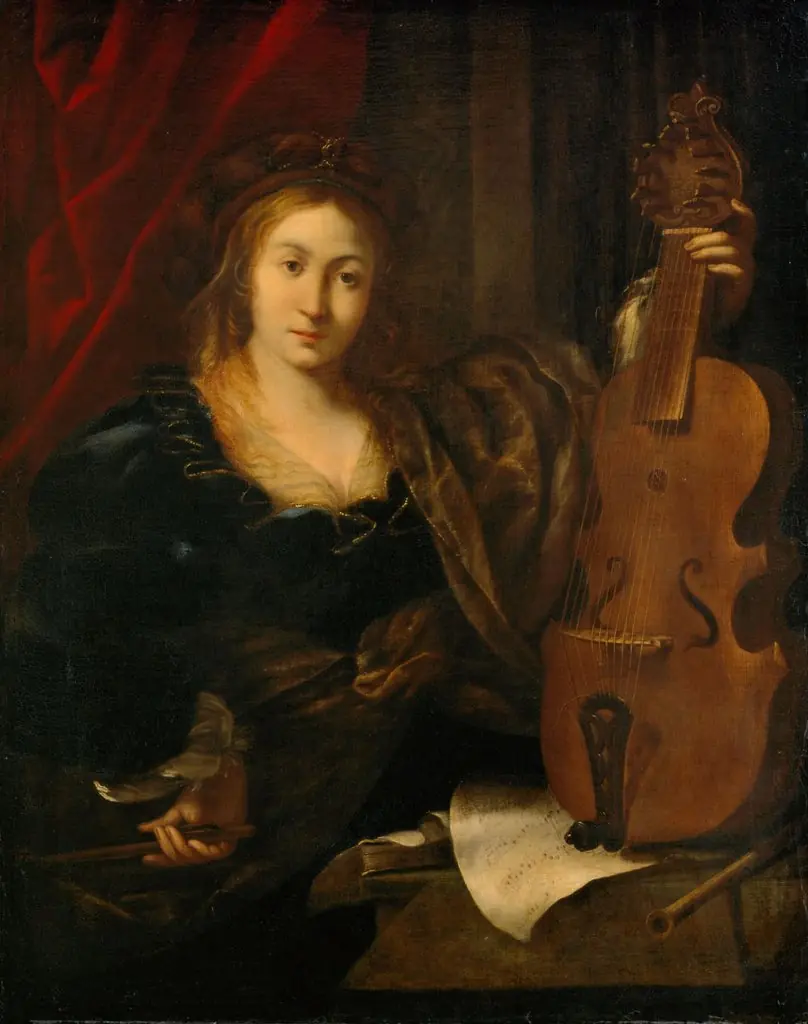 Young woman with a lira da gamba
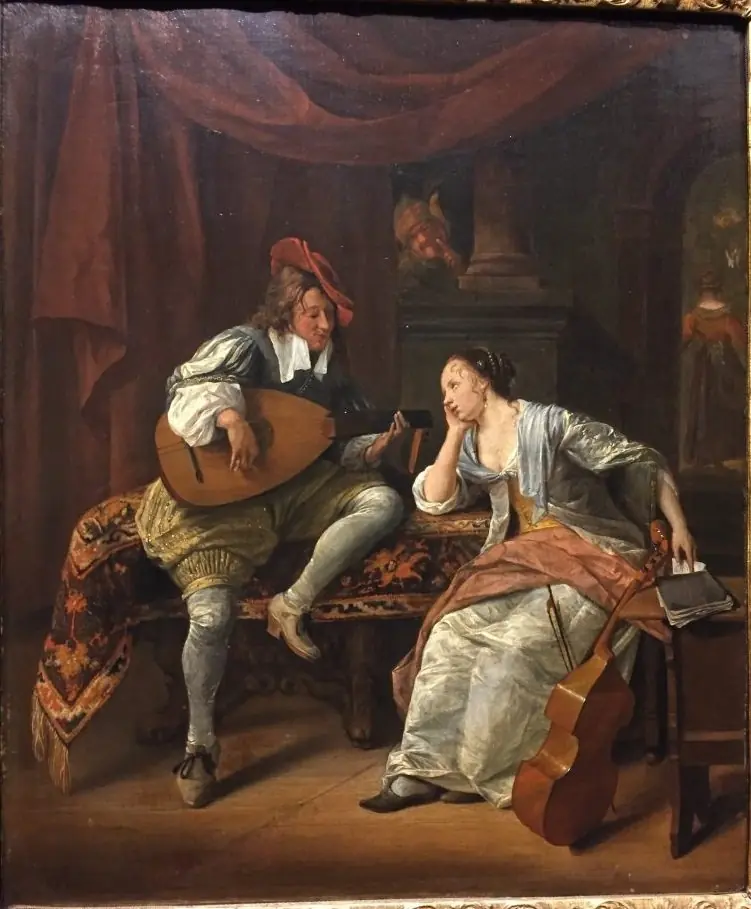 Cavalier Playing a Lute to a Lady (‘Lucelle and Ascagnes’)
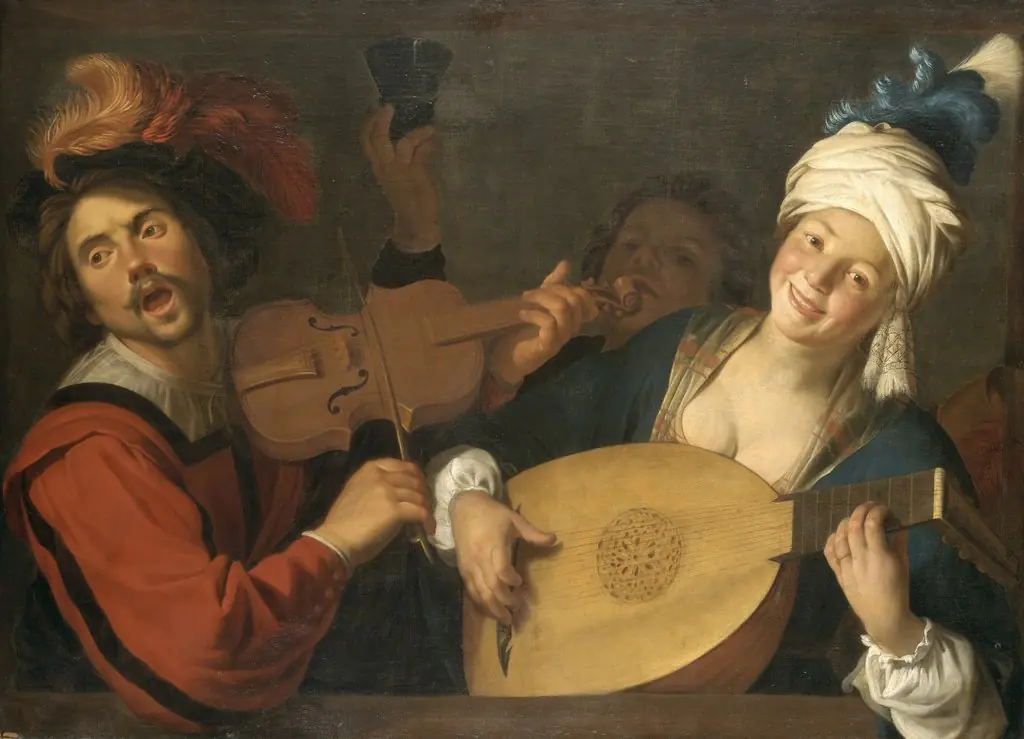 Couple making music behind a balustrade
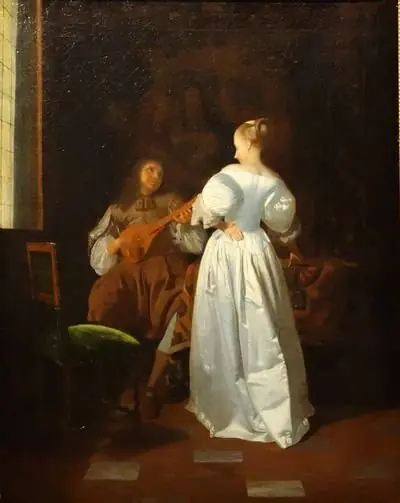 Man playing the cithern and a young woman in an interior
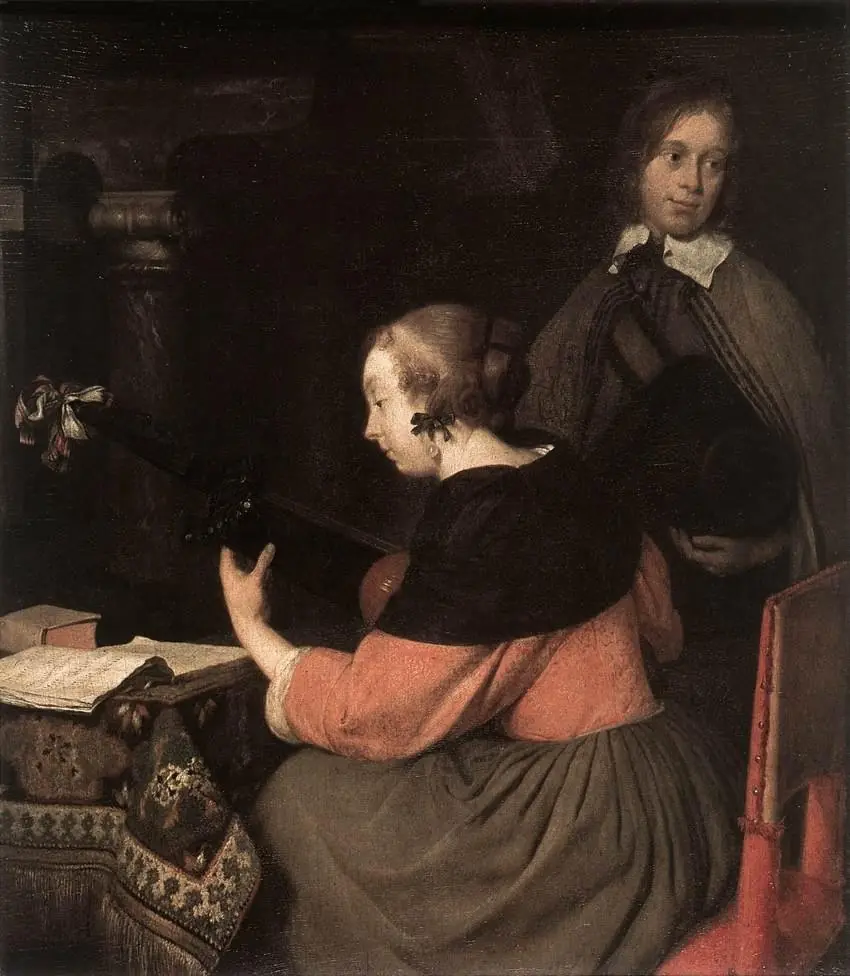 Luteplayer
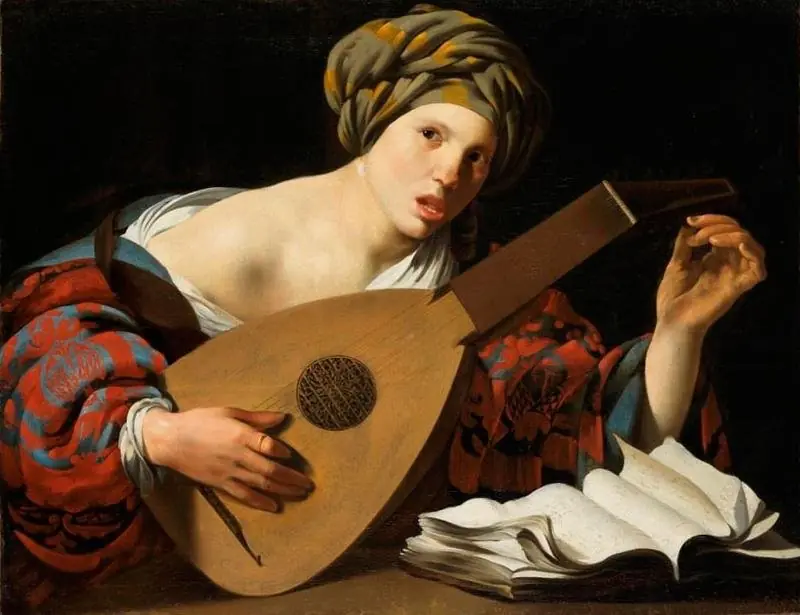 Young woman tuning a lute
 A Woman Playing a Lute