Artwork
Dirk Bouts (en atelier). Hugo van der Goes. Anoniem. Triptiek met de Marteldood van de Heilige Hippolytus Zijpanelen, voorzijde
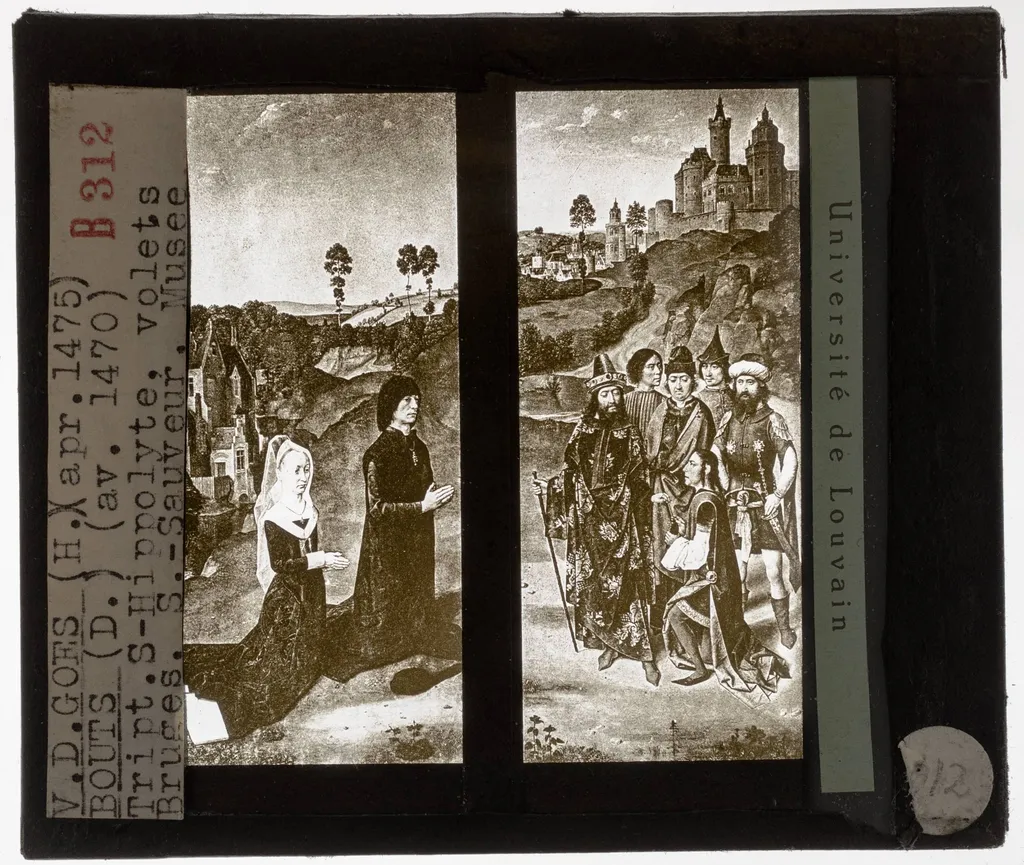
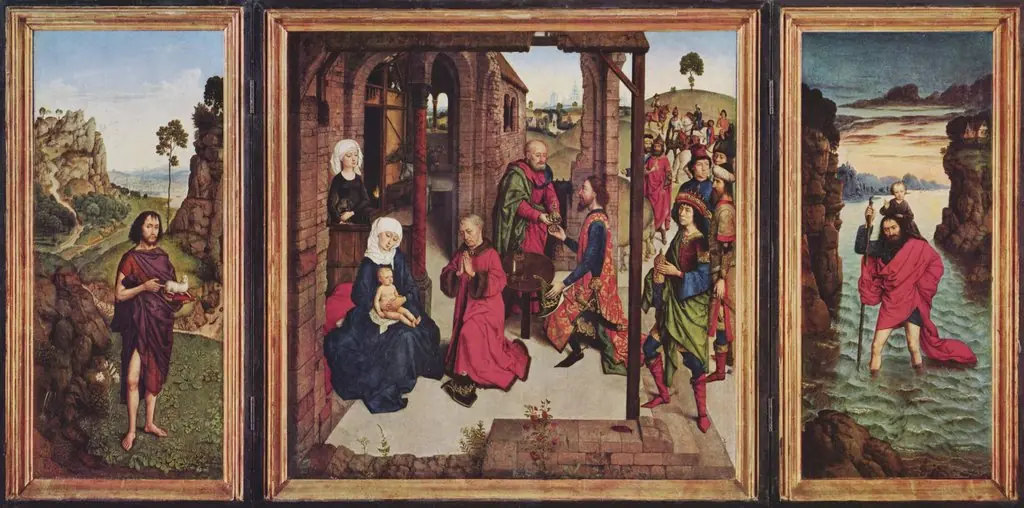
Dirk Bouts (en atelier). Hugo van der Goes. Anoniem. Triptiek met de Marteldood van de Heilige Hippolytus Zijpanelen, voorzijde is an unspecified painting by the Early Baroque Italian artist Dieric Bouts. It is held in the collection of the Catholic University of Leuven. The triptych portrays the martyrdom of Saint Hippolytus, depicting his violent death across three panels.
About this work
Overview
The triptych portrays the martyrdom of Saint Hippolytus, depicting his violent death across three panels. Executed in oil on wood between 1470 and 1479, the work belongs to the Flemish Primitive tradition. Today the panels are displayed in St. Salvator’s Cathedral in Bruges, Belgium.
Subject & Meaning
The central narrative shows Hippolytus being slain, with blood flowing and his garments torn, while a rearing horse adds dynamism to the scene. The composition emphasizes the saint’s suffering and steadfast faith, inviting contemplation of martyrdom as a testament to spiritual conviction.
Technique & Style
The artist employed layered oil glazing, a hallmark of early Netherlandish painting, to achieve a luminous surface. Soft, glowing colors contrast with the graphic violence, creating depth and allowing subtle light to penetrate the figures, a characteristic approach of the Flemish Primitives.
History & Provenance
Created in the late 15th century, the triptych entered the collection of St. Salvator’s Cathedral, where it has remained in situ. Documentation from the 19th century records its presence in the cathedral, confirming its continuous ecclesiastical context.
Context
During the period of its production, Bruges was a thriving artistic centre, and the Flemish Primitive style emphasized meticulous detail and naturalistic representation. The work reflects contemporary devotional practices that favored vivid, emotionally resonant depictions of saints’ lives.
Legacy
The triptych stands as an example of early oil painting techniques that influenced subsequent generations of Northern European artists. Its preservation in a liturgical setting offers insight into the visual culture of late medieval Belgium.
Artist & collection
Artist
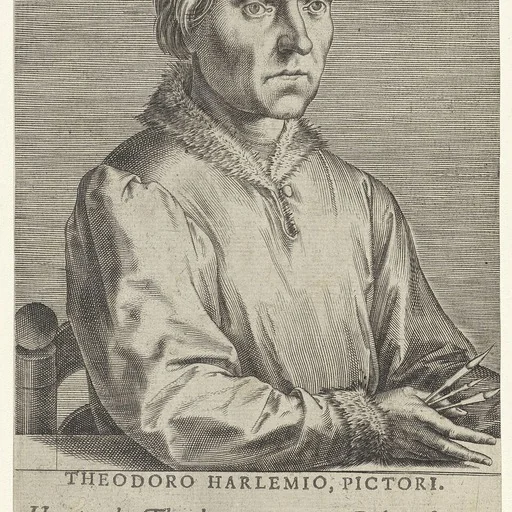
Dieric Bouts (born c. 1415 – 6 May 1475) was an Early Netherlandish painter. Bouts may have studied under Rogier van der Weyden, and his work was influenced by van der Weyden and Jan van Eyck. He worked in Leuven from…
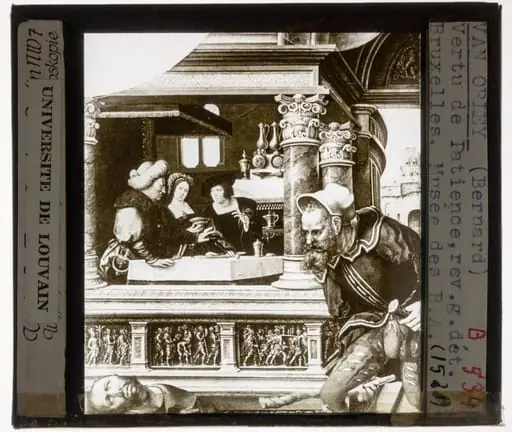 Bernard van Orley. Triptiek met de deugd van het Geduld Paneel links, achterzijde: De arme Lazarus aan de deur van de slechte rijke, detail bovenaan
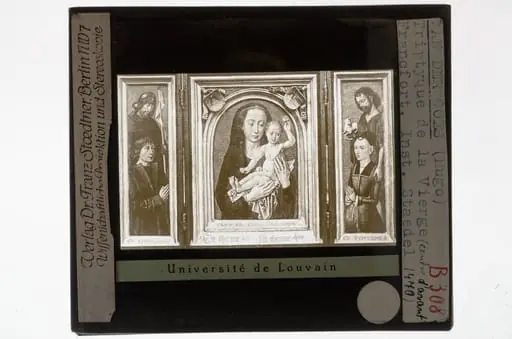 Hugo van der Goes. Triptych
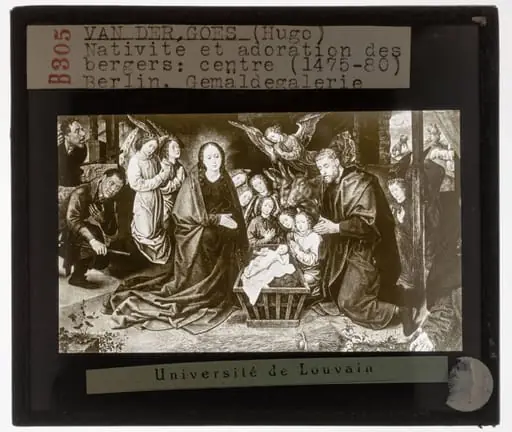 Hugo van der Goes. Kerstverhaal. Aanbidding der Herders Detail, centraal
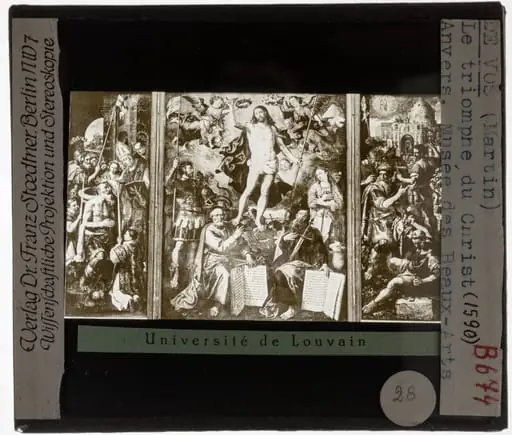 Maarten de Vos. Altaarstuk van de gilde van de oude voetboog
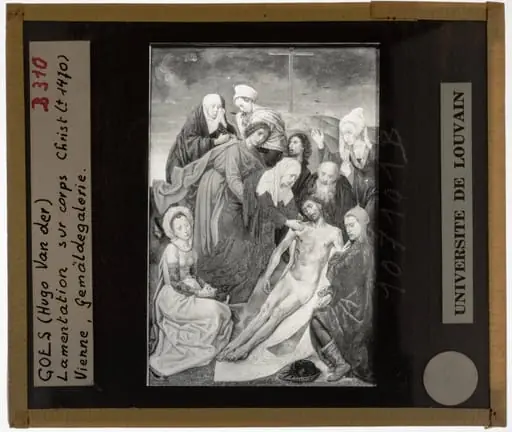 Hugo van der Goes. Diptych of Sin and Redemption Panel right: Lamentation of Christ
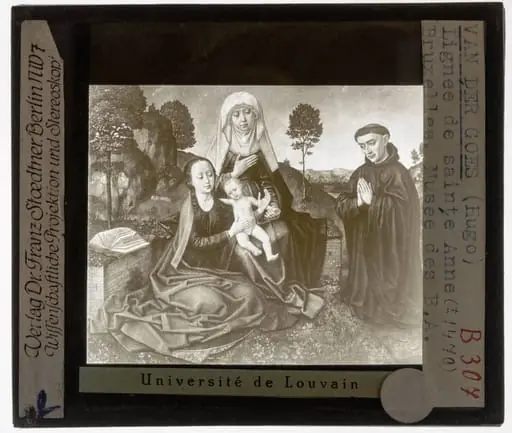 Hugo van der Goes. St Anne's with a Franciscan donor
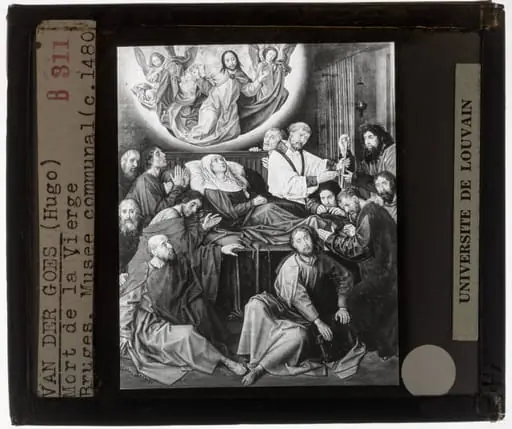 Hugo van der Goes. Death of Mary
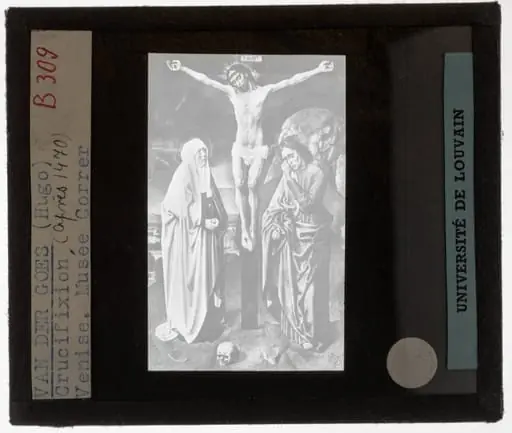 Hugo van der Goes. Kruisiging
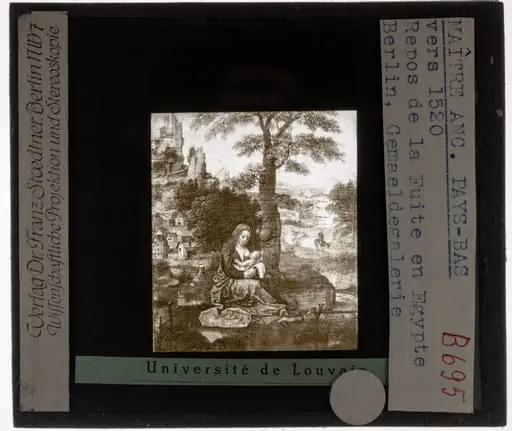 Anoniem (naar Joachim Patinir). Rust op de vlucht naar Egypte