Artwork
Lagerleben
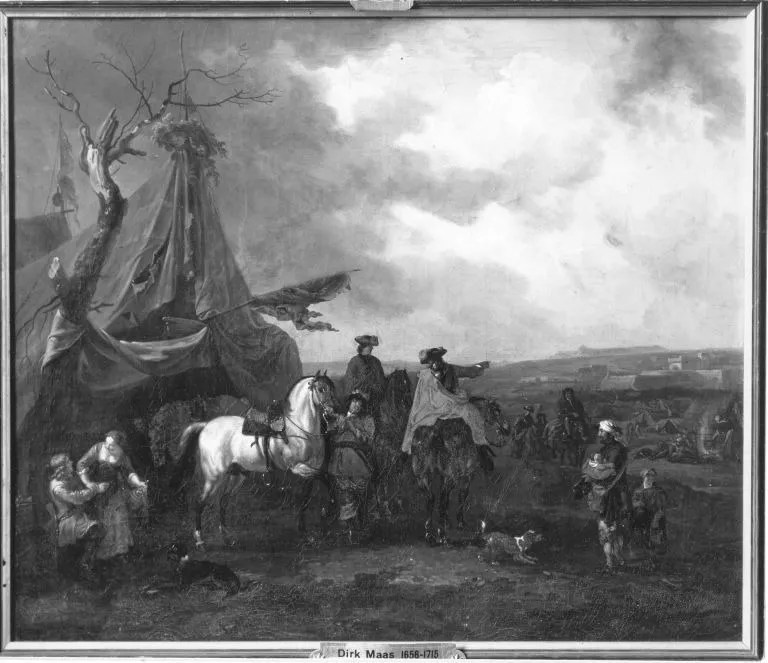
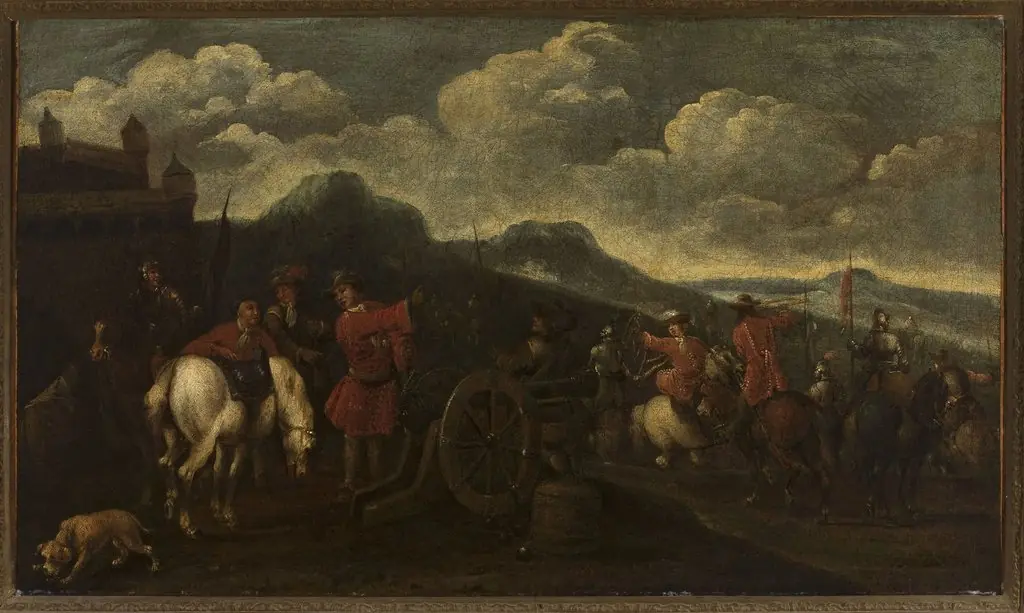
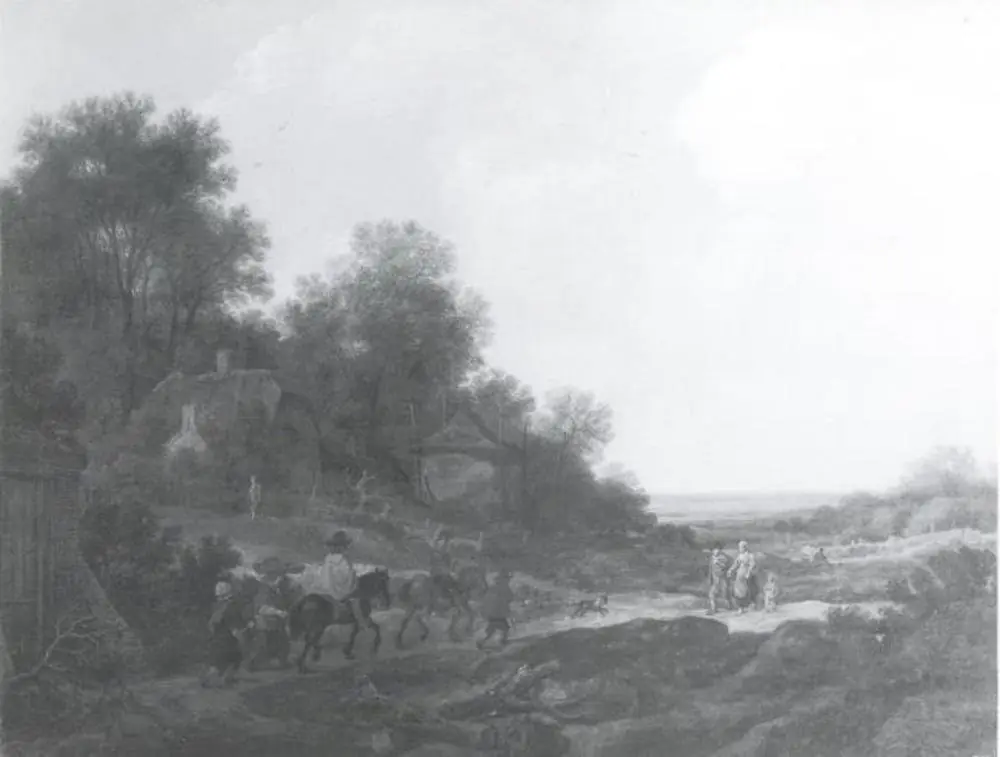
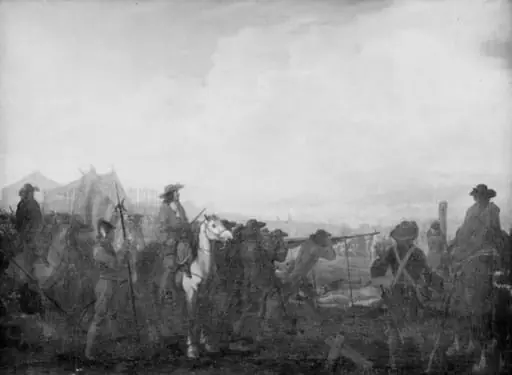
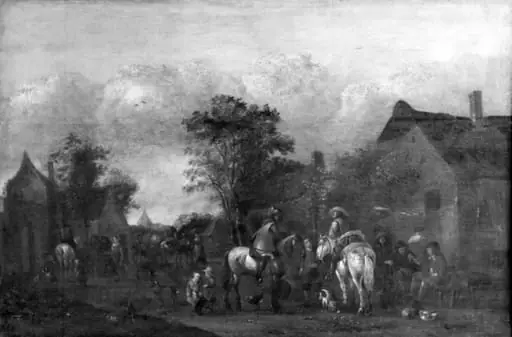
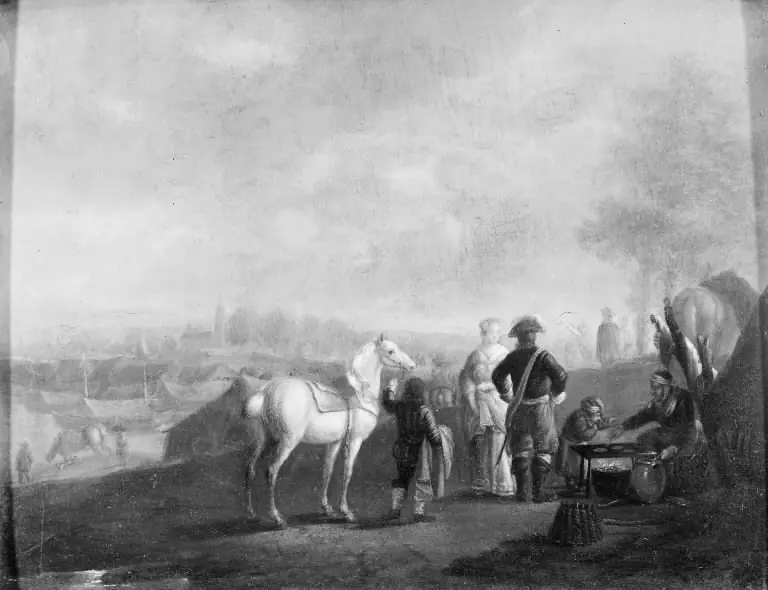
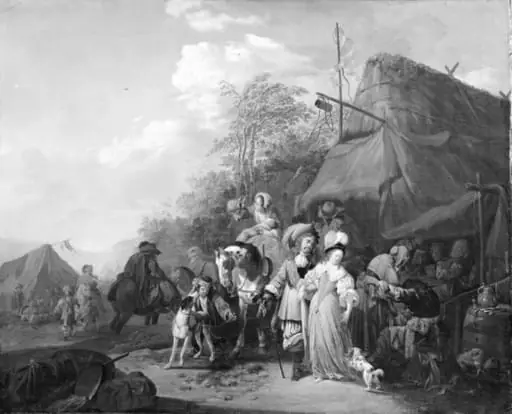
Lagerleben is an unspecified painting by the Dutch Golden Age artist Dirk Maas. It dates from 1694 and is held in the collection of the Bavarian State Painting Collections.
About this work
Overview
It captures a moment of quiet activity among travelers and their animals, rendered with careful attention to spatial arrangement and naturalistic detail.
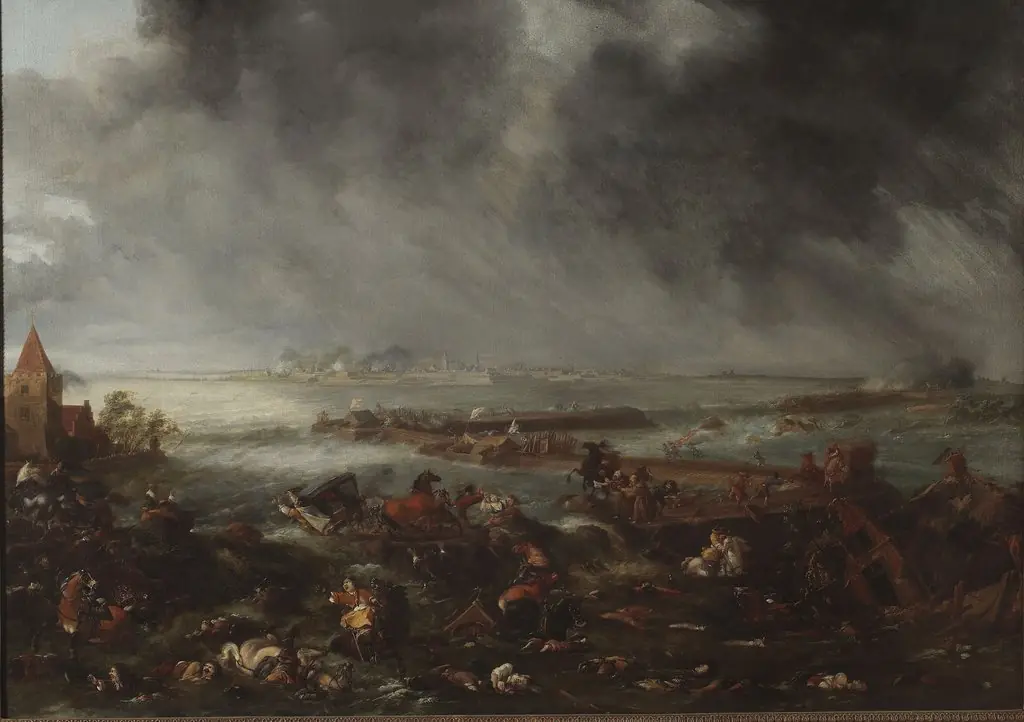
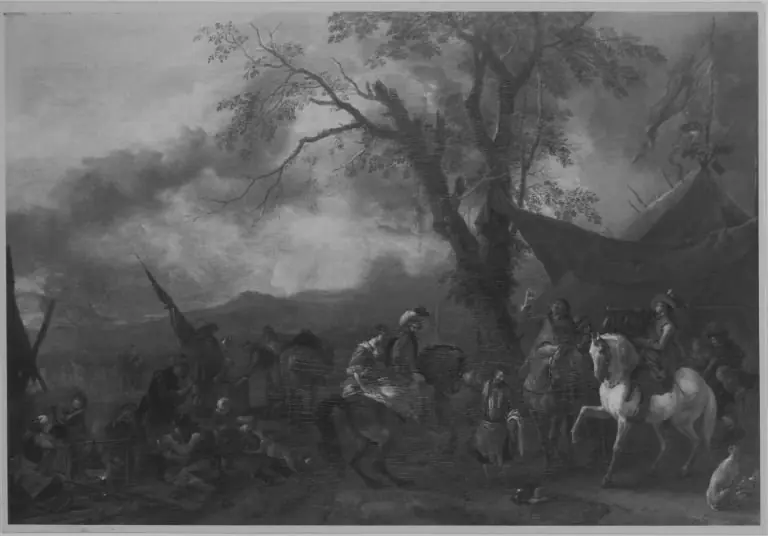
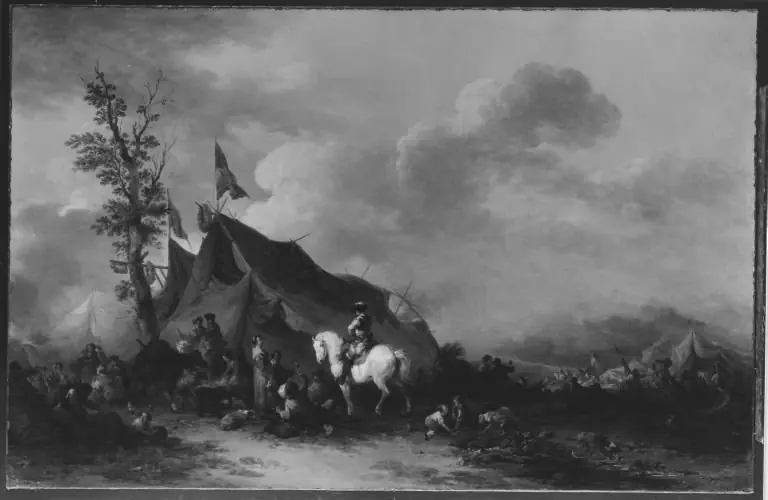
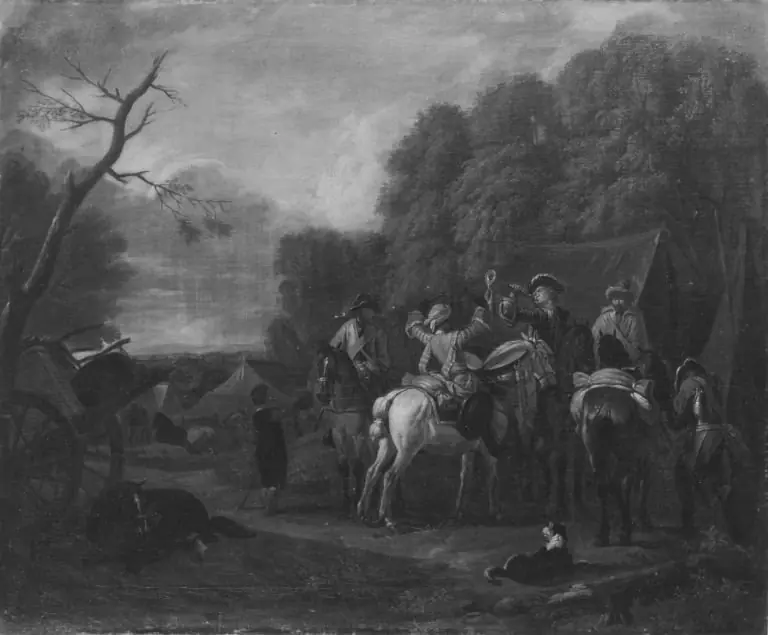
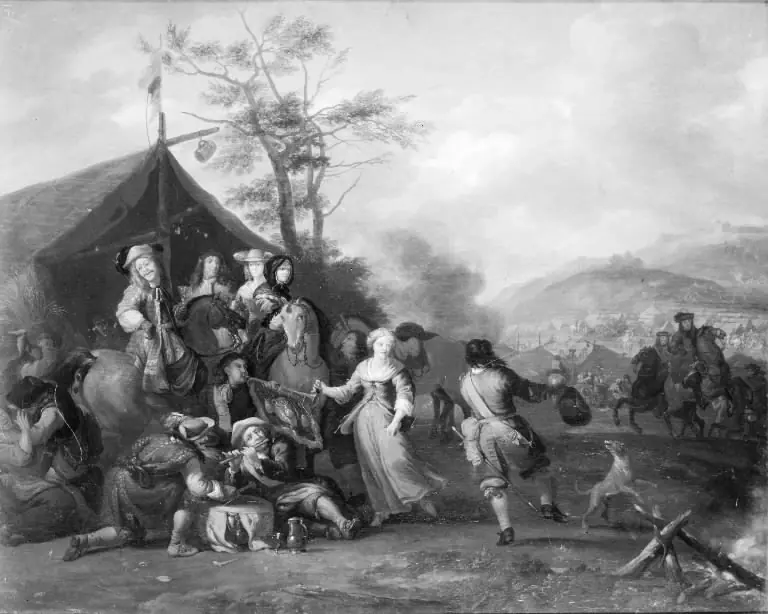
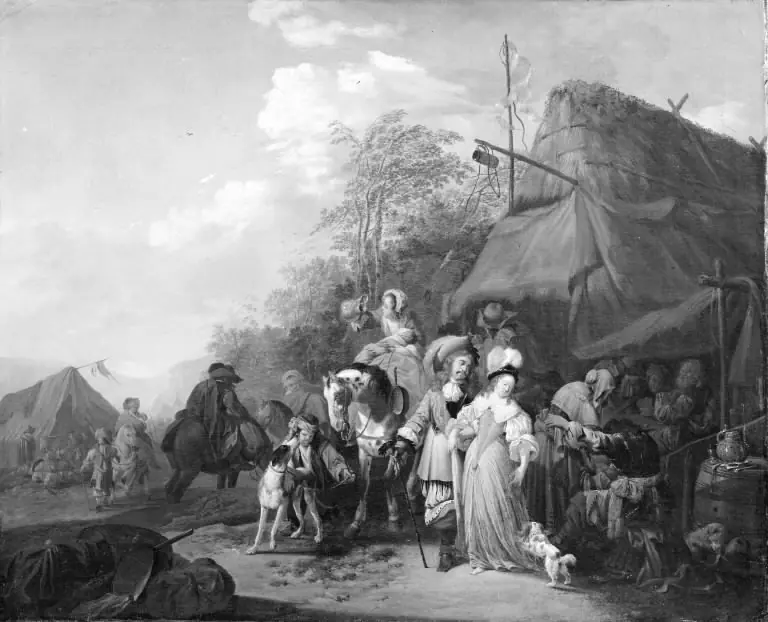
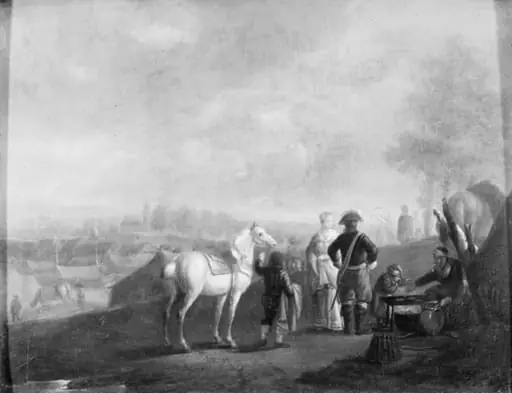
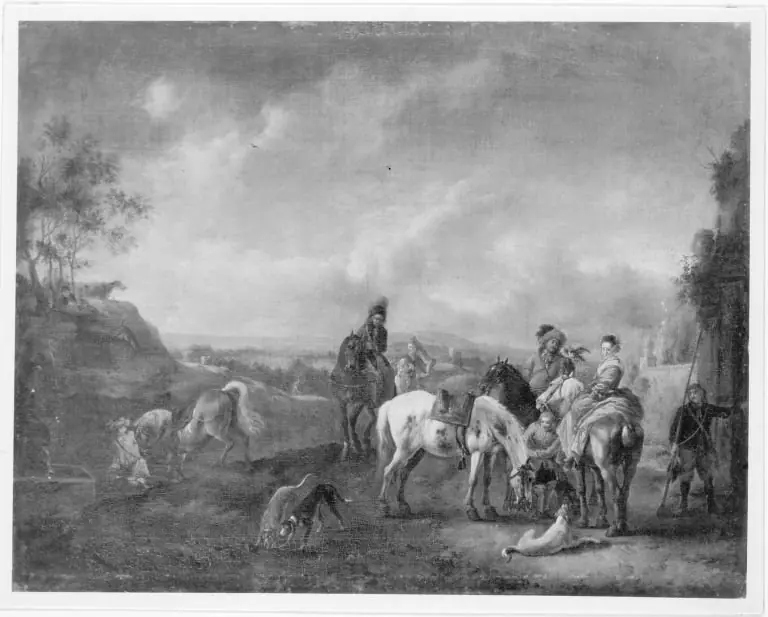
Painted in 1694 by Dirk Maas, Lagerleben is an oil on canvas depicting a rural encampment. The work is part of the collection at the Alte Pinakothek in Munich. It captures a moment of quiet activity among travelers and their animals, rendered with careful attention to spatial arrangement and naturalistic detail. The scene unfolds under an overcast sky, suggesting a transient halt rather than a permanent settlement.
Subject & Meaning
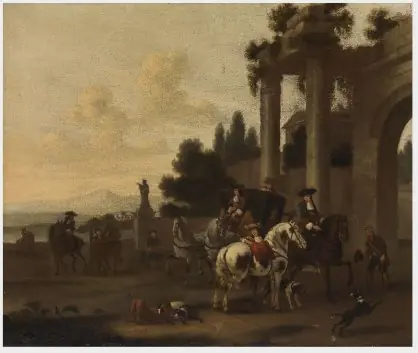
The painting portrays a group of travelers and their horses gathered near a large tent, likely a temporary resting place. Figures engage in mundane tasks—handling animals, adjusting gear—conveying a sense of routine amid travel. The presence of a man holding a dog adds a personal, intimate detail. The scene avoids grandeur, instead emphasizing the quiet dignity of everyday movement and rest in a pre-industrial landscape.
Technique & Style
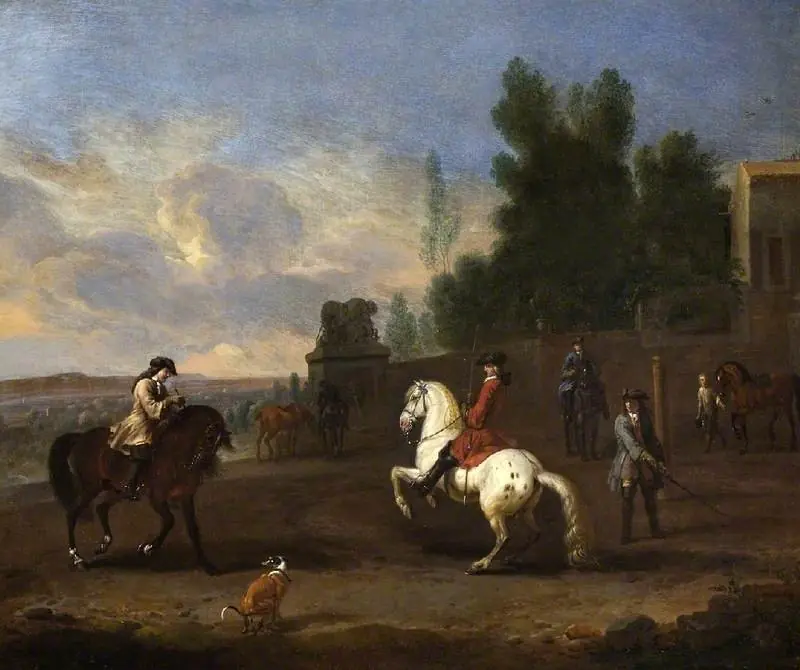
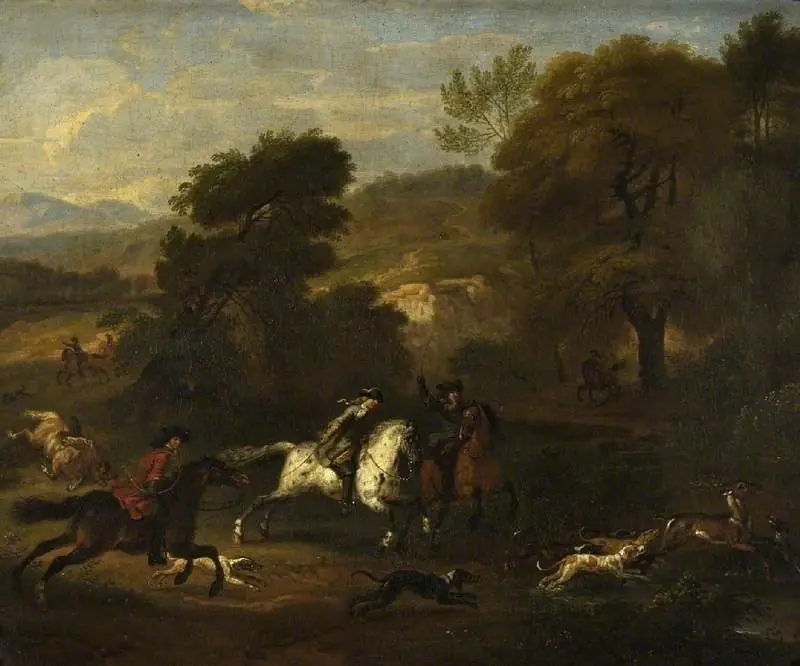
Maas employs chiaroscuro to model forms and suggest volume, particularly in the folds of clothing and the musculature of horses. The brushwork is precise yet fluid, with soft transitions between light and shadow enhancing the three-dimensionality of the figures. The background landscape is rendered with looser strokes, creating atmospheric depth that recedes gently behind the more sharply defined foreground elements.
History & Provenance
The painting entered the Alte Pinakothek’s collection in the 19th century, likely through the acquisition of private German collections assembled during the early Romantic period. Its attribution to Dirk Maas has been consistently supported by stylistic analysis and archival records. No significant alterations or restorations are documented, preserving its original tonal balance and compositional integrity.
Context
Lagerleben reflects a 17th-century Dutch and German tradition of genre scenes depicting military or civilian encampments. Such works often served as records of daily life during periods of travel or conflict. Maas, trained in the Northern European realist tradition, drew from observations of roadside stops and transient communities, aligning his work with contemporaries who favored observational accuracy over idealized narratives.
Legacy
Though not widely exhibited outside Germany, Lagerleben remains a representative example of late 17th-century Dutch-influenced genre painting in the German-speaking regions. Its quiet realism and attention to mundane detail influenced later regional artists interested in documenting ordinary life. The work contributes to a broader understanding of how everyday movement and rest were visually articulated in early modern Europe.
Artist & collection