Artwork
A riding school
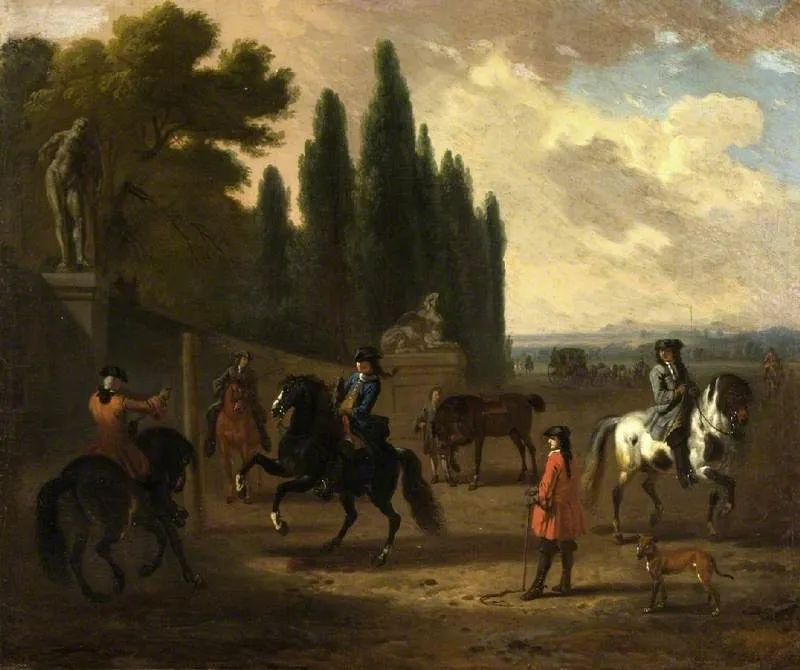
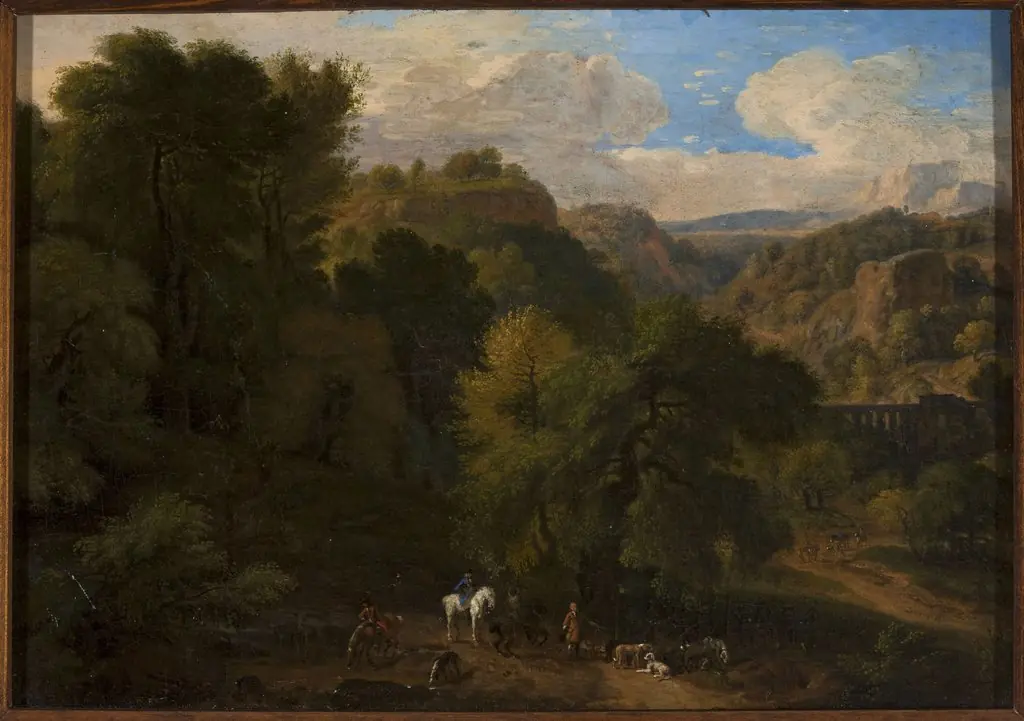
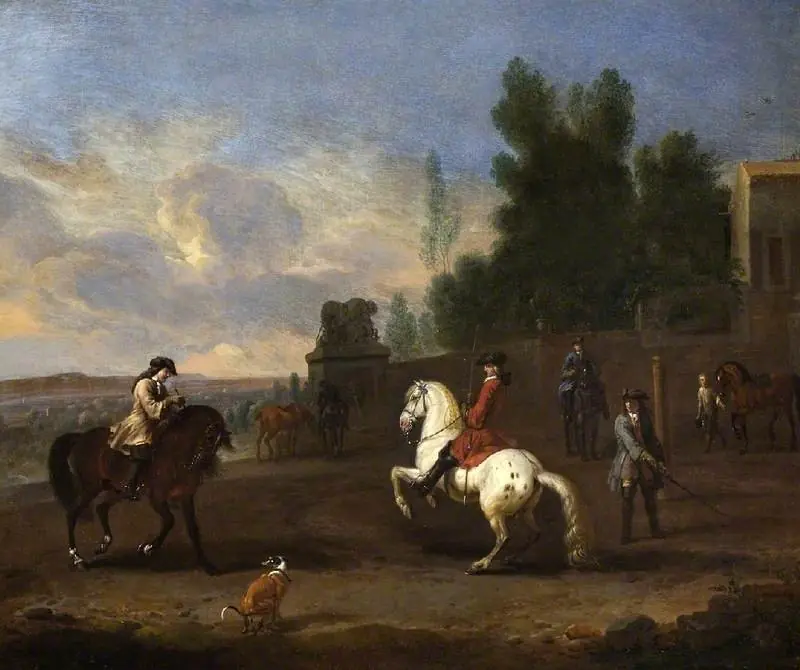
A riding school is an oil painting by Dirk Maas. It dates from 1698 and is held in the collection of the Fitzwilliam Museum.
About this work
Overview
Unlike formal portraits or mythological subjects, the work focuses on ordinary life, aligning with the Dutch tradition of genre painting.
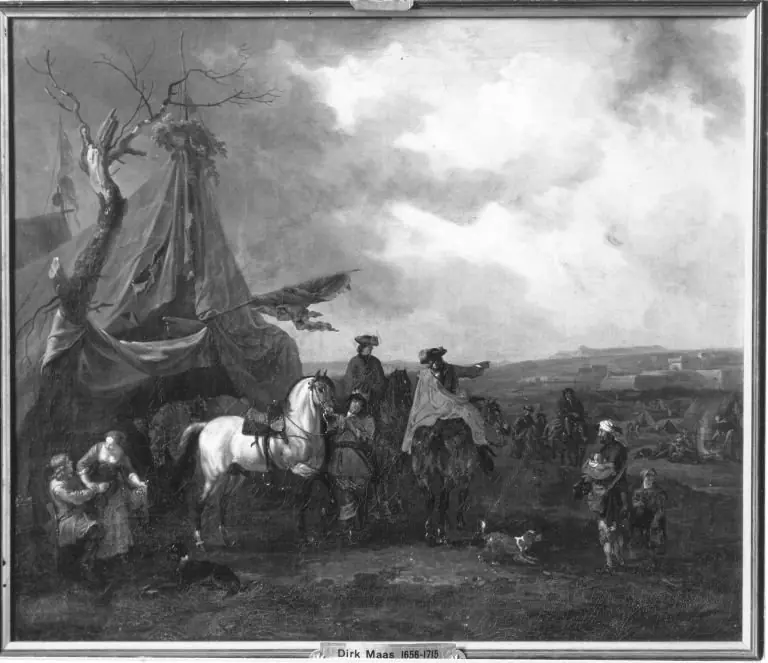
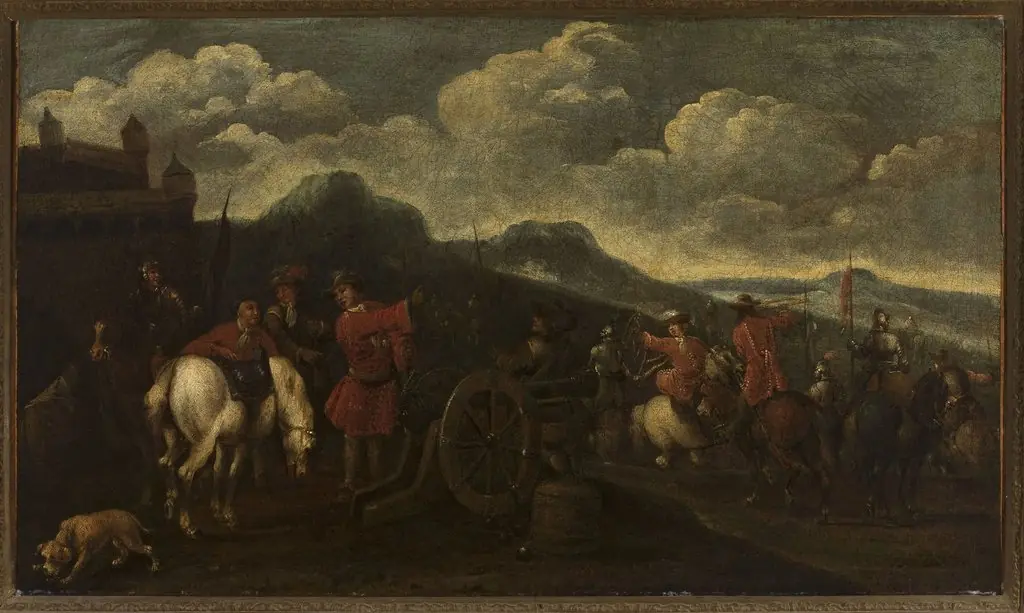
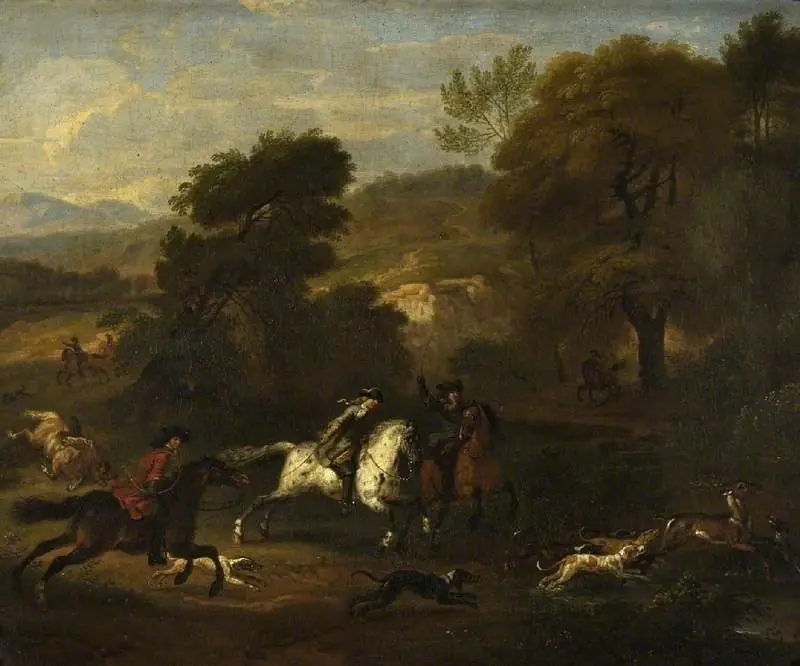
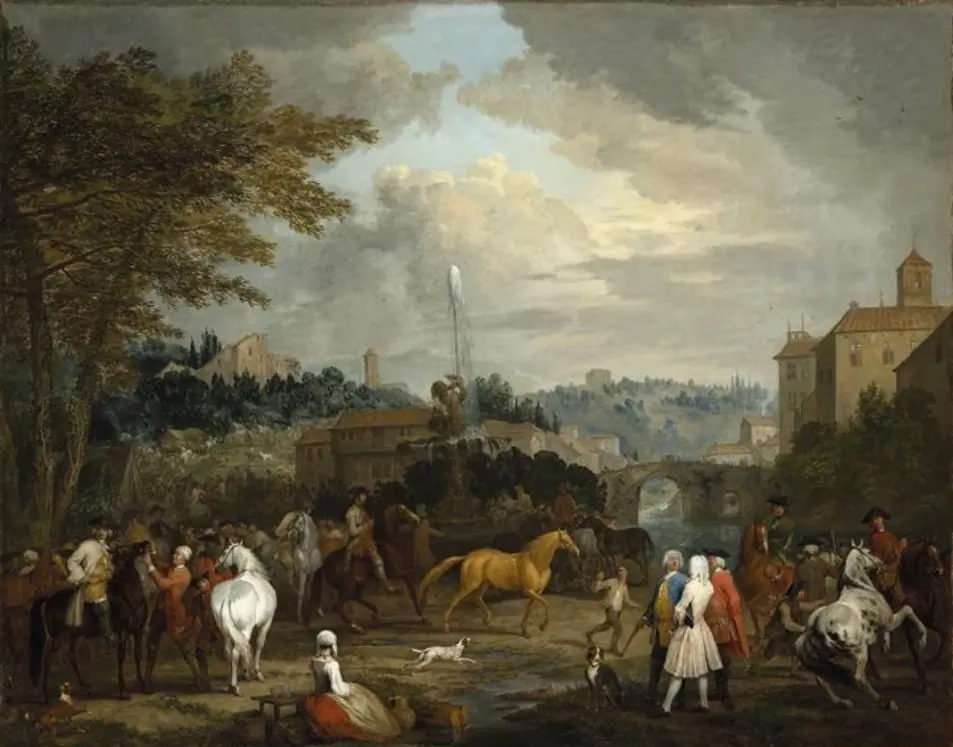
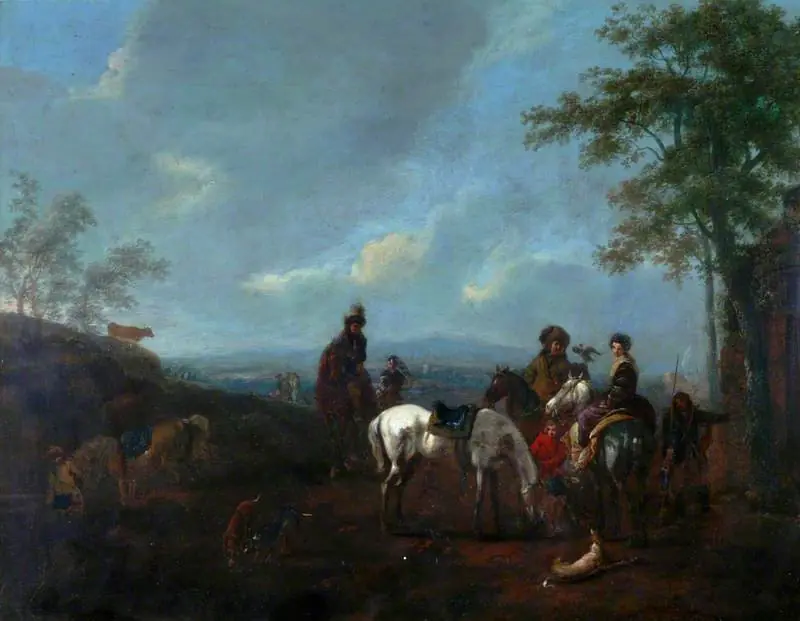
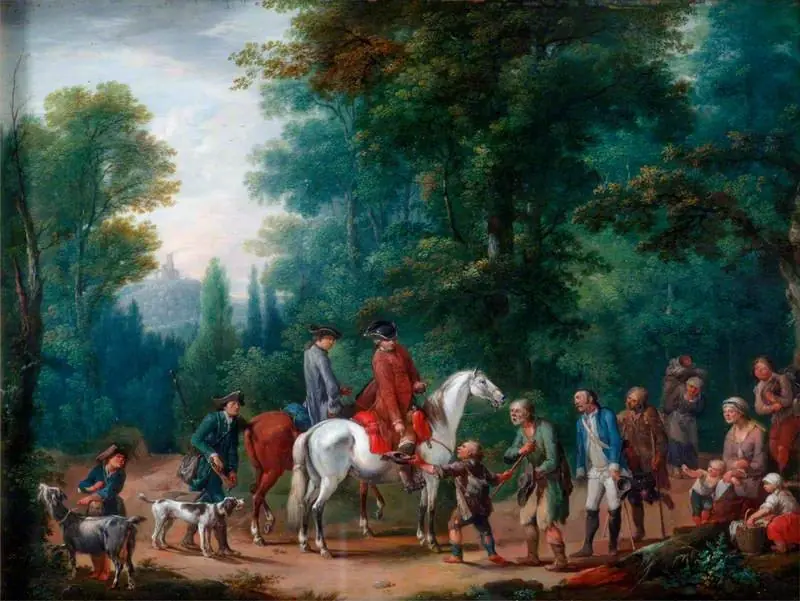
Painted around 1698 by Dirk Maas, this oil on canvas depicts a bustling equestrian training ground. The scene captures a moment of daily activity among riders, attendants, and dogs, set beneath an open sky. Unlike formal portraits or mythological subjects, the work focuses on ordinary life, aligning with the Dutch tradition of genre painting. Its composition conveys motion and informal interaction rather than ceremonial grandeur.
Subject & Meaning
The painting portrays a riding school as a working space, not a spectacle. Riders are shown in varied stances, some guiding horses, others observing. Dogs on leashes suggest companionship or hunting preparation, hinting at the social habits of the period. The absence of nobility or overt symbolism points to a quiet celebration of skilled labor and equestrian culture among the urban elite.
Technique & Style
Maas employs loose brushwork to suggest movement, particularly in the horses’ limbs and flowing manes. The palette is restrained yet varied, with earth tones and muted greens dominating, accented by subtle highlights on saddles and clothing. The background, with its soft sky and scattered trees, recedes gently, keeping focus on the figures. Light falls naturally, enhancing the sense of an outdoor, unposed moment.
History & Provenance
The painting entered the Fitzwilliam Museum’s collection in the 19th century, likely through a private acquisition. Its attribution to Dirk Maas is supported by stylistic comparisons with his other known works, though few of his paintings survive. The date of c. 1698 is inferred from archival records and the maturity of his technique, placing it near the end of his active career.
Context
In late 17th-century the Netherlands, equestrian training was both practical and social, especially among merchants and landowners. Riding schools were common in cities like Amsterdam and Utrecht, serving as places for exercise, display, and networking. Maas’s work reflects this cultural niche, offering a rare glimpse into non-aristocratic horsemanship during a period when such scenes were seldom recorded in art.
Legacy
Though Dirk Maas is not widely known today, this painting remains a significant example of Dutch genre painting focused on equestrian life. It contributes to the broader understanding of how everyday activities were documented visually during the late Baroque era. Its preservation in a major public collection ensures continued study of lesser-known artists who captured the rhythms of ordinary life.
Artist & collection