Artwork
Farm
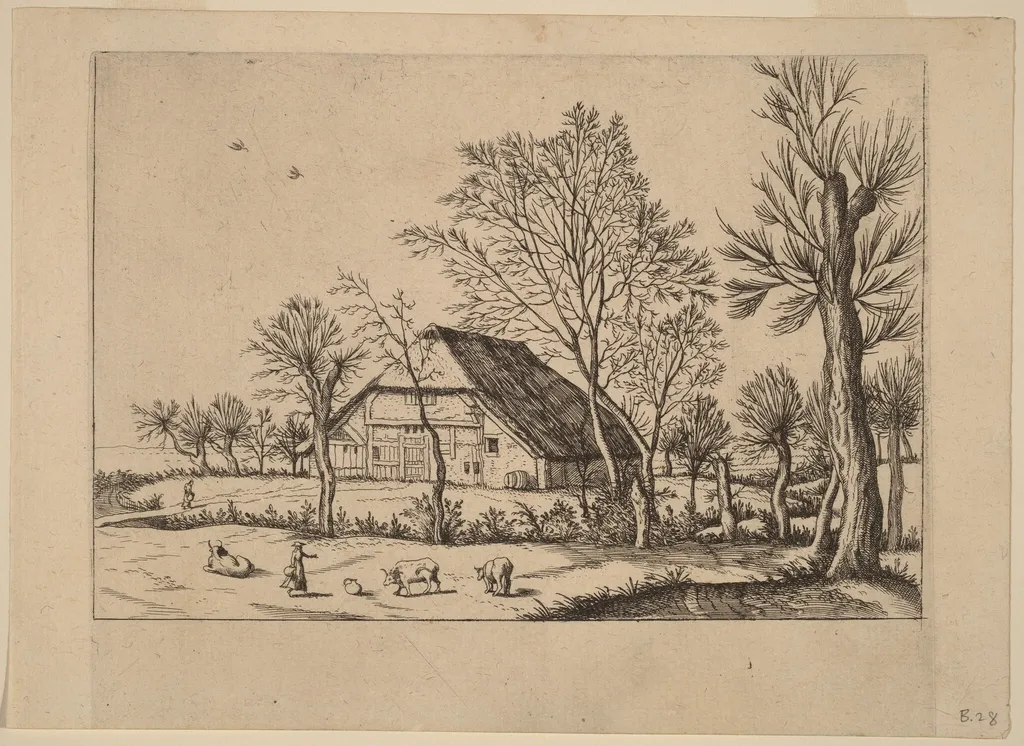
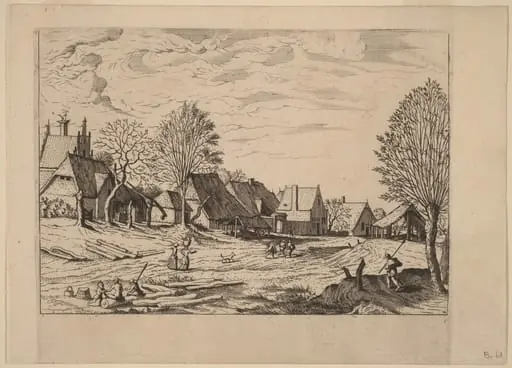
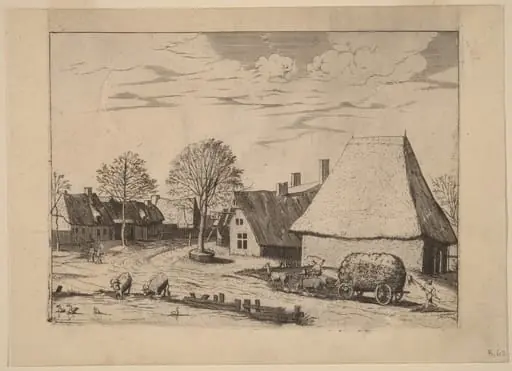
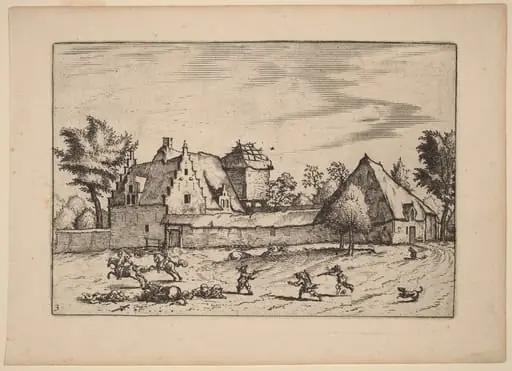
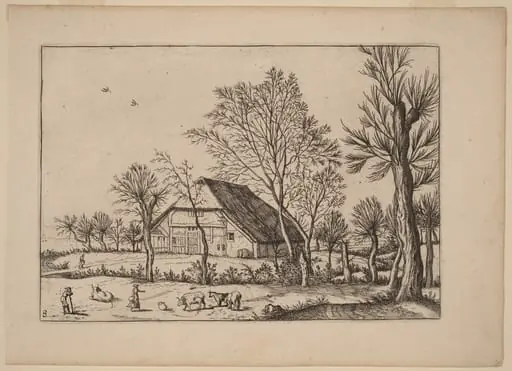
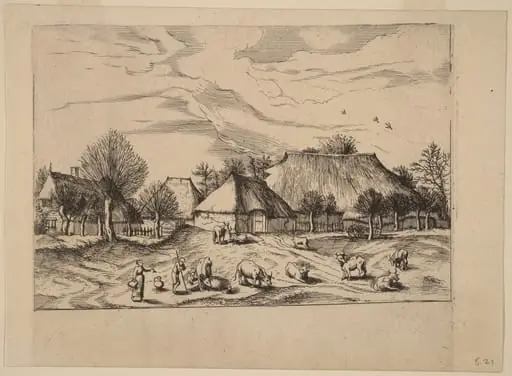
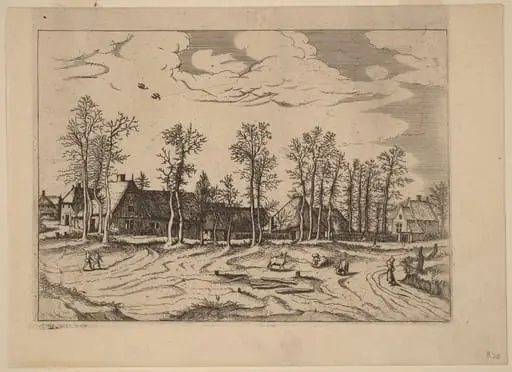
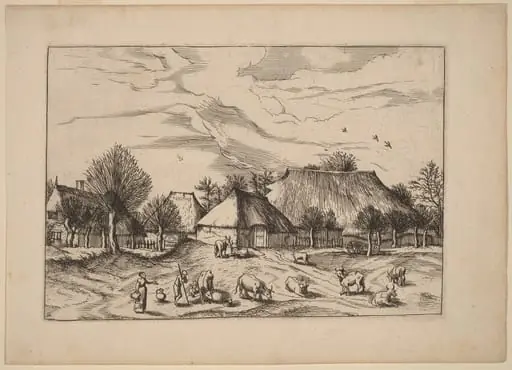
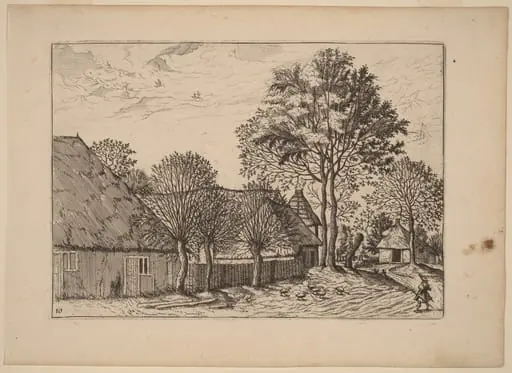
Farm is an ink print by the Baroque artist Lucas van Doetechum. It dates from 1560 and is held in the collection of the National Gallery of Art.
About this work
Overview
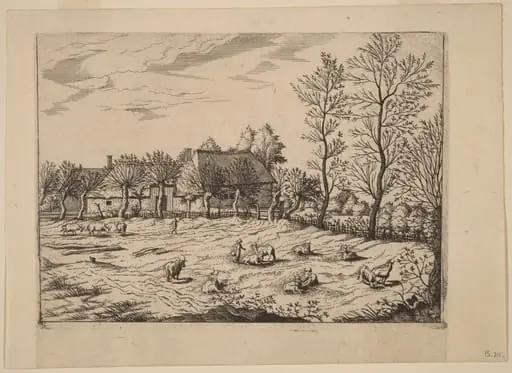
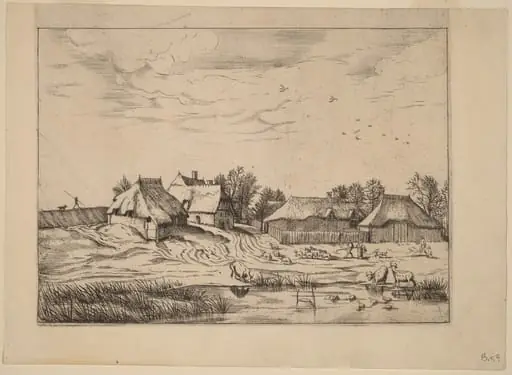
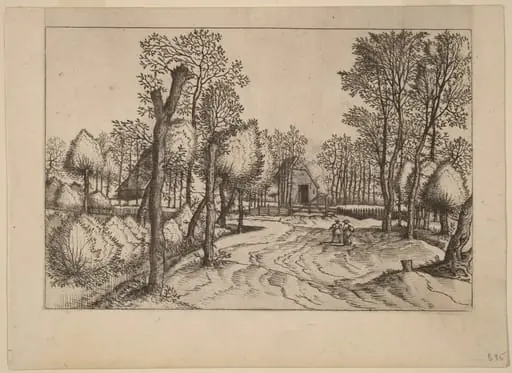
“Farm” is a black‑and‑white print produced in 1560 by the Dutch artist Lucas van Doetechum. Executed as an etching that was later enhanced with engraving, the work measures a modest size typical of mid‑sixteenth‑century prints. It depicts a tranquil rural setting, rendered with a careful balance of line and tone that invites close inspection of everyday life on a modest homestead.
Subject & Meaning
The composition centers on a thatched‑roof cottage beside a shallow stream, where a solitary figure stands near the water’s edge. Two sheep graze calmly, while a second person walks along a path flanked by leafless trees in the distance. The scene conveys a quiet, self‑sufficient agrarian existence, emphasizing the harmony between human activity and the surrounding landscape.
Technique & Style
Van Doetechum employed a combination of etching and engraving, first incising the image onto a copper plate with acid, then reinforcing selected areas with hand‑cut lines. This hybrid approach allows for delicate textures—such as the shutters, wool of the sheep, and bark of the trees—while preserving the crispness of engraved outlines, illustrating the evolving printmaking practices of the period.
History & Provenance
Created in the mid‑sixteenth century, the print reflects the growing interest in genre scenes that documented everyday life. While specific ownership records are scarce, the work is attributed to van Doetechum through stylistic analysis and a dated signature. It remains part of several European print collections, serving as a representative example of early Dutch rural imagery.
Artist & collection