Artwork
The Stand for Garrett and Sons, Leiston Works
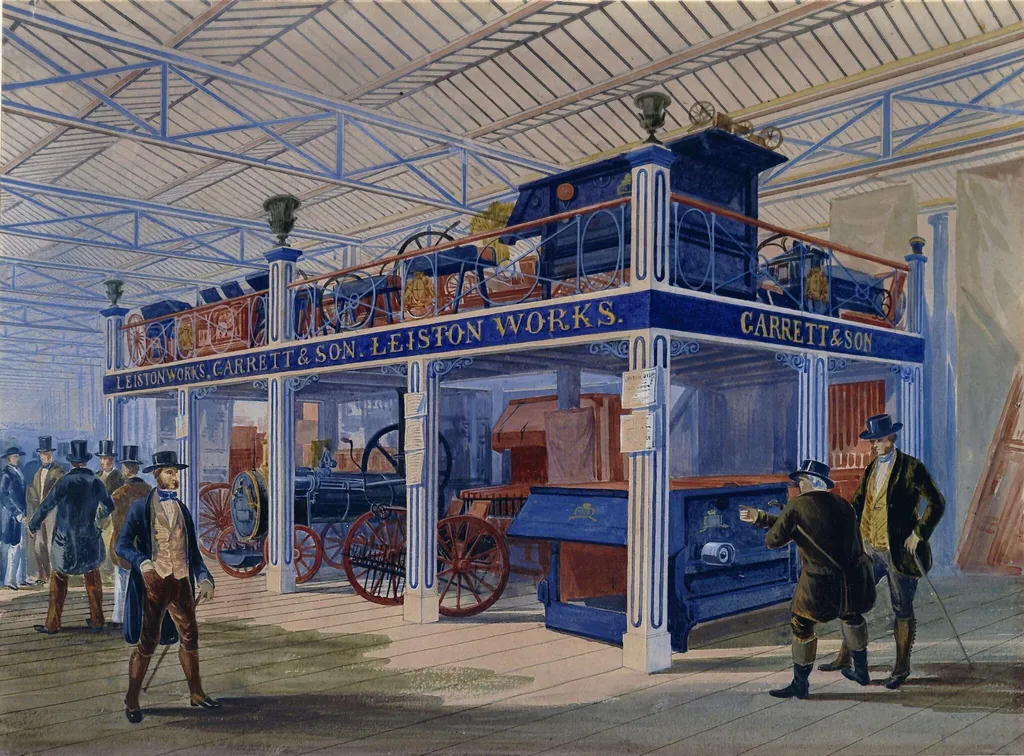
The Stand for Garrett and Sons, Leiston Works is a watercolor work on paper by the British Romanticist artist Edwin Thomas Dolby. It dates from 1851 and is held in the collection of the Victoria and Albert Museum.
About this work
It drew more than six million visitors—about a third of Britain’s people at the time.
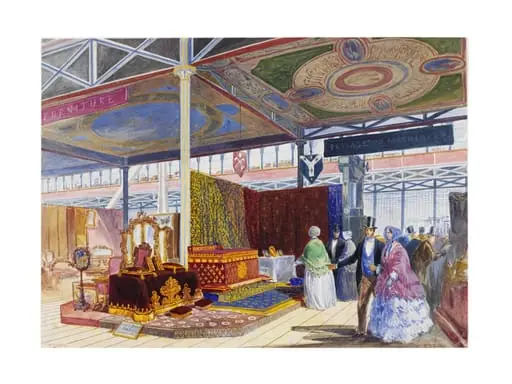
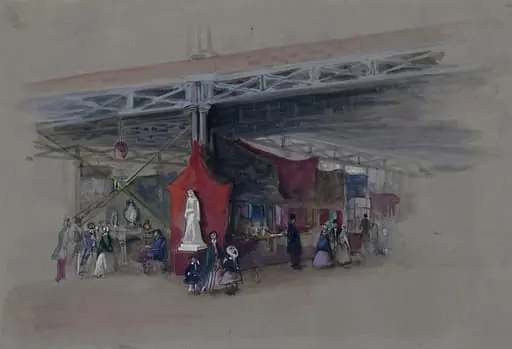
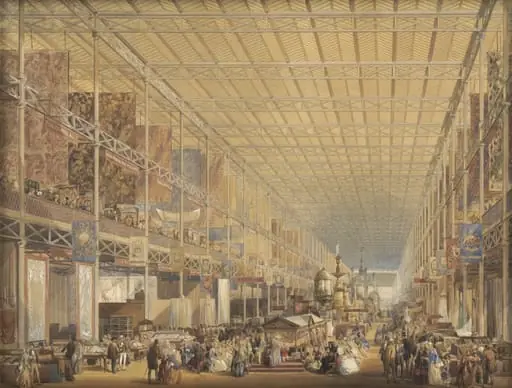
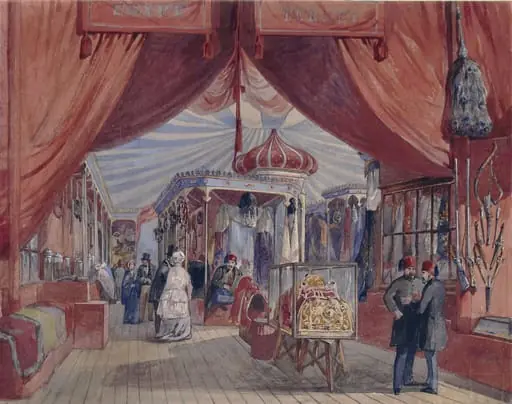
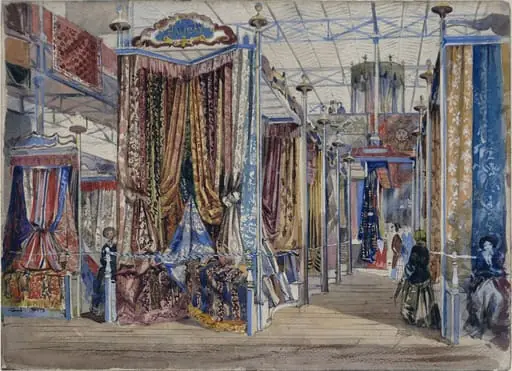
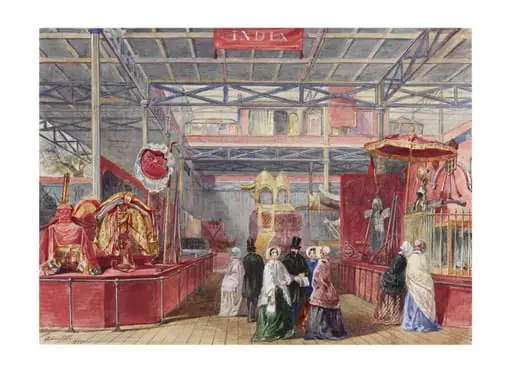
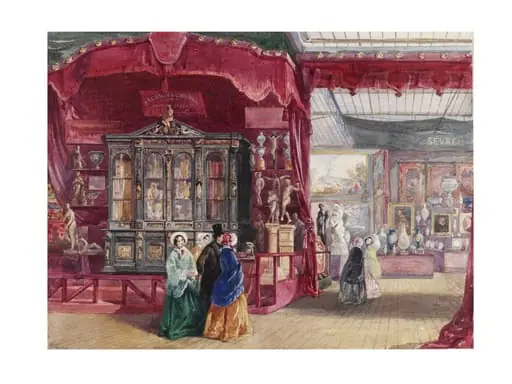
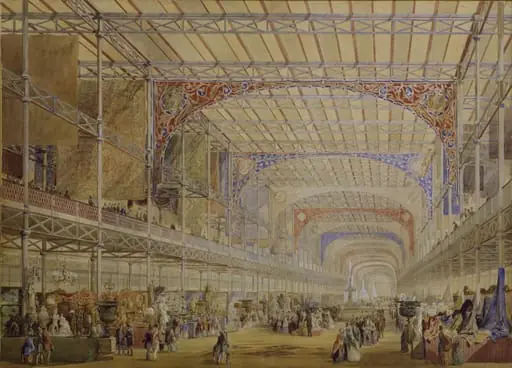
This watercolor shows the stand for Garrett and Sons at the 1851 Great Exhibition. The event had over 13,000 exhibits in the famous Crystal Palace. It drew more than six million visitors—about a third of Britain’s people at the time.
The profits from the show helped start the Victoria and Albert Museum. This watercolor was later turned into a colored lithograph for a souvenir book. Garrett and Sons likely sold machinery or tools here.
Check out the Victoria and Albert Museum for more Great Exhibition items.
Overview
This watercolour depicts the stand of Garrett and Sons at the 1851 Great Exhibition, held in London's Crystal Palace, a groundbreaking glass and iron structure. The exhibition, a landmark event in the history of international trade fairs, showcased over 13,000 manufactured products from around the world, attracting a vast audience of over six million visitors, roughly a third of Great Britain's population at the time.
Subject & Meaning
The artwork specifically focuses on the exhibit space allocated to Garrett and Sons, likely manufacturers of machinery or tools, highlighting their participation in this pivotal display of industrial achievement.
Technique & Style
Executed in watercolour, the work demonstrates a representational approach, accurately capturing the stand's appearance. It was later reproduced as a colour lithograph in 'Recollections of the Great Exhibition', a contemporary souvenir publication.
History & Provenance
Originally part of a series of images from the Great Exhibition, this watercolour's provenance links to the event's broader legacy. The exhibition's profits funded key cultural and scientific institutions in South Kensington, including the precursor to the Victoria and Albert Museum, established in 1857.
Context
The Great Exhibition of 1851, where this stand was displayed, symbolized the apex of the Industrial Revolution's showcase of innovation and global connectivity. The Crystal Palace, with its innovative design, embodied the era's technological advancements.
Legacy
Beyond its historical documentation of Garrett and Sons' participation, the watercolour contributes to the visual record of the Great Exhibition. The event's impact extended to the founding of the Victoria and Albert Museum, which continues to house a significant collection related to the Great Exhibition.
Artist & collection
Artist
Edwin Thomas Dolby painted watercolours of everyday scenes. His work "The Stand for Garrett and Sons, Leiston Works" shows a specific place, Leiston Works. Another piece, "Church Furniture", gives a glimpse into his…