Artwork
Church Furniture
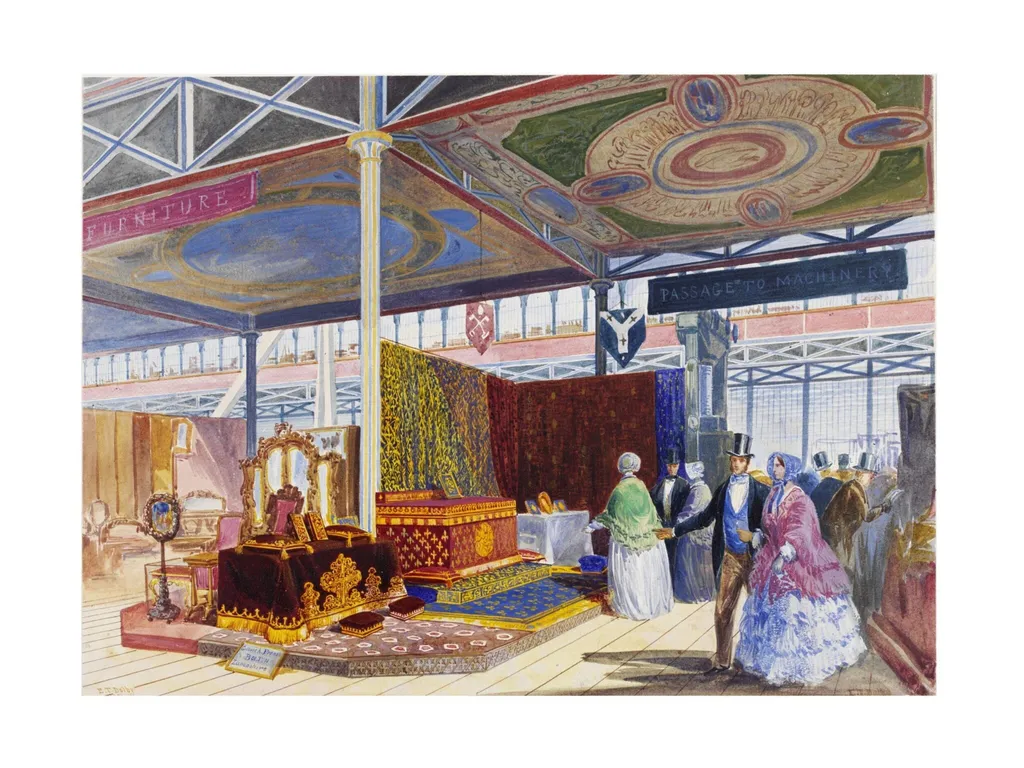
Church Furniture is a watercolor work on paper by the British Romanticist artist Edwin Thomas Dolby. It dates from 1851 and is held in the collection of the Victoria and Albert Museum.
About this work
The Great Exhibition drew over six million visitors to the Crystal Palace in Hyde Park.
Edwin Thomas Dolby painted this watercolour in 1851. It shows church furnishings from the Great Exhibition that year. The work is part of a set turned into colour lithographs for a souvenir book.
The Great Exhibition drew over six million visitors to the Crystal Palace in Hyde Park. Profits paid for buildings that later became the Victoria and Albert Museum.
Look up the Victoria and Albert Museum.
Overview
This watercolour, executed in 1851, records a display of ecclesiastical furnishings presented at the Great Exhibition held in the Crystal Palace, Hyde Park. The image was later reproduced as a colour lithograph for the contemporary souvenir volume Recollections of the Great Exhibition, providing a visual record of the exhibition’s interior.
Subject & Meaning
The composition focuses on a collection of church furniture and textiles supplied by the Bolton draper Gilbert French, whose trade name appears in a modest advertisement at the lower left. The arrangement illustrates the variety of liturgical objects offered for sale or appraisal during the exhibition, highlighting the commercial aspect of religious art in mid‑nineteenth‑century Britain.
Technique & Style
Rendered in transparent watercolour washes, the artist captures the interior lighting of the glass‑and‑iron hall with delicate tonal gradations. Fine line work delineates the intricate details of the furnishings, while the overall palette remains muted, allowing the objects’ textures and fabrics to stand out against the architectural backdrop.
History & Provenance
The original watercolor formed part of a series that were reproduced as colour lithographs for the souvenir guide, a popular publication for visitors. The profits generated by the Great Exhibition were subsequently allocated to cultural projects in South Kensington, including the construction of the building that would become the Victoria and Albert Museum.
Context
The Great Exhibition of 1851 was the first international showcase of manufactured goods, attracting more than six million attendees—roughly one‑third of Britain’s population at the time. The event’s scale and its emphasis on industrial design created a market for decorative and functional objects such as church furnishings, linking religious tradition with contemporary manufacturing.
Artist & collection
Artist
Edwin Thomas Dolby painted watercolours of everyday scenes. His work "The Stand for Garrett and Sons, Leiston Works" shows a specific place, Leiston Works. Another piece, "Church Furniture", gives a glimpse into his…

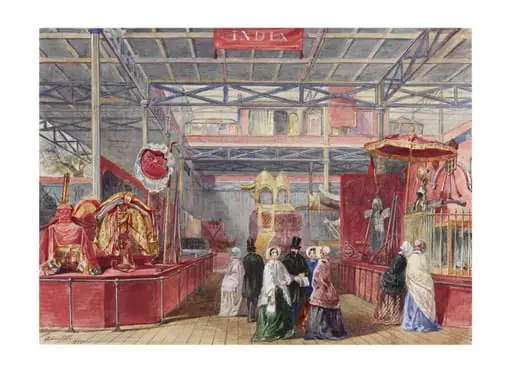 The Indian Court and Elephant Trappings
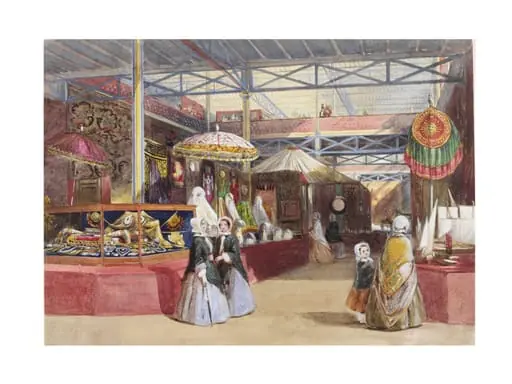 The Indian Court and Jewels
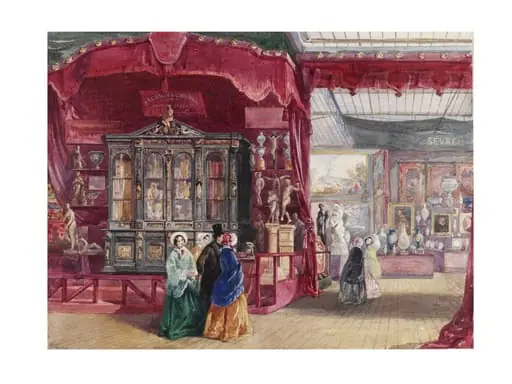 Part of the French Court, no. 1 (Sevres)
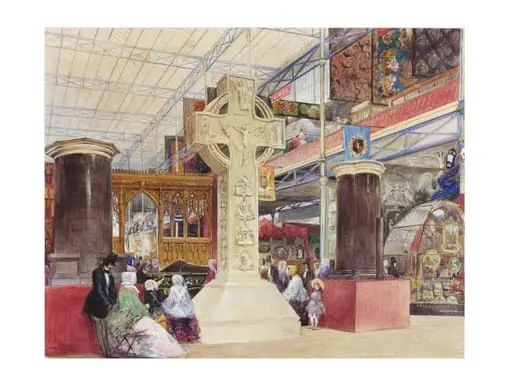 View in the West Nave
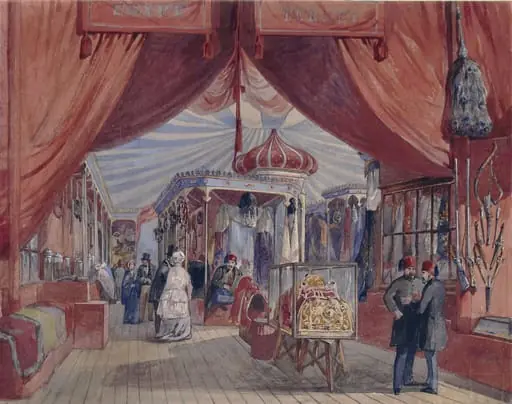 The Turkish Court
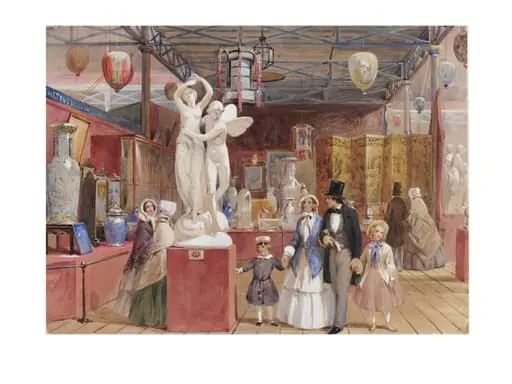 Part of the Chine Court
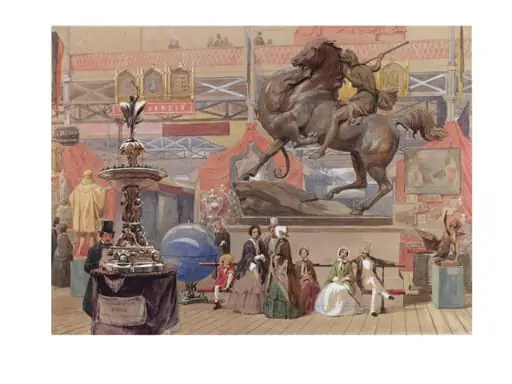 View in the East Nave (The Amazon, by Kiss)
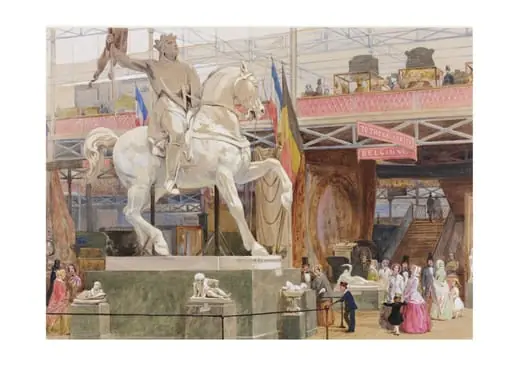 View in the East Nave (Godfrey of Bouillon, by Simonis)
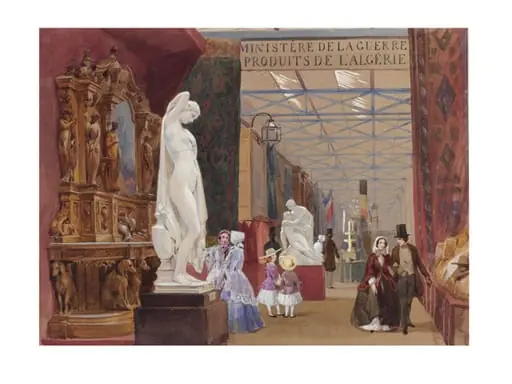 Part of the French Court, No. 2
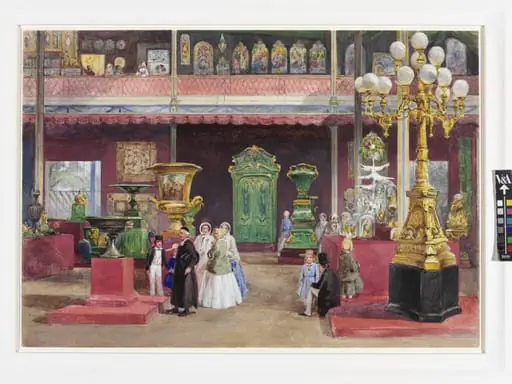 Part of the Russian Court
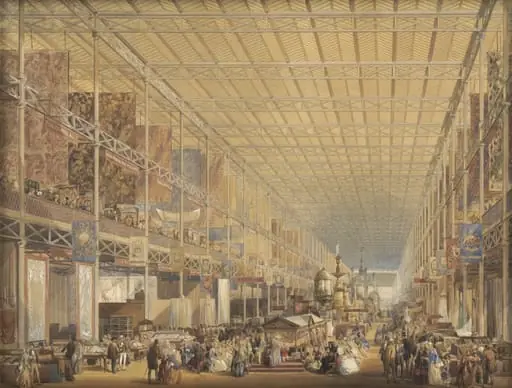 Interior of the Great Exhibition
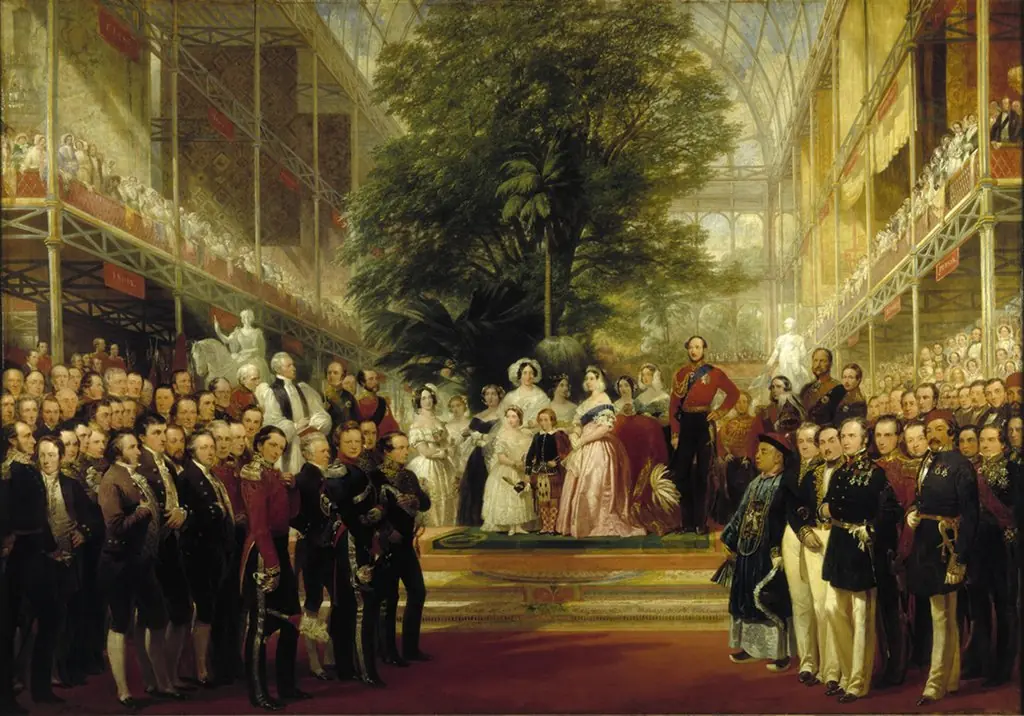 The Opening of the Great Exhibition by Queen Victoria on 1 May 1851