Artwork
The Indian Court and Elephant Trappings
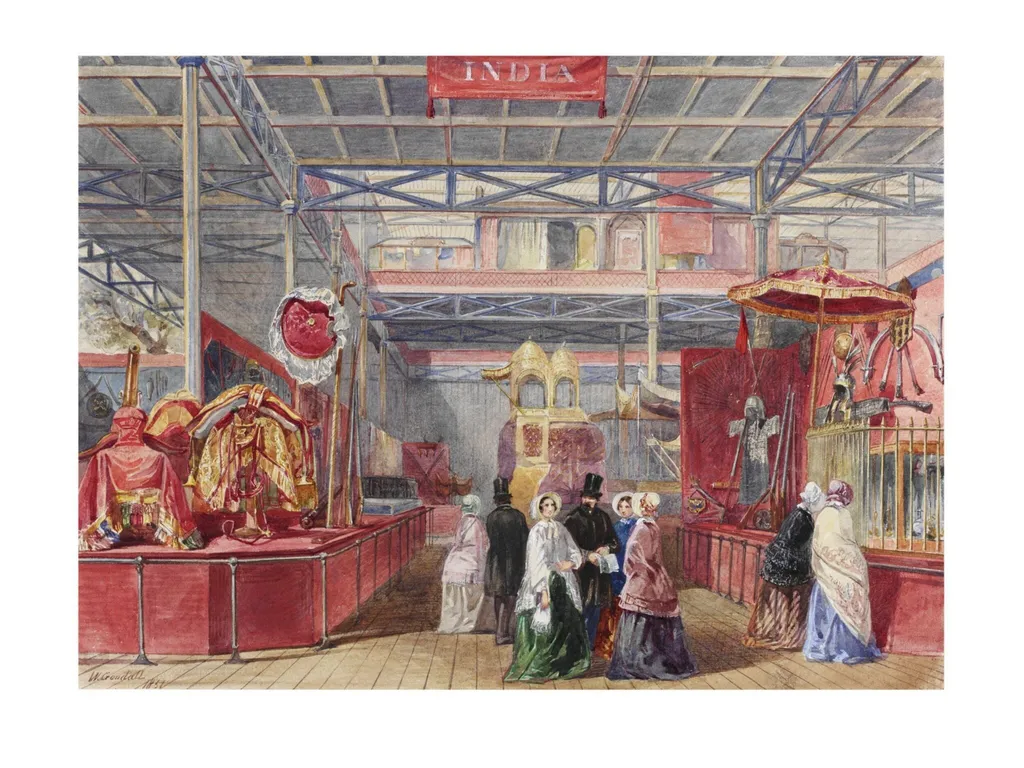
The Indian Court and Elephant Trappings is a watercolor work on paper by the Patna School of Painting artist Walter Goodall. It dates from 1851 and is held in the collection of the Victoria and Albert Museum. The watercolour depicts the Indian Court as it appeared at the Great Exhibition of 1851, held in the Crystal Palace in Hyde Park.
About this work
This watercolour shows a scene from the Indian Court at the Great Exhibition of 1851. The show was huge—over 13,000 exhibits in a giant glass building called the Crystal Palace.
Goodall painted it as part of a set turned into colorful prints later. Money from the fair helped start the Victoria and Albert Museum years later.
Check out Walter Goodall.
Overview
The watercolour depicts the Indian Court as it appeared at the Great Exhibition of 1851, held in the Crystal Palace in Hyde Park. The exhibition showcased more than 13,000 items and drew over six million visitors, roughly a third of Britain’s population at the time. The image was later reproduced as a colour lithograph in the souvenir volume Recollections of the Great Exhibition.
Subject & Meaning
The scene captures the Indian Court’s decorative setting, including an elephant with its howdah positioned in front of the court. The composition highlights the exotic appeal that the exhibition organizers used to represent India’s cultural heritage for a British audience.
Technique & Style
Executed in watercolour, the work features delicate washes and precise detailing that convey the textures of the court’s architecture, the elephant’s skin, and surrounding foliage. The medium allowed for vivid colour reproduction in the subsequent lithographs, preserving the original’s tonal subtleties.
History & Provenance
The painting was created before the exhibition opened, as indicated by the absence of a stuffed elephant that appears in later prints. An elm tree visible on the left was part of the temporary landscaping incorporated into the Crystal Palace structure. The original watercolour is part of a series that was commercially issued as colour lithographs, serving as a visual record of the fair.
Context
Funds generated by the Great Exhibition were allocated to cultural projects in South Kensington, eventually leading to the establishment of the Victoria and Albert Museum. The Indian Court was one of many national displays intended to showcase the breadth of the British Empire’s artistic and material culture.
Artist & collection
Artist
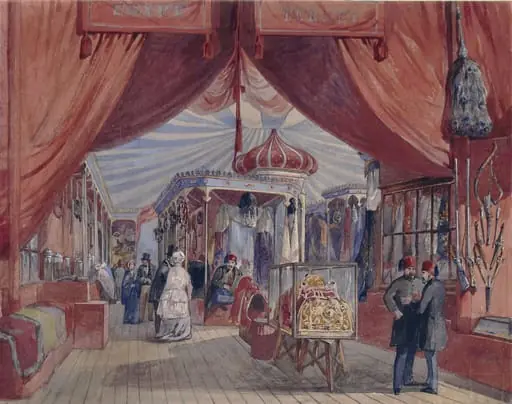
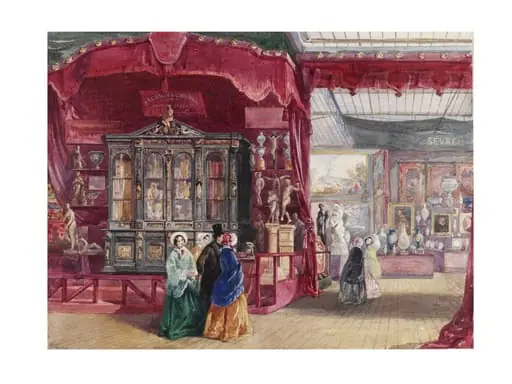
Walter Goodall’s 1851 watercolors zoom in on the decorative arts of three royal courts: The Indian Court and Elephant Trappings, The Turkish Court, and Part of the French Court, no.

 Part of the Fine Arts Court
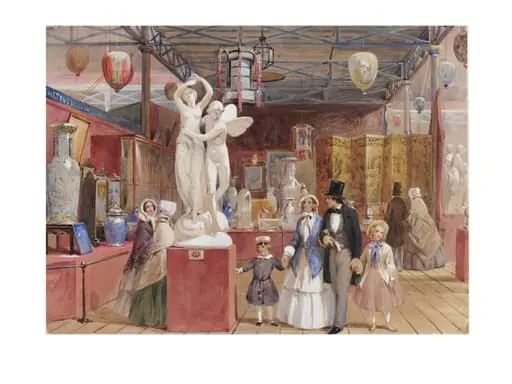 Part of the Chine Court
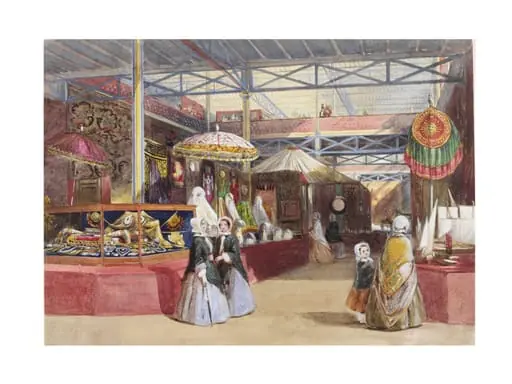 The Indian Court and Jewels
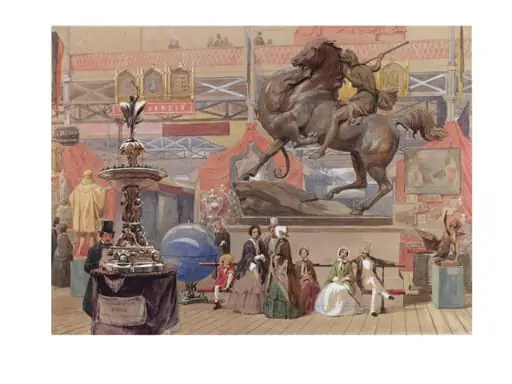 View in the East Nave (The Amazon, by Kiss)
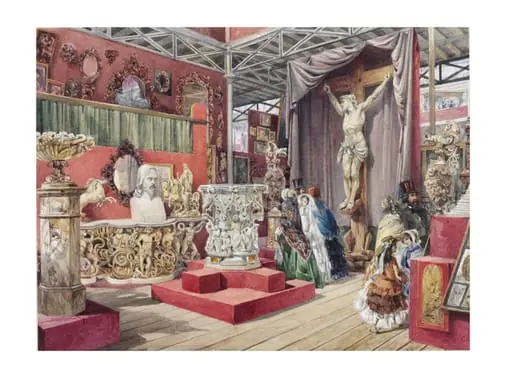
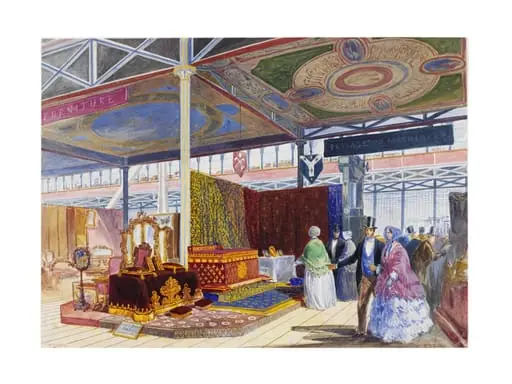 Church Furniture
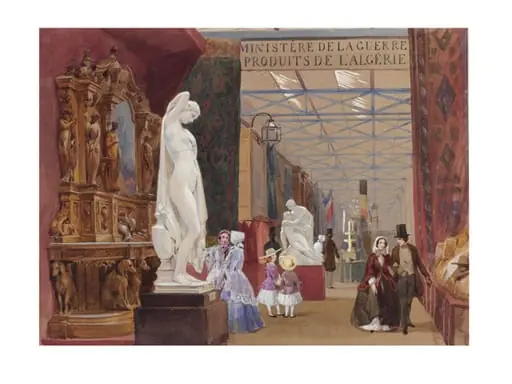 Part of the French Court, No. 2
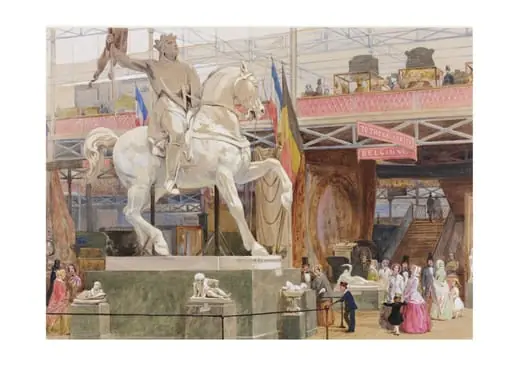 View in the East Nave (Godfrey of Bouillon, by Simonis)
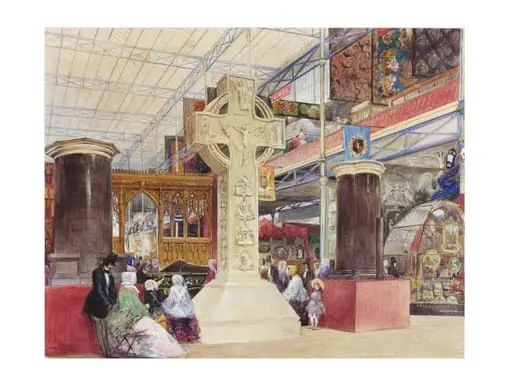 View in the West Nave
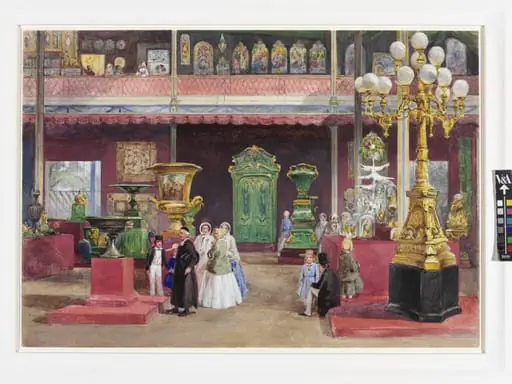 Part of the Russian Court
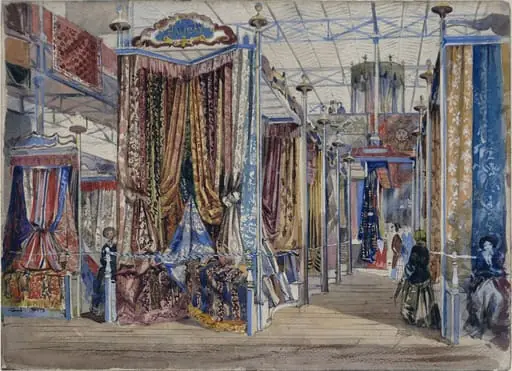 Display of fabric in the Halifax and Kendal courts at The Great Exhibition of 1851