Artwork
Part of the French Court, no. 1 (Sevres)
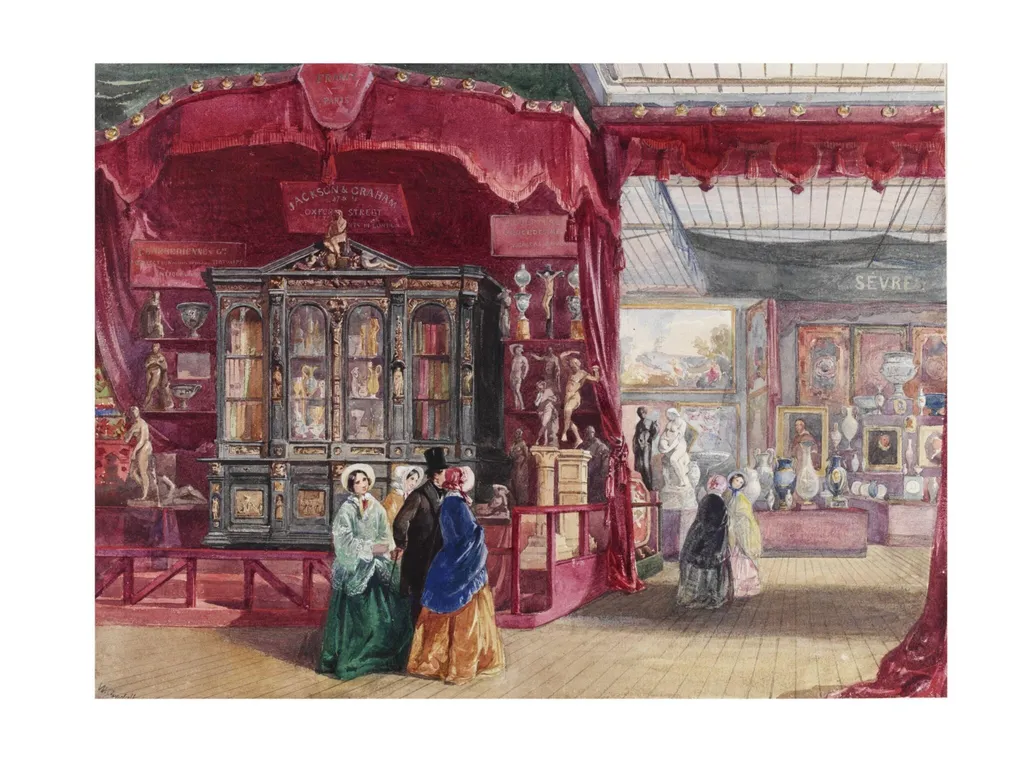
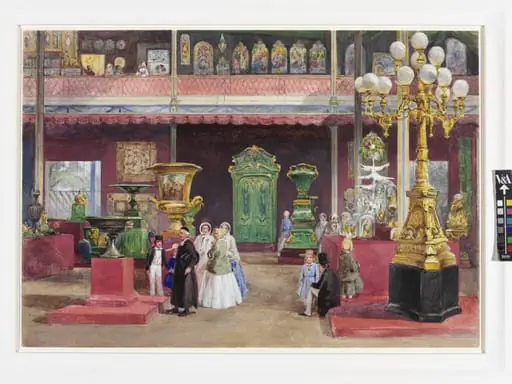
Part of the French Court, no. 1 (Sevres) is a watercolor work on paper by the British Romanticist artist Walter Goodall. It dates from 1851 and is held in the collection of the Victoria and Albert Museum.
About this work
The profits paid for new science and art projects in South Kensington, including the museum where this work now lives.
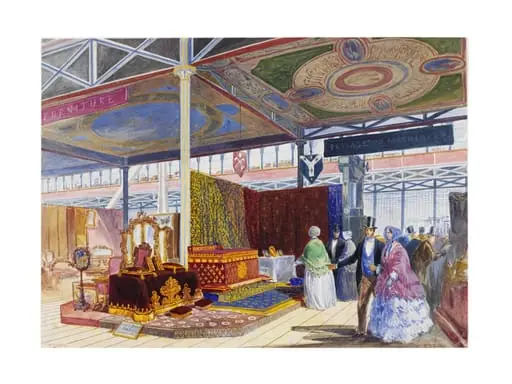
Walter Goodall painted this watercolour in 1851. It shows part of the French Court at the Great Exhibition in London’s Crystal Palace. The show had over 13,000 exhibits and drew millions of visitors.
The profits paid for new science and art projects in South Kensington, including the museum where this work now lives.
The watercolour was later turned into a souvenir book using colour lithographs. Check out the Victoria and Albert Museum.
Overview
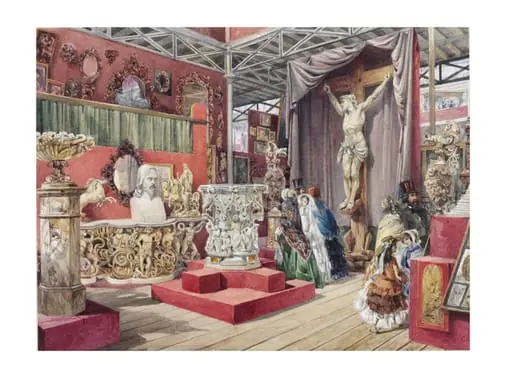
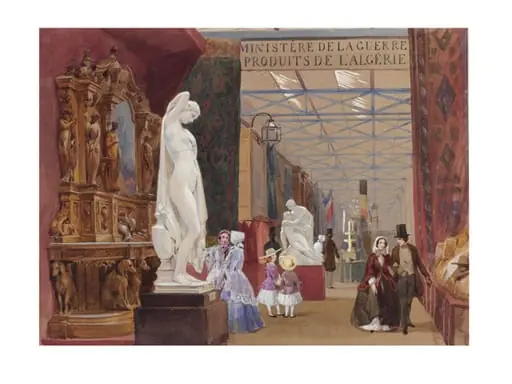
Walter Goodall created this watercolour in 1851 as a record of the French Court at the Great Exhibition in London’s Crystal Palace. It was one of several images later reproduced as colour lithographs in a souvenir publication, Recollections of the Great Exhibition. The work captures a specific section of the exhibition devoted to French manufacturing, with emphasis on porcelain and bronze decorative arts. The original piece now resides in the Victoria and Albert Museum, an institution founded using profits from the exhibition.
Subject & Meaning
The scene centers on a display of Sèvres porcelain in the background, representing French craftsmanship. In the foreground, an ornate ebony cabinet—crafted by Barbedienne & Co. with British collaboration—features bronze reliefs based on sculptures by Michelangelo and Ghiberti. These elements together signify international artistic exchange and national pride in industrial design, reflecting the exhibition’s goal of showcasing global technological and aesthetic achievement.
Technique & Style
Executed in watercolour, the work employs delicate washes and precise linear detail to render textures of porcelain, polished wood, and bronze. Goodall’s approach is observational rather than dramatic, prioritizing clarity and accuracy over emotional expression. The composition balances foreground objects with architectural space, guiding the viewer’s eye through the exhibit’s organized layout, consistent with documentary aims of the period.
History & Provenance
Painted during the Great Exhibition, the watercolour was reproduced in a commercially published souvenir volume, ensuring its wider circulation. Its survival as an original piece is rare, as most such works were disseminated as prints. It entered the collection of the Victoria and Albert Museum, which was established using proceeds from the exhibition, creating a direct link between the artwork and the institution it now inhabits.
Context
The Great Exhibition of 1851 was a landmark event, displaying over 13,000 manufactured goods from nations worldwide within the unprecedented Crystal Palace structure. It emphasized industrial progress and cultural diplomacy. The French Court’s inclusion of Sèvres porcelain and bronze furnishings highlighted France’s continued dominance in luxury arts, even as Britain led in mechanized production.
Legacy
The exhibition’s financial surplus directly supported the development of South Kensington as a cultural and educational hub, leading to the founding of the Victoria and Albert Museum. Goodall’s watercolour, though not widely known today, remains a tangible record of how visual documentation helped shape public engagement with industrial exhibitions and the institutionalization of art and design history.
Artist & collection
Artist
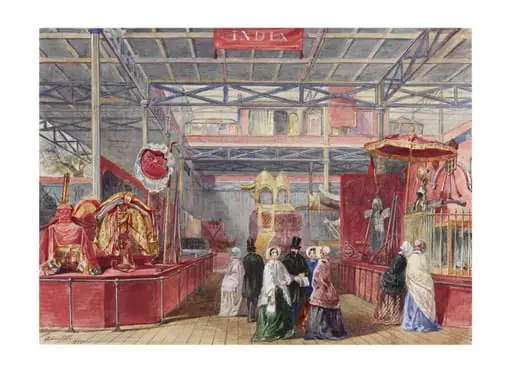
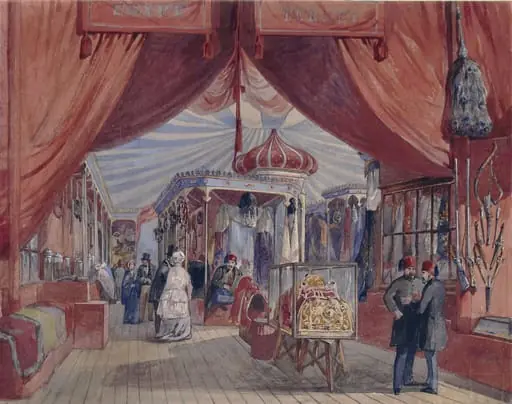
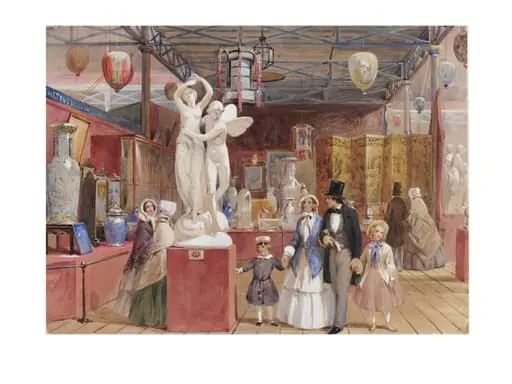
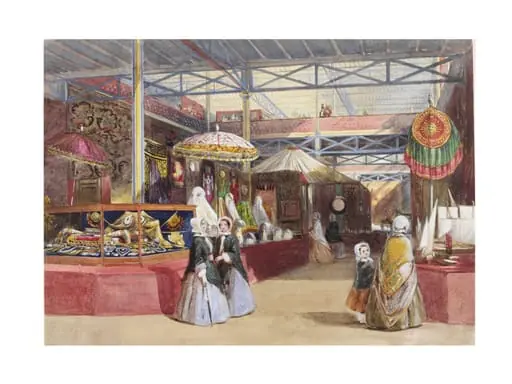
Walter Goodall’s 1851 watercolors zoom in on the decorative arts of three royal courts: The Indian Court and Elephant Trappings, The Turkish Court, and Part of the French Court, no.