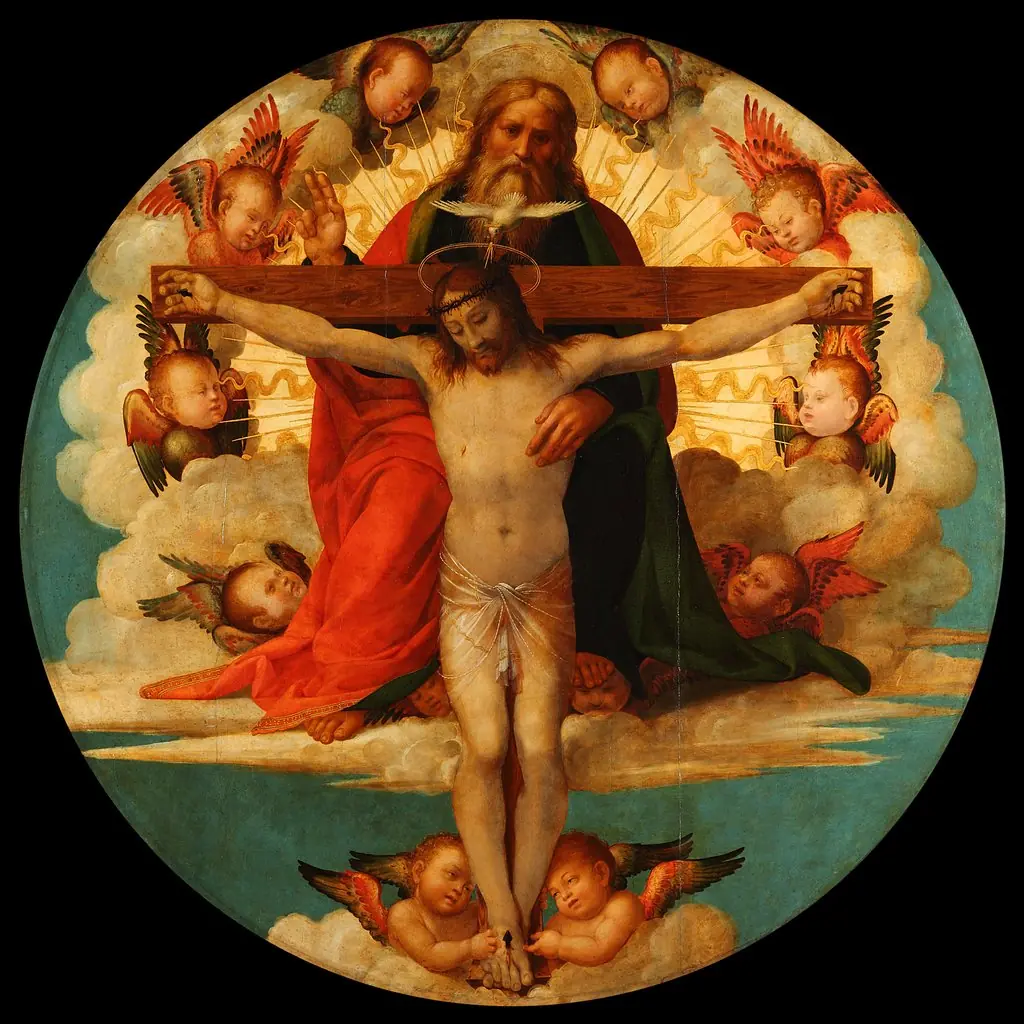
Artwork
The Trinity
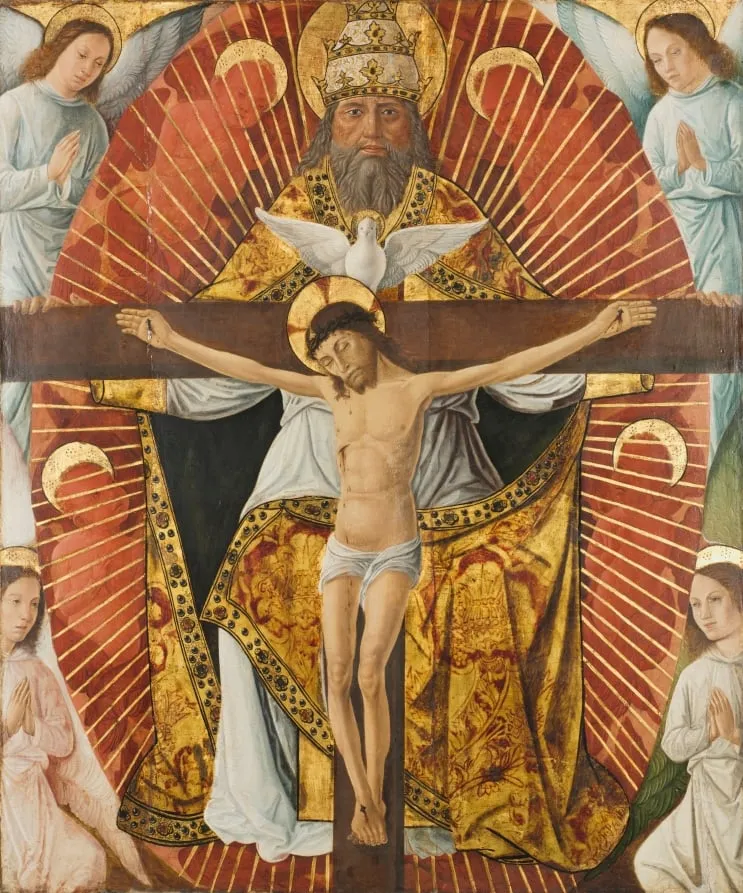
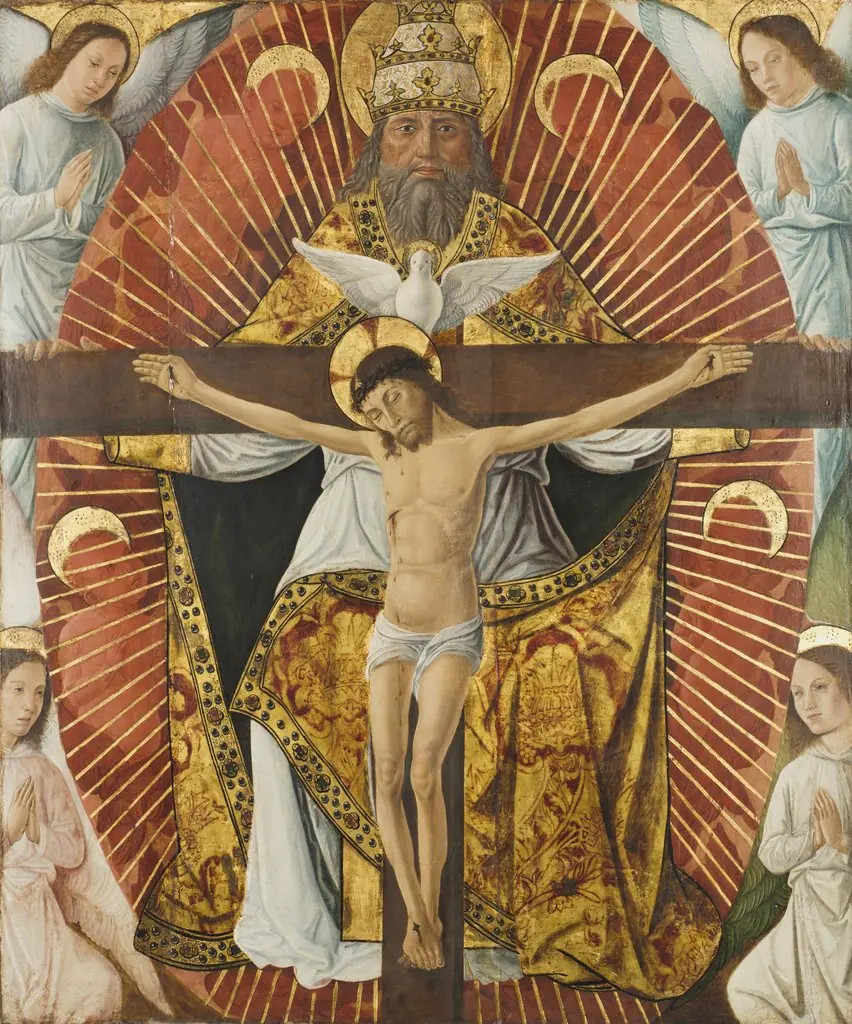
The Trinity is an unspecified painting by the Early Renaissance artist Laurent Girardin. It dates from 1460 and is held in the collection of the Cleveland Museum of Art.
About this work
Overview
The work presents a conventional Christian iconography of the Holy Trinity: God the Father, crowned with a papal tiara, is shown in a richly embroidered crimson cope; the Son is depicted on the cross; and the Holy Spirit appears as a dove. Beneath them, two cherubic figures emit a red glow, creating a luminous focal point.
Subject & Meaning
The composition emphasizes the theological doctrine of the three persons of God, linking each figure to its traditional symbol—authority for the Father, sacrifice for the Son, and the dove for the Spirit. The inclusion of the cherubs, illuminated in red, serves to highlight the divine presence and may allude to the heavenly choir surrounding the Trinity.
Technique & Style
The artist employs a vivid red illumination that recalls the effect of light filtered through stained glass, a technique also evident in his contemporaneous window designs for a Lyon church. The sumptuous velvet cope, rendered with gold thread forming a pomegranate motif, demonstrates meticulous attention to textile detail and symbolic ornamentation.
History & Provenance
Commissioned for a church in Lyon, the painting was created alongside the artist’s work on the building’s stained‑glass program. Its original setting linked the canvas directly to the liturgical space for which it was intended, reinforcing the visual and devotional continuity between painted and glass media.
Context
During the period, French ecclesiastical art often integrated painted and architectural elements to produce immersive sacred environments. The use of chiaroscuro‑like lighting effects aligns the work with broader Baroque tendencies to dramatize spiritual scenes through contrast and colored illumination.
Artist & collection

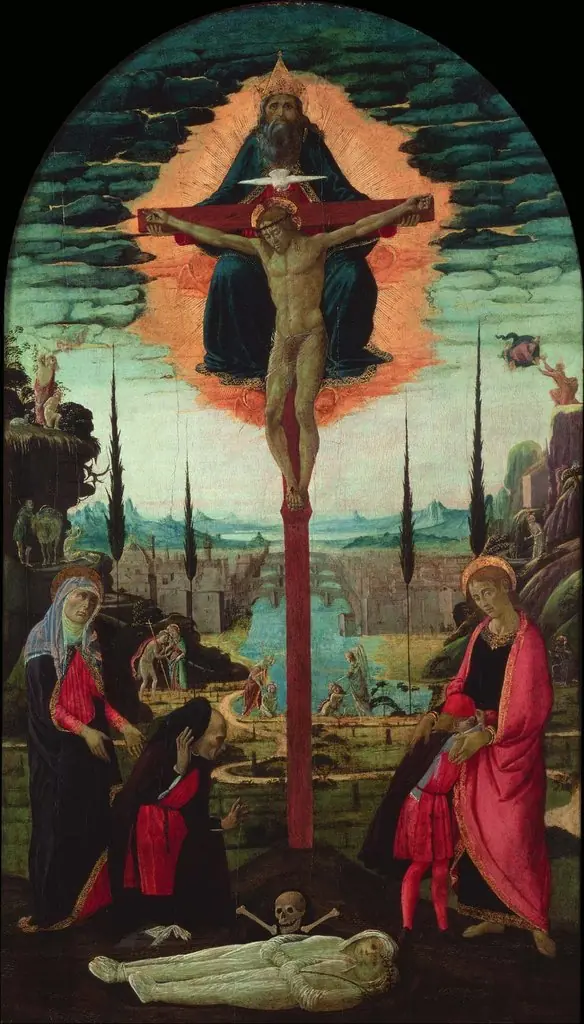 Votive Altarpiece: the Trinity, the Virgin, St. John and Donors
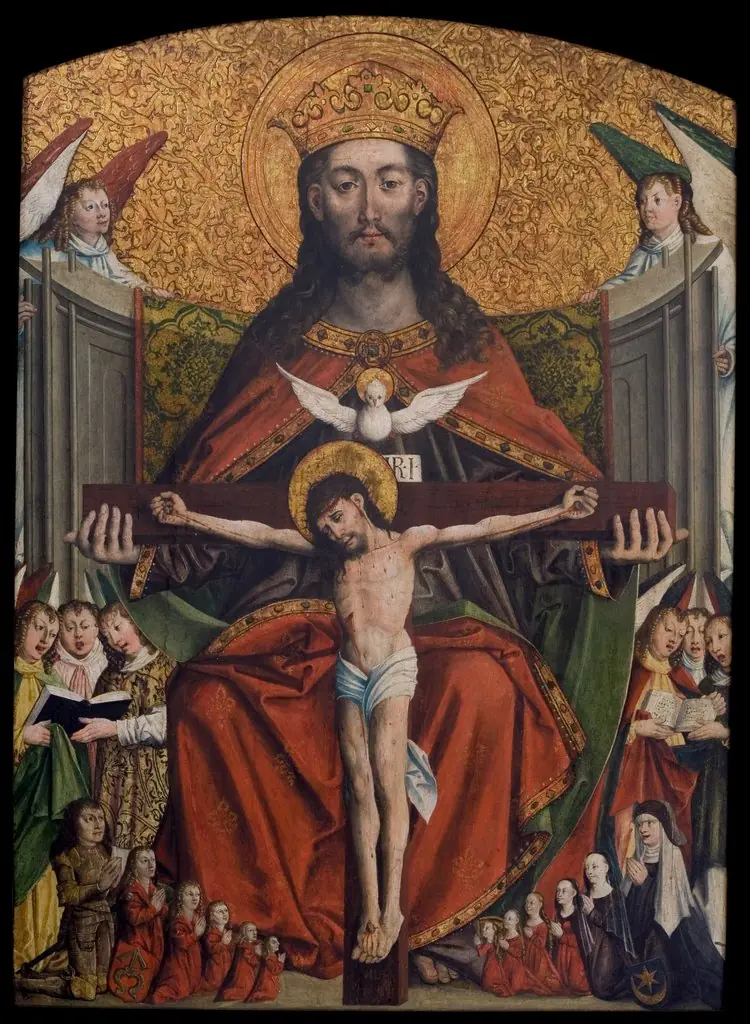 Holy Trinity. Votive painting of Jakub Dębiński, from the Parish Church of St Margaret in Dębno near Brzesko
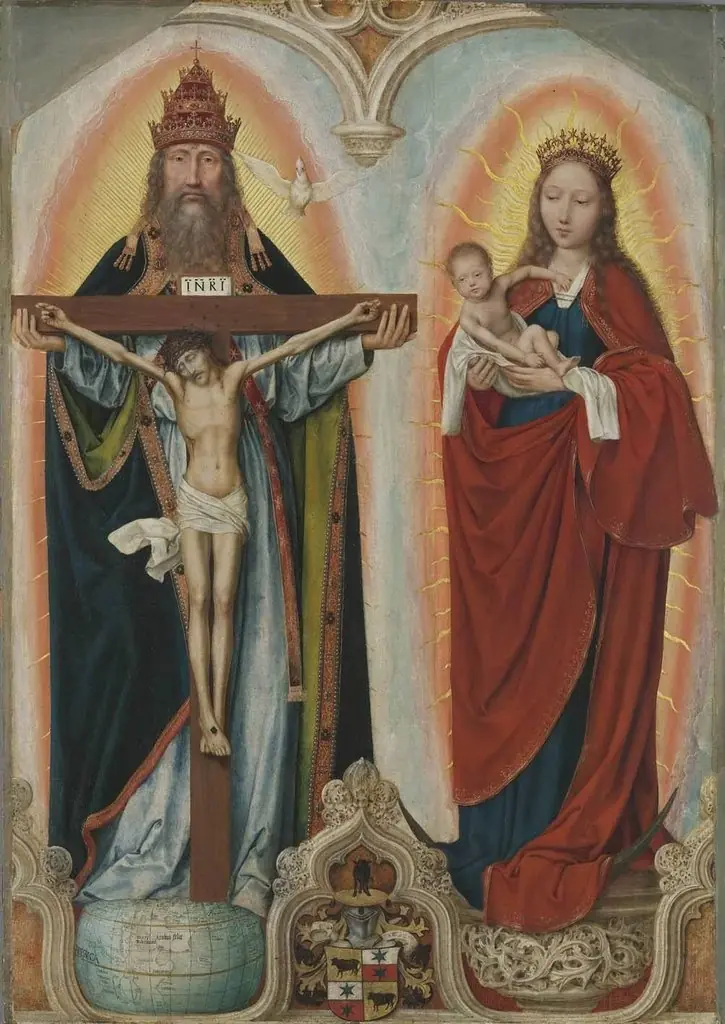 Rem-Altar: Maria mit Kind
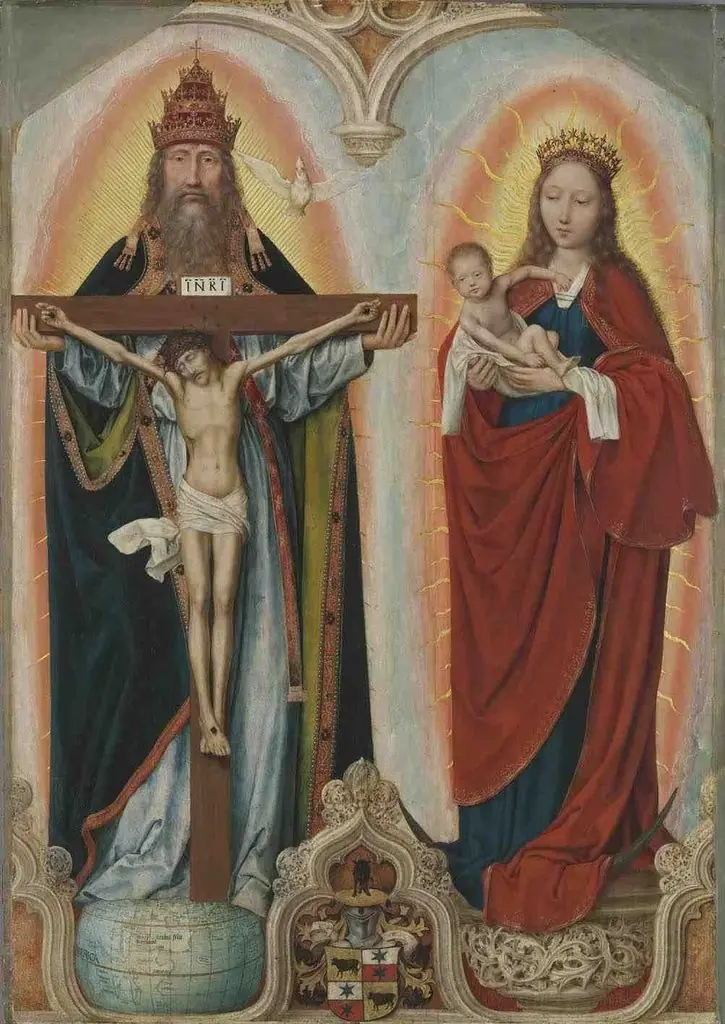 Rem-Altar: Heilige Dreifaltigkeit ("Gnadenstuhl")
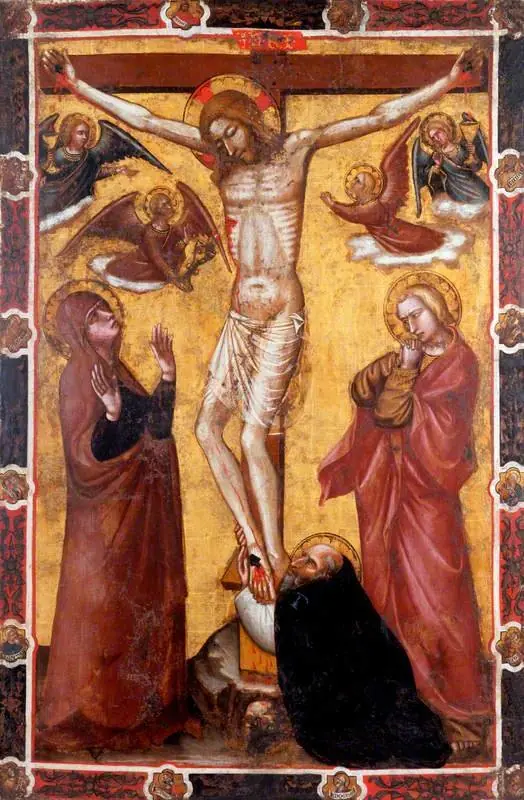 The Crucifixion with the Virgin and Saint John; Saint Anthony Abbot at the Foot of the Cross (one side of a processional banner) (formerly attributed to Barnaba da Modena)
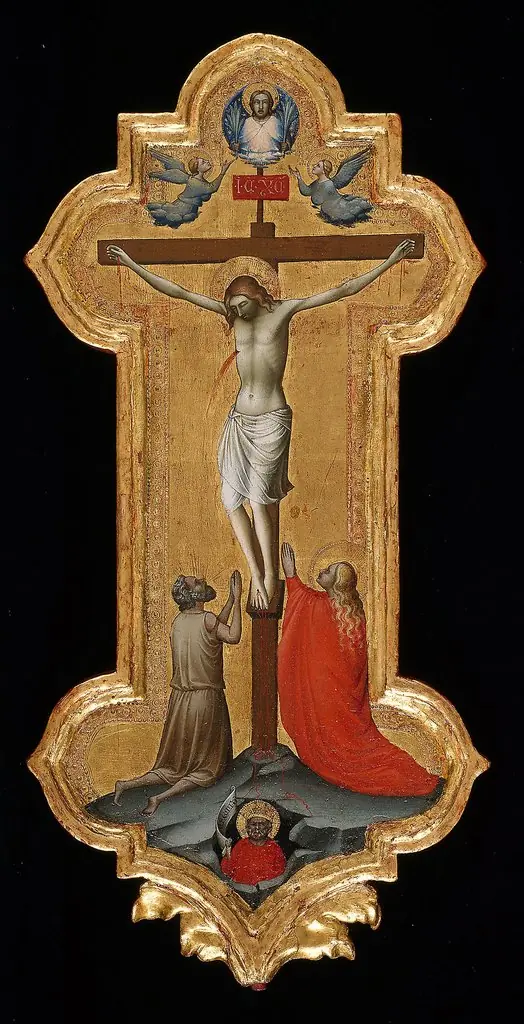 Processional Cross
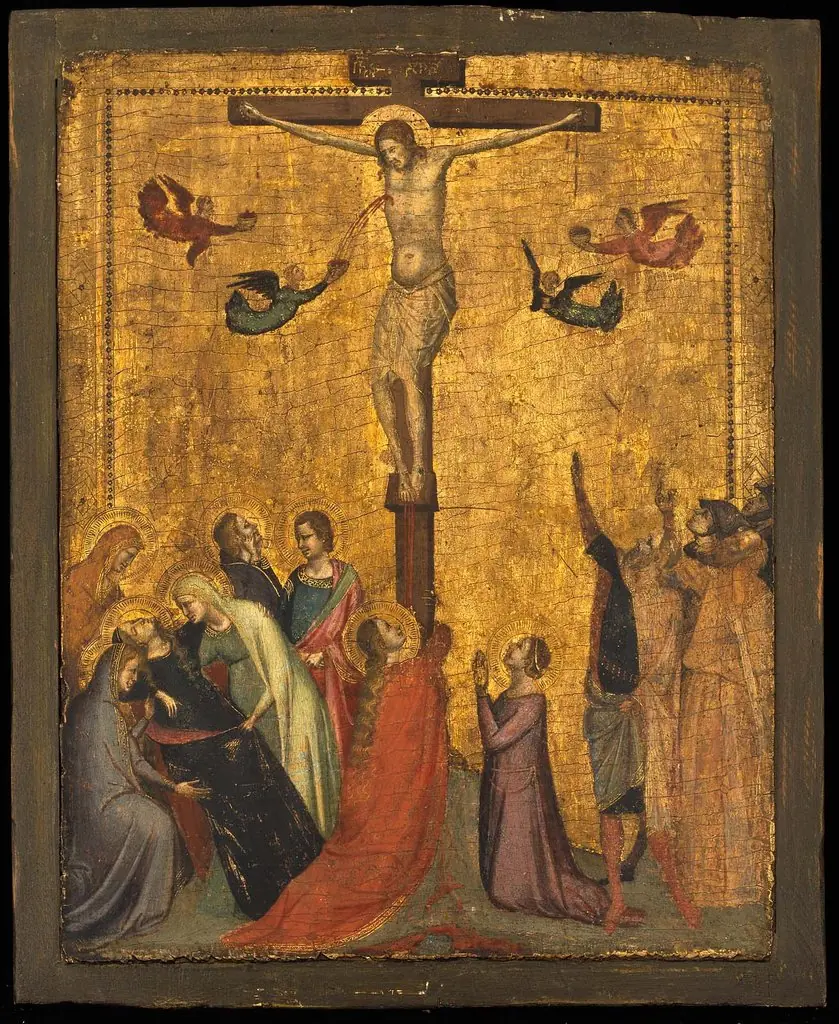 The Crucifixion