Artwork
Crucifixion
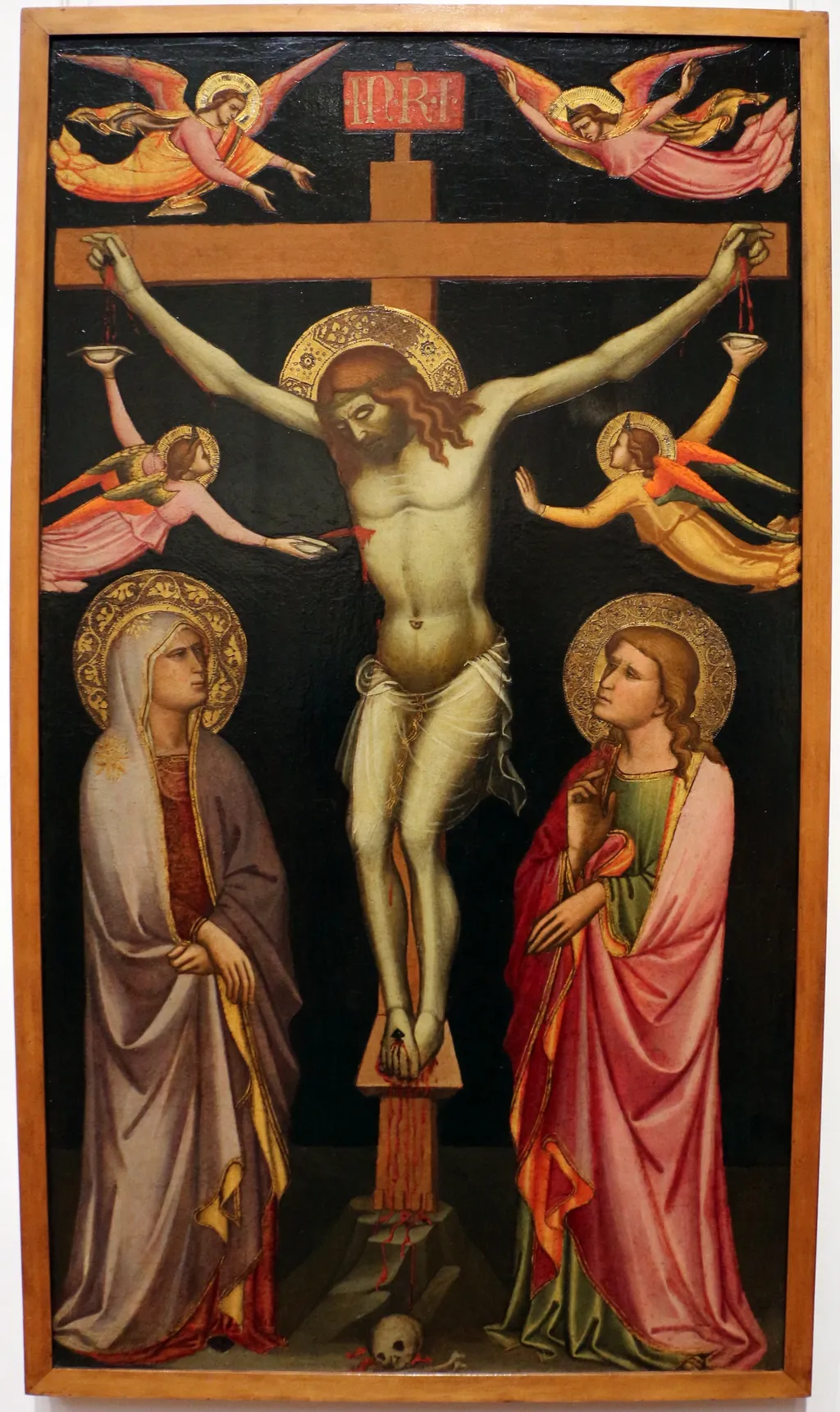
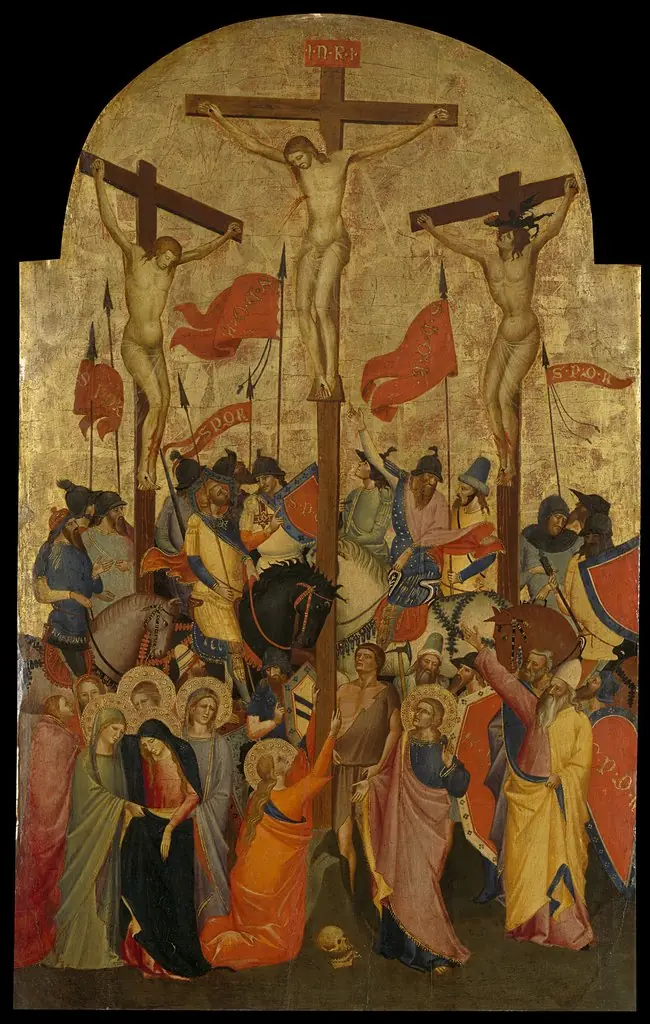
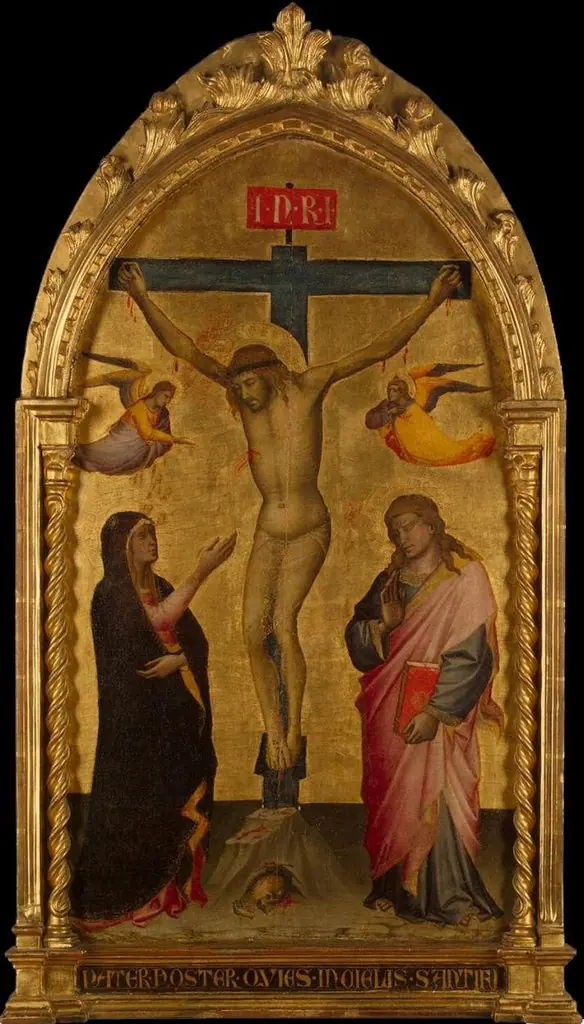
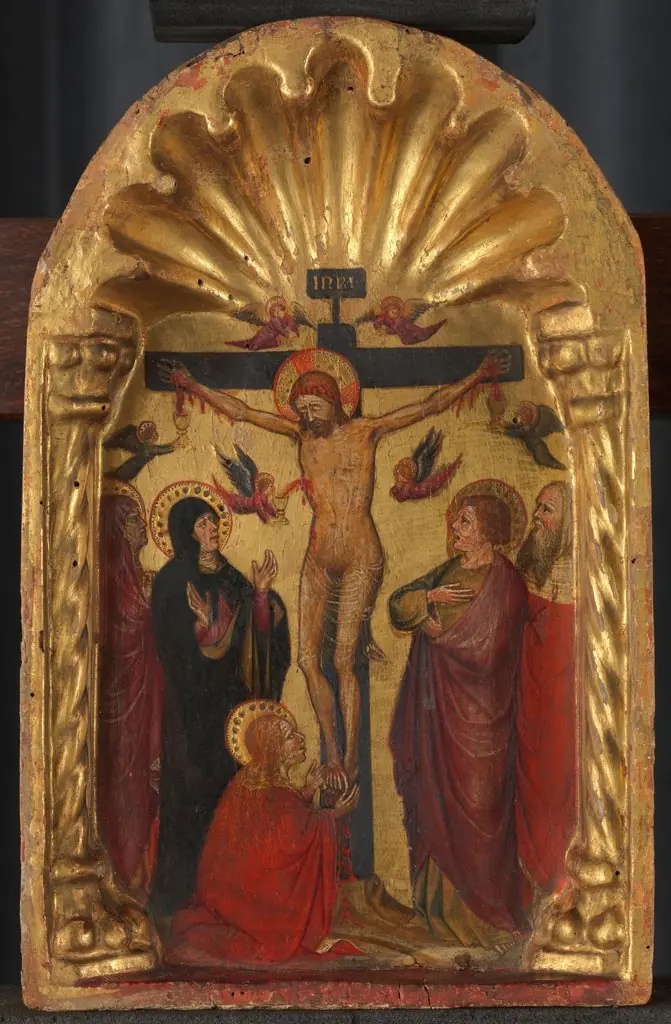
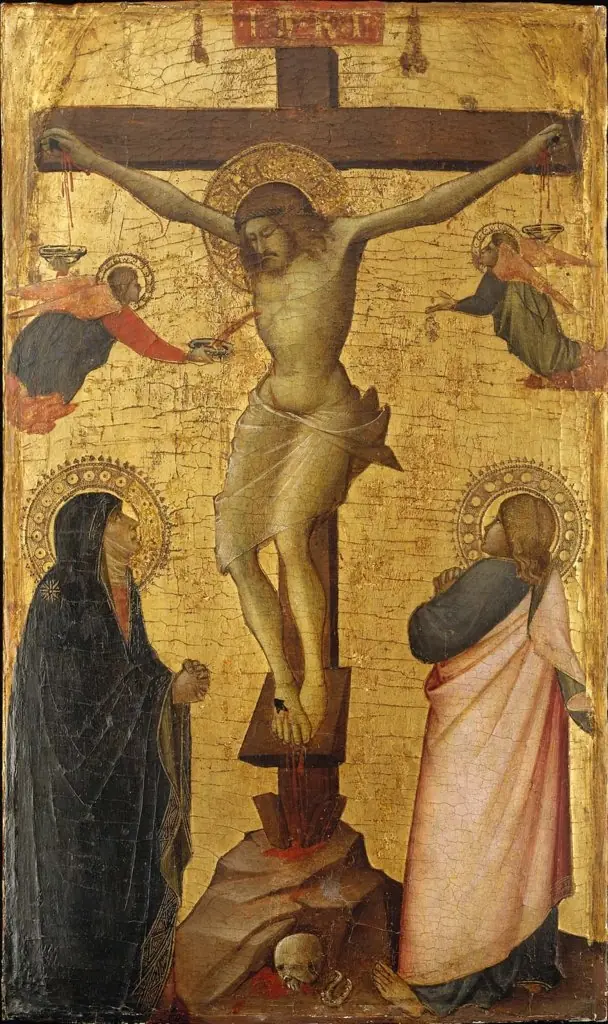
Crucifixion is a tempera painting by Niccolò di Pietro. It dates from 1396 and is held in the collection of the Uffizi Gallery.
About this work
Overview
Painted in 1396 by Niccolò di Pietro Gerini, this tempera-on-panel work depicts the Crucifixion in a traditional late Gothic style. Created during Gerini’s active years in central Italian cities like Florence and Pisa, the painting is now held in the Uffizi Gallery. Its composition follows established religious iconography of the period, emphasizing solemnity over naturalism.
Subject & Meaning
At the base, two mourning women—likely the Virgin Mary and Mary Magdalene—gaze upward, their halos marking sanctity amid grief.
The scene centers on Christ crucified, his body suspended on a brown wooden cross, haloed and bearing the marks of suffering. Above him, two angels collect his blood in chalices, symbolizing the Eucharist and the salvific nature of his sacrifice. At the base, two mourning women—likely the Virgin Mary and Mary Magdalene—gaze upward, their halos marking sanctity amid grief. The imagery reinforces theological themes of redemption and divine sorrow.
Technique & Style
Executed in tempera, the painting employs flat, linear forms and limited spatial depth typical of late medieval Italian art. Figures are rendered with rigid postures and stylized drapery, their expressions restrained yet emotionally charged. The dark background isolates the sacred figures, heightening their symbolic presence. Gold leaf halos and precise brushwork reflect devotional priorities over illusionistic realism.
History & Provenance
Commissioned likely for a religious setting, the painting entered the Uffizi’s collection in the early modern period, where it remains today. Gerini’s documented activity in Florence and surrounding towns suggests local patronage, possibly from a convent or civic chapel. Its preservation reflects continued reverence for late Gothic devotional art in Tuscany.
Context
In late 14th-century Tuscany, religious imagery served both liturgical and instructional roles. Gerini’s adherence to conventional compositions aligned with prevailing tastes, even as early Renaissance innovations emerged nearby. The emphasis on symbolic action—angels collecting blood, mourners in prayer—reflects a devotional culture focused on Christ’s sacrifice as a tangible, sacred event.
Legacy
Though not widely known outside scholarly circles, Gerini’s Crucifixion exemplifies the persistence of Gothic conventions in Florentine painting well into the 15th century. It stands as a quiet counterpoint to the emerging naturalism of contemporaries like Giotto’s followers, preserving a visual language rooted in spiritual symbolism rather than humanist observation.
Artist & collection
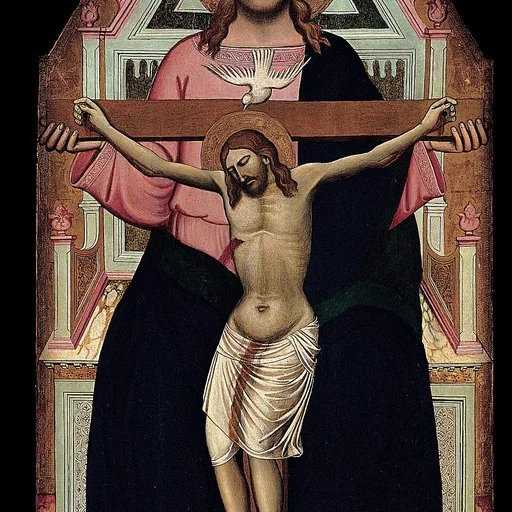
Artist
Niccolò di Pietro Gerini (c. 1340 – 1414) was an Italian painter of the late Gothic period, active mainly in his native Florence although he also carried out commissions in Pisa and Prato. He was not an innovative…