Artwork
Saint Martin and the Beggar
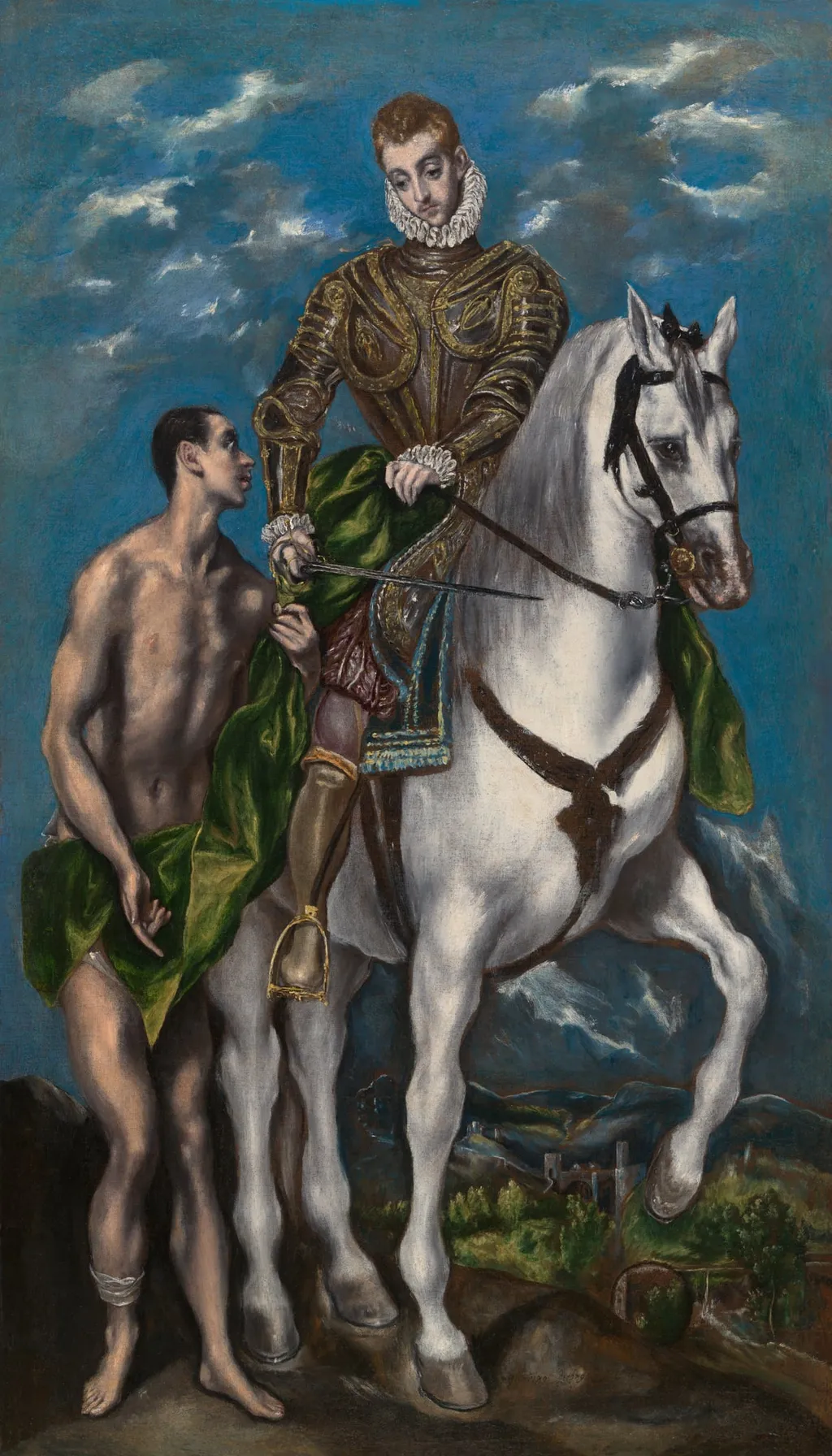
Saint Martin and the Beggar is an oil painting by the Mannerist artist Domenico Theotokópoulos, called El Greco. It dates from 1597 and is held in the collection of the Art Institute of Chicago.
About this work
Overview
This oil on canvas painting is a reduced-scale version of a larger altarpiece originally commissioned for the private chapel of San José in Toledo.
This oil on canvas painting is a reduced-scale version of a larger altarpiece originally commissioned for the private chapel of San José in Toledo. El Greco created such replicas to extend the reach of his religious imagery beyond the original patron, making his compositions accessible to private collectors and smaller devotional spaces. The work retains the core narrative and compositional structure of the full-scale piece while adapting its scale for domestic or intimate settings.
Subject & Meaning
The scene depicts Saint Martin of Tours sharing his cloak with a beggar, a moment celebrated in medieval hagiography as an act of Christian charity. During the Counter-Reformation, such stories were emphasized by the Catholic Church to reinforce moral behavior and the spiritual value of almsgiving. The inclusion of contemporary armor and the recognizable skyline of Toledo grounds the sacred event in the viewer’s world, reinforcing its relevance to daily life and personal piety.
Technique & Style
El Greco employs elongated forms and a heightened palette to convey spiritual tension, characteristic of his mature style. The figures are rendered with sharp, angular drapery and a luminous, almost unnatural light that separates them from the atmospheric background. The distant cityscape of Toledo is rendered with loose, suggestive brushwork, contrasting with the precise detailing of the figures and their armor, creating a layered visual rhythm between the earthly and the divine.
History & Provenance
The original altarpiece was commissioned for the chapel of San José in Toledo, likely in the 1590s. This smaller version was produced shortly after, possibly as a studio reproduction or a commissioned duplicate for another patron. Its survival suggests continued interest in El Greco’s religious imagery beyond the initial commission, reflecting his growing reputation and the demand for devotional works in private collections across Spain and beyond.
Context
In late 16th-century Spain, religious imagery was tightly linked to the Church’s efforts to renew faith amid Protestant challenges. Saint Martin’s act of charity aligned with Tridentine ideals promoting visible piety and social responsibility. El Greco’s integration of Toledo’s skyline into the scene reflects a local pride common among Spanish artists, embedding sacred narratives within familiar urban landscapes to deepen their emotional and spiritual impact.
Legacy
This painting exemplifies El Greco’s strategy of adapting major commissions into smaller formats, a practice that broadened his influence and preserved his iconography in private hands. While the original altarpiece remains in Toledo, this replica helped disseminate his distinctive visual language across Spain, contributing to the wider recognition of his style and reinforcing the enduring appeal of his religious subjects in post-Tridentine devotional culture.
Artist & collection
Artist
Domenico Theotokópoulos, called El Greco
El Greco painted dramatic, elongated figures in oil on canvas, blending late Renaissance technique with something more spiritual and restless.