Artwork
Disrobing of Christ (by J.M.Theotocópuli)
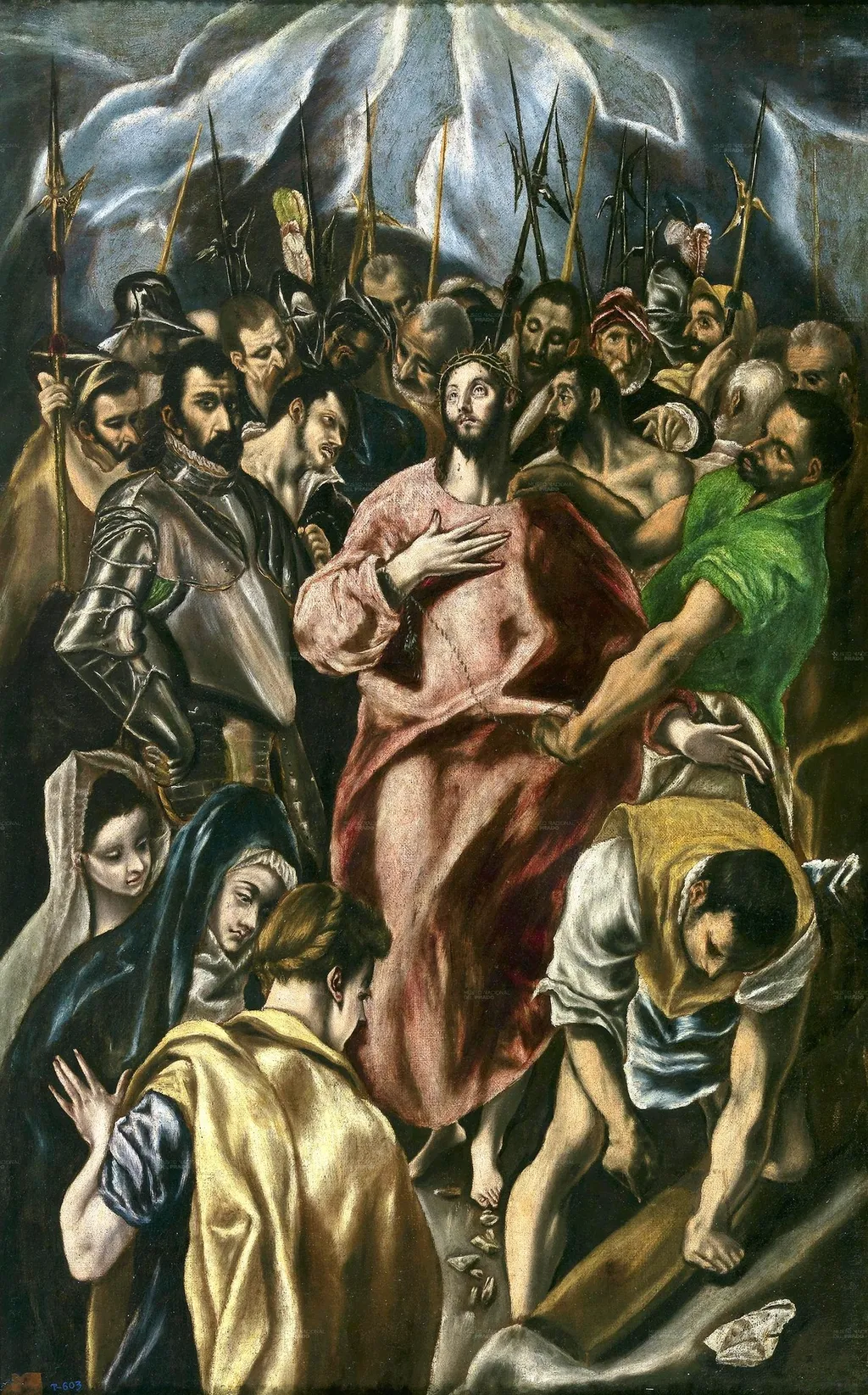
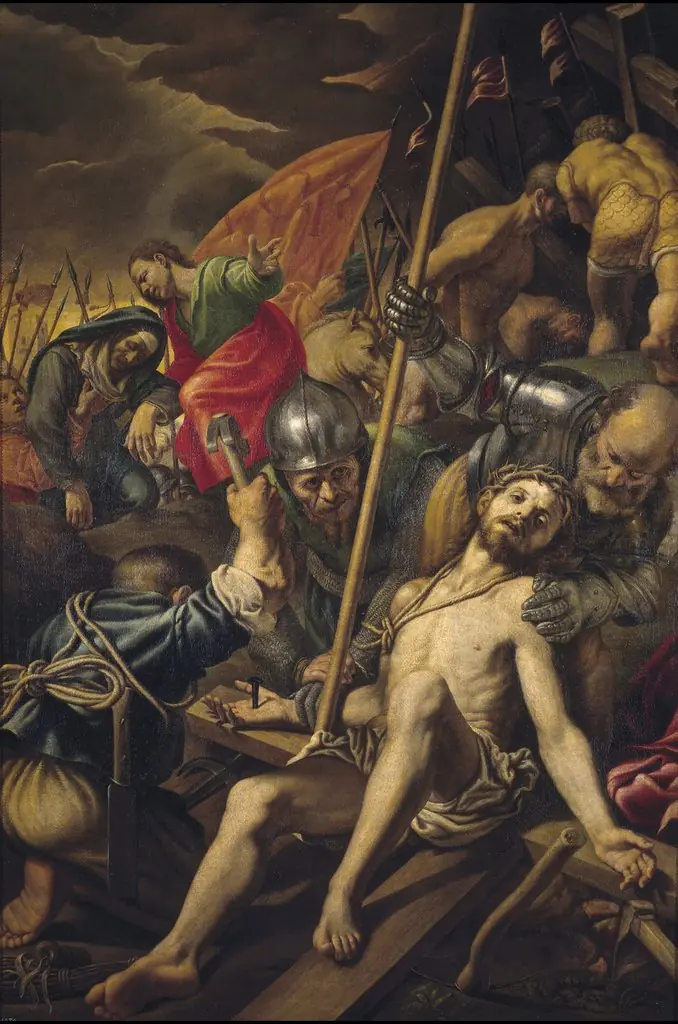
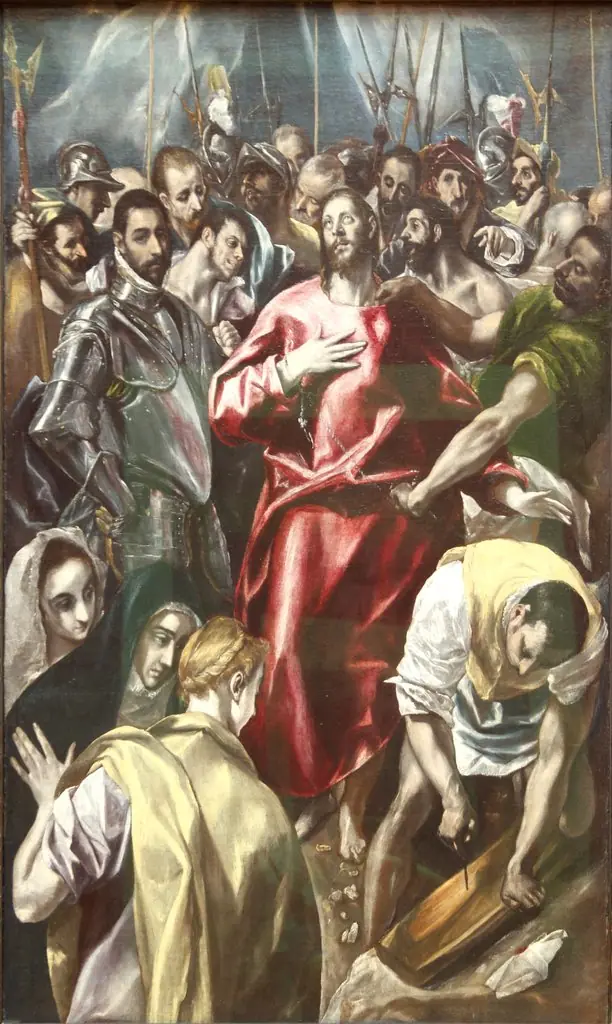
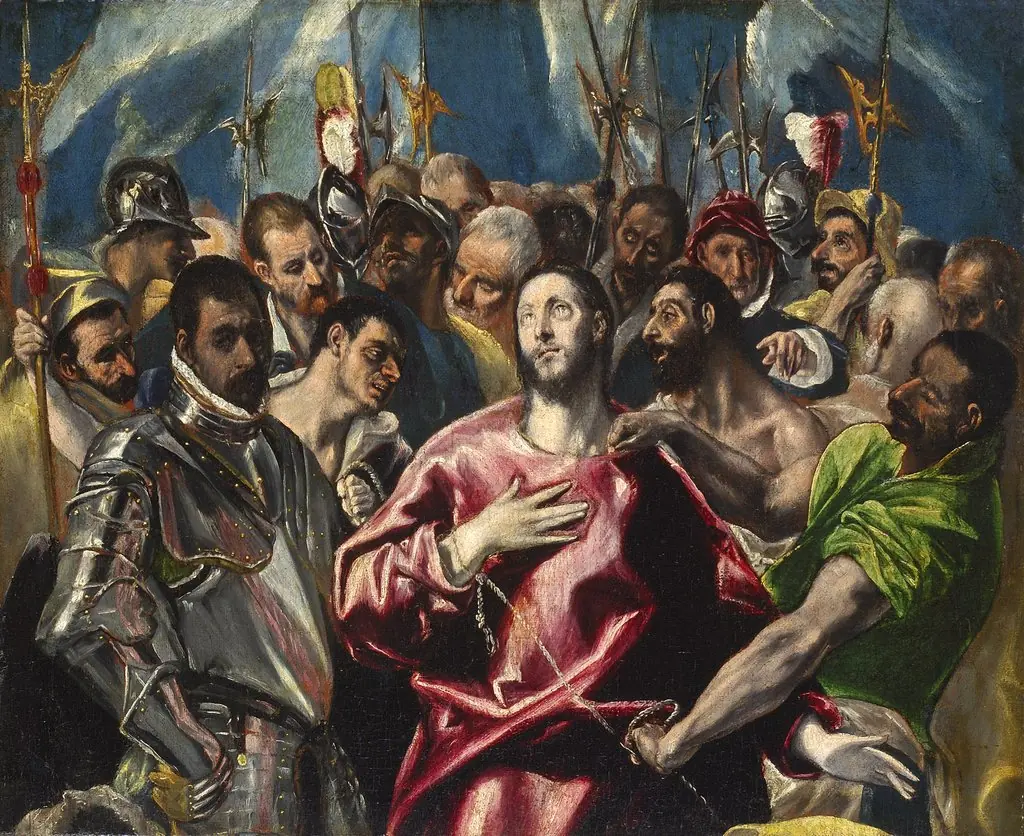
Disrobing of Christ (by J.M.Theotocópuli) is an oil painting by the Mannerist artist Jorge Manuel Theocupulus. It dates from 1606 and is held in the collection of the Museo del Prado. Jorge Manuel Theotocópuli’s *Disrobing of Christ* (1606) is an oil painting that portrays the moment preceding the crucifixion.
About this work
Overview
Jorge Manuel Theotocópuli’s *Disrobing of Christ* (1606) is an oil painting that portrays the moment preceding the crucifixion. Central to the composition is Christ, crowned with thorns and flanked by a gathering of onlookers, some bearing spears. The work is executed in a mannerist idiom and is part of the Museo del Prado’s holdings.
Subject & Meaning
The scene captures the tense interval when Christ’s garments are being removed, a prelude to his suffering on the cross. The presence of the spear alludes to the instrument of his eventual death, while the varied reactions of the surrounding figures—some averting their gaze, others covering their faces—underscore the emotional gravity of the event.
Technique & Style
The painting employs a stark chiaroscuro, with illuminated faces that seem to glow against a predominately somber palette of browns, grays, and muted greens. Highlights on the pale skin and the vivid red of Christ’s robe create focal points, while deep shadows enhance the sense of drama and three‑dimensionality characteristic of mannerist composition.
History & Provenance
Created in 1606, the work reflects the artistic lineage of its creator, Jorge Manuel Theotocópuli, who was the son of the renowned El Greco (Doménikos Theotokópoulos). The painter also practiced architecture in Toledo, and the canvas eventually entered the collection of the Museo del Prado, where it remains on display.
Context
Produced during the early 17th‑century Spanish Counter‑Reformation, the painting aligns with contemporary religious commissions that emphasized the Passion of Christ. Its mannerist style, inherited from the elder Theotocópuli, bridges the transition from the late Renaissance toward the emerging Baroque sensibility in Iberian art.
Own this work as a print
Artist & collection
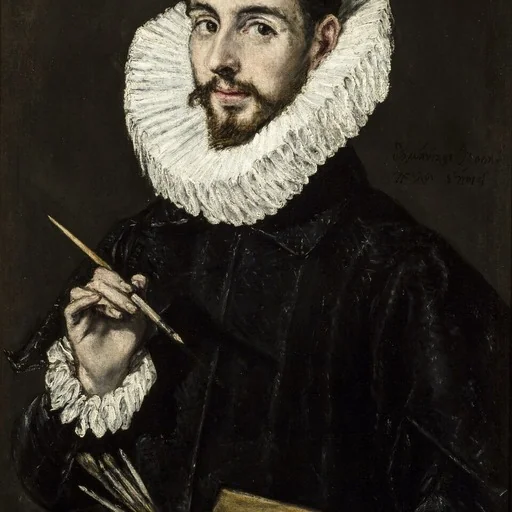
Artist
Jorge Manuel Theotocópuli de las Cuevas (1578, Toledo - 29 March 1631, Toledo) was a Spanish painter and architect. He was the only son of the iconic painter, Doménikos Theotokópoulos, called "El Greco".