Artwork
Allegorie: Die versäumte Gelegenheit
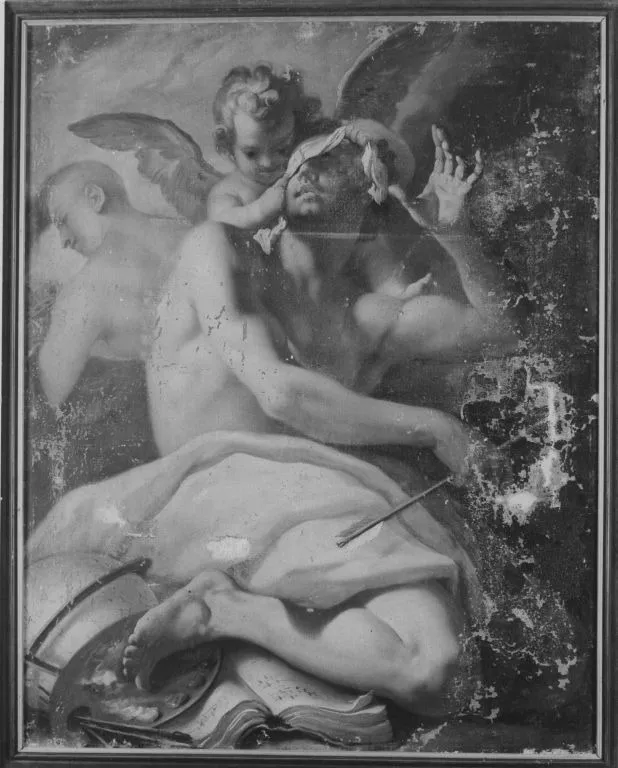
Allegorie: Die versäumte Gelegenheit is an unspecified painting by Domenico Zanetti. It is held in the collection of the Bavarian State Painting Collections.
About this work
Overview
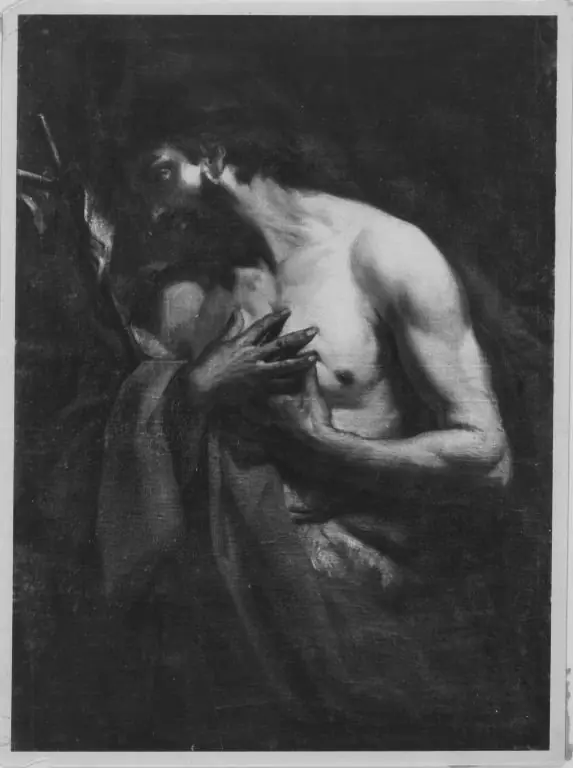
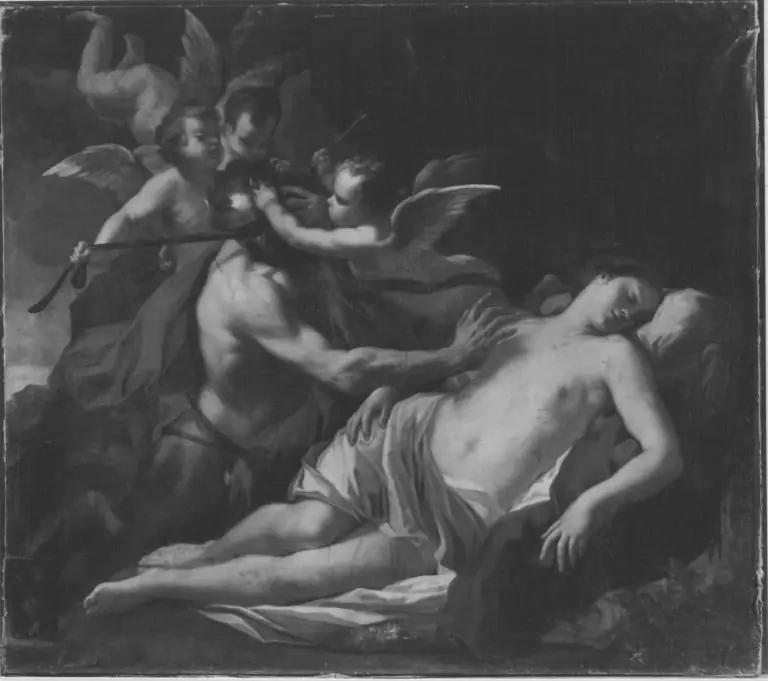
It presents a solitary male figure in a state of stillness, surrounded by symbolic elements that suggest missed opportunity or internal conflict.
Painted around 1713 by Domenico Zanetti, this allegorical work resides in the Alte Pinakothek in Munich. It presents a solitary male figure in a state of stillness, surrounded by symbolic elements that suggest missed opportunity or internal conflict. The composition is restrained, emphasizing mood over narrative action, and reflects the Venetian tradition of philosophical imagery in early 18th-century painting.
Subject & Meaning
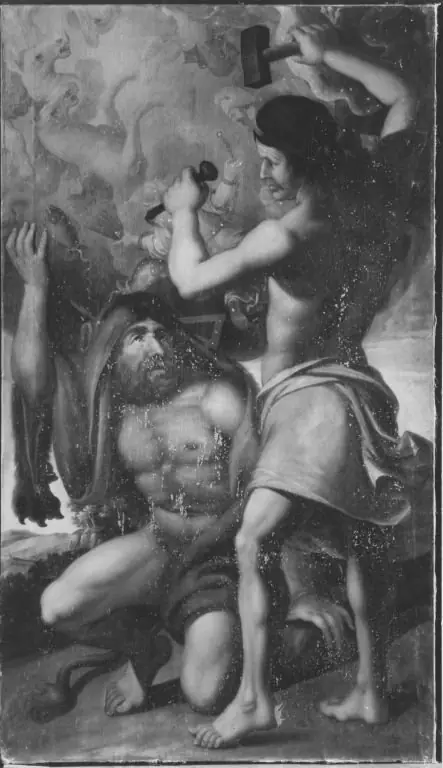
The central figure, partially draped and nude, embodies contemplation, possibly representing a man confronted with a lost chance. The cherub on his shoulder, armed with a bow and arrow, alludes to Cupid or the fleeting nature of desire. Together, they imply a psychological tension—between action and inaction, impulse and regret—without specifying a literary or mythological source, leaving interpretation open to the viewer.
Technique & Style
Zanetti employs soft chiaroscuro to model the figure’s form against a dark, neutral background, enhancing the sense of isolation. Warm flesh tones contrast subtly with the muted surroundings, drawing focus to the man’s posture and expression. The brushwork is delicate, particularly in rendering the cherub and fabric folds, suggesting influence from Venetian colorism and a refined, intimate approach to allegory.
History & Provenance
The painting entered the Alte Pinakothek’s collection in the 19th century, likely through acquisitions of Venetian works from private European collections. Its attribution to Zanetti is based on stylistic comparison with his few surviving works. No earlier documentation of its commission or ownership is known, and it appears to have remained relatively obscure until modern cataloging efforts.
Context
Created during a period when Venetian painters increasingly turned to allegorical and moralizing themes, Zanetti’s work aligns with a broader trend of introspective imagery in early 18th-century Italy. Unlike grand historical scenes, this painting favors quiet psychological depth, reflecting a shift toward personal reflection in art, possibly influenced by Enlightenment ideals and the rise of private collecting.
Legacy
Though Zanetti is not widely known today, this painting remains a rare example of his allegorical output. It contributes to the understanding of how Venetian artists adapted classical motifs into intimate, emotionally nuanced compositions. Its preservation in a major museum ensures its continued role in scholarly discussions of allegory beyond the Baroque mainstream.
Artist & collection