Artwork
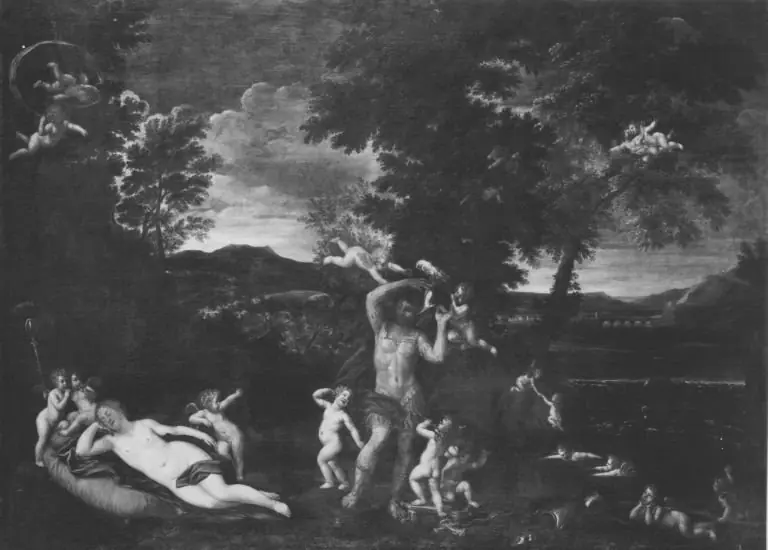
Nymphe and Satyr
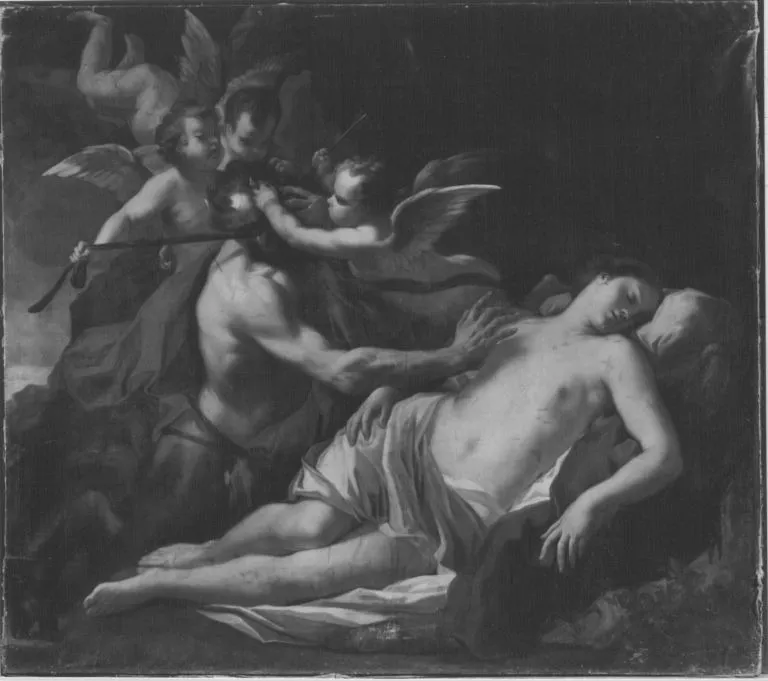
Nymphe and Satyr is an unspecified painting by the Early Baroque Italian artist Francesco Albani. It dates from 1619 and is held in the collection of the Bavarian State Painting Collections.
About this work
Overview
Francesco Albani’s 1619 canvas Nymphe and Satyr presents a nocturnal tableau in which a semi‑clothed female figure reclines on the ground, appearing exhausted or asleep. A bearded, muscular male figure looms above her, while two winged beings hover nearby—one equipped with a bow, the other bearing a club. The darkened backdrop isolates the characters, emphasizing their interaction.
Subject & Meaning
The composition draws on classical mythology, pairing a vulnerable nymph with a satyr, a creature linked to rustic revelry and unbridled desire. The presence of the winged attendants, one archer and one club‑bearer, suggests a narrative of pursuit or protection, underscoring themes of temptation, power, and the tension between innocence and primal instinct.
Technique & Style
Albani employs a pronounced chiaroscuro scheme, contrasting illuminated forms against a deep, shadowy environment to heighten drama. The strong directional light sculpts the flesh of the nymph and the satyr’s musculature, while the ethereal winged figures are rendered with softer edges, reinforcing their otherworldly nature. The palette remains muted, focusing attention on light and volume.
History & Provenance
Completed in 1619, the work entered the collection of the Alte Pinakothek in Munich, where it remains on display. Its acquisition reflects the museum’s emphasis on Baroque Italian painting, and the piece has been documented in the museum’s catalogues as a representative example of Albani’s mythological oeuvre.
Artist & collection

Artist
Francesco Albani or Albano was an Italian Baroque painter of Albanian descent who was active in Bologna, Rome, Viterbo (1609–1610), Mantua (1621–1622) and Florence (1633).

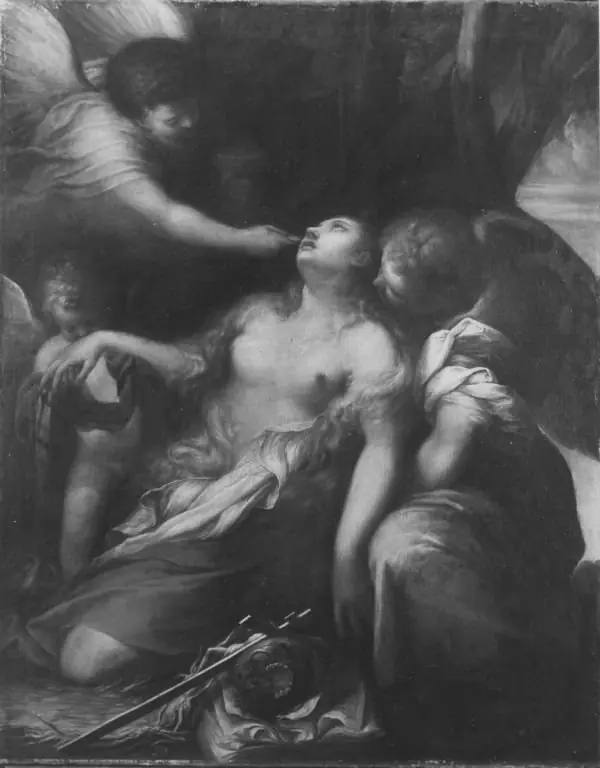 Kommunion der hl. Magdalena
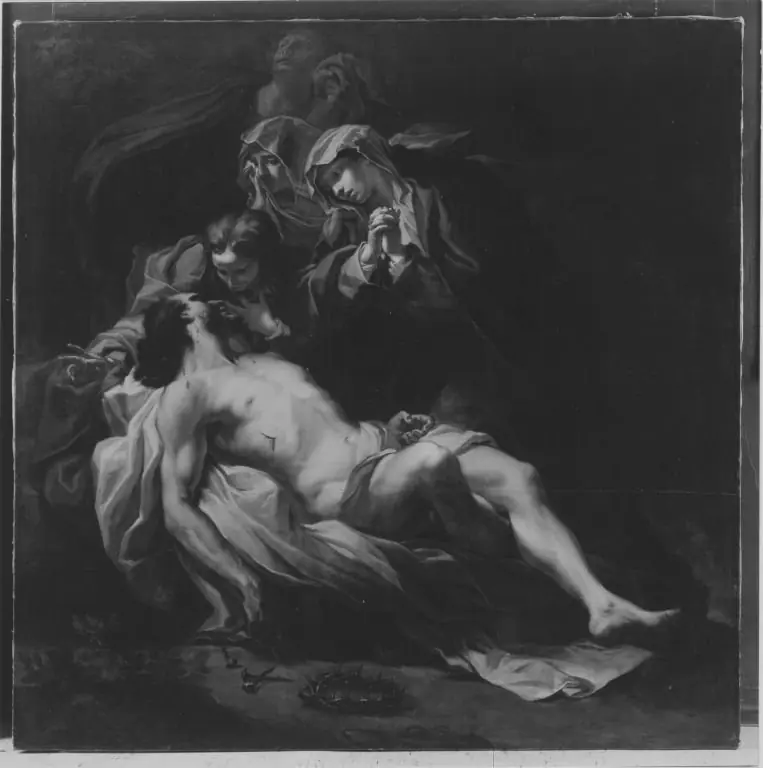 Lamentation of Christ
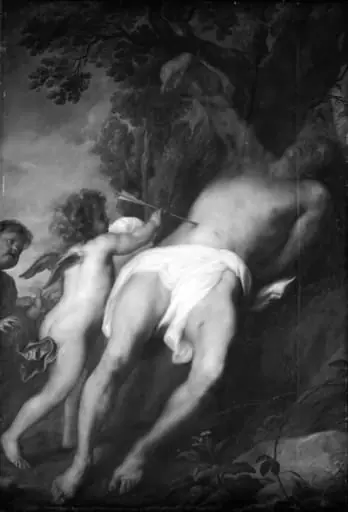 St Sebastian Being Tended by Two Angels
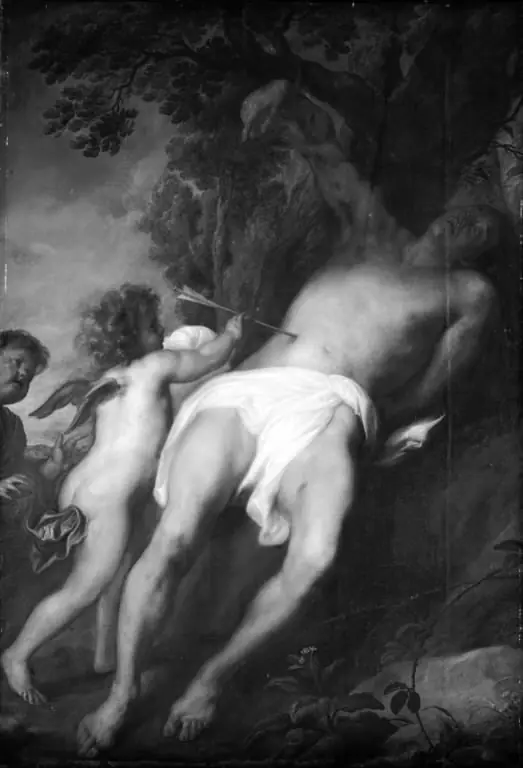 St Sebastian Being Tended by Two Angels
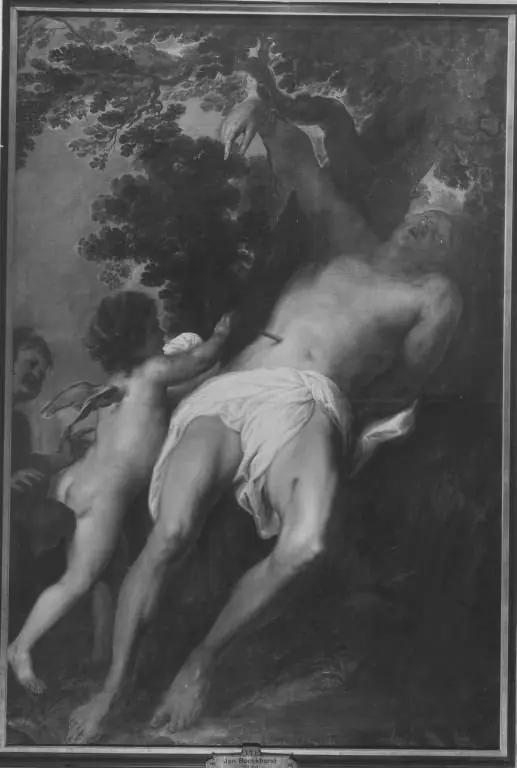 Hl. Sebastian (Kopie nach)
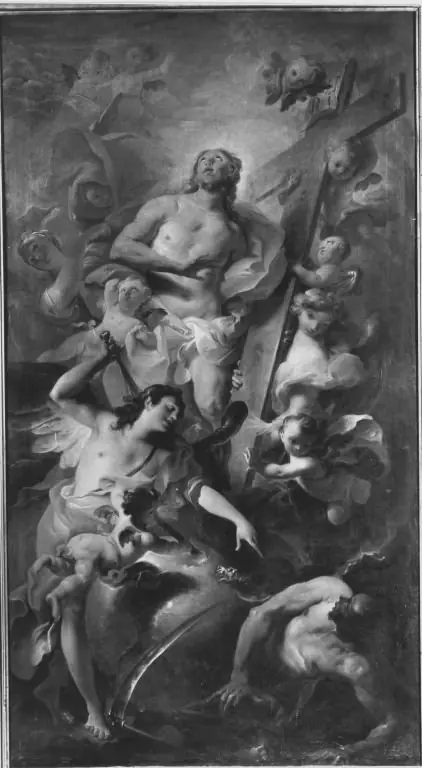 Christus als Überwinder
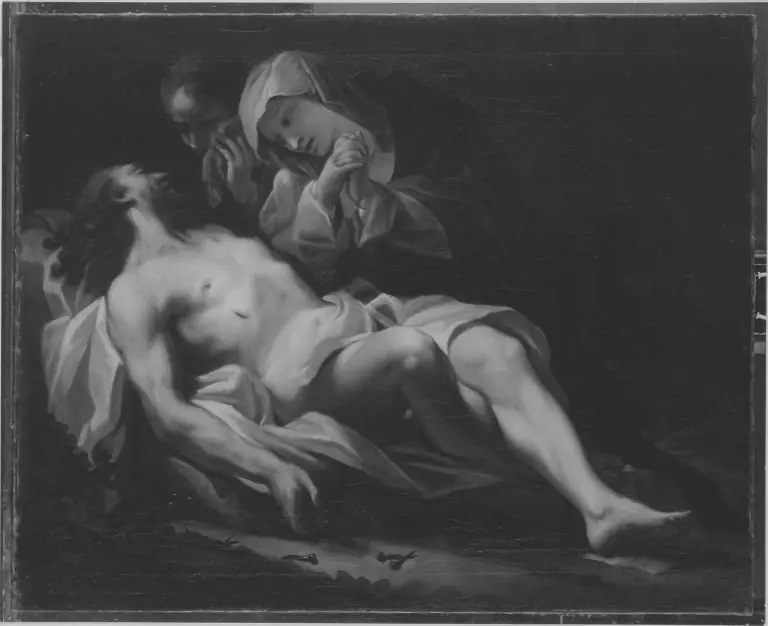 Beweinung Christi
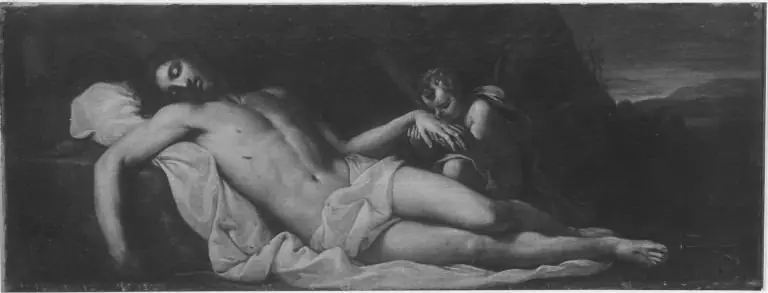 Dead Christ
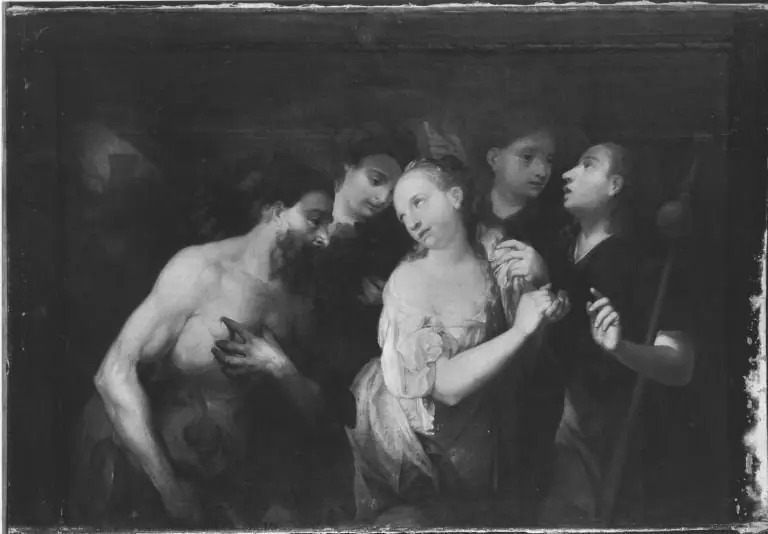 Lot und seine Töchter (Kopie nach)
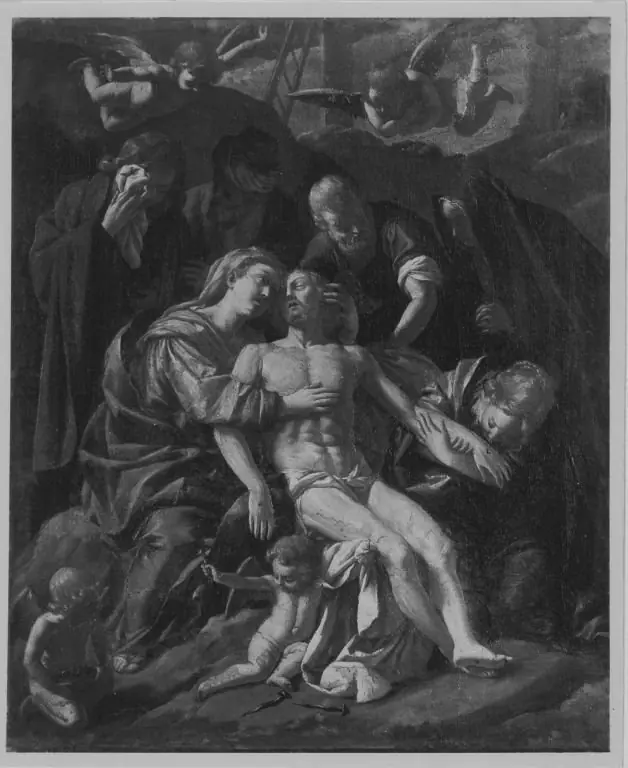 Lamentation of Christ
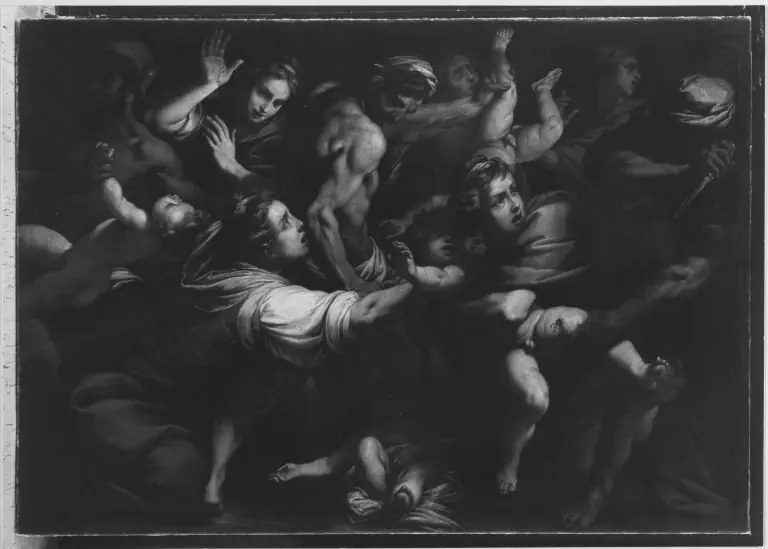 Bethlehemitischer Kindermord
 Birth of Maria de Medici (study)