Artwork
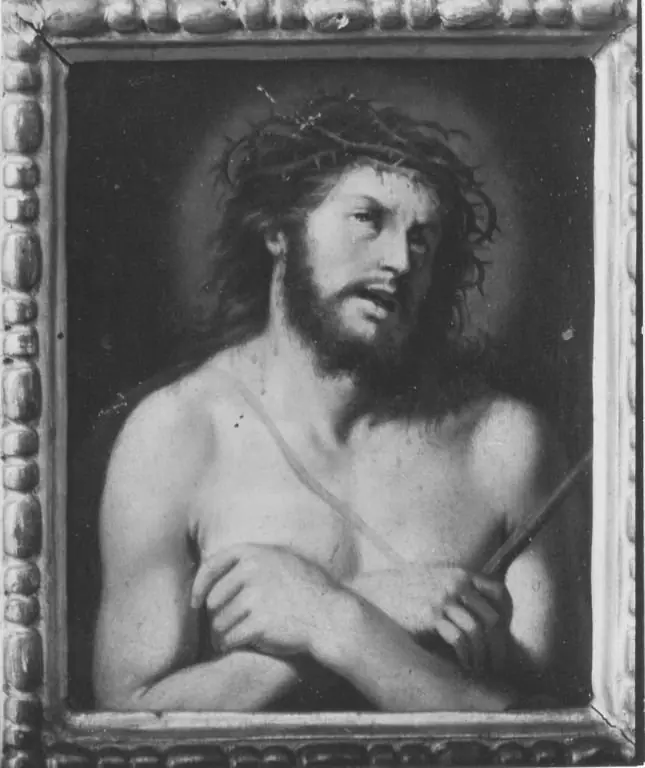
Ecce homo
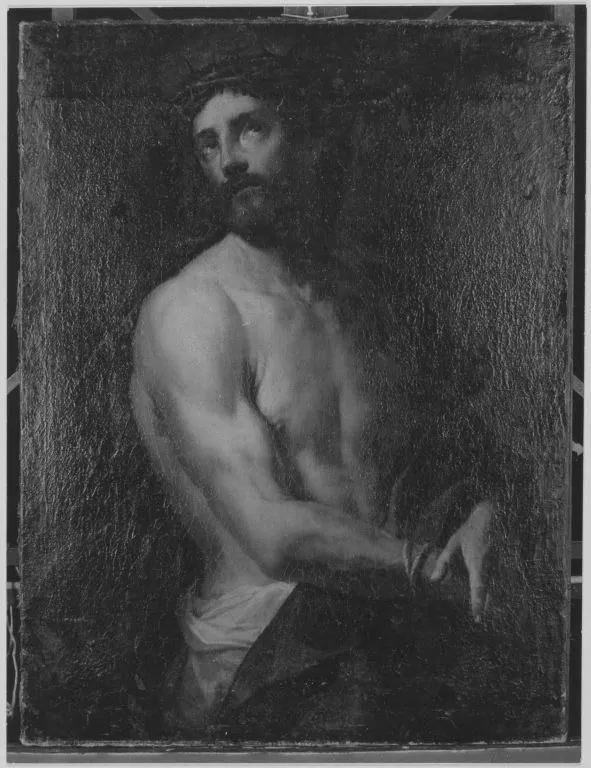
Ecce homo is an unspecified painting by Domenico Zanetti. It is held in the collection of the Bavarian State Painting Collections.
About this work
Overview
Executed around 1713, the oil painting measures roughly a life‑size portrait and is part of the collection of Munich’s Alte Pinakothek.
Domenico Zanetti’s early‑18th‑century work titled *Ecce homo* presents a solitary figure of the crucified Christ. Executed around 1713, the oil painting measures roughly a life‑size portrait and is part of the collection of Munich’s Alte Pinakothek. The composition centers on a muscular, bearded man crowned with thorns, his torso exposed and draped only in a white cloth, set against a deep, shadowy background.
Subject & Meaning
The image captures the moment when Pontius Pilate presents Jesus to the crowd, a theme traditionally known as “Ecce homo” or “Behold the man.” Zanetti emphasizes Christ’s suffering through the crown of thorns, the downcast gaze, and the solemn expression, inviting contemplation of sacrifice and humanity within a devotional context.
Technique & Style
Rendered with meticulous realism, the painting showcases Zanetti’s skill in handling flesh tones and chiaroscuro. A concealed light source bathes the figure, highlighting muscular definition and smooth skin while the surrounding darkness recedes. The brushwork is fine and controlled, allowing precise rendering of facial features, hair, and the delicate folds of the white cloth.
History & Provenance
Created circa 1713, the work entered the Alte Pinakothek’s holdings during the museum’s 19th‑century acquisitions of Baroque religious art. Its provenance prior to that remains sparsely documented, but the painting has been consistently attributed to Zanetti, an Italian painter active in the early 1700s, and has remained in the Munich collection since its accession.
Artist & collection

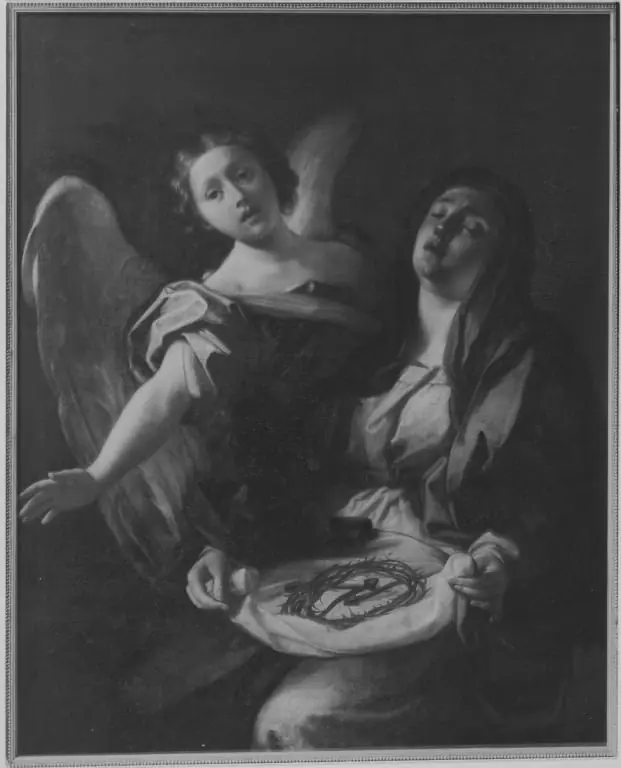
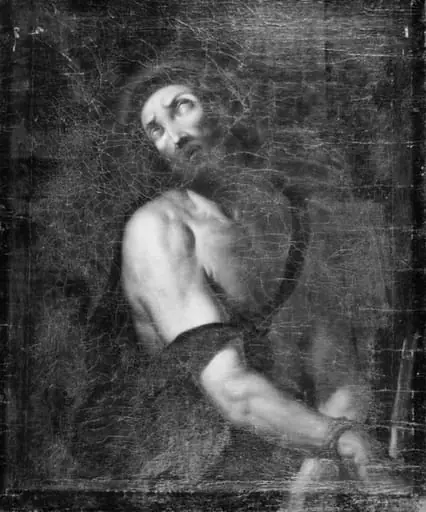 Kristus med tornekronen og sammenbundne hænder, holder i den højre hånd et rør
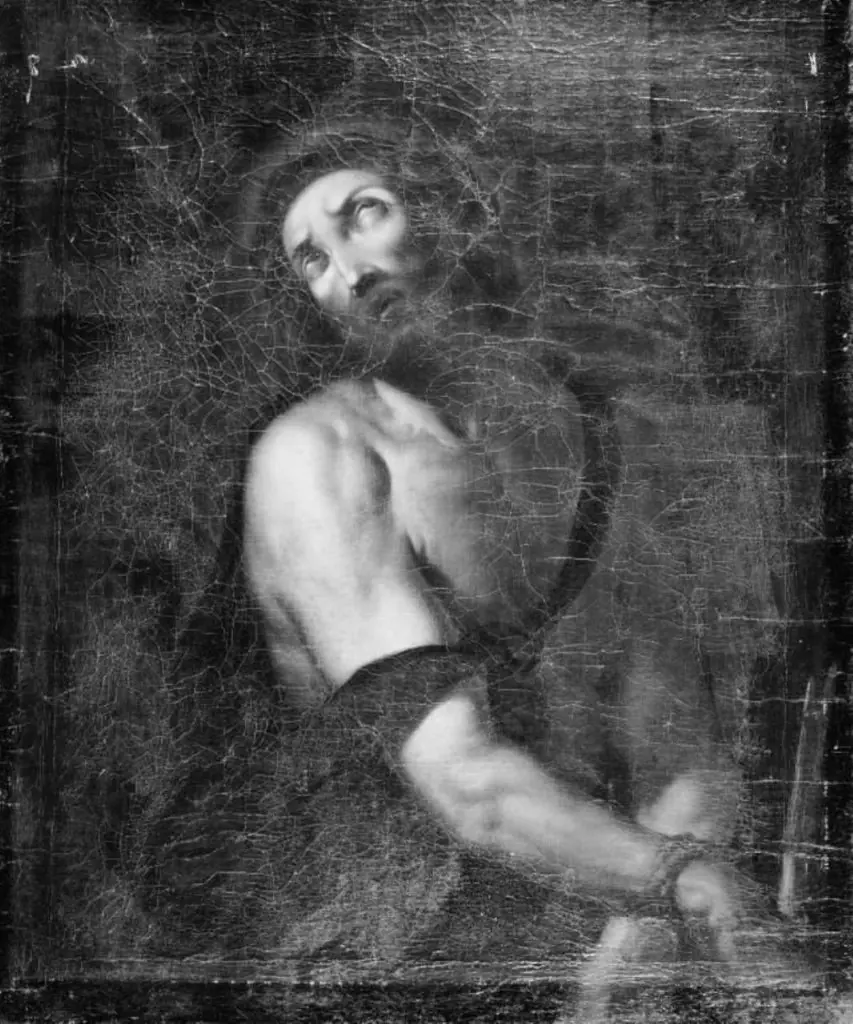 Kristus med tornekronen og sammenbundne hænder, holder i den højre hånd et rør
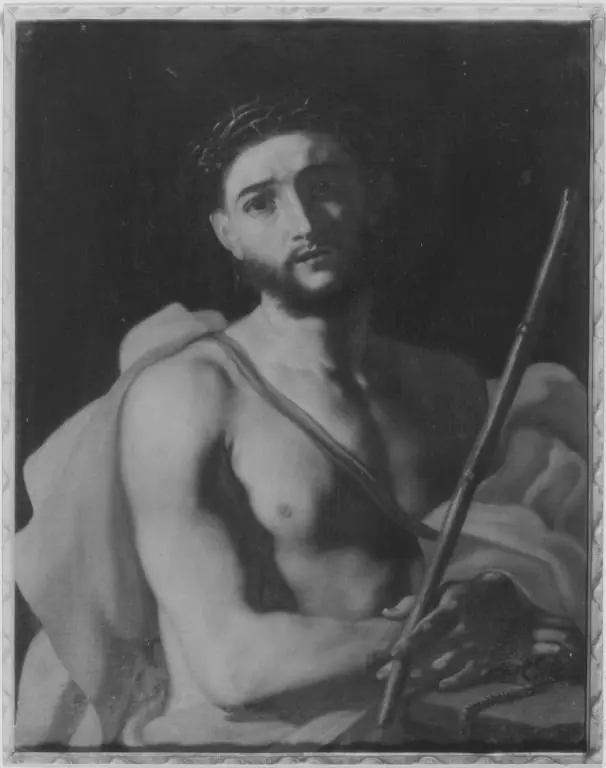 Ecce homo
 St Sebastian
 Ecce homo
 Christ on the cross
 Johannes der Täufer
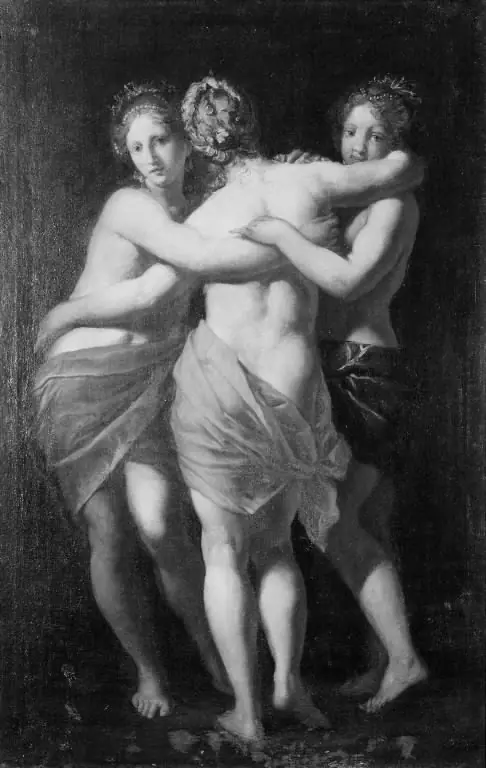 The Three Graces
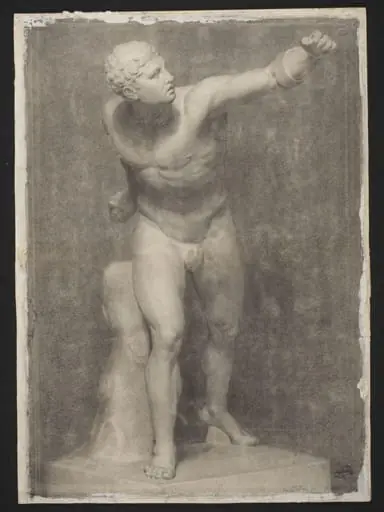 Study of a plaster cast of the Borghese Gladiator
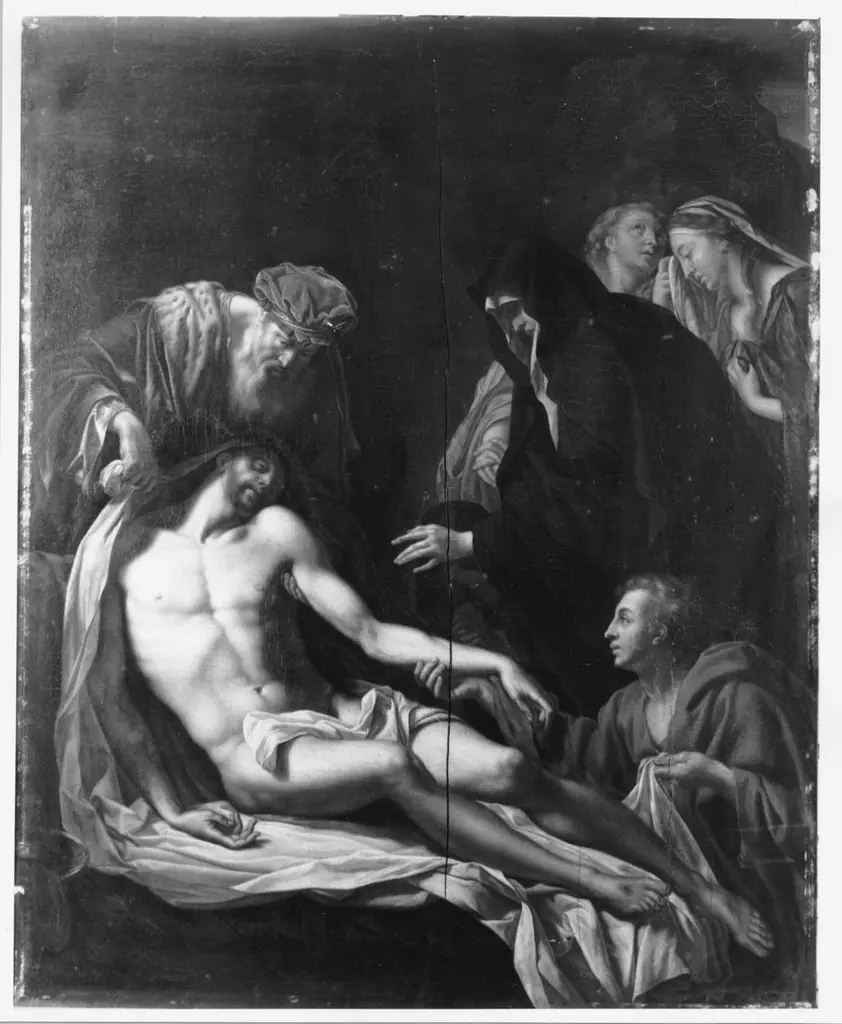 The Entombment
 The Three Graces