Artwork
Children with a mousetrap
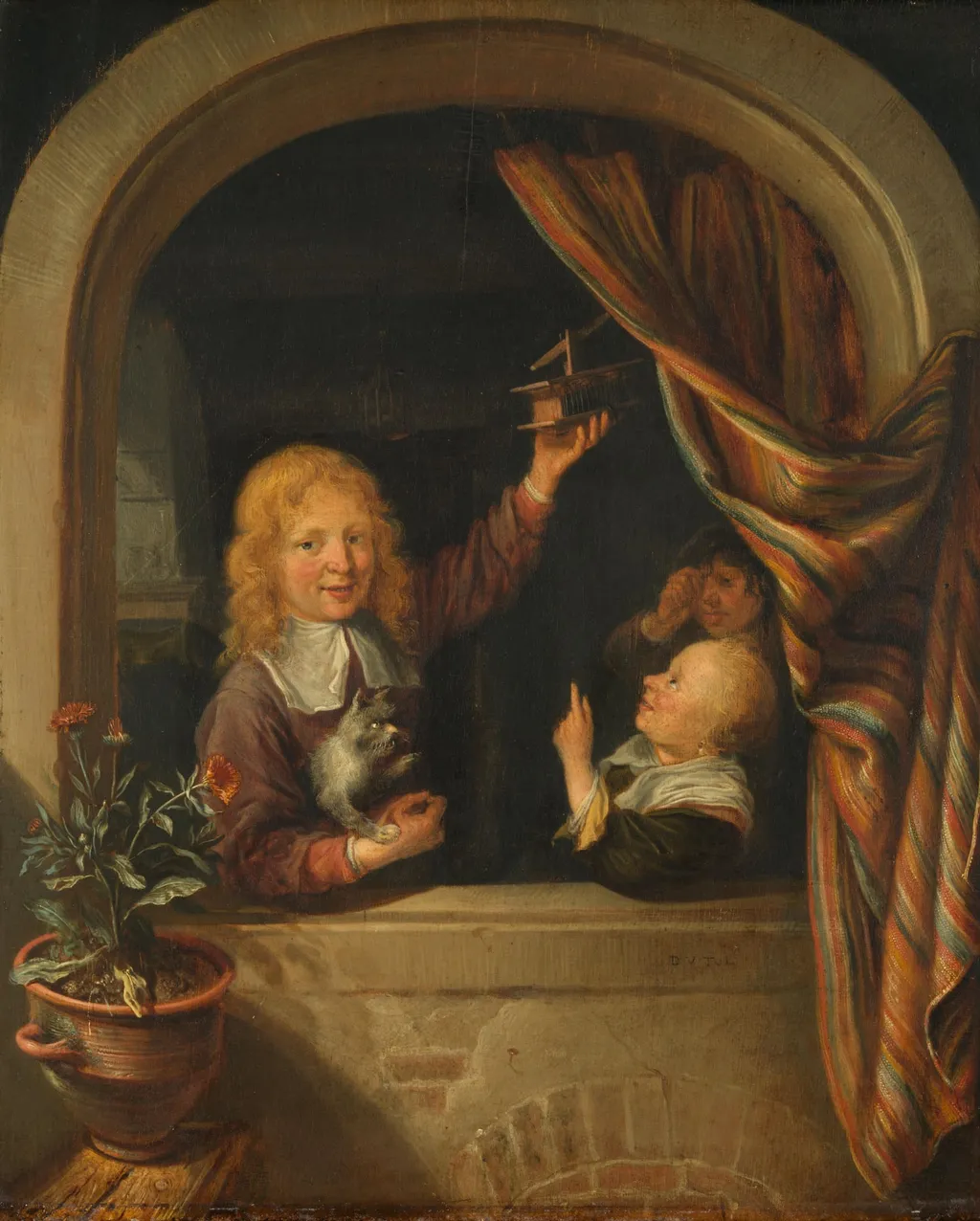
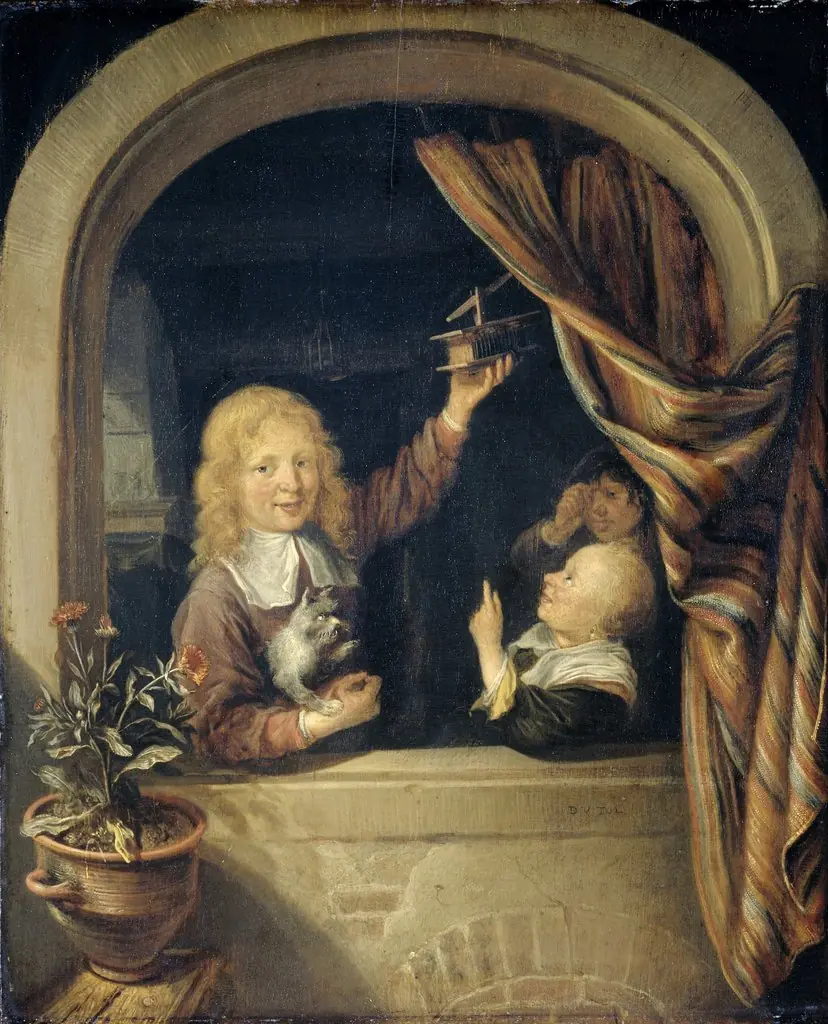
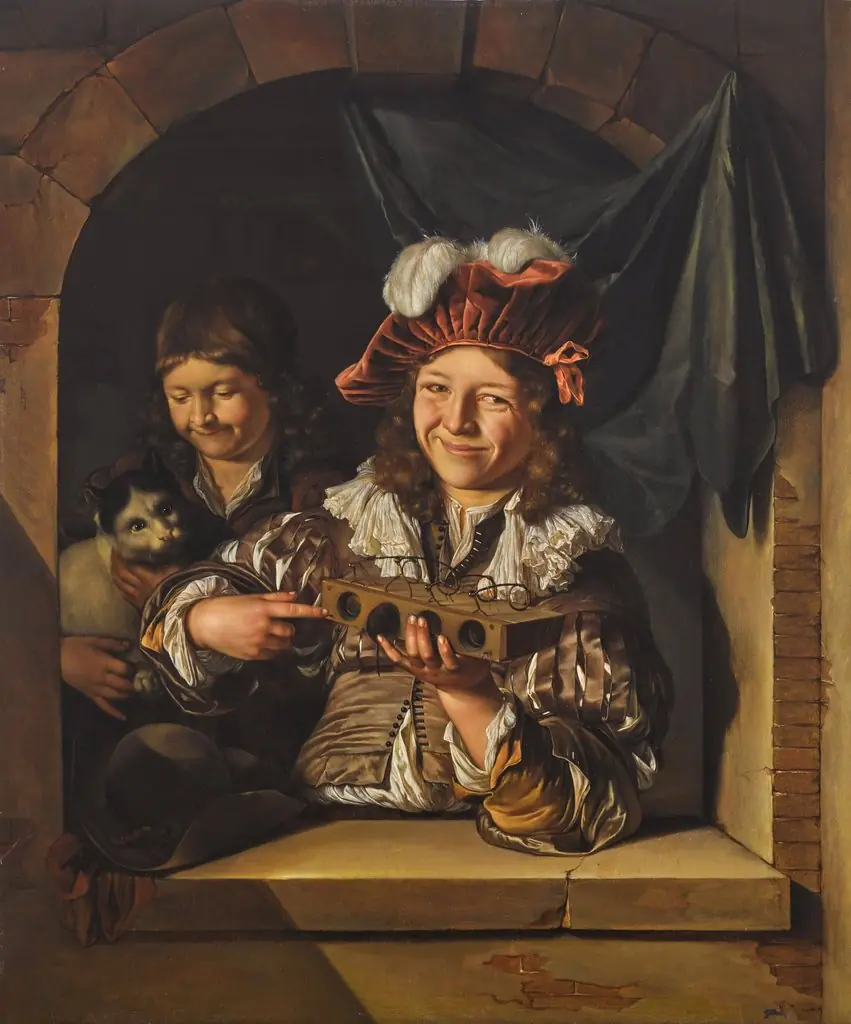
Children with a mousetrap is an unspecified painting by the Dutch Golden Age artist Domenicus van Tol. It dates from 1668 and is held in the collection of the Rijksmuseum. An unsigned oil painting depicts three children gathered at a stone window, engaged in a quiet, unscripted moment of play.
About this work
Overview
An unsigned oil painting depicts three children gathered at a stone window, engaged in a quiet, unscripted moment of play. The scene is intimate and unidealized, capturing a fleeting interaction without overt narrative or moralizing. The absence of an artist’s signature leaves the creator unknown, though the work aligns with Dutch genre painting traditions of the late 17th century.
Subject & Meaning
The children interact with a mousetrap and a cat in a manner that suggests curiosity rather than cruelty. One boy holds the trap and the animal, another points at it, and a third weeps behind them. No clear lesson is conveyed; the focus lies in the raw, unmediated dynamics of childhood—play, surprise, and emotional reaction—rendered without symbolism or didactic intent.
Technique & Style
The painting employs soft modeling and naturalistic lighting to ground the figures in a tangible space. Textures of stone, fabric, and fur are rendered with quiet precision, while the composition is deliberately unbalanced, drawing attention to the children’s gestures and expressions. The potted plant in the foreground adds depth and a sense of domestic realism.
History & Provenance
The painting’s origins are undocumented. It lacks a signature, date, or early record of ownership, making its commission and early history uncertain. It entered the Rijksmuseum’s collection without known provenance prior to its acquisition, suggesting it may have been collected as a representative example of Dutch genre scenes rather than as a work by a known master.
Context
Similar compositions appear in the work of artists like Pieter de Hooch and Jan Steen, though this piece remains more restrained in tone.
Created during a period when Dutch artists frequently portrayed domestic life, this work reflects a broader trend of capturing ordinary moments with observational fidelity. Unlike moralizing scenes of children, it avoids allegory, instead presenting play as a self-contained experience. Similar compositions appear in the work of artists like Pieter de Hooch and Jan Steen, though this piece remains more restrained in tone.
Legacy
Though not attributed to a named artist, the painting endures as a quiet testament to the observation of childhood in Dutch art. Its unembellished realism and emotional subtlety have made it a touchstone for studies of everyday life in 17th-century Holland, valued for its authenticity rather than its fame.
Artist & collection