Artwork
Ornamental Panel with Pan and Two Garland-Bearing Women
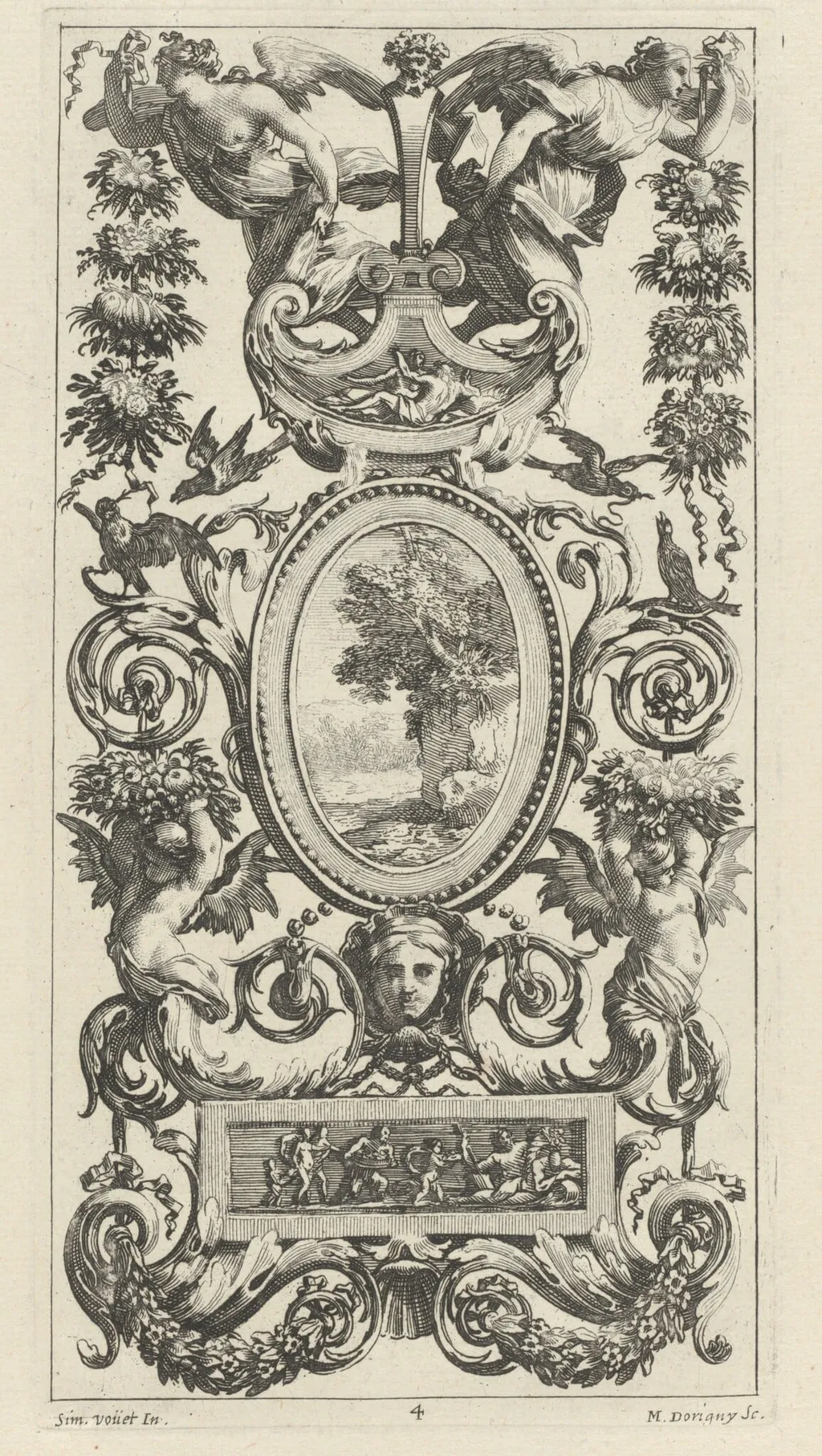
Ornamental Panel with Pan and Two Garland-Bearing Women is an ink print by the Baroque artist Michel Dorigny. It dates from 1647 and is held in the collection of the National Gallery of Art.
About this work
Overview
The work presents a decorative frame surrounding an oval scene, where a flautist—identified with the god Pan—plays amid two women holding festooned garlands.
Michel Dorigny’s 1647 print, titled Ornamental Panel with Pan and Two Garland‑Bearing Women, is an etched and engraved composition on laid paper. The work presents a decorative frame surrounding an oval scene, where a flautist—identified with the god Pan—plays amid two women holding festooned garlands. The surrounding motif features stylised foliage and floral elements that reinforce its ornamental character.
Subject & Meaning
The central vignette depicts Pan, the pastoral deity of music, engaged in a quiet performance, while the accompanying women, each bearing a garland, suggest a celebratory or ritual context. The juxtaposition of music and festooned flora evokes themes of harmony between nature and art, a common allegorical device in 17th‑century visual culture.
Technique & Style
Dorigny combines etching with fine engraving to achieve a range of line qualities on the laid paper’s textured surface. Delicate cross‑hatching creates subtle tonal gradations, while sharper engraved lines define the ornamental border. The interplay of light and shadow within the oval scene produces a modest sense of depth, characteristic of Baroque printmaking’s interest in chiaroscuro.
History & Provenance
Executed in 1647, the print reflects Dorigny’s activity during the French Baroque period, when decorative prints were often used to adorn interiors or as models for decorative arts. While specific ownership records are scarce, the work survives in several European print collections, attesting to its circulation among connoisseurs of ornamental design.
Artist & collection


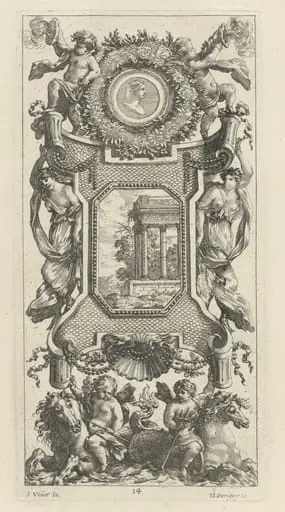 Ornamental Panel Surmounted by a Bust of a Woman and Two Putti with Flaming Trumpets
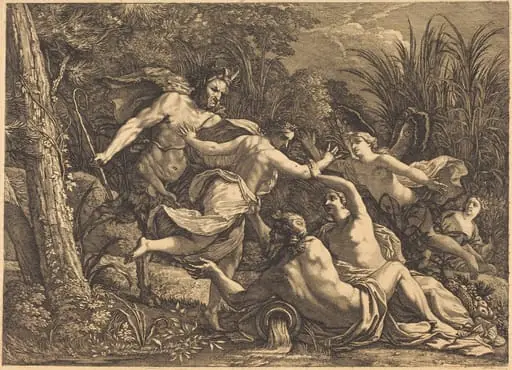 Pan and Syrinx
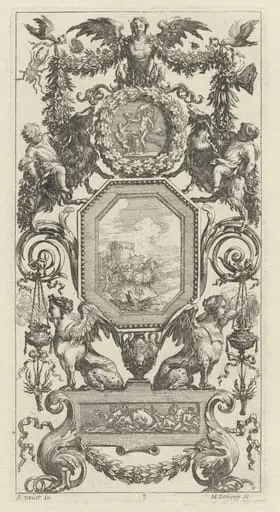 Ornamental Panel Surmounted by a Winged Harpy
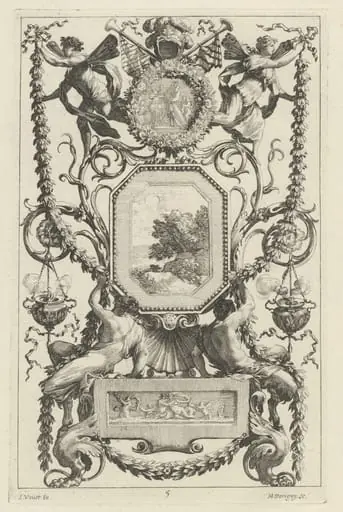 Ornamental Panel Surmounted by a Medallion with a Sacrifice
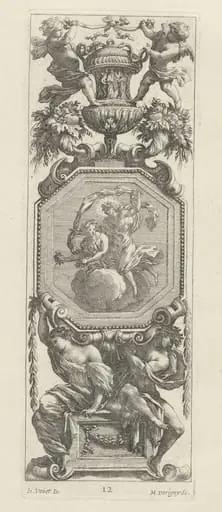 Ornamental Panel Surmounted by Two Putti and a Vase
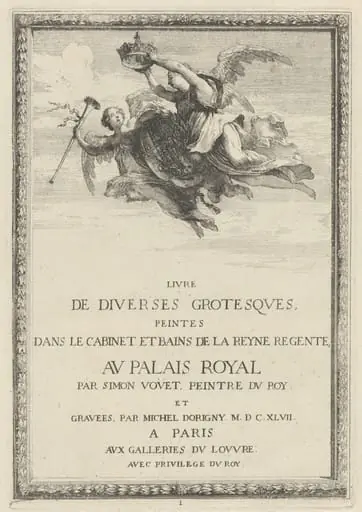 Title Page
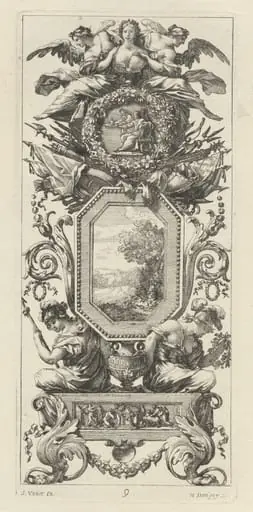 Ornamental Panel Surmounted with Two Figures Leaning on the Bust of a Woman
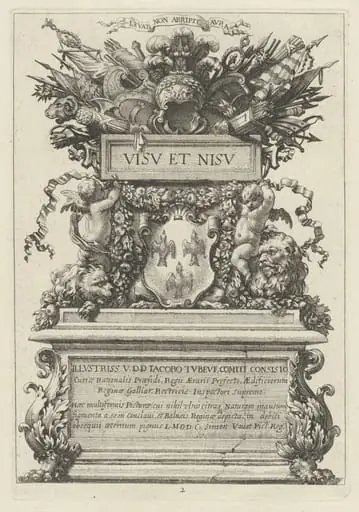 Frontispiece