Artwork
Ornamental Panel Surmounted with a Head Flanked by Foliage
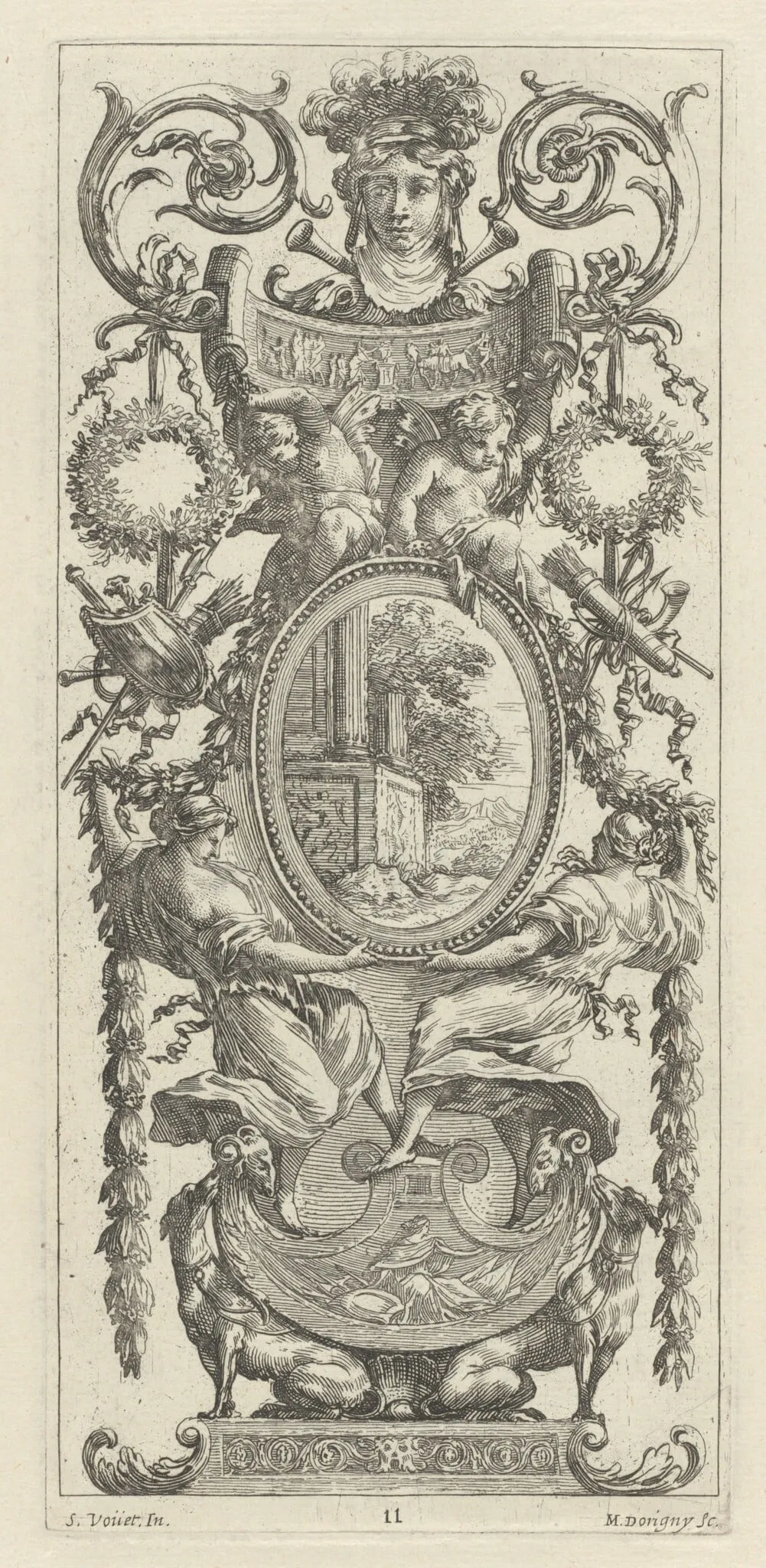
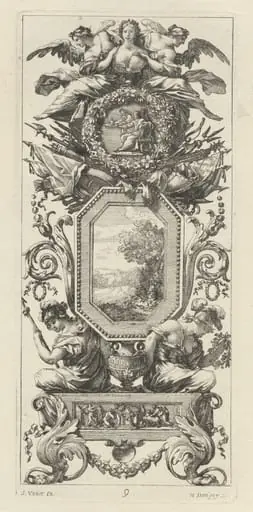
Ornamental Panel Surmounted with a Head Flanked by Foliage is an ink print by the Baroque artist Michel Dorigny. It dates from 1647 and is held in the collection of the National Gallery of Art.
About this work
Overview
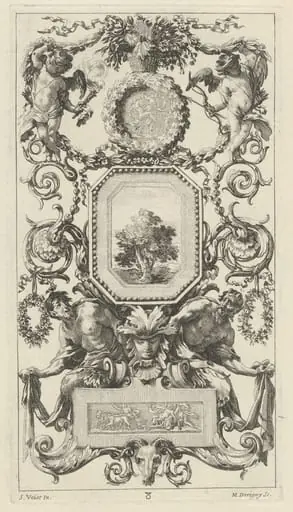
Decorative motifs—including swirling foliage, tools such as a hammer and anvil, and intricate leaf patterns—frame the central imagery in crisp black lines.
Created in 1647 by French printmaker Michel Dorigny, this work is an ornamental panel executed in etching combined with engraving on laid paper. The composition centers on a heraldic device: a crowned head crowns the upper edge, while two lions support a shield that contains a miniature landscape of a building amid trees. Decorative motifs—including swirling foliage, tools such as a hammer and anvil, and intricate leaf patterns—frame the central imagery in crisp black lines.
Subject & Meaning
The print functions as a stylized coat of arms, employing conventional symbols of authority and craftsmanship. The crowned head suggests noble or royal patronage, whereas the lions, traditional supporters in heraldry, uphold a shield that depicts architecture and nature, perhaps alluding to a specific estate or familial domain. The inclusion of a hammer and anvil may reference the patron’s trade or guild affiliation, integrating professional identity into the emblematic design.
Technique & Style
Dorigny employed both etching and engraving on a metal plate, a common practice in the mid‑seventeenth century to achieve fine detail and tonal variation. Etching allowed for fluid, spontaneous lines in the decorative foliage, while engraving provided the precise, sharply defined contours of the heraldic figures and architectural elements. The use of laid paper contributes a subtle texture that enhances the contrast of the deep black ink against the fibrous surface.
Context
The work belongs to a period when elaborate printed heraldic panels were commissioned for display in private residences, guild halls, or as decorative inserts in books. Dorigny, active in Paris, was known for his skill in reproducing intricate designs for aristocratic and commercial clients. This piece reflects the broader Baroque taste for elaborate ornamentation and the growing demand for reproducible, high‑quality prints.
Legacy
While not widely reproduced, the panel illustrates the technical versatility of mid‑Baroque printmakers and offers insight into the visual language of heraldic representation in 17th‑century France. Its combination of symbolic imagery and decorative flourish serves as a reference point for scholars studying the intersection of art, identity, and craft in early modern print culture.
Artist & collection


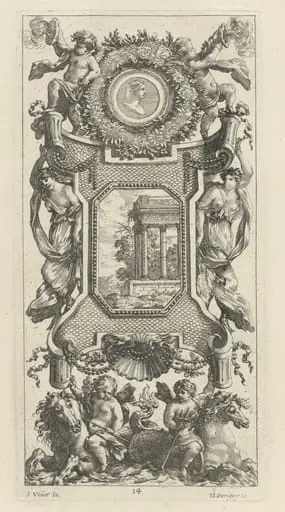 Ornamental Panel Surmounted by a Bust of a Woman and Two Putti with Flaming Trumpets
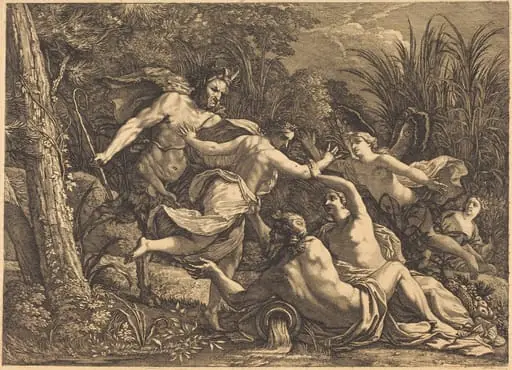 Pan and Syrinx
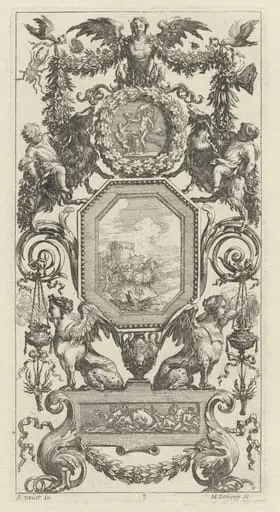 Ornamental Panel Surmounted by a Winged Harpy
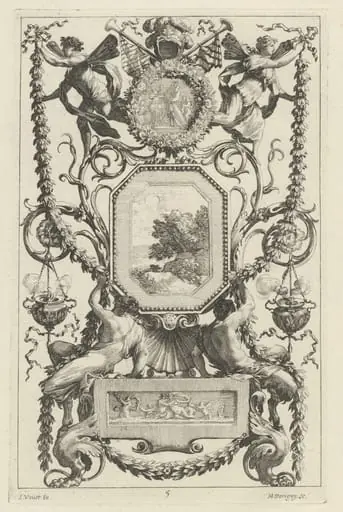 Ornamental Panel Surmounted by a Medallion with a Sacrifice
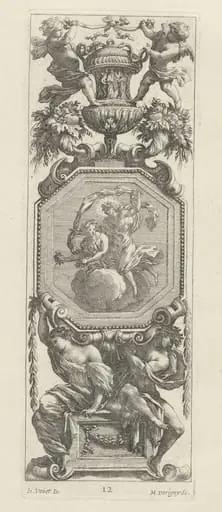 Ornamental Panel Surmounted by Two Putti and a Vase
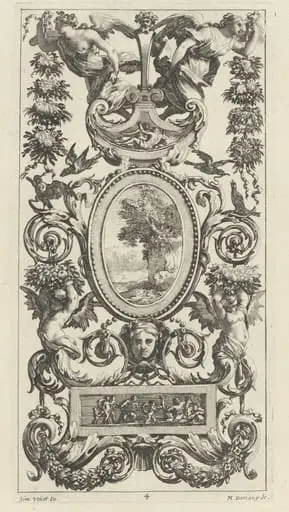 Ornamental Panel with Pan and Two Garland-Bearing Women
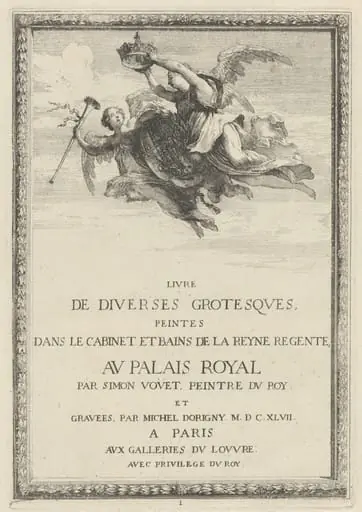 Title Page
 Ornamental Panel Surmounted with Two Figures Leaning on the Bust of a Woman