Artwork
Borratxo alegre
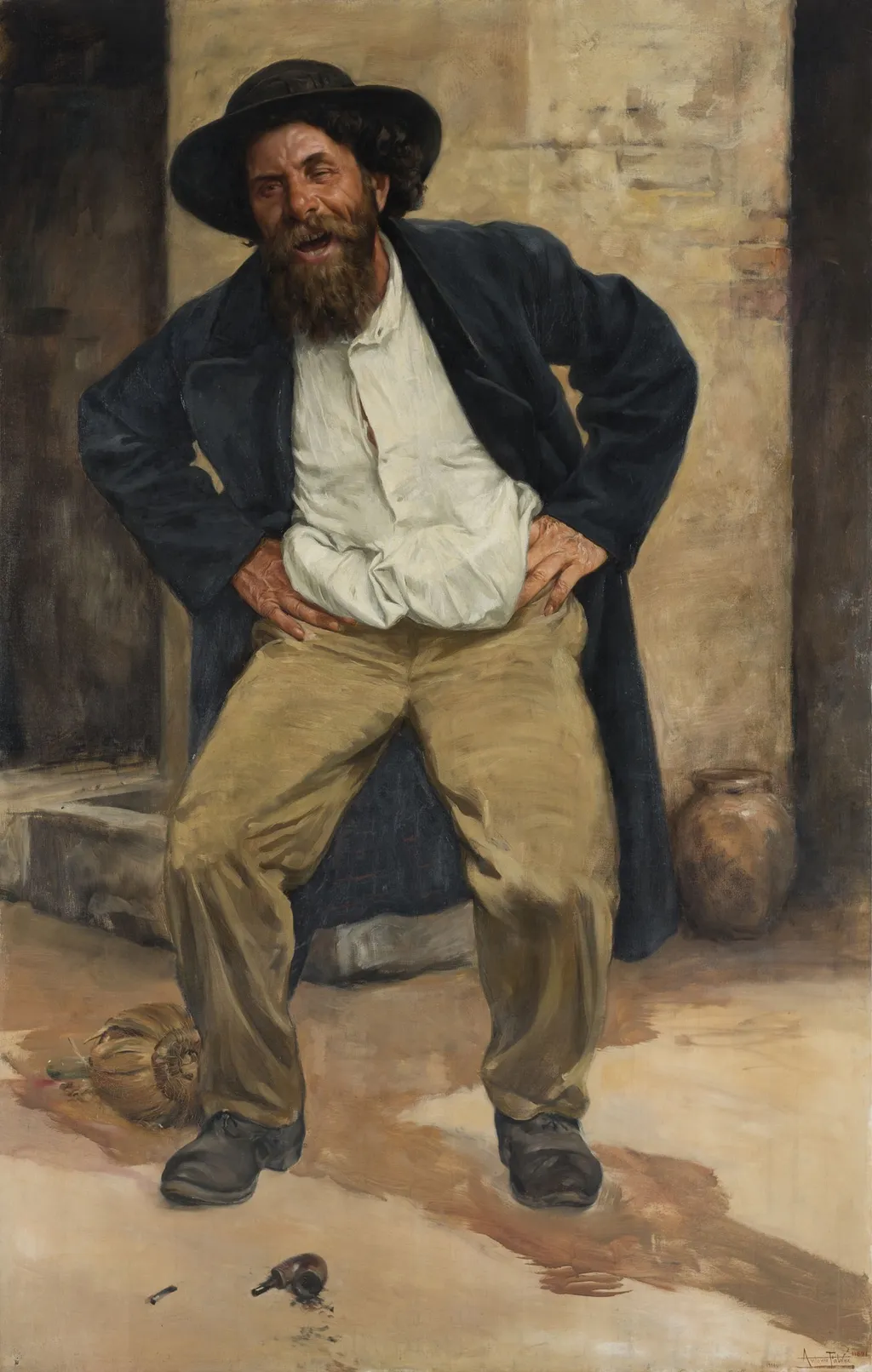
Borratxo alegre is an oil painting by the Art Nouveau artist Antonio Fabrés. It dates from 1911 and is held in the collection of the Museu Nacional d'Art de Catalunya.
About this work
Overview
Antonio Fabrés painted *Borratxo alegre* in 1911 using oil on canvas, blending his training in sculpture with his painterly practice.
Antonio Fabrés painted *Borratxo alegre* in 1911 using oil on canvas, blending his training in sculpture with his painterly practice. Though associated with Orientalist and historical themes, this work departs into a more intimate, genre-focused scene. It resides in the Museu Nacional d'Art de Catalunya, where it exemplifies the artist’s engagement with early 20th-century Spanish realism infused with Art Nouveau sensibilities in line and surface.
Subject & Meaning
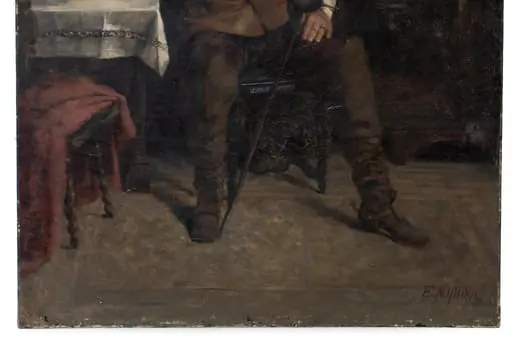
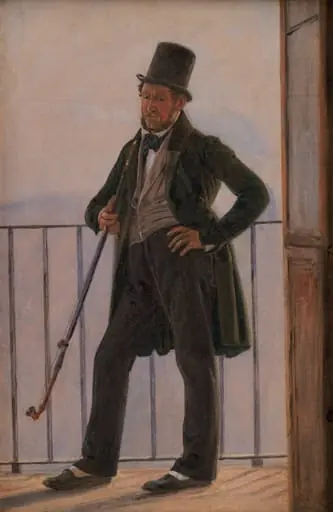
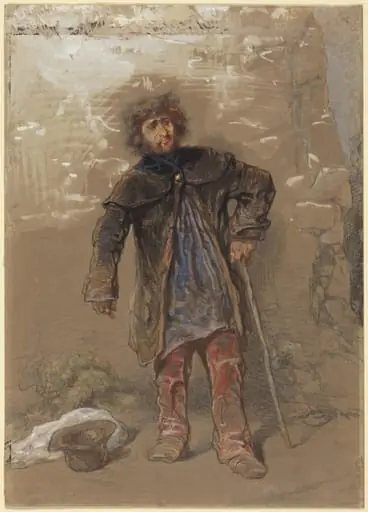
The painting portrays a man in everyday attire, standing with a relaxed yet tense posture—hand on hip, arm bent—as if caught mid-moment of physical unease. His expression suggests irritation or fatigue rather than joy, subverting the title’s suggestion of merriment. The solitary figure, framed by a plain wall and minimal props, evokes quiet isolation, hinting at inner states over narrative drama.
Technique & Style
Fabrés employs subtle chiaroscuro to model the figure’s form, lending volume without dramatic contrast. The brushwork is smooth, emphasizing contours and fabric textures—especially the jacket and shirt—while the background remains muted and flat. Art Nouveau influence appears in the flowing lines of the figure’s posture and the rhythmic placement of the clay pot, harmonizing with the composition’s restrained elegance.
History & Provenance
Created in 1911, the painting entered the collection of the Museu Nacional d'Art de Catalunya in the early 20th century, likely through institutional acquisition or donation. It has remained in the museum’s holdings since, with no documented public exhibitions beyond its inclusion in broader surveys of Catalan painting from the period.
Context
In early 1900s Catalonia, artists like Fabrés navigated between academic traditions and emerging modernist currents. While many embraced symbolism or avant-garde abstraction, Fabrés maintained a figurative approach, grounding his work in observed reality. *Borratxo alegre* reflects this balance—neither fully traditional nor radically modern, it captures a moment of psychological nuance within a culturally evolving artistic landscape.
Legacy
Though not widely reproduced or critically highlighted in major art histories, *Borratxo alegre* remains a quiet example of Fabrés’s ability to merge technical precision with emotional restraint. It contributes to understanding how Catalan painters interpreted everyday life during a period of regional cultural reawakening, offering a counterpoint to more overtly political or decorative works of the era.
Own this work as a print
Artist & collection
Artist
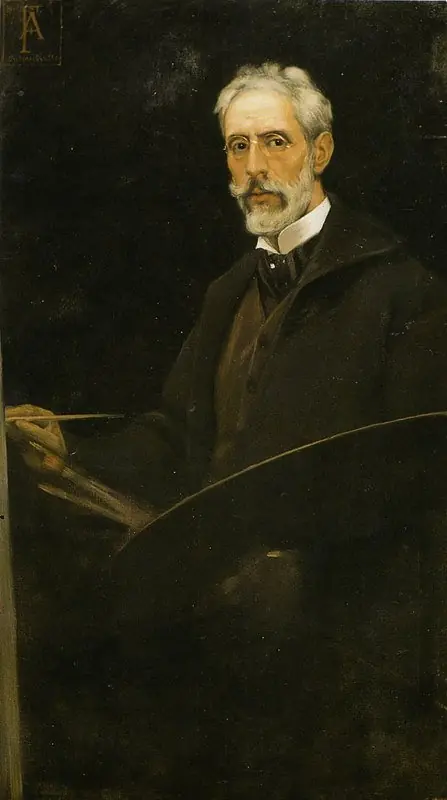
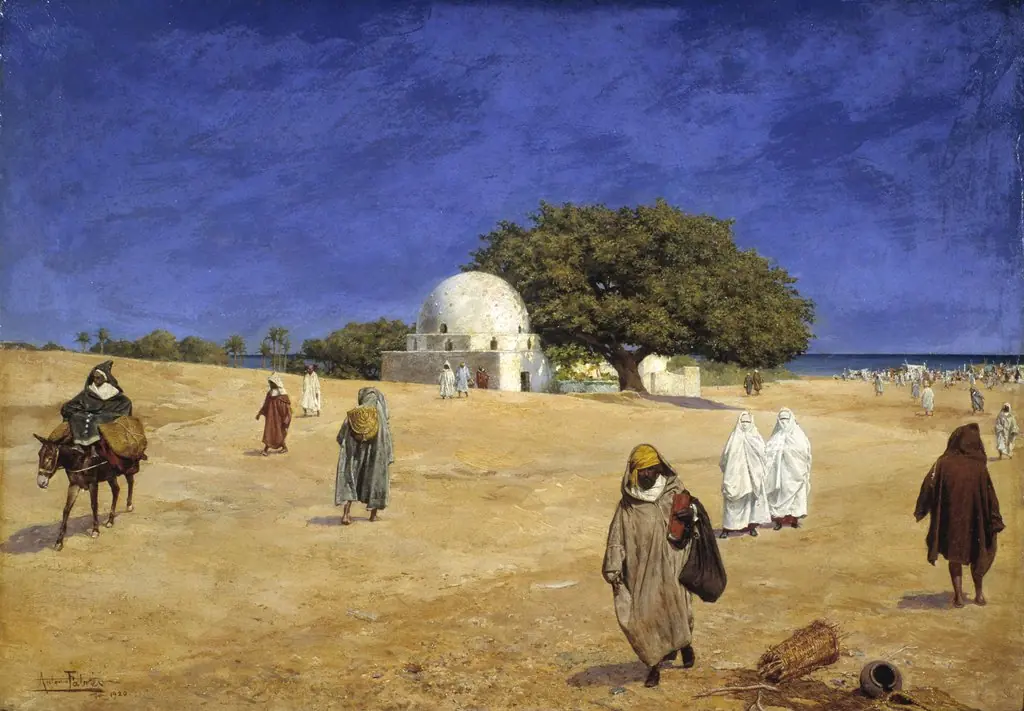
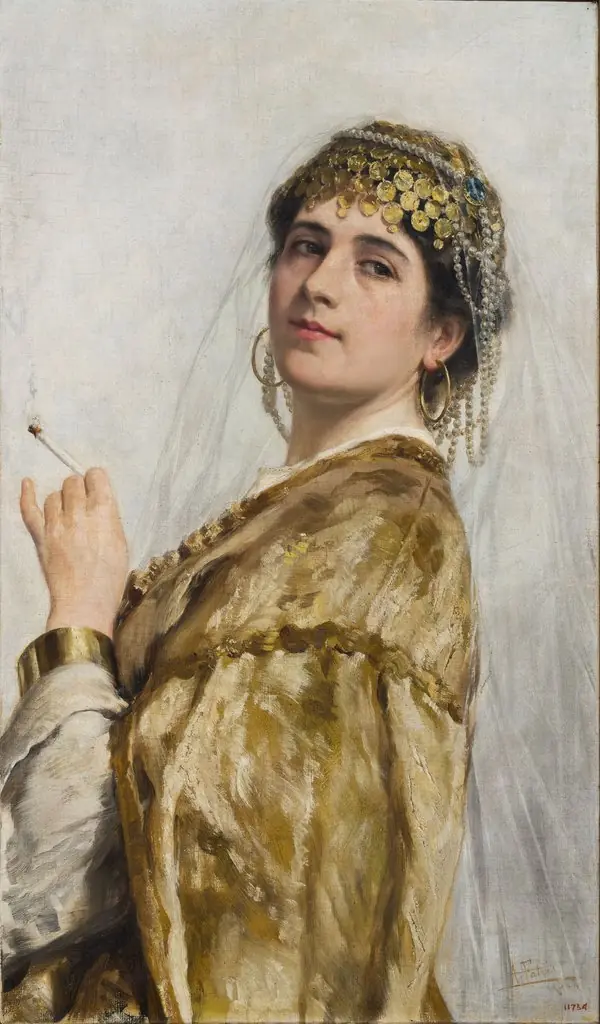
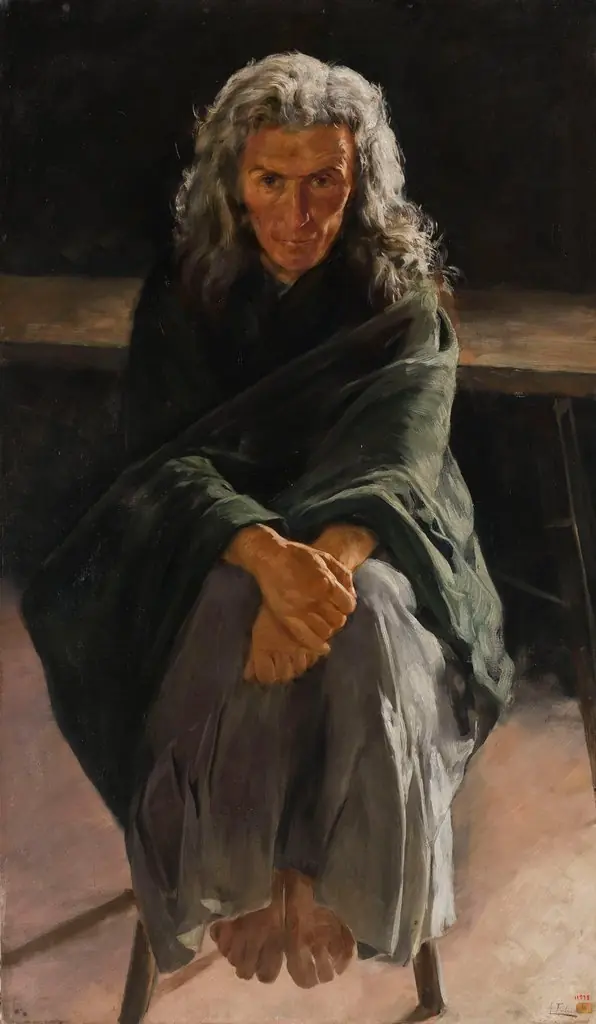
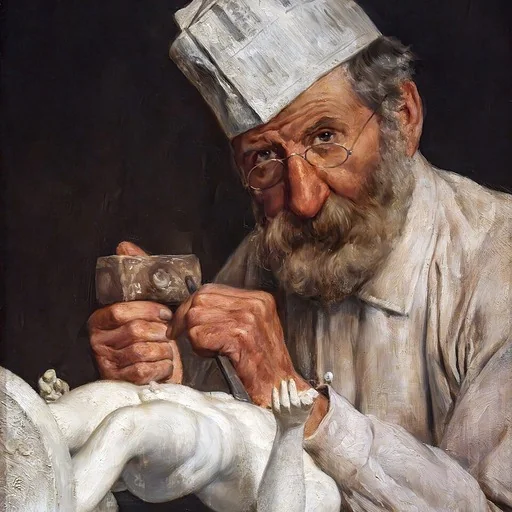
Antoni Maria Fabrés i Costa (Spanish: Antonio Maria Fabrés y Costa; 1854–1938), also known as Antoni Fabrés, was a Catalan sculptor and painter known especially for his depictions of Orientalist and period subjects.