Artwork
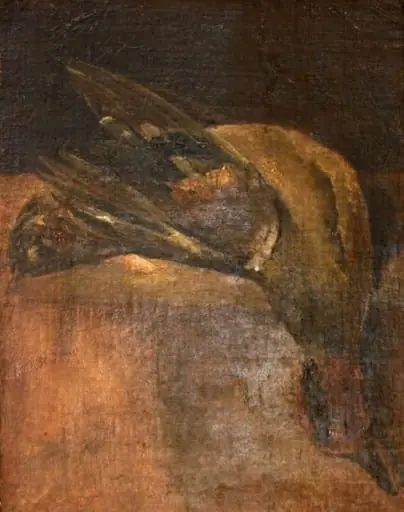
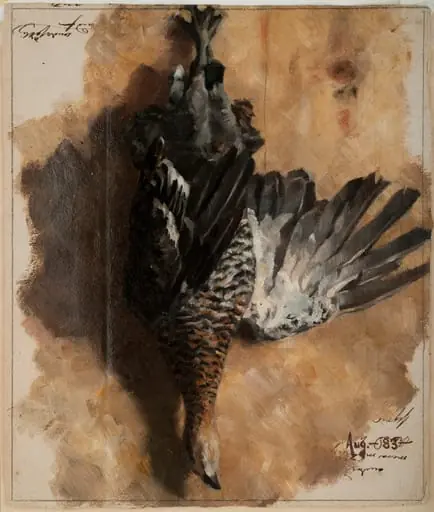
Dead Eagle Owl
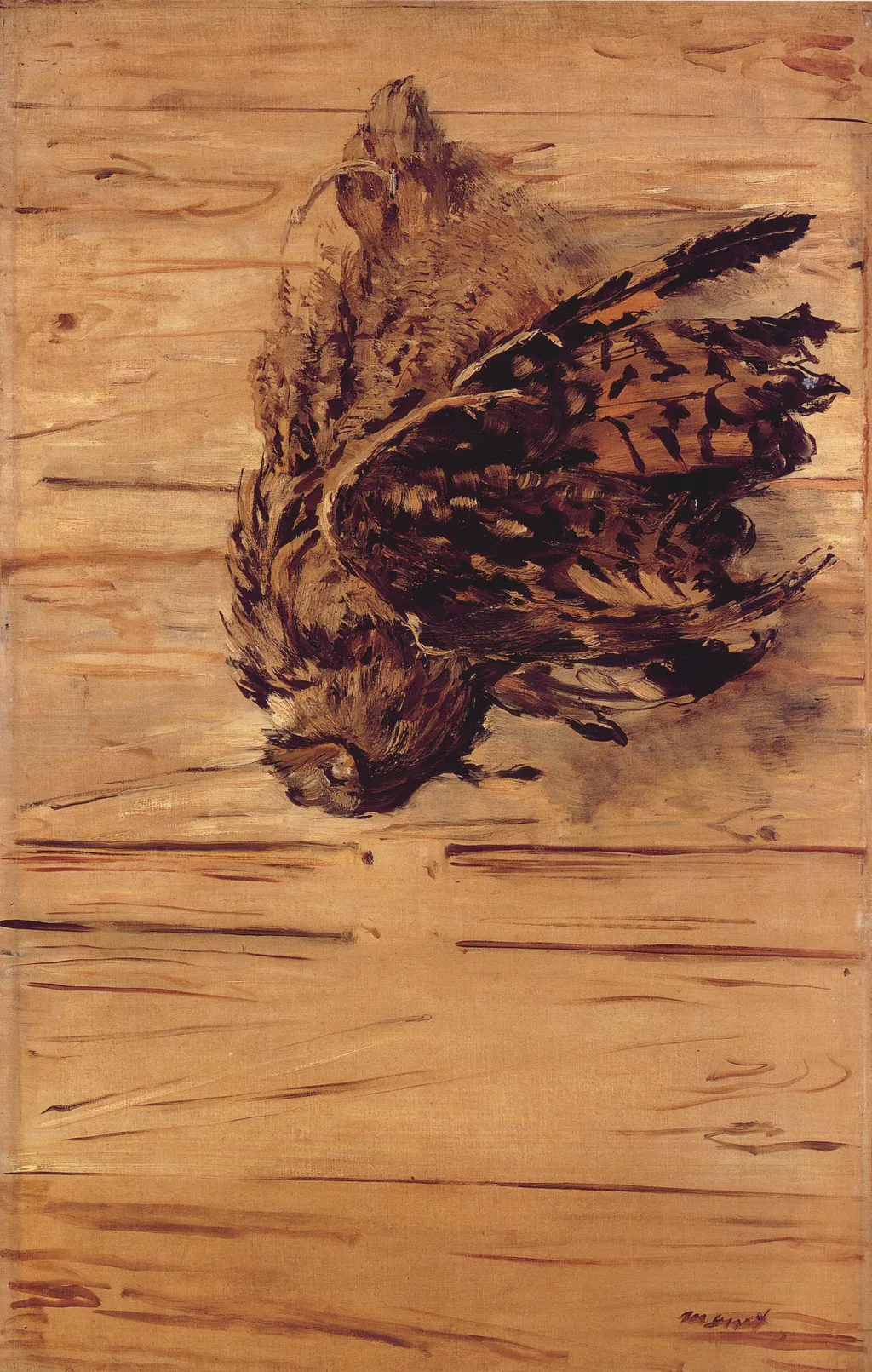
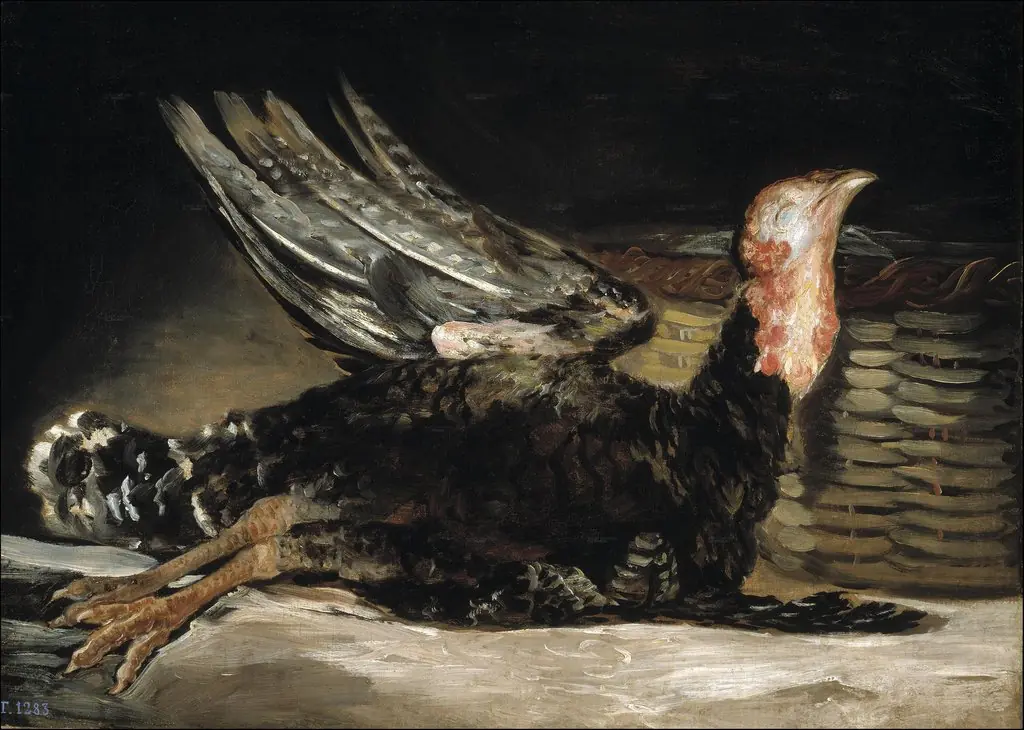
Dead Eagle Owl is an oil painting by the Post-Impressionist artist Edouard Manet. It dates from 1891 and is held in the collection of the Foundation E.G. Bührle Collection.
About this work
Overview
Édouard Manet’s 1881 oil painting, titled *Dead Eagle Owl* (French: *Le Grand‑duc*), presents a solitary, inverted Eurasian eagle‑owl suspended from a wooden board. Rendered in oil on canvas, the work belongs to the small group of hunting still‑lifes that Manet produced, and it now resides in the collection of the E.G. Bührle Foundation in Zürich.
Subject & Meaning
The composition centers on the lifeless bird, its ruffled plumage rendered in dark tones punctuated by lighter patches, while the head is turned slightly, lending a quiet, contemplative presence. The depiction of a hunting trophy evokes a tradition of morbid still‑life themes that explore mortality and the material remnants of sport.
Technique & Style
Manet employs a thick, impasto application of paint, especially evident in the textured wood grain and the bird’s feathers, creating a tactile, almost sculptural surface. The brushwork is vigorous and uneven, giving the owl a three‑dimensional quality that contrasts with the subdued background.
History & Provenance
Created during Manet’s convalescence in Versailles after a serious illness, the painting is part of a series of still‑lifes he executed that year. It reflects influences from 18th‑century French still‑life painters such as Chardin and 17th‑century Dutch artists like Jan Weenix, who also explored similar subjects.
Context
In the broader context of 19th‑century French art, *Dead Eagle Owl* stands out as a rare example of hunting still‑life in Manet’s oeuvre, a genre more commonly associated with earlier European traditions. Its somber tone aligns with the period’s interest in realism and the unidealized portrayal of everyday objects.
Own this work as a print
Artist & collection

Artist
Édouard Manet didn’t have much time to make his mark—he died at 51—but he used every year.