Artwork
Hanging Ducks
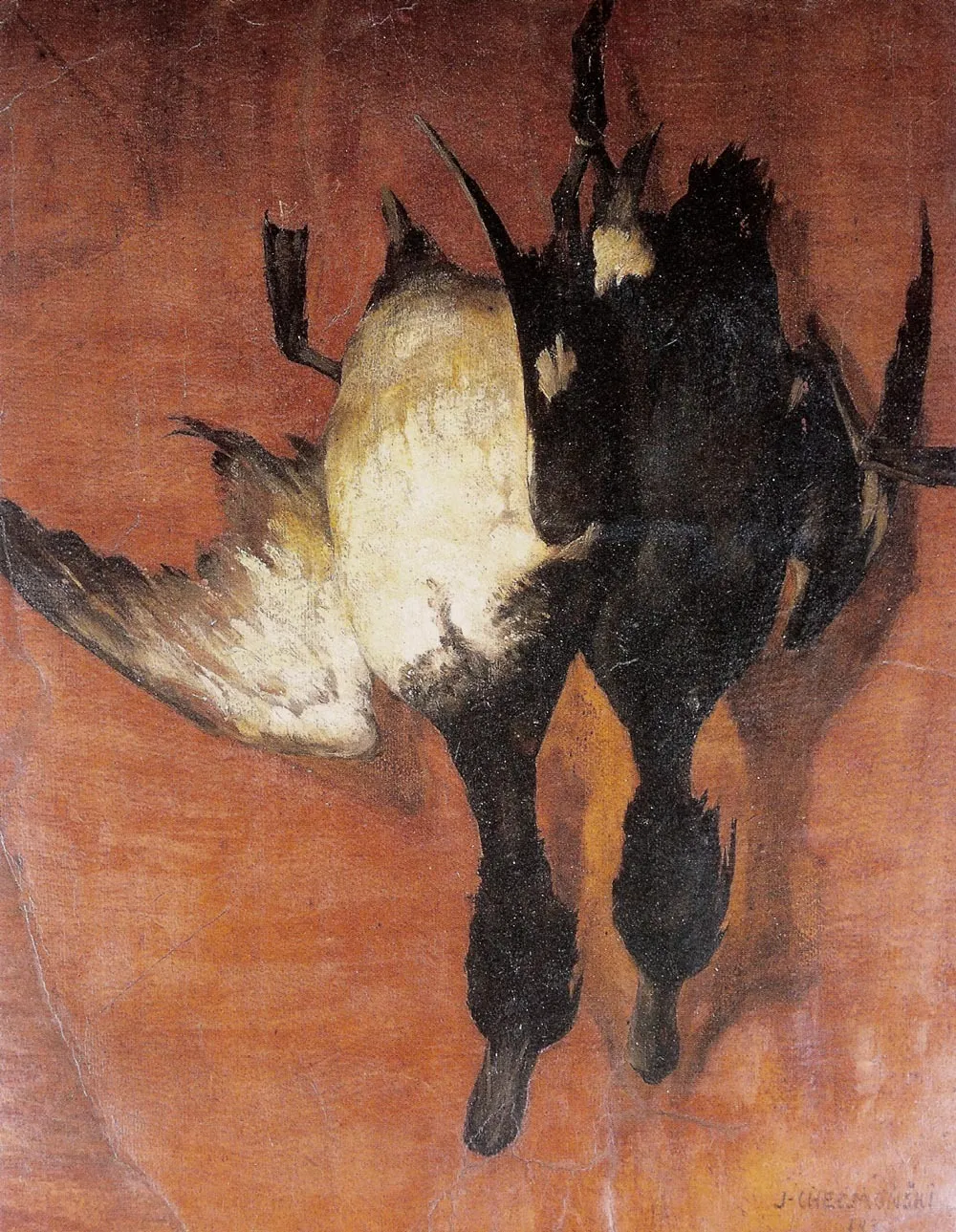
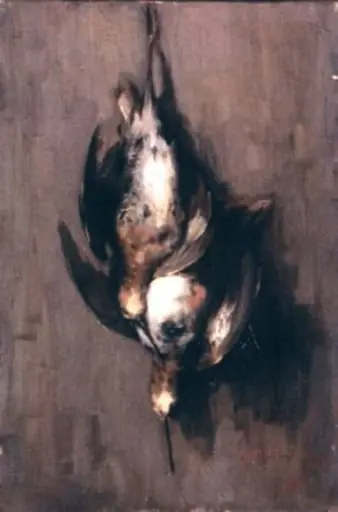
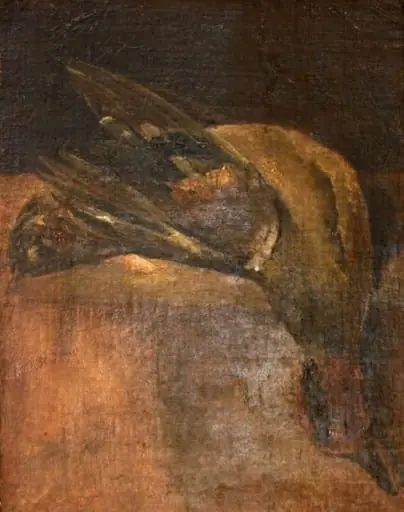
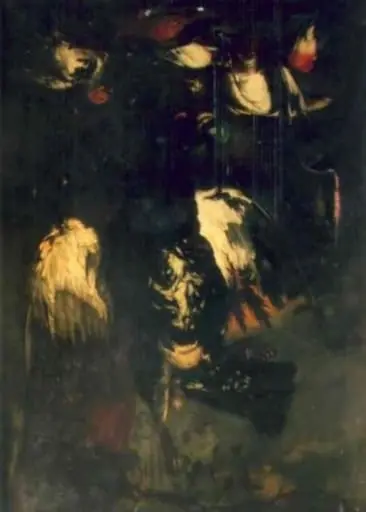
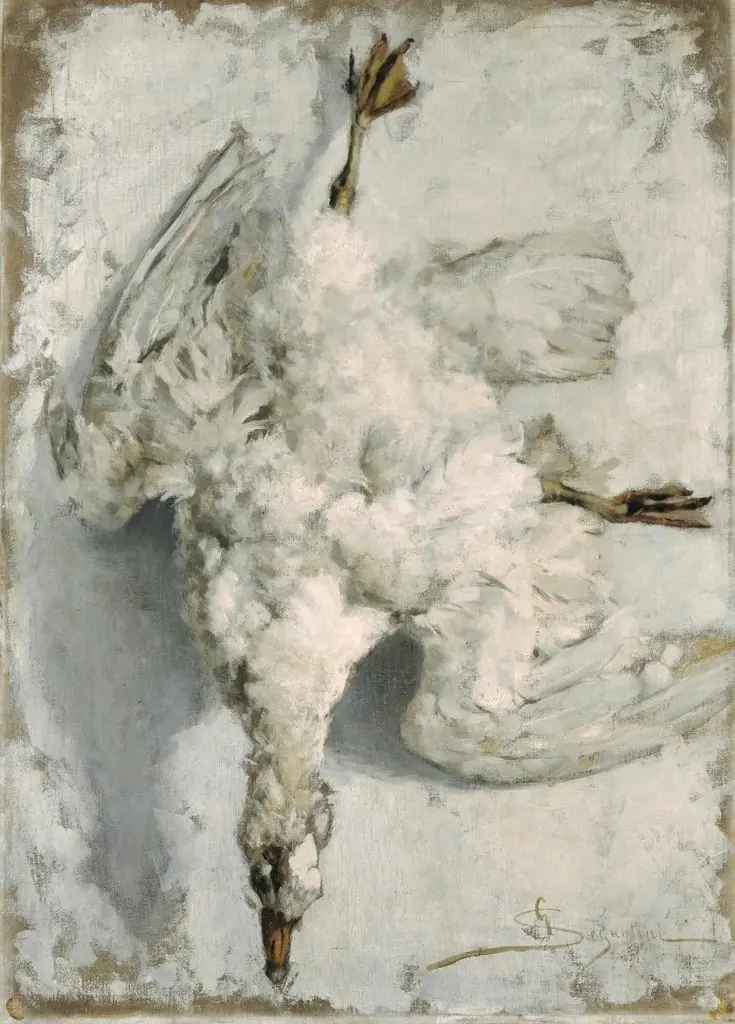
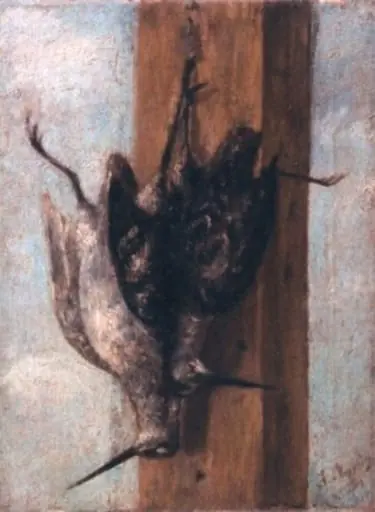
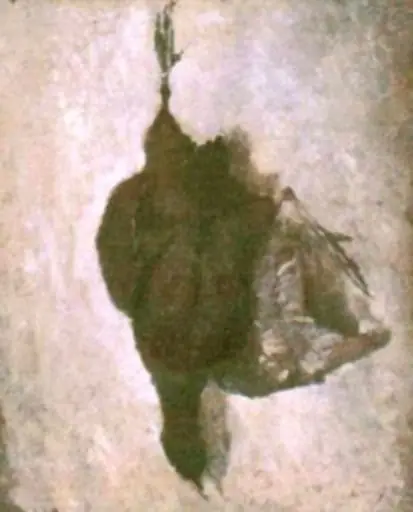
Hanging Ducks is an oil painting by Józef Chełmoński. It dates from 1890 and is held in the collection of the National Museum in Kraków.
About this work
Overview
Though classified as a still life, the painting avoids decorative intent, instead presenting a moment of stillness that invites contemplation.
Józef Chełmoński painted *Hanging Ducks* in 1890 using oil on canvas, capturing a quiet rural scene with minimal composition. The work belongs to his broader engagement with everyday life in partitioned Poland, where ordinary subjects carried subtle cultural weight. Though classified as a still life, the painting avoids decorative intent, instead presenting a moment of stillness that invites contemplation.
Subject & Meaning
Two ducks hang suspended, their bodies turned away from one another, rendered in muted tones against a warm, earthy backdrop. The arrangement suggests a moment after slaughter, common in peasant economies, yet the composition avoids overt violence. The stillness and isolation of the figures evoke themes of transience and quiet dignity, reflecting Chełmoński’s sensitivity to the rhythms of rural existence.
Technique & Style
Chełmoński employed thick, deliberate brushwork to define the ducks’ feathers and forms, emphasizing texture over detail. The left duck appears warmer in hue, while the right is darker, creating visual balance without symmetry. The background, a rich reddish-brown, grounds the scene without distraction, allowing the animals’ forms to dominate. Light falls evenly, eliminating dramatic shadows and reinforcing the painting’s somber calm.
History & Provenance
Completed in 1890, the painting entered the collection of the National Museum in Kraków, where it remains today. It was produced during a period when Chełmoński increasingly turned from grand landscapes to intimate domestic scenes. Its preservation in a major Polish institution underscores its recognition as a representative work of late 19th-century Polish realism, though it was never widely exhibited during the artist’s lifetime.
Context
In partitioned Poland, artists like Chełmoński often turned to rural subjects as acts of cultural affirmation. Depictions of food preparation, hunting, and animal husbandry carried unspoken resonance amid political suppression. *Hanging Ducks* fits within this tradition—not as protest, but as quiet witness to the endurance of folk life, rendered with restraint and emotional gravity.
Legacy
Though less known than Chełmoński’s expansive landscapes, *Hanging Ducks* is regarded as a refined example of his ability to infuse mundane scenes with psychological depth. Its influence is seen in later Polish realists who favored intimate, unembellished compositions. The painting endures as a quiet meditation on labor, mortality, and the dignity of the everyday.
Artist & collection
Artist
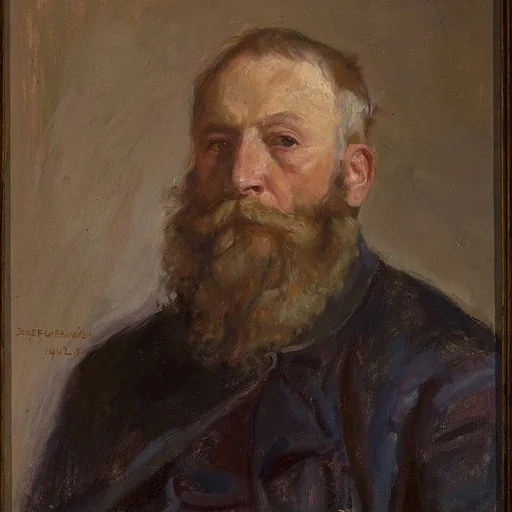
Józef Marian Chełmoński (7 November 1849 – 6 April 1914) was a Polish painter, known for his realistic paintings of landscapes, rural scenes and genre scenes presenting historical and social contexts of the late Romantic period in…